


Communication model showing sender receiver channel feedback




Try Before you Buy Download Free Sample Product
 Impress Your
 Audience
 100%
100% Editable
 Save Hours
 of Time


Go according to the checklist with our Communication Model Showing Sender Receiver Channel Feedback. Have all the basics going correctly.
People who downloaded this PowerPoint presentation also viewed the following :
Communication model showing sender receiver channel feedback with all 5 slides:
Increase the degree of determination in folks with our Communication Model Showing Sender Receiver Channel Feedback. Be able to intensify the effort.


FAQs for Communication model showing sender
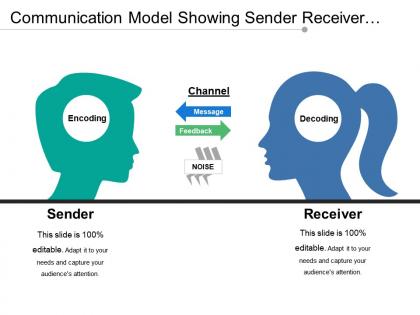
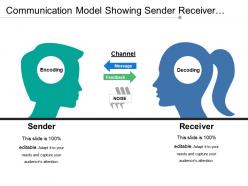
So basically you've got five key pieces: sender, message, channel, receiver, and feedback. The sender encodes their message, picks how to send it (email, text, face-to-face - whatever makes sense), then the receiver decodes it on their end. Feedback tells you if they actually got what you meant. There's also noise, which is just anything that screws up the communication - could be literal noise or like, your phone dying mid-call. Honestly, I think most communication fails happen because people don't think about their channel choice. Just run through these components when you're sending something important and you'll be golden.
Dude, encoding and decoding is where communication goes to die honestly. You take your thoughts and turn them into words or gestures - that's encoding. Then they decode it back into meaning on their side. Problem is, we've all got totally different "codebooks" from our experiences and backgrounds. Your message can get completely mangled in translation. I always throw in a quick "make sense?" or explain the same thing differently if it's important. Oh, and don't assume people get your references - learned that one the hard way. Bottom line: double-check that your point actually landed how you meant it.
Context is everything when you're trying to communicate effectively. Shannon-Weaver's model shows how it acts like background noise messing with your signal. Interactive models treat it as the shared space between you and whoever you're talking to - affects all the feedback you get. But honestly? Transactional models make the most sense since context is always shifting and hits everyone at once. Here's the crazy part: cultural context can flip your meaning completely even if you use identical words. Always think about where your audience is coming from before you send something important.
Honestly, feedback is just how you figure out if people actually get what you're saying. Like, you send a message and then... what? You're basically throwing words into space unless you know it landed right. Could be someone nodding, asking questions, or even that blank stare that tells you everything lol. Written responses work too. The thing is, you can adjust on the spot when you're getting feedback. I always throw in "make sense?" or watch faces during conversations - saves so much confusion later. Communication without feedback is just talking to yourself, which... we've all been there.
So Shannon-Weaver is all about technical stuff - like when your phone cuts out mid-sentence. They fix it with redundancy and error correction. Berlo gets into the psychological side though, where your own biases mess with how you interpret things. That's "semantic noise" apparently. The transactional model makes the most sense to me - it assumes noise never stops, so both people have to keep adjusting. Real conversations are messy anyway! Best thing you can do is build in those feedback loops. Catch the confusion early before it snowballs into something worse.
So that Shannon-Weaver model? It's actually perfect for understanding digital stuff. You've got sender, encoder, channel, decoder, receiver - basically how all our tech works. But here's the thing - "noise" isn't just radio static anymore. It's packet loss, crappy bandwidth, interference, even buggy code screwing things up. Pretty wild how an old communication model still nails it. This whole framework pushed us toward error correction and redundancy in digital systems. When you're building anything, just assume your channel will be messy and plan ways to catch and fix transmission errors. Trust me on this one.
So basically you'd add body language, tone, and facial expressions as a separate track running alongside the words in your communication model. Think of it like subtitles, but for gestures and vibes. Honestly, nonverbals can totally contradict what someone's actually saying - which is kinda fascinating if you think about it. Don't treat them as secondary either. They're carrying just as much weight as the verbal stuff. Map out what body language happens at each step of your current process. Short sentences work here. You'll be surprised how much communicates without any words at all.
So basically, linear communication is like old TV - you just blast your message out there and cross your fingers. One direction only. Interactive models are way better because they actually include feedback loops. Your audience talks back, asks questions, changes the whole conversation. Way more realistic, honestly. Both people are sending AND receiving at the same time, plus there's context and background noise to deal with. I always try to build in ways for people to respond when I'm communicating something important at work - makes such a difference.
Yeah so cultural stuff totally shapes how you need to communicate with people. Like, some cultures want you to be super direct while others think that's rude and prefer hints. Body language means completely different things too. I bombed this presentation once with our international team because I didn't get this! Also some cultures expect you to explain every detail, but others assume you already share the same background knowledge. It's kinda fascinating actually. Bottom line - figure out your audience's cultural vibe first, then adjust your whole approach from there.
So SMCR basically makes you think through everything step by step instead of just winging it. You gotta consider how credible you seem, what your actual message is, and which format works best - slides, video, whatever. But here's the thing most people totally ignore: actually understanding your audience's background and what they care about. I've seen so many presentations bomb because of this. Oh, and it reminds you that cultural stuff and attitudes matter way more than you'd think. Just try mapping out your next presentation this way - I bet you'll spot holes you would've missed otherwise.
Basically, you've gotta figure out who you're talking to first. Some people want you to cut straight to the point, others need way more background info - honestly, it's all over the place depending on the group. Think about their culture, how tech-savvy they are, what language works best. Mix up your approach too - throw in visuals, write stuff down, say it out loud. Give people tons of chances to ask questions because they will. Oh, and don't get married to your first plan. If you're seeing blank stares, switch it up fast.
Okay so the transactional model basically changed everything about how we think about workplace communication. Instead of just broadcasting messages at people, it shows that everyone's sending AND receiving at the same time. Like, you're constantly picking up on feedback, body language, all that stuff - and it's shaping the conversation as you go. Way different from those old-school linear models. What's actually useful here? You can't just dump information on someone and walk away. You've got to read the room, see how your message is landing, then adjust on the fly. It's honestly more like a conversation than a presentation.
So the Helical model is basically like a spiral staircase - you're hitting similar topics but getting deeper each time. Unlike those basic linear models where you just send/receive messages, this one gets that every conversation builds on what happened before. Your past experiences totally shape how you respond. Plus each interaction actually changes you for next time, which honestly makes way more sense when you think about it. Like in meetings - you'll notice how differently you talk to Sarah now versus when you first met her. It's not just feedback loops, it's actual growth happening.
Honestly, communication models are game-changers because they stop that chaos where half your team is operating on old info. You get clear pathways for who needs what and when. The shared language thing is huge too - cuts down on so many stupid arguments. They'll show you exactly where things usually fall apart (spoiler: it's always the handoffs between departments), so you can actually plan for that. Oh, and feedback becomes way more structured instead of just random comments flying around. Keeps everyone on the same page about what you're actually trying to accomplish.
Honestly, visual aids are a game-changer for explaining communication models. People's eyes just glaze over when you're rambling about sender-receiver processes without showing them anything. Diagrams and flowcharts make abstract stuff way easier to follow. You can literally map out how messages flow between different stages. Colors help too - like highlighting feedback loops or whatever. I always think of it like giving directions - would you rather have someone describe every turn, or just hand you a map? Just don't go overboard with fancy graphics that distract from your actual point.
-
Helpful product design for delivering presentation.
-
Use of icon with content is very relateable, informative and appealing.