


Communication cycle diagram sample of ppt




Try Before you Buy Download Free Sample Product
 Impress Your
 Audience
 100%
100% Editable
 Save Hours
 of Time


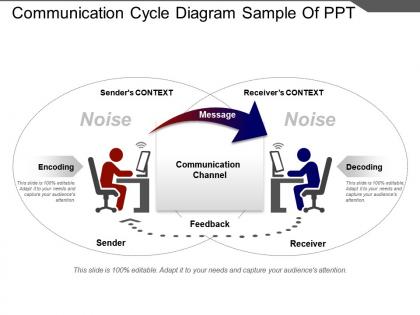
Showcase the process of communication using this Communication Cycle Diagram Sample Of PPT template. Emphasize the importance of effective communication and depict how important it is to remove all the operational barriers. You can incorporate this slide to motivate the employees and other staff members to communicate their viewpoints freely about the sales and marketing strategies. Illustrate the communication process and make your audience familiar with the models of communication. Depict how a sender encodes the message and how a receiver decodes it. Showcase the channel and the medium of communication that should be preferred while transmitting the messages. Make your audience aware of the different elements or components of the communication cycle, including the sender, receiver, encoding, decoding, and feedback. Download this readily available PPT slide to generate a sense of team spirit in your organization.
People who downloaded this PowerPoint presentation also viewed the following :
Communication cycle diagram sample of ppt with all 5 slides:
Enhance expertise in any area with our Communication Cycle Diagram Sample Of Ppt. They help you focus on any domain.

FAQs for Communication cycle diagram
So basically there are six parts to how communication works. You're the sender who turns thoughts into words or whatever (that's encoding). Then you pick how to send it - text, talking, email, whatever. The other person receives it and tries to figure out what you actually meant, which honestly can be a total crapshoot sometimes. They give you feedback so you know if they got it. The cool part? When you actually listen to that feedback, you can tweak how you communicate next time. It's like this whole loop that keeps going.
Honestly, feedback is what saves you from talking to a brick wall. You throw out your message and without any response back, you're just guessing if anyone gets it. Could be nodding along or completely lost - who knows? When someone gives you feedback though, even if it's just a weird look, you can pivot. Figure out if they understood or need you to explain differently. I always try asking "What questions do you have?" instead of "Any questions?" - sounds less intimidating somehow. Creates actual space for people to speak up instead of just nodding and staying confused.
Context is like the invisible filter that changes how people hear you. Same "great job" feels totally different in a celebration versus after someone screwed up, you know? Everything matters - where you are, timing, your relationship with them, what just happened before. Cultural stuff too. I swear it's like those weird optical illusions where the exact same shape looks completely different based on what's around it. So when you've got something important to say, just pause for a sec and think about all the baggage they might be bringing to how they'll interpret it.
Honestly, once you get how the whole communication thing works, you'll catch miscommunications before they blow up your projects. The basic cycle is sender → message → receiver → feedback, right? So when stuff goes wrong, you can pinpoint exactly where. Like maybe Sarah never saw your email, or she saw "urgent" and thought next week instead of today. I swear this happens constantly. You'll find yourself double-checking that people actually understood what you meant. Team meetings get so much better too - no more everyone nodding while secretly thinking totally different things.
Biggest issues I see are noise - both literal distractions and mental clutter. Then there's the whole jargon problem where you're speaking Greek to people. But honestly? The feedback thing kills me. I've watched so many projects crash because nobody bothered checking if their message actually landed. Pick the right communication method for what you're saying. Don't dump complicated stuff on stressed people - timing matters. Oh, and here's something that actually works: ask "what questions do you have?" instead of "any questions?" Trust me, you'll get way better responses that way.
Dude, body language is everything when you're presenting. Like, you could have amazing content but if you look scared up there, nobody's gonna buy what you're selling. Eye contact is huge - it makes people actually listen instead of checking their phones. I've noticed this weird thing where confident posture creates this feedback loop. People start nodding and leaning in, which makes you feel better, so you get even more confident. It's pretty cool actually. Watch how your audience is sitting though - if they're slouched and distracted, you gotta switch up your energy fast.
Before you start talking or typing, figure out what you actually want to say first. Be super specific - "by Friday at 3 PM" beats "soon" every time. I learned this the hard way lol. Skip the fancy jargon unless you're 100% sure they'll get it. Organize your main points so they make sense together. Oh, and pick the right way to send your message - some stuff needs a call, not a text. Honestly, the best trick is pretending you're getting your own message with zero context. Would you understand it?
Honestly, active listening completely changes how conversations go. Instead of just waiting for your turn to talk, you're actually paying attention - asking questions, repeating back what you heard, that kind of thing. Catches misunderstandings before they snowball into bigger issues. I've noticed this especially in work meetings where everyone's usually just thinking about their own agenda. When you summarize what someone said before jumping into your response, people actually feel heard. Creates this whole cycle where both people are more engaged. Trust me, try it once and you'll notice the difference right away. Makes everything way less frustrating.
Honestly, tech is a total double-edged sword for communication. Like yeah, you can get instant feedback through Slack or video calls, which is amazing. But then autocorrect screws you over at the worst possible moment, or your message gets buried under 47 other notifications. The biggest issue though? You miss all the facial expressions and body language that actually matter. I've learned this the hard way - definitely had some awkward misunderstandings over text that would've been fine in person. Just pick the right tool for what you're trying to say and double-check they actually got your point when it's important stuff.
Working across cultures? You'll want to watch every step of how you communicate. Use simple language when you're putting your message together - skip idioms since they rarely translate well. The actual delivery gets tricky with language barriers, plus some cultures are super direct while others dance around topics. Here's the thing though - people decode everything through their own cultural filter, so your meaning might get completely twisted. Always ask clarifying questions during feedback! Silence doesn't mean they get it. I've learned this the hard way. Create space for people to actually admit when they're lost.
So here's the thing - use simple words and skip the jargon they won't understand. Ask questions upfront to make sure you're on the same page. I always mess this up by assuming people totally get what I'm saying without actually checking! Have them repeat back what they heard. Watch their face too if you're talking in person - blank stares are dead giveaways. Don't try explaining complicated stuff over text either. Build in little check-ins as you go instead of dumping everything at once then hoping for the best.
Oh man, timing is EVERYTHING with communication. Send feedback right after someone messes up? Constructive. Wait three weeks? Now you're just being mean. Plus you gotta read the room - if someone's already stressed out, your perfectly worded message is gonna fall flat. I learned this the hard way more times than I'd like to admit lol. The receiver's headspace matters just as much as what you're actually saying. Before jumping into any serious conversation, I always try to think: is this really the right moment? Sometimes waiting an hour makes all the difference.
Think of emotional intelligence as your secret weapon for reading people during conversations. Before you even speak, EQ helps you figure out how someone might react based on their vibe or style. While you're talking, you'll notice those nonverbal cues - like if they're actually listening or just waiting for you to shut up. That's where tons of people screw up honestly, they just word-vomit without checking if it's working. When they respond back, your emotional radar picks up on the feelings underneath their words, not just what they're saying. Then you can adjust accordingly.
Templates are honestly a game-changer. They give you a structure that works, so you're not staring at a blank slide wondering where to start. Your audience gets it faster too since they recognize the layout patterns. Less mental work for everyone. I used to waste so much time figuring out basic stuff like where to put headlines or how to organize sections. Now I just have my go-to formats. Pick maybe 2-3 templates for different presentation types - saves tons of time and your message comes across way clearer. It's like having training wheels but in a good way.
Oh man, incomplete communication is like the worst business killer. Your team will be running in totally different directions because everyone heard something else. Clients get pissed when they think you're ignoring them. Honestly, I've seen so many projects crash just because nobody confirmed what was actually decided - it's wild how often this happens. You'll waste hours in "clarification meetings" that could've been avoided. Missing deadlines becomes inevitable since people aren't sure if they're supposed to do anything. Just quickly recap what was agreed on and who's doing what next. Saves everyone's sanity.
-
Attractive design and informative presentation.
-
Content of slide is easy to understand and edit.