

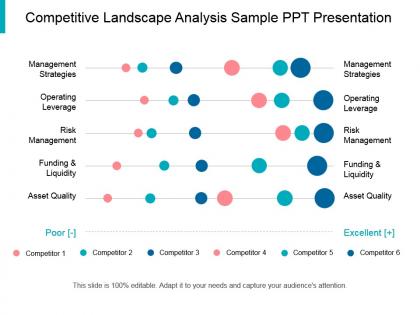
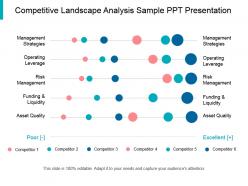
Competitive landscape analysis sample ppt presentation




Try Before you Buy Download Free Sample Product
 Impress Your
 Audience
 100%
100% Editable
 Save Hours
 of Time


Enlist the help of all around with our Competitive Landscape Analysis Sample Ppt Presentation. Be able to involve individuals.
People who downloaded this PowerPoint presentation also viewed the following :
Competitive landscape analysis sample ppt presentation with all 5 slides:
Folks develop fondness for you due to our Competitive Landscape Analysis Sample Ppt Presentation. You will establish an endearing image.


FAQs for Competitive landscape analysis
Start by figuring out who else is solving your customers' main problem - not just direct competitors, but anyone going after the same wallets. Check their pricing, features, and what customers are saying in reviews. Their social media tells you a lot too, plus any recent funding news shows where they're headed. The real differences usually aren't the obvious stuff - it's more like how they handle support or which market slice they're chasing. Honestly, business model differences can matter way more than features. Make a basic comparison chart and actually update it every few months because this stuff changes fast.
Honestly, pricing is all over the map even in the same industry. Premium brands act like they're doing you a favor charging more. Value players just keep slashing prices trying to win on cost alone. You've got companies doing that sneaky $9.99 thing (which actually works, weirdly), others dropping prices super low to steal customers fast. Then there's bundling - they throw services together so you can't easily compare apples to apples. Pick like 5-6 main competitors and check their prices monthly. Watch how they react when someone changes pricing. That's where you'll find your opening.
Yeah so usually the top 3-4 companies grab like 60-80% of any market, but honestly it depends on the industry. What you want to check is their revenue growth from the last few years - who's actually winning? The cool thing is finding those patterns where maybe the big leader is getting stagnant while smaller guys are crushing it. Market consolidation is everywhere right now too. Just grab their quarterly reports and throw the market share data into a basic chart. Sounds boring but trust me, you'll spot exactly where things are shifting and which strategies don't suck.
Here's how I'd figure out what's actually working for them: Check where they're constantly active - their social posts, how often they're running ads (SEMrush is solid for this), and which posts get real engagement. If they keep sponsoring the same podcasts or events, that's probably paying off. Don't just steal their playbook though. Figure out WHY it works, then make it yours. Like if they're killing it on LinkedIn with industry tips, you could share similar insights but with your own spin on things. Honestly, I'd test their top 2-3 channels with small budgets first. See what sticks before going all in.
Obviously I can't tell you about your specific competitors since I don't know your business, but here's what I'd do. Make a simple spreadsheet comparing pricing, features, customer service, market share - the usual stuff. Check their online reviews and social media too. People love to vent about bad experiences online, so you'll find tons of useful intel there. Be brutally honest about where they're actually beating you, and note where they're clearly screwing up. This whole process usually reveals market gaps you didn't even notice before. Then you can either fill those gaps or figure out where you need to catch up.
It totally depends on your industry - tech companies drop updates monthly, but manufacturers might wait years between big changes. Honestly, Adobe drives me nuts with their constant updates. Frequent releases can show you're innovative, but they also annoy people who just want stuff to work. Too few updates though? You'll look outdated next to competitors who move faster. Really comes down to what your audience actually wants. I'd check what your top competitors did over the past year - you might spot some patterns or find gaps where you can jump in with perfect timing.
Check out G2, Capterra, and Trustpilot for solid competitor reviews. Reddit's where people actually vent about stuff they hate - way more honest than official review sites. Social media mentions on Twitter and LinkedIn work too. Don't forget app store reviews and Google Reviews. Industry forums are clutch if you know where your customers hang out. Look for complaint patterns across different sites since one angry review might just be a fluke. Oh, and set up Google Alerts for their company names so you'll automatically catch new mentions without having to manually search all the time.
Three things you gotta watch: AI automation, sustainability pressure, and subscription models taking over everything. Your bigger competitors are already testing AI for customer service while smaller ones are still lost honestly. Green messaging is everywhere but some companies are actually walking the walk behind the scenes. Subscriptions are reshaping how everyone thinks about pricing - it's pretty wild how fast that shifted. Oh and definitely check out recent press releases from your main competitors. You'll spot where they're throwing money fast. The whole landscape feels chaotic right now but that's where opportunities hide.
So basically your competitors are doing one of three things right now. Some jump on compliance early to get that first-mover edge. Others (usually the big guys) are lobbying like crazy to shape the actual rules. Then there's the wait-and-see crowd who don't want to waste money on stuff that might change. Oh, and tons of them are just partnering with RegTech companies instead of building their own systems - way easier tbh. The clever ones see new regs as chances to get ahead, not just annoying costs. You should totally map out who's doing what so you can find gaps or easier compliance routes.
Most competitors stick to the same boring playbook - cheapest prices, newest tech, amazing customer service, or super fast delivery. You'll also see tons of generic nonsense like "premium quality" everywhere (which basically means nothing). What I'd do is make a simple spreadsheet of what they actually promise on their websites and ads. Focus on the specific stuff they keep repeating, not the fluffy marketing speak. That'll show you exactly where they think they're crushing it and - more importantly - where you might find some gaps to exploit.
So here's the thing - each competitor basically owns different chunks of customers. Like, some brands grab the young city crowd while others lock down older suburban folks. Income levels don't really overlap much either, which is honestly perfect for you. What you need to do is figure out exactly who each competitor has claimed already. Then hunt for the gaps - that's where you can slip in. Try to get your hands on customer surveys from the big players if possible. Those underserved segments? That's your goldmine right there.
Your competitors are probably partnering up to cover gaps they can't handle solo - new tech, bigger reach, whatever. Watch for their announcements about integrations, distribution deals, joint ventures. Most partnerships are fluff honestly, but the real ones? They can totally change the game by giving access to customers or markets your competitors couldn't touch before. I'd set up Google alerts for your main rivals plus words like "partnership" or "alliance." Oh, and don't ignore the smaller partnerships either - sometimes those signal where they're testing new directions before going big.
Your competitors' locations totally shape how they operate. City-based ones usually go for speed and convenience - they've got the scale for it. Rural competitors? They're all about those community connections and personal touch. Honestly, their customer loyalty can be insane compared to bigger players. Local businesses stick to nearby customers with face-to-face service, while urban competitors cast wider nets digitally or go premium. Location affects their costs, talent access, even regulations. Check where your main competitors are based and see how geography shapes their strategy - you might find areas they're missing or can't reach well.
Most companies go three routes with sustainability stuff - they change operations (carbon-neutral shipping, renewable energy), redesign products with eco materials, or do community partnerships. Honestly, half of them are just doing it for good PR. You can spot the real ones by checking if they share actual numbers and data. The better companies bake it into their whole business instead of slapping it on as an afterthought. I'd map out what competitors are claiming vs. what they're actually delivering, then figure out where you guys can jump in authentically.
Honestly, you've gotta make competitor tracking a weekly thing, not just when you panic. I spend like 30 minutes every week checking what they're up to - new product drops, who they're hiring (LinkedIn is seriously clutch for this), patent stuff if that matters in your space. Google alerts are your friend too - set them up for competitor names plus whatever tech buzzwords matter to you. SEMrush and SimilarWeb work great for the deeper dives. The tricky part is figuring out what actually threatens you versus cool-but-irrelevant stuff they're doing. Most of it's just noise, but you'll spot the real moves if you stay consistent with it.
-
Very unique, user-friendly presentation interface.
-
Thanks for all your great templates they have saved me lots of time and accelerate my presentations. Great product, keep them up!