Market analysis target market powerpoint slide designs

Rating:
100%
Slide 1 of 5
Favourites Favourites

Try Before you Buy Download Free Sample Product

Audience Impress Your
Audience
Editable 100%
Editable
Time Save Hours
of Time
The Biggest Sale is ending soon in
0
0
:
0
0
:
0
0
Rating:
100%
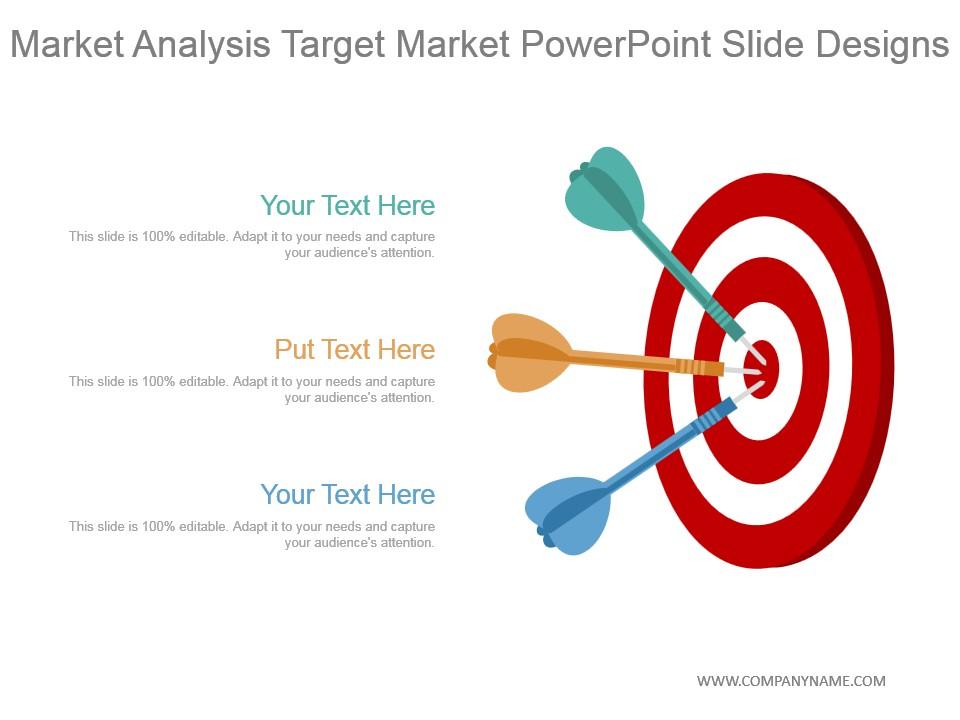
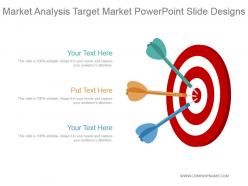
Presenting market analysis target market powerpoint slide designs. This is a market analysis target market powerpoint slide designs. This is a three stage process. The stages in this process are target, arrows, marketing, strategy, analysis.

FAQs for Market analysis target market

Dude, AI is everywhere now - every industry's scrambling to figure it out. Supply chains are getting more regional too, which makes sense after all the chaos we've seen. Companies are pouring money into sustainability stuff because investors actually care about that now. Oh, and remote work is still messing with real estate in weird ways. The crazy part though? Data analytics for predicting what people will buy is getting insanely accurate. I'd definitely keep an eye on which competitors are dumping cash into this stuff - they're probably planning something big for the next few years. Everything still feels like we're recovering from 2020 honestly.

Look at who's already buying your stuff first - that's your goldmine right there. Send out surveys, do some quick interviews, check your analytics. People overshare on social media too, so use listening tools to see what they're actually saying (not what you think they're saying). Once you've got real data, group customers by similarities. Then build detailed personas for each group. Don't just wing it though - base everything on actual facts you've collected. The whole point is getting specific enough that you can speak directly to what each group actually cares about. Makes messaging way easier.

Look, competitive analysis is basically your sanity check when researching markets. Map out who's doing what - their pricing, what customers actually think about them, all that stuff. It's legal stalking, honestly. This gives you the real scoop on market gaps and where you can swoop in differently. You'd be shocked how many people skip this step and just wing it. Pick maybe 3-5 direct competitors first. Dig into their strategies, see what they're screwing up. Without doing this homework, you're basically throwing darts blindfolded and hoping something sticks.

Government databases are your best bet - Census Bureau and Bureau of Labor Statistics have tons of free stuff. IBISWorld and Euromonitor do solid industry reports, though they cost money. Your own customer data beats everything if you've got it. Trade associations are surprisingly useful for benchmarking too. Social media analytics give you real-time vibes, but honestly half of it's just people complaining about random stuff. SEMrush works great for competitor research, or you can just creep on their job postings to see what they're up to. Start with the free government sources, then spend money once you know what you're actually looking for.

PESTEL breaks down your external environment into six buckets - Political, Economic, Social, Technological, Environmental, and Legal stuff. Way better than just randomly scrolling through industry reports hoping something clicks. Each category helps you catch opportunities and threats you'd probably miss otherwise. Honestly, it's just a fancy checklist but it works. You won't get blindsided by obvious changes in your market. I'd start with whatever 2-3 areas hit your industry hardest and dig deep there first - no point analyzing political factors if you're running a local coffee shop, you know?

Look, it really depends what data you're working with. Got historical sales? Time series analysis will pick up trends and seasonal stuff pretty easily. If it's a newer product though, surveys and focus groups are probably your best bet for understanding what customers actually want. Regression analysis is solid when you need to see how different factors affect demand - honestly one of my favorites. Machine learning's trendy right now and works well with messy, complex datasets. But here's the thing: don't just pick one method. Combining 2-3 approaches usually gives you way better results than going all-in on just one.

Look, consumer behavior is what drives everything in markets. People change how they shop? Markets follow. Take millennials - their whole sustainability thing created that massive eco-friendly boom we're seeing everywhere now. Same with convenience obsessions spawning the gig economy. Here's what I've noticed: always check the underlying motivations first when you're looking at any market. Are consumers after value, convenience, status? That tells you where things are headed next. Honestly, it gets pretty predictable once you start spotting the patterns. You'll catch opportunities way before your competition does.

Focus on the metrics that actually move the needle - market share, revenue growth, and what you're spending to get customers. Customer lifetime value and conversion rates matter too. Honestly, most people overthink this stuff. Social listening is clutch though - it'll show you what's coming before it hits your bottom line. Brand perception surveys help too if you have the budget. Pick maybe 6 metrics max that tie directly to your goals. More than that and you'll drown in data. Build a basic dashboard so you can see patterns without squinting at spreadsheets all day.

So basically, qualitative research tells you the "why" behind all those numbers. Like your survey shows 60% love Product A, but interviews reveal the actual reasons - maybe it smells like their mom's cooking or whatever. Numbers show you patterns, but talking to people gives you the real story. I honestly think most companies skip this part and miss out big time. Short surveys are nice and all, but pair them with actual conversations and you'll get insights that actually make sense. The combination is where the magic happens - you need both pieces to see what's really going on.

Dude, the data situation is honestly a nightmare - official stats are either ancient or completely made up. Getting boots-on-the-ground research done is brutal because the infrastructure just isn't there. Cultural stuff will totally throw off your results if you don't get the local context right. Oh, and politics? Regulations change overnight, which is fun. Currency swings will wreck your financial models too. Honestly, just team up with local research firms who actually know what's going on. They're worth their weight in gold. And whatever error margins you're thinking - double them.

Dude, the speed difference is honestly insane - we're getting real-time insights instead of waiting weeks for traditional survey results. Social media scraping, IoT sensors, customer tracking... there's so much granular data you can pull now. Machine learning spots patterns in huge datasets that would take forever to find manually. Though I still think some of the older methods had their charm, you know? Anyway, the big win is making faster decisions than your competitors. You should definitely try some automated collection tools if you haven't yet.

Start with the basics - trends, averages, correlations. That stuff's your foundation. Cross-tabulation works great for comparing customer segments. Regression analysis shows what actually drives behavior, but fair warning, the math gets messy fast. Don't ignore the qualitative side though. Coding responses and thematic analysis catches things numbers totally miss. Heat maps and dashboards? Game changers for spotting patterns. Honestly, I'd keep it simple at first. Get comfortable with what your data's saying, then add the fancy techniques later. Oh, and visual tools will save your sanity.

So you basically take your SWOT and use it to make sense of all that market research you collected. First, gather your external stuff - competitor info, customer behavior, industry changes, whatever. Then figure out what's an opportunity vs. threat. Your internal strengths and weaknesses tell you which opportunities you can actually go after (no point chasing stuff you suck at, right?). I'd do the market research first though, then the SWOT. That way you're not just guessing. The whole thing helps you pick which market segments make the most sense based on where you're actually strong.

Okay so basically three big things to watch for: data privacy, getting proper consent, and not being manipulative. Be upfront about collecting data from surveys or whatever. Don't lie about why you're doing the research - people hate that and it'll bite you later. Also resist cherry-picking results just because your client wants to hear certain things (I know, easier said than done). You've gotta disclose your methods and biases in reports. Oh and obviously don't sell people's info to random companies. Treat participants right and present honest findings, even if stakeholders get cranky about it.

Okay so first thing - figure out what's actually changing based on your data. Are people wanting different stuff? Different prices? Shopping somewhere else? Once you know that, start moving things around. Maybe switch up your messaging or go after new customers entirely. Sometimes you'll need to change your whole product plan, which honestly sucks but whatever. The trick is staying flexible instead of being stubborn about what you originally wanted to do. I'd pick the biggest 2-3 things from your analysis and figure out specific changes for each one. Don't try to fix everything at once.

Ratings and Reviews

100% of 100
Review Form
Write a review
Most Relevant Reviews
  1. 100%

    by Edmond Estrada

    Great product with highly impressive and engaging designs.
  2. 100%

    by Darwin Mendez

    Presentation Design is very nice, good work with the content as well.

2 Item(s)

per page: