


Comparative Assessment Between Itil V3 And Itil V4




Try Before you Buy Download Free Sample Product
 Impress Your
 Audience
 100%
100% Editable
 Save Hours
 of Time


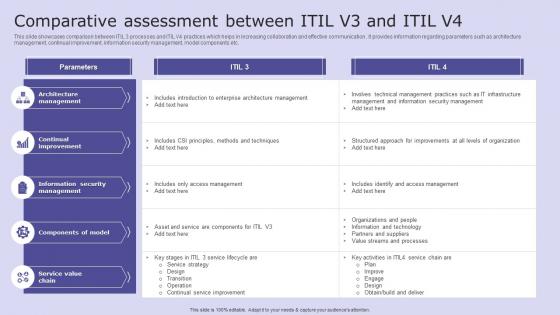
This slide showcases comparison between ITIL 3 processes and ITIL V4 practices which helps in increasing collaboration and effective communication. It provides information regarding parameters such as architecture management, continual improvement, information security management, model components etc.
People who downloaded this PowerPoint presentation also viewed the following :
Comparative Assessment Between Itil V3 And Itil V4 with all 6 slides:
Use our Comparative Assessment Between Itil V3 And Itil V4 to effectively help you save your valuable time. They are readymade to fit into any presentation structure.





FAQs for Comparative Assessment Between Itil V3
So ITIL 4 basically threw out v3's rigid process stuff for something way more flexible. You get this Service Value System instead of those old lifecycle stages - honestly makes so much more sense now. It actually works with DevOps and Agile instead of fighting them, which is huge. There's 34 practices now vs the old 26 processes, but they're built to connect rather than work in silos. If you're stuck on v3 still, I'd map your current processes to the new practices first. Shows you exactly where the gaps are and what needs fixing.
Oh yeah, ITIL 4 is way better for this stuff. They basically rebuilt it from scratch to work with Agile and DevOps - none of that old bureaucratic mess. You can run your sprints and CI/CD while still having decent service management structure. The new version actually gets iterative improvement and cross-team collaboration, which is wild considering how painful v3 was. Think of it more like bumpers at a bowling alley than strict rules. Pick the practices that make sense for your team and ditch the rest. Trust me, it's actually usable now.
So ITIL has five main parts: guiding principles, governance, service value chain, practices, and continual improvement. The principles help you make decisions, governance sets direction, and practices are basically your toolkit. Then there's the value chain - that shows how work actually moves through your org. Honestly, that's where I'd start if I were you since you'll see results faster. Continual improvement just... well, it keeps everything from going stale over time. Nothing stays working perfectly forever, right? Focus on the value chain first though - it'll make the biggest difference for your team's service delivery.
So I'd start with the basics - incident resolution times and how often you fix things on the first try. Service uptime matters obviously. Customer satisfaction scores are clutch though, probably more than most people realize. If users aren't happy, your processes are basically useless. Cost stuff like price per ticket helps too, even if it's not the most exciting thing to track. Oh and see how well teams actually follow your ITIL processes - compliance rates can be pretty telling. Honestly just pick 3 or 4 that match your biggest headaches and track them consistently.
CSI is ITIL's way of making sure you don't get complacent - it runs constantly in the background while you're doing everything else. You're always measuring how things went and figuring out what sucked. The idea is creating this feedback loop where you ask "how'd we do?" after every service interaction. Honestly, it's pretty smart because most teams just move on to the next fire without learning anything. Short sentences, longer explanations - whatever works. Just pick one service that's driving everyone crazy right now and start tracking its performance. That's literally your starting point for the whole CSI thing.
ITIL v4 is way better for digital stuff because it dropped the rigid step-by-step nonsense. Now it's all about value streams and actually getting things done fast. Teams can finally work together instead of staying in their little silos - which, let's be honest, was long overdue. Map out your current processes first to spot the bottlenecks. Then you can bring in DevOps and cloud automation without breaking everything. The whole framework just feels more realistic now. It keeps service quality solid while being way more flexible and collaborative than the old version.
ITIL's actually pretty solid for getting your IT services running smoother. Incident response gets way faster, and you'll do way less scrambling around putting out fires all day. The standardized stuff helps teams talk to each other better - and honestly, that's half the battle right there. Your service desk stops being so reactive and starts getting ahead of problems. Plus you get real metrics to show the business what you're actually doing for them. Biggest thing though? It connects what IT does to what the company actually needs instead of just random tech maintenance. Start small with incident management first.
Yeah totally doable! Don't go crazy trying to implement everything though - that's where most small companies mess up. I'd start with incident management and change management since those usually solve the biggest headaches. Service desk stuff too if you're dealing with lots of user issues. The thing is, you don't need all the heavy documentation and approval chains that big corporations use. Combine some roles, simplify the paperwork, whatever works for your size. Just keep the main ideas intact. Pick like 2 or 3 things, nail those down first, then add more later when you've got bandwidth.
So ITIL 4's four dimensions model is basically like having guardrails when you're working on services. You've got organizations & people, information & technology, partners & suppliers, plus value streams & processes. Honestly, it's saved me from making dumb oversights - like that time I rolled out a new system but totally forgot about user training (oops). Each dimension makes you pause and think. Going tech-heavy? Cool, but what about your vendor contracts? Focusing on processes? Don't forget the people actually doing the work. Just run through all four whenever you're planning changes.
ITIL works great with other frameworks - it's like the practical "how-to" manual while COBIT covers governance stuff and ISO 20000 handles certifications. They actually complement each other instead of competing. COBIT gives you strategic oversight. ITIL breaks down the actual service management processes. ISO 20000 becomes your proof that you're doing things right. Most companies I've seen end up mixing all three, honestly - which makes sense when you think about it. Just don't try implementing everything simultaneously. Map out where each one actually helps your situation first.
Honestly? Most companies bite off way more than they can chew right out the gate. They want to overhaul everything instead of picking one messy process that's actually driving people crazy. Then you've got teams who get so wrapped up in creating the "perfect" workflow that they totally lose sight of what the business needs - which is backwards if you ask me. People hate change when nobody explains why they're doing it differently. Oh, and the culture piece is massive but gets overlooked. Focus on tools over people and you're screwed. Pick two things max, get some wins, then build from there.
So ITIL basically maps out five stages that connect together. You start with Service Strategy - figuring out what services you actually need. Then Service Design, where you plan how to build them. Service Transition gets everything live without breaking stuff (easier said than done). Service Operation is the day-to-day keeping things running smoothly. Finally there's Continual Service Improvement for making things better over time. It's pretty logical when you see it laid out. Each stage has specific processes so you're not just making it up as you go. The whole thing's a cycle - you keep improving based on what you learn.
For ITSM platforms, ServiceNow's honestly the best but probably way too expensive unless you're huge. Remedy and Jira Service Management are solid alternatives that won't break the bank. Dynatrace or New Relic work great for monitoring - they actually integrate well with ITIL stuff instead of being a pain. Oh, and Ansible's clutch for automating change management processes. Here's the thing though - map out what you're actually doing first before buying anything. Otherwise you'll end up forcing your team to work around crappy software instead of the tools working for you. Pick stuff that plays nice together or you're just creating more headaches.
Honestly, ITIL's pretty great for this - just flip your focus from internal stuff to what customers actually want. Map their journeys during service design and you'll spot problems before they blow up. When incidents happen, don't just fix things quietly. Talk to people! Keep them updated. The feedback loops are where the magic happens though - actually listen to what they're telling you and tweak your services based on that. Oh, and start with proper service level management so you can track metrics that users care about, not just random IT stuff. Makes a huge difference.
So ITIL basically forces IT and business teams to actually talk to each other instead of working in their own little bubbles. Service design is where you really see this - business people sit down with IT folks to hammer out what they actually need and how to measure success. Everyone starts using the same vocabulary around delivering value, which honestly just makes life easier for everyone. Cross-functional teams become the norm. You'll set up joint governance stuff and regular service reviews where both sides finally get what the other is dealing with. My advice? Pick one service and get both teams doing monthly check-ins together.
-
The slides come with appealing color schemes and relevant content that helped me deliver a stunning presentation without any hassle!
-
Best way of representation of the topic.