

Compensation Package Powerpoint Presentation Slides




Try Before you Buy Download Free Sample Product
 Impress Your
 Audience
 100%
100% Editable
 Save Hours
 of Time


While evaluating job offers, a job seeker considers the total compensation package and not just the salary. Showcase the benefits of joining your organization by using our remuneration package PowerPoint presentation slides. Presenting employees with their allowance offer can be a proactive way to aid retention, helping employees to understand the full value of their package. This employee benefits PowerPoint theme is content ready complete deck which consists of 39 slides. The professionally designed salary package PPT includes various templates like basic employee compensation layout, employee companion components, employee compensation breakup, employee compensation system, employee compensation plan types, employee compensation structure, employee compensation sheet, list of employee benefits, etc. This employee benefits PPT can be used for other related topics like employee compensation report, employee benefits criteria, employee benefits concept, etc. Download our salary & fringe benefits PowerPoint theme and showcases the benefits in a more professional way. Our Compensation Package Powerpoint Presentation Slides are applicable in any forum. They can be employed anywhere.
People who downloaded this PowerPoint presentation also viewed the following :
Content of this Powerpoint Presentation
Slide 1: This slide introduces Compensation Package. State Your Company Name and begin.
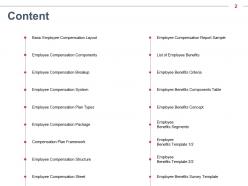
Slide 2: This slide shows Content of the presentation.
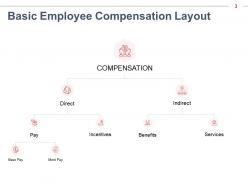
Slide 3: This slide shows Basic Employee Compensation Layout.
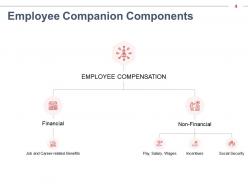
Slide 4: This slide presents Employee Compensation Components describing- Pay, Salary, Wages, Incentives, Social Security, Job and Career-related Benefits.
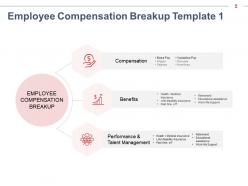
Slide 5: This slide displays Employee Compensation Breakup describing- Benefits, Compensation, Performance & Talent Management.
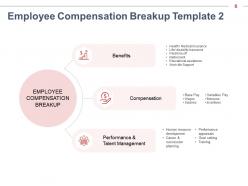
Slide 6: This is another template on Employee Compensation Breakup.
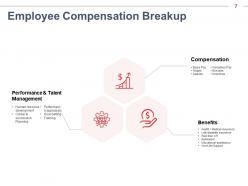
Slide 7: This is another template on Employee Compensation Breakup.
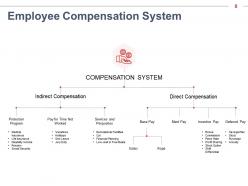
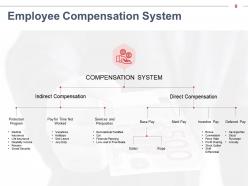
Slide 8: This slide represents Employee Compensation System describing- Protection Program, Pay for Time Not Worked, Services and Perquisites, Base Pay, Merit Pay, Incentive Pay, Deferred Pay.
Slide 9: This is an optional slide on Employee Compensation System.
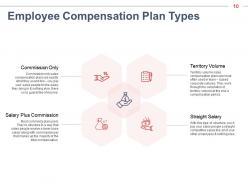
Slide 10: This slide showcases Employee Compensation Plan Types as Territory Volume, Straight Salary, Salary Plus Commission, Commission Only.
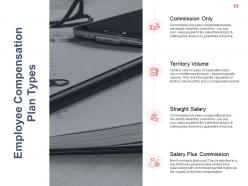
Slide 11: This is an optional slide on Employee Compensation Plan Types.
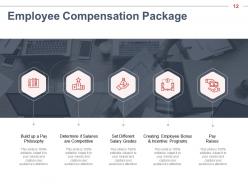
Slide 12: This slide shows Employee Compensation Package describing- Build up a Pay Philosophy, Set Different Salary Grades, Determine if Salaries are Competitive, Pay Raises, Creating Employee Bonus & Incentive Programs.
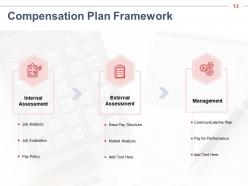
Slide 13: This slide presents Compensation Plan Framework with Internal Assessment, External Assessment, Management.
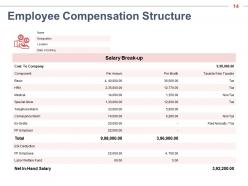
Slide 14: This slide displays Employee Compensation Structure describing salary break-up.
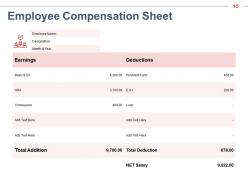
Slide 15: This slide represents Employee Compensation Sheet showing earnings, deductions and net salary.
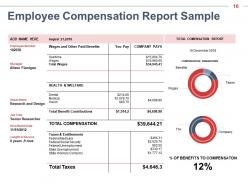
Slide 16: This slide showcases Employee Compensation Report Sample.
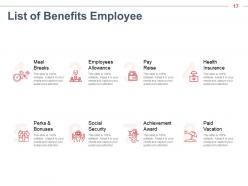
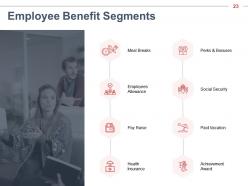
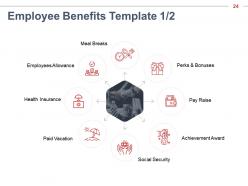
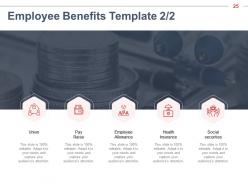
Slide 17: This slide shows List of Employee Benefits describing- Meal Breaks, Social Security, Perks & Bonuses, Pay Raise, Employees Allowance, Health Insurance, Paid Vacation, Achievement Award.
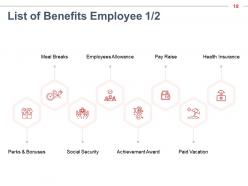
Slide 18: This is an optional slide on List of employee benefits.
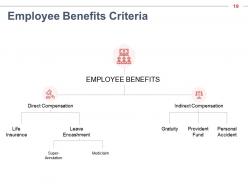
Slide 19: This slide presents Employee Benefits Criteria in hierarchy form.
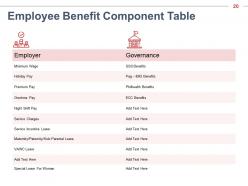
Slide 20: This slide displays Employee Benefits Component Table describing benefits provided by employer and government.
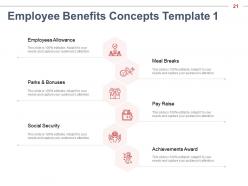
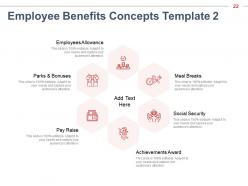
Slide 21: This slide represents Employee Benefits Concept with- Meal Breaks, Social Security, Perks & Bonuses, Pay Raise, Employees Allowance, Achievement Award.
Compensation Package Powerpoint Presentation Slides with all 39 slides:
Use our Compensation Package Powerpoint Presentation Slides to effectively help you save your valuable time. They are readymade to fit into any presentation structure.



FAQs for Compensation Package
Okay so there's basically four things to think about. Obviously base salary, but benefits are huge too - health insurance, 401k matching, PTO days. That stuff adds up way more than people realize. Performance bonuses and stock options are worth considering if they fit your role. Then there's the random perks like flexible schedules, learning budgets, gym memberships - honestly some candidates care more about those than extra cash. I'd start by checking what competitors pay, then figure out what weird little extras match your vibe and budget.
Yeah, so tech companies go crazy with equity and perks to snag talent. Finance is all about those fat cash bonuses based on performance. Healthcare? They're more about solid benefits and job security - less flashy stuff. Manufacturing and retail keep it pretty basic with standard salary plus benefits. It's kinda nuts how different companies can be even when they're similar sizes. I'd honestly just research whoever you're targeting specifically before you negotiate anything. Way better than guessing what they'll offer.
Yeah, location makes a huge difference in pay. SF and NYC salaries look impressive until you realize rent costs your firstborn child. Companies basically have different pay scales for different cities - Austin might be 20-30% less than Seattle for the exact same job. Remote work's made this messier since some places pay based on where you live vs where they're located. I'd definitely check Glassdoor or Levels.fyi first to see what's normal in your area before you negotiate. Market rates vary like crazy depending on where you are.
Dude, you've gotta show them the whole package, not just base salary. Most people tunnel vision on that number and miss thousands in other benefits. Make a simple one-page sheet with everything - health coverage, 401k matching, PTO days, training budgets, remote work options, whatever you offer. Use actual dollar amounts like "$8,000 toward health premiums annually" instead of weird percentages that nobody can decipher. Keep it visual so they can actually compare it to other offers properly. Honestly, candidates who don't look at total comp are doing themselves dirty.
Honestly? Skip obsessing over just salary bumps. Remote work and flexible schedules are huge right now - people will take less money for that freedom. Better health coverage and retirement matching obviously help too. But here's what's interesting: professional development budgets can be just as attractive as cash to the right person. Learning stipends, conference funds, that stuff really works. Oh, and don't sleep on recognition programs or showing clear promotion paths. Survey your current team first though. You'll probably be shocked at what they actually care about versus what you think they want.
Honestly, non-monetary perks work way better than most managers think. Flexible schedules, decent healthcare, training opportunities - that stuff makes people feel like you actually give a damn about them. Short-sighted companies obsess over salary when employees will stick around for good benefits and respect. Coffee bars are nice too I guess, though that feels a bit much sometimes. The trick is just asking what your team wants instead of guessing. Maybe it's remote days, maybe it's conference budgets. People won't bail for slightly better pay if they're happy where they are.
Dude, inflation is totally screwing with comp planning right now. What seems fair today will feel like garbage in six months. You've got to build in real cost-of-living bumps, not those pathetic 2-3% raises that don't cover anything. Everyone's basically making it up as they go since the old playbooks are useless. I'd focus on flexibility over rigid structures - that way you can actually adjust when prices go crazy. The whole salary vs equity balance is tricky too. Honestly, most companies I know are just trying not to hemorrhage talent while figuring it out.
Honestly, bonuses and commissions work great if you tie them to stuff that actually moves the needle - like revenue targets or customer scores. Stock options are huge right now, especially if you're at a startup. Just don't make the mistake of setting impossible goals or people will hate it. I'd say start with maybe 10-20% variable comp? You can always tweak it later. The trick is being super clear upfront about what they need to hit. Profit-sharing's another option too. Really depends on what makes sense for each role, but measurable goals are your friend here.
Dude, start with the basics - minimum wage, overtime rules, and getting your exempt vs non-exempt classifications right. Equal pay laws are no joke, so you'll want to regularly check for any gender or racial pay gaps. Benefits compliance is another headache with ERISA and ACA stuff, plus whatever your state throws at you. Employment law moves ridiculously fast these days! My advice? Get a lawyer to review everything annually and document why you made specific pay decisions. Oh, and don't skip the state-specific requirements - they love to surprise you. Trust me, legal fees beat lawsuit settlements every time.
Honestly, your employee mix totally dictates what comp packages work. Gen Z and millennials want flexible PTO and help with student loans way more than fancy health plans. Parents? They're all about that family coverage and parental leave - which, fair enough. Workers close to retirement are laser-focused on 401k matching since they're actually gonna use it soon. Oh, and location is huge too because living in NYC versus like, Kansas, is completely different money-wise. Don't just guess what people want though - actually survey them first. Then build something flexible so everyone can pick what they actually need.
Don't just focus on base salary - you need the whole picture. Benefits, equity, bonuses, PTO, all that stuff adds up fast. Compare against similar companies though, not like Google if you're at a 50-person startup lol. Location obviously makes a huge difference too. I'd hit up Glassdoor, PayScale, maybe some industry surveys if you can find them. Professional consulting firms are solid but probably overkill unless your company's willing to pay for it. Remote work perks and learning budgets can honestly be worth thousands. Pick your top 5-10 competitors and start building from there.
Dude, transparency makes such a huge difference here. I've seen companies totally bomb this - they keep everything secret and then wonder why people are constantly asking for raises or jumping ship. Be upfront about how comp works, what someone needs to do to move up, where they stand in the pay range. People can actually plan ahead that way instead of just guessing. Trust me, it cuts down on those super awkward money conversations too. Just write down your compensation approach clearly and make sure your managers aren't clueless when explaining it. Game changer honestly.
Honestly, you can't figure out if your pay is competitive without asking people what they actually want. Set up regular surveys and exit interviews - but make them feel safe to be brutally honest. What mattered to employees five years ago? Probably irrelevant now. Remote work changed everything, and people's priorities keep shifting. Create multiple ways for them to give feedback about pay equity and benefits. I'd do quarterly check-ins, though that might be overkill for smaller teams. The real trick is acting on what you hear, not just collecting data that sits in a spreadsheet somewhere.
Dude, automation is seriously where it's at for comp and payroll stuff. Most platforms now handle salary calculations, bonus tracking, equity grants - basically everything that used to make us want to cry into spreadsheets. The compliance reporting alone saves me like 10 hours a week, no joke. Plus employees love seeing their total rewards in those real-time dashboards instead of bugging HR constantly. My advice? Map out whatever processes are eating your time right now - probably payroll data entry or benefits enrollment. Those are gonna be your easiest wins. Modern HRIS tools integrate pretty seamlessly, so everything flows without you having to babysit it.
Honestly, gig work is getting way better with benefits now. Platforms are rolling out health insurance help, retirement accounts, even PTO - which is wild for gig work, right? They're also doing earnings guarantees and performance bonuses to stop people from constantly switching apps. The whole thing is moving away from just "do a task, get paid" toward actually giving workers some financial security. My advice? Skip the basic platforms and go for ones offering these hybrid packages instead of pure transactional stuff. Makes a huge difference long-term.
-
Informative presentations that are easily editable.
-
Great designs, really helpful.
-
The content is very helpful from business point of view.
-
Excellent products for quick understanding.