


Employee Salary Break Up Powerpoint Presentation Slides





Try Before you Buy Download Free Sample Product
 Impress Your
 Audience
 100%
100% Editable
 Save Hours
 of Time


Get access to this tailor-made easy to understand Employee Salary Break Up PowerPoint Presentation Slides to manage employee salary. Salary Structure PowerPoint complete deck comprises of content ready templates like basic employee compensation layout, employee compensation components, break-up, system, plan types, employee compensation package, compensation plan framework, salary structure, employee compensation sheet, list of employee’s benefits, employee benefits criteria, concept of employee benefits, etc. Set different salary grade and create incentive programs using this professionally designed employee salary management PPT visuals. Additionally, the ready to use payroll management PPT slides are completely customizable. You can add or delete the content if needed. This presentation is apt for HR managers to present employee benefits. Download CTC break-up presentation template to showcase employee benefits like social security, pay raise, health insurance, etc. Employee compensation and benefits presentation slides help you to communicate your ideas in an impressive manner.
People who downloaded this PowerPoint presentation also viewed the following :
Content of this Powerpoint Presentation
Slide 1: This slide introduces Employee Salary Break-Up. State Your Company Name and begin.
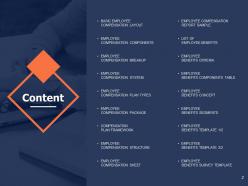
Slide 2: This slide shows Content of the presentation.
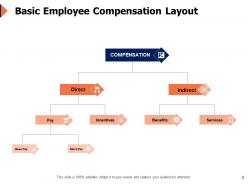
Slide 3: This slide shows Basic Employee Compensation Layout.
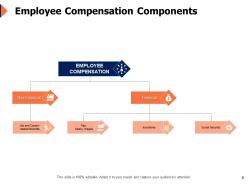
Slide 4: This slide presents Employee Compensation Components describing- Pay, Salary, Wages, Incentives, Social Security, Job and Career-related Benefits.
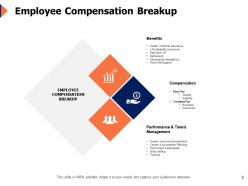
Slide 5: This slide displays Employee Compensation Breakup describing- Benefits, Compensation, Performance & Talent Management.
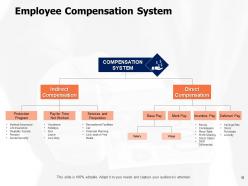
Slide 6: This slide represents Employee Compensation System describing- Protection Program, Pay for Time Not Worked, Services and Perquisites, Base Pay, Merit Pay, Incentive Pay, Deferred Pay.
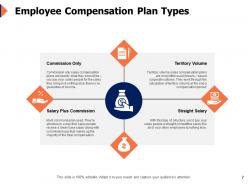
Slide 7: This slide showcases Employee Compensation Plan Types as Territory Volume, Straight Salary, Salary Plus Commission, Commission Only.
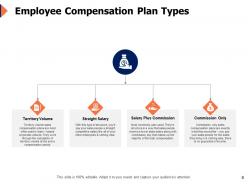
Slide 8: This is another slide with Employee Compensation Plan Types.
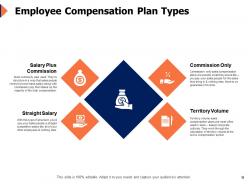
Slide 9: This is another slide with Employee Compensation Plan Types.
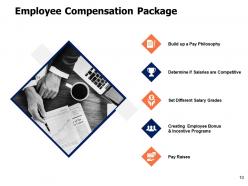
Slide 10: This slide shows Employee Compensation Package describing- Build up a Pay Philosophy, Set Different Salary Grades, Determine if Salaries are Competitive, Pay Raises, Creating Employee Bonus & Incentive Programs.
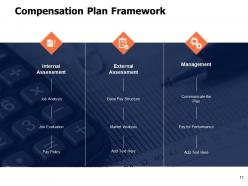
Slide 11: This slide presents Compensation Plan Framework with Internal Assessment, External Assessment, Management.
Slide 12: This slide displays Employee Compensation Structure describing salary break-up.
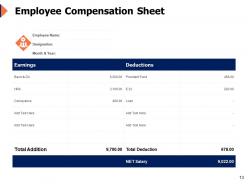
Slide 13: This slide represents Employee Compensation Sheet showing earnings, deductions and net salary.
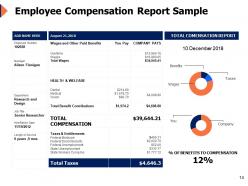
Slide 14: This slide showcases Employee Compensation Report Sample.
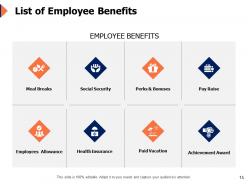
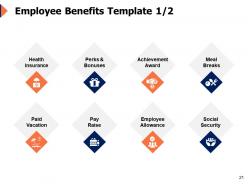
Slide 15: This slide shows List of Employee Benefits describing- Meal Breaks, Social Security, Perks & Bonuses, Pay Raise, Employees Allowance, Health Insurance, Paid Vacation, Achievement Award.
Slide 16: This slide presents Employee Benefits Criteria in hierarchy form.
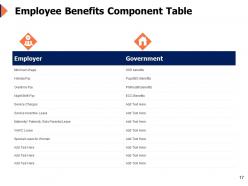
Slide 17: This slide displays Employee Benefits Component Table describing benefits provided by employer and government.
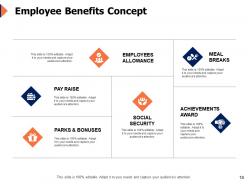
Slide 18: This slide represents Employee Benefits Concept with- MEAL BREAKS, SOCIAL SECURITY, PARKS & BONUSES, PAY RAISE, EMPLOYEES ALLOWANCE, ACHIEVEMENTS AWARD.
Slide 19: This is another slide with Employee Benefits Concept.
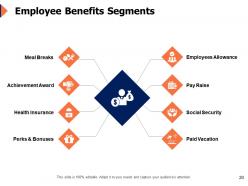
Slide 20: This slide showcases Employee Benefits Segments describing- Social Security, Pay Raise, Employees Allowance, Paid Vacation, Meal Breaks, Perks & Bonuses, Health Insurance, Achievement Award.
Slide 21: This slide shows Employee Benefits Template. You can add or edit data as per requirements.
Slide 22: This is another slide presenting Employee Benefits Template.
Slide 23: This is another slide with Employee Benefits Template.
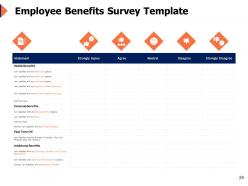
Slide 24: This slide represents Employee Benefits Survey Template with scale range from strongly agree to strongly disagree.
Slide 25: This slide displays Employee Salary Break-Up Icons.
Slide 26: This slide is titled as Additional Slides for moving forward.
Slide 27: This is Our Mission slide with related imagery and text.
Slide 28: This is About Us slide to show company specifications etc.
Slide 29: This is a Financial slide. Show your finance related stuff here.
Slide 30: This is Blub or Idea slide to state a new idea or highlight information, specifications etc.
Slide 31: This is Our Target slide. State your targets here.
Slide 32: This is another slide displaying Our Target.
Slide 33: This is a Puzzle slide with additional text boxes.
Slide 34: This is Our Team slide with names and designation.
Slide 35: This is another slide for Our Team.
Slide 36: This is a Location slide with maps to show data related with different locations.
Slide 37: This is a Quotes slide to convey message, beliefs etc.
Slide 38: This is a CONTACT US slide with address, contact number and email address.
Slide 39: This is a Thank You slide for acknowledgement.
Employee Salary Break Up Powerpoint Presentation Slides with all 39 slides:
Customers feel enchanted by our Employee Salary Break Up Powerpoint Presentation Slides. Gazes get fixed by their brilliance.


















FAQs for Employee Salary Break Up
So you've got your base salary obviously, then any bonuses or commission stuff on top. Benefits are huge too - health insurance, 401k matching, all that. Stock options if you're lucky enough to work somewhere that does equity. Then they take out taxes, social security, sometimes random stuff like parking fees (ugh). Honestly the whole breakdown can be kinda overwhelming when you first see it all itemized. Check your HR portal thing - it'll show you where every dollar goes. I'd peek at it maybe once a year just to make sure they're not screwing anything up and you're actually using all your benefits.
So base salary is just your guaranteed yearly pay - what you get no matter what happens. Total comp though? That's everything bundled together: bonuses, stock options, healthcare, 401k matching, all of it. Honestly, I learned this the hard way when I almost took a "higher paying" job that actually paid way less once you factored in benefits. Always ask for the full breakdown when you're job hunting. Sometimes companies lowball the base but make up for it with solid perks. Don't just look at that one number - you'll miss the bigger picture.
So bonuses and commissions are basically extra money on top of your regular salary - they change based on how you or the company does. Your base pay is what you're guaranteed no matter what. Commissions usually tie directly to sales numbers, while bonuses can be more random or depend on company profits. Makes budgeting kind of a pain since you never know exactly what you'll get! When you're looking at job offers, definitely ask about how often people actually hit those targets - some companies are way more generous than others. Total comp matters more than just base salary.
So here's the thing - benefits don't actually show up on your paycheck, but they're still part of what you're getting paid. Health insurance, 401k matching, all that stuff adds real value even though you don't see the cash directly. When you're comparing job offers, definitely ask HR to break down the total compensation because benefits can bump up your effective pay by like 20-30%. I've seen people take lower salaries thinking they're getting screwed, but then their benefits package was way better. Sometimes a $50k job with amazing benefits beats a $60k job with garbage coverage. Just something to think about!
Look, being open about salary stuff is honestly a game-changer for team morale. People stop whispering about who makes what and actually trust you more. When everyone knows how pay decisions work, those weird bathroom conversations about fairness basically disappear. Your team will perform better too since they get what it takes to move up. I learned this the hard way at my last job - secrecy just breeds resentment. Even sharing your basic criteria makes a huge difference. Trust me, start small but start somewhere.
Yeah, location totally changes how much companies pay you. SF and NYC salaries look huge on paper, but rent basically eats half your paycheck. Meanwhile someone in Austin might make 30k less but actually live better? It's kinda crazy. Most companies use cost-of-living data to figure out regional pay scales. Some throw in location bonuses or tweak benefits too. Don't just look at the raw salary number though - compare it to what housing actually costs there, plus state taxes. I learned this the hard way when I almost took a "high-paying" job in Manhattan.
Dude, your performance eval basically controls your whole paycheck situation. Score well and you're looking at 3-8% salary bumps plus bonuses that actually matter. Bomb it? You're stuck at the same pay, maybe even dropped to a crappier bonus tier. Companies love tying different parts of your compensation to how you performed - sometimes your base goes up but bonus stays flat, or the other way around. Honestly, I've seen people leave thousands on the table just because they didn't take their eval seriously. It's annoying but true - that review literally decides if you'll afford that vacation next year.
Honestly, most people have zero idea what their actual total comp looks like - they just see that take-home number and call it a day. Make your pay stubs way clearer with detailed breakdowns of salary, benefits, taxes, all that stuff. Pie charts or simple infographics work great for showing the full picture. I'd do regular walkthrough sessions where you can answer questions in person too. Don't wait for people to come asking - be upfront about it from the start. Oh, and definitely give them those annual compensation statements. Shows them exactly what they're worth including all the benefits value they probably forgot about.
Honestly, I'd do this quarterly - way better than scrambling during annual review madness. First thing is checking market rates for similar roles, then see if anyone on your team is getting screwed compared to their peers. Promotions are the worst for this btw, people take on way more work but their pay doesn't catch up. Write everything down because you'll 100% forget why you made certain decisions. Don't just look at base salary either - the whole package matters. Set those calendar reminders now or you'll never actually do it.
Dude, knowing your full salary breakdown is a game changer for negotiations. You'll see exactly what you're actually taking home vs. what they're spending on you. Base pay, benefits, 401k match, bonuses - it all counts. Maybe they can't bump your salary but could totally increase your health benefits or retirement match instead. Those "extras" add up way more than you'd think! Plus you can compare your entire package to market rates, not just the base number. I learned this the hard way last year. Go in with real data instead of just winging it.
Yeah totally - pay varies a ton even at the same company. Sales people usually get lower base but way higher commission upside, which honestly seems stressful to me. Engineers often score more stock options though. HR and admin roles? Pretty steady packages, nothing crazy but reliable. Different job levels create tiers too obviously. I'd just ask your manager straight up about how comp works for your specific role - they'll know way more than guessing from what other departments get.
Start with transparency and make sure you're hitting all the legal boxes first. Labor laws are different everywhere, but most places want clear docs showing base salary, overtime rates, and all the mandatory stuff like taxes and social security. Fair pay rules keep getting tighter too - honestly feels like there's new regulations every month. Your breakdown needs to cover required benefits and meet minimum wage standards. Also gotta follow any equal pay rules in your area. Oh, and definitely get legal or HR to look it over before you launch anything. Trust me, you don't want compliance issues later.
Check out Glassdoor and PayScale for salary research - they're pretty solid. Don't just look at base pay though, you need the whole picture: bonuses, stock options, benefits, vacation days. Tech companies throw stock at you while finance is all about those fat bonuses. Here's the thing - compare actual job responsibilities, not just titles. A "manager" at some tiny startup isn't the same as one at Google, obviously. I'd pull from like 3-4 different sources to get a real sense of the range. Oh, and make sure you're comparing companies of similar size in your industry.
Honestly, just start with whatever you've already got access to. Excel or Google Sheets work fine for basic stuff - pivot tables are clutch. If your bosses want something fancier, Tableau and Power BI make those interactive dashboards that actually look professional. Your HRIS system probably has reporting built in too, though in my experience they're usually pretty clunky to navigate. For massive datasets, Python or R give you way more control but there's obviously a learning curve there. I'd probably just see what specific questions leadership keeps asking, then pick your tool based on that.
Honestly, showing people their full salary breakdown is huge for keeping them around. Like, when someone can actually see their base pay plus benefits and bonuses all laid out, they're way less tempted by random recruiters hitting them up. I've watched so many good people bail because they had no clue their total package was actually solid! During performance reviews, just show them the whole picture. It kills those weird money conversations too. People feel more trusted when you're upfront about compensation - and trust me, that beats having them secretly scrolling LinkedIn at lunch.
No Reviews