


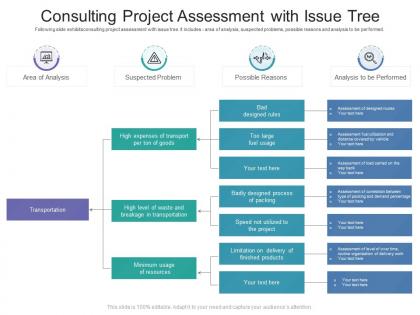
Consulting project assessment with issue tree




Try Before you Buy Download Free Sample Product
 Impress Your
 Audience
 100%
100% Editable
 Save Hours
 of Time


Following slide exhibitsconsulting project assessment with issue tree. It includes area of analysis, suspected problems, possible reasons and analysis to be performed.
People who downloaded this PowerPoint presentation also viewed the following :
Consulting project assessment with issue tree with all 2 slides:
Use our Consulting Project Assessment With Issue Tree to effectively help you save your valuable time. They are readymade to fit into any presentation structure.
FAQs for Consulting project assessment
Honestly, I look at three things: did you actually fix what they hired you for, stay on time/budget, and can they keep things running without you? That first one's critical - I've watched so many "successful" projects completely whiff on the real problem. Client satisfaction matters too, obviously. But here's what gets overlooked: knowledge transfer. If they're calling you six months later because nobody knows how to use what you built, that's on you. Pro tip though - hash out these success metrics right at the start. Saves everyone headaches later when you're trying to figure out if you actually won.
Honestly, you've gotta bake feedback into your milestones from the start. I'd do weekly or bi-weekly check-ins depending on how long the project is. Skip the generic "how's it going?" questions though - they're useless. Ask specific stuff about communication, timelines, whether deliverables actually hit the mark. Use structured forms so you're not flying blind. Track everything in whatever system you're using and pivot when needed. The whole point is making it ongoing, not waiting till the end when everything's already screwed up and you can't fix it.
Honestly, focus on three big ones: client satisfaction, staying on budget, and hitting your deadlines. Those will tell you everything about whether you actually nailed it. I throw in deliverable quality ratings too, though that gets a bit fuzzy sometimes. For the outcome stuff, just measure against whatever goals you originally set - ROI bumps, efficiency improvements, whatever. Don't waste time on metrics that look impressive but mean nothing. Keep it to 3-5 max, and make sure your client actually cares about them upfront. Nothing worse than tracking something they don't value.
Look, stakeholder buy-in is everything here. Get them involved from day one because they know the business better than you ever will - the politics, the constraints, what'll actually work. I learned this the hard way on a project once. Don't just grab their input at the start and disappear for weeks. Keep checking back with them as you dig into things. Set up regular touchpoints so you're validating findings along the way. Trust me, you don't want to walk into that final presentation with recommendations they hate because you missed something obvious.
ROI is pretty straightforward - just divide your project's net benefits by total costs, then times 100 for the percentage. Honestly though, the math is the easy part. What gets messy is figuring out what counts as "benefits" in the first place. Could be cost savings, new revenue, efficiency stuff - really depends on your project. Oh and don't forget indirect costs! Everyone remembers consultant fees but forgets about opportunity costs. My advice? Hash out your success metrics before you even start. Trust me, it's so much harder to agree on what worked after everything's done. Then just track those numbers like your life depends on it.
Honestly, most people mess up by being way too vague about what success actually looks like. You'll also want to get everyone on board early - can't tell you how many times someone comes out of nowhere halfway through like "why wasn't I included in this??" Super annoying. Timeline estimates are usually trash too, mine included. Define your outcomes clearly upfront and map out who needs to be involved. Yeah, stakeholder mapping sounds boring but it'll save you headaches later. A decent project charter helps - scope, timeline, who's doing what. The setup phase feels tedious but it's worth it.
Start with the numbers - that's your bulletproof foundation. Honestly, stakeholders can't really push back on solid quantitative data. I usually do like 60% quant, 40% qual, but it totally depends on your audience. Use the hard data to show trends, then dig into interviews or observations to figure out why stuff is happening. Like if your numbers show customer satisfaction dropping, the qualitative research tells you it's because wait times suck. The data hooks them, but those human insights are what'll actually drive your recommendations. Numbers first, context second.
So for project assessments, I'd start with something basic like the Project Management Triangle - you know, scope, time, cost. SWOT analysis works too. Stakeholder mapping and risk registers are honestly my go-to tools because they catch stuff you'd totally miss otherwise. Logic models are solid for measuring actual outcomes and impact. Sometimes though? Just do a simple pros/cons list - works better than you'd think. For gathering info, mix surveys with interviews and document reviews to get the whole story. Oh and don't go crazy - stick to 2-3 tools max or everyone gets overwhelmed.
Honestly? Every 2-4 weeks at major milestones works best for most projects. I always do quick weekly check-ins though - waiting a whole month to find out you're screwed is just brutal. Hit the big ones: after discovery, midpoint, and before final delivery. But here's the thing - if something feels off or stakeholders are getting weird, just add another assessment. Don't overthink it. Your project's complexity should dictate frequency more than some rigid schedule anyway. Set up the cadence early and tell your team when to expect these checkpoints so nobody's caught off guard.
Set your evaluation criteria from day one and don't budge on them later. Get multiple people to review - preferably someone who wasn't knee-deep in planning. Document with actual data, not just "this felt good" vibes. I've watched too many of these turn into who's-the-favorite contests, which is useless for everyone. Build scoring rubrics that you'll actually follow through on. Oh, and separate project results from how the team performed - totally different animals. Think of it like presenting to a client who's gonna poke holes in everything you say.
Yeah, totally keep notes after each project - what worked, what was a disaster. I made the same dumb stakeholder mistake like three times before finally writing it down lol. Check for patterns in client feedback and team stuff. Honestly, scope creep is always lurking so track what triggers it. Same with data collection headaches - they pop up everywhere. Make a simple template now and just update it after assessments. Share these war stories during kickoffs so your team doesn't repeat your failures. Trust me, you'll be so glad you did this when you're six months in and can't remember why that one project went sideways.
Industry standards are basically your measuring stick for consulting projects. They give you benchmarks for quality and performance that clients already expect you to know. ISO frameworks, regulatory stuff, sector-specific metrics - there's honestly a ton to juggle. But you can't skip them because clients will compare your work to these standards anyway. Your credibility tanks if you don't show you understand the relevant norms. Oh, and pro tip - figure out which standards actually apply to your project first. Don't waste time learning every single one that exists.
Lead with an executive summary - that's honestly the only part most people will actually read. Back up your findings with solid data, then tie each one to something they can actually do about it. I always throw together a quick impact vs effort matrix to help prioritize stuff (saves so much arguing later). Visuals are your friend here - charts, diagrams, whatever keeps people from glazing over at walls of text. Skip the corporate speak and be direct. Oh, and this is crucial - assign owners and deadlines for next steps. You'd be amazed how many brilliant recommendations just die because nobody knows who's supposed to act on them.
Honestly, you've gotta make different versions for different people. Executives just want the highlights - ROI numbers and key metrics on a dashboard. Don't dump a 50-page report on them because they won't read it anyway (learned that the hard way). Your project teams need the opposite though - all the detailed findings and actual action plans with timelines. I usually do brief presentations for leadership focused on business impact. Then schedule follow-ups within a couple weeks to answer questions. Otherwise everything just dies in someone's inbox and nothing happens.
Start with daily standups - they're clutch for catching issues early. Get everyone working in shared spaces like Miro or Google docs where they can actually collaborate in real time. Here's what really works: rotate who leads different parts of the assessment. Keeps people engaged and prevents that one person from becoming the holdup (you know there's always one). Regular check-ins are huge too. Honestly, the biggest thing is making sure people feel safe speaking up when something's off or they disagree with findings. Oh, and kick off your next project with a team charter so everyone's on the same page about how you'll work together.
-
Commendable slides with attractive designs. Extremely pleased with the fact that they are easy to modify. Great work!