


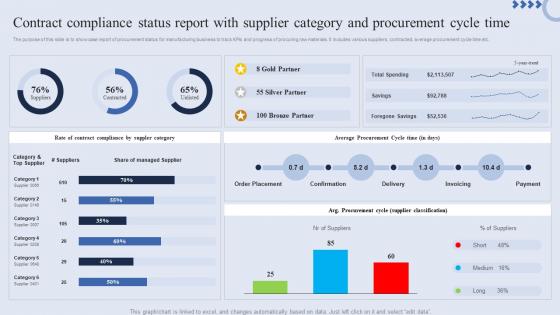
Contract Compliance Status Report With Supplier Category And Procurement Cycle Time




Try Before you Buy Download Free Sample Product
 Impress Your
 Audience
 100%
100% Editable
 Save Hours
 of Time


The purpose of this slide is to showcase report of procurement status for manufacturing business to track KPIs and progress of procuring raw materials. It includes various suppliers, contracted, average procurement cycle time etc.
People who downloaded this PowerPoint presentation also viewed the following :
Contract Compliance Status Report With Supplier Category And Procurement Cycle Time with all 10 slides:
Use our Contract Compliance Status Report With Supplier Category And Procurement Cycle Time to effectively help you save your valuable time. They are readymade to fit into any presentation structure.








FAQs for Contract Compliance Status Report With Supplier Category And
Here's what I'd do - start by mapping your current contracts and figure out which ones are your biggest headaches. Four things matter most: clear policies (so people know what compliance actually looks like), regular check-ins to spot problems before they blow up, solid training, and having a plan for when stuff inevitably goes wrong. Training is where most companies totally bomb though - you can't expect people to follow rules they don't get. Oh, and document everything. Seriously. Make sure someone owns each contract relationship too, otherwise things just fall through the cracks.
Honestly, most contract training is painfully boring and people just tune out. Break down all that legal jargon into simple summaries - like actual dos and don'ts people can remember. Interactive workshops beat regular presentations every time since folks can ask about real situations they're dealing with. You'll want simple reference guides too, maybe checklists they can actually grab when needed. Oh, and make it relevant to what each person does day-to-day - generic training is useless. Don't forget refreshers because people forget this stuff fast.
Dude, you gotta digitize those contracts first - spreadsheets are basically ancient at this point. Set up automated alerts for deadlines and renewals so stuff doesn't slip by. AI can actually scan through everything and spot compliance risks before they bite you. Some platforms track performance metrics against your terms in real-time, which is pretty sick honestly. My buddy's company saved like 20 hours a week once they switched from manual tracking. Look for compliance software that plays nice with whatever systems you're already using. Trust me, the flip phone comparison isn't even dramatic enough.
Honestly, audits are like that friend who calls you out when you're slacking - annoying but necessary. You'll catch compliance issues before they blow up into real problems. Most teams just sign contracts then completely forget what they agreed to (we've all been there). Quarterly reviews help you spot which requirements people keep missing and figure out if your contracts are even realistic to begin with. The trick is making it routine instead of waiting until something goes wrong. Nobody wants to scramble during crisis mode when you could've just checked your work regularly.
Poor communication kills deals - I've watched teams blow million-dollar contracts because nobody tracked key dates. Different departments read the same terms completely differently, which is insane but happens constantly. Documentation gets sloppy, then scope creep hits and suddenly you're delivering way more than what's in the contract. Oh, and when requirements change without proper amendments? Total compliance nightmare. Set up automated reminders for critical dates and make sure everyone's looking at the same contract version. Trust me on this one.
First thing - document everything right now. Screenshots, emails, whatever you've got. Try talking to them directly before you do anything dramatic. Could just be a miscommunication (though I kinda doubt it if you're asking me this). Check if your contract mentions mediation or arbitration - most do these days. Sometimes it's honestly not worth blowing up a good business relationship over minor stuff. But if they really screwed you over? Get a lawyer involved before you make any big moves. Oh, and save every single conversation you have about this mess.
Start with an audit of your current contracts - find where you're bleeding risk. Documentation needs to be bulletproof upfront because vague language will bite you later. I'd set up automated alerts for deadlines since manual tracking is basically asking for trouble. Regular check-ins with everyone involved are crucial, plus you need one central place where people can actually see what's happening. The real key though? Give someone specific ownership of each piece - can't have stuff floating around with nobody accountable. Oh, and strong communication channels between all parties. Sounds obvious but you'd be surprised how often that gets overlooked.
Honestly, it's all over the map depending on your industry. Healthcare has to deal with HIPAA and FDA stuff - super strict. Financial services? Don't even get me started on SEC rules and banking regs. Construction is probably the worst though - between safety standards and building codes, you're drowning in paperwork. Tech focuses more on data privacy and protecting IP. First thing you should do is figure out which regulatory bodies actually govern your sector. Then build your whole contract process around what they require. Makes way more sense than trying to guess what you need.
Oof, yeah breaching a contract usually means you're on the hook for damages. The other party can sue you for whatever money they lost because you didn't hold up your end. Courts sometimes force you to actually do what you promised too - that's called specific performance. How bad it gets really depends on how serious your breach was and what penalties your contract spells out. Oh, and prepare for some uncomfortable conversations with your boss when the lawyers start calling lol. Honestly though, just keep good records of everything you do to stay compliant. Makes life way easier if things go sideways.
Honestly, most compliance problems happen because people just don't get what their contracts actually say. Training that breaks down the real stuff they deal with works way better than boring generic sessions. I've seen teams drop their issues by 60% with quarterly workshops - pretty wild results. Focus on scenarios your people actually face, not textbook examples. Contract interpretation, spotting risks, knowing when to escalate. The difference is making it relevant to their daily work instead of just another mandatory training they'll forget about.
Track compliance rates first - that's what your boss actually cares about. Then milestone adherence, financial performance vs contract values, and any penalty incidents. Honestly, most people overcomplicate this stuff at first. Contract renewal rates are huge too since they show if partnerships are genuinely working out. Set up weekly dashboards for both your side AND vendors' performance. I'd start simple with these basics - you can always drill down into more detailed metrics once you've got the foundation solid. Way easier than trying to track everything from day one.
Honestly, you've got to get everyone bought in, not just dump this on legal. Skip the death-by-PowerPoint training sessions - nobody's learning anything that way. Leadership has to walk the walk too, because people see right through hypocrisy. Set up crystal clear processes so when someone hits a contract snag, they actually know who to call. Oh, and definitely celebrate when teams spot issues early - positive reinforcement works. The whole thing falls apart if following the rules feels harder than ignoring them. Make compliance the path of least resistance and you're golden.
Dude, you need a contract lifecycle management platform - Icertis, Agiloft, or ContractWorks are solid picks. They'll automate alerts for deadlines and compliance stuff so you don't miss anything important. If money's an issue, Salesforce works too, or even Airtable with some workflows set up. Honestly, the interface matters more than you'd think - if your team hates using it, they won't. First step is figuring out exactly what compliance events you're tracking. Then demo a few options to see what feels right. Oh, and make sure whatever you pick actually plays nice with your current systems or you'll just create more headaches.
Ugh, international contracts are honestly such a headache. You're basically dealing with completely different legal systems that don't play nice together. Every country has its own tax rules, privacy laws, and ways of handling disputes. Currency changes can screw up your pricing overnight too. The translation thing is trickier than people think - legal terms just don't translate perfectly, so you end up with weird interpretation issues. Get local lawyers involved from the start (learned this the hard way). Also build in some wiggle room for when regulations inevitably change.
Honestly, third-party vendors can be lifesavers for contract compliance. You've got compliance software companies, audit firms, legal consultants - these people do this stuff all day long. They'll catch violations before they blow up into real problems and can automate a lot of the tedious reporting work. Some have pretty solid risk assessment tools too. The trick is finding ones that actually get your industry (and won't make you jump through hoops to integrate). I'd start by figuring out what's giving you the biggest headaches compliance-wise, then hunt for vendors who specialize in exactly that. Way better than trying to become an expert in everything yourself.
-
Slideteam offers pocket-friendly products. As a college student this is a really necessary thing to look at while paying for something.
-
Thank you for offering such fantastic custom design services. The team is really helpful and innovative. In a very short time, I received my personalized template.