

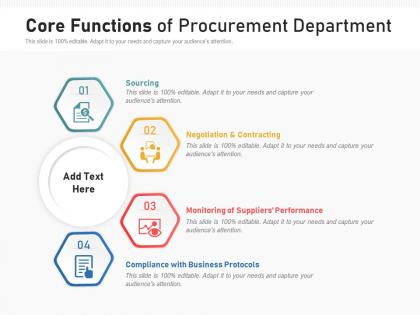
Core functions of procurement department




Try Before you Buy Download Free Sample Product
 Impress Your
 Audience
 100%
100% Editable
 Save Hours
 of Time


Our Core Functions Of Procurement Department are topically designed to provide an attractive backdrop to any subject. Use them to look like a presentation pro.
People who downloaded this PowerPoint presentation also viewed the following :
Core functions of procurement department with all 2 slides:
Use our Core Functions Of Procurement Department to effectively help you save your valuable time. They are readymade to fit into any presentation structure.
FAQs for Core functions
The key procurement stages include need identification, supplier sourcing, request for proposals, vendor evaluation, contract negotiation, purchase order creation, and performance monitoring. These stages streamline organizational purchasing by ensuring compliance, minimizing costs, and maintaining quality standards, with many companies finding that structured procurement processes deliver significant cost savings and enhanced supplier relationships.
Organizations effectively manage supplier relationships through clear communication protocols, performance monitoring systems, strategic partnership development, and regular relationship assessments. These approaches streamline collaboration by establishing mutual expectations, tracking delivery metrics, and fostering long-term partnerships, with many companies finding that strong supplier relationships ultimately reduce costs, improve quality, and enhance supply chain resilience.
Technology revolutionizes modern procurement through automation, data analytics, artificial intelligence, cloud-based platforms, and digital supplier networks. These tools streamline sourcing processes by enhancing supplier evaluation, automating purchase orders, and providing real-time spend visibility, with many organizations finding that strategic technology integration delivers significant cost reductions and operational efficiency.
Procurement strategies align with business goals by integrating cost optimization, supplier diversification, risk management, and sustainability initiatives directly into corporate objectives. Through strategic sourcing and vendor relationship management, organizations streamline operations, reduce expenses, and enhance supply chain resilience, with many companies finding that aligned procurement ultimately delivers competitive advantage and supports long-term growth targets.
Procurement risks include supplier reliability issues, cost overruns, quality defects, regulatory compliance failures, and supply chain disruptions. These challenges can be mitigated through diversified supplier portfolios, comprehensive vendor assessments, strategic contract negotiations, and robust monitoring systems, with many organizations finding that proactive risk management ultimately delivers cost savings and operational resilience.
Data analytics improves procurement decision-making by identifying spending patterns, predicting supplier performance risks, and optimizing contract negotiations through historical data insights. Through advanced analytics platforms, organizations streamline vendor selection, reduce costs by 15-20%, and enhance supply chain transparency, with many manufacturing and retail companies finding that predictive models significantly minimize procurement disruptions.
Best practices for negotiating supplier contracts include thorough market research, establishing clear performance metrics, building strategic partnerships, leveraging competitive bidding, and implementing flexible terms for scalability. These approaches enhance procurement outcomes by reducing costs, improving service quality, and ensuring contractual compliance, with many organizations finding that collaborative negotiation strategies ultimately deliver stronger supplier relationships and competitive operational advantages.
Sustainable procurement significantly enhances a company's reputation by demonstrating environmental responsibility, ethical sourcing practices, and long-term strategic thinking to stakeholders and consumers. Through transparent supply chain management, organizations strengthen brand trust, attract environmentally conscious customers, and differentiate themselves competitively, with many companies finding that sustainable practices ultimately drive customer loyalty and market positioning.
Key procurement performance metrics include cost savings, supplier performance ratings, procurement cycle time, contract compliance rates, and spend under management. These metrics enable organizations to streamline operations, enhance supplier relationships, and optimize resource allocation, with many companies finding that comprehensive measurement ultimately delivers improved operational efficiency and significant competitive advantage in increasingly complex supply chains.
Companies integrate ethical sourcing by establishing supplier codes of conduct, conducting regular audits, implementing transparency requirements, and partnering with certified sustainable vendors. Through these strategic approaches, organizations in manufacturing, retail, and technology sectors enhance brand reputation, reduce supply chain risks, and meet consumer expectations, while ultimately delivering competitive advantage in increasingly conscious markets.
Small businesses face limited supplier options, reduced negotiating power, higher per-unit costs, cash flow constraints, and fewer procurement resources compared to larger corporations. While large organizations leverage economies of scale and dedicated procurement teams, smaller companies increasingly find that strategic partnerships, technology adoption, and collaborative purchasing groups help level the playing field, ultimately delivering competitive pricing and operational efficiency.
Cross-functional collaboration enhances procurement outcomes by integrating insights from finance, operations, legal, and technical teams, enabling better supplier selection, risk assessment, and contract negotiations. This strategic coordination streamlines decision-making processes, reduces procurement cycles, and ensures alignment with organizational goals, with many companies finding that collaborative approaches deliver cost savings, improved supplier relationships, and enhanced operational efficiency.
Emerging procurement trends include AI-powered sourcing, blockchain for supply chain transparency, sustainable procurement practices, supplier diversity initiatives, and advanced analytics for risk management. These technologies streamline vendor selection, enhance contract compliance, and minimize supply disruptions, with many organizations finding that strategic procurement automation ultimately delivers significant cost reductions and competitive advantages.
E-procurement transforms traditional purchasing by automating manual processes, centralizing supplier management, and enabling real-time tracking of orders and approvals. Through digital platforms, organizations streamline requisition workflows, enhance spend visibility, and accelerate approval cycles, with many companies finding that electronic systems reduce procurement costs by 10-15% while improving supplier relationships and compliance monitoring.
Global sourcing creates complex economic ripple effects, including job displacement in local manufacturing, reduced demand for domestic suppliers, and potential wage pressures in traditional industries. However, it simultaneously enables cost savings that can stimulate consumer spending, forces local businesses to innovate and specialize, and creates new opportunities in logistics, quality control, and supplier management, with many communities finding that strategic adaptation ultimately enhances their competitive position.
-
Informative presentations that are easily editable.