


Corporate development oak chart ppt examples slides




Try Before you Buy Download Free Sample Product
 Impress Your
 Audience
 100%
100% Editable
 Save Hours
 of Time


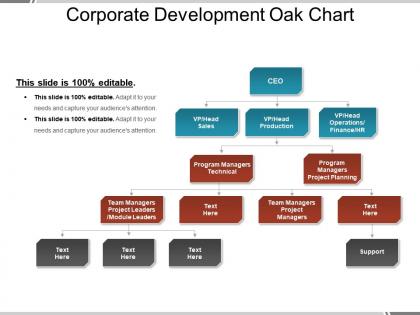
Corporate development oak chart PPT examples slide is an impressive professionally proficient slide layout which serves the purpose of both educational and professional presentations. The given oak chart PPT presentation graphic has been designed in three color tones to ensure maximum visibility with attractiveness attached to it. Managers, company owners, business analysts, and even educators can make use of this organizational development chart PPT model to explain the concept in detail but with ease, by effective use of this visual presentation. Our team of professionals has taken all due care to design the slide after an intense session of research and brainstorming. The three levels of organizational chart PPT presentation template can be used by the professionals of any organization irrespective of the industry type. Force critics to accept your conditions with our Corporate Development Oak Chart Ppt Examples Slides. Be able to confront a direct challenge.
People who downloaded this PowerPoint presentation also viewed the following :
Corporate development oak chart ppt examples slides with all 5 slides:
Initiate action to bridge the gaps with our Corporate Development Oak Chart Ppt Examples Slides. It helps identify deficiencies.


FAQs for Corporate development oak chart
So most corp dev teams have pretty similar setups. At the top there's usually a VP or Head of Corporate Development. Directors sit under them handling stuff like M&A or partnerships. The Associate Directors and Senior Associates? They're basically living in Excel building financial models all day - kinda brutal honestly. Associates and Analysts do research, due diligence, that kind of thing. Oh and bigger companies sometimes have separate biz dev people just for partnerships. Really depends on how many deals your company does though, so yours might look totally different.
So corp dev is basically the hub for all the big strategic stuff. You're constantly juggling finance (deal models, valuations), legal (due diligence headaches), and business leaders who all want different things. Strategy teams jump in for market research too. Honestly, it gets messy fast - like, really messy. RACI charts are your best friend here, trust me. Set up regular check-ins from day one or you'll end up with everyone having opinions about everything. Oh, and maybe grab coffee with your finance counterpart early - they can save your butt on the numbers side.
Financial modeling is your golden ticket - master that first. You'll spend tons of time analyzing deals and doing valuations. Strategic thinking matters too since you're figuring out how acquisitions actually make sense. Honestly, communication skills are probably underrated - you're constantly pitching ideas to executives and negotiating. Project management becomes this weird skill you didn't expect to need, but you're managing like five different deals at once. Due diligence experience is clutch. Basic legal knowledge helps but don't stress if you're not there yet. Start with Excel modeling though - that's what'll get you hired.
Dude, you need a solid org chart - it's a game changer for knowing who actually makes decisions. No more guessing whether to ping the VP of Strategy or go straight to the Chief Development Officer. I swear I've watched teams burn weeks just hunting down the right stakeholders. Map out who gives final approval vs who just weighs in on different deal sizes. Clear reporting lines mean faster escalation and way less of those cringe moments where everyone thinks they're running the same acquisition. Honestly, half the battle is just knowing who's responsible for what. Makes accountability so much easier when roles aren't a mystery.
Honestly, the worst part is just figuring out who reports to who and making sure teams aren't stepping on each other's toes. Corp dev is weird because it touches M&A, partnerships, strategy - basically everything - so roles get messy fast. Reporting structure is a total crapshoot too. I've seen teams under CEO, CFO, or strategy and they all worked fine depending on what the company cared about most. Oh and sizing is brutal since you never know when deals will actually happen. Start with nailing down who does what first. The org chart stuff can wait.
Honestly, start with the boring stuff first - automate whatever repetitive tasks are eating up your time. CRM systems are clutch for tracking your deal pipeline, and virtual data rooms make due diligence way less painful. AI market research tools are actually pretty solid for initial target screening (saves hours of manual work). Your cross-functional teams will thank you for decent collaboration platforms too. Analytics tools help you spot acquisition targets based on whatever criteria you're using. I'd probably focus on deal sourcing tools once you've got the basics down - they're more sophisticated but worth it.
So corp dev is way more strategic than regular biz dev. Biz dev people are out there chasing partnerships and deals to bring in revenue. Corp dev? They're thinking bigger picture - M&A, investments, joint ventures, all that high-level stuff that shapes where the company's headed. It's honestly more like being an architect for your company's future. Regular biz dev feels more sales-y to me. Oh, and if you're considering corp dev, you'll need solid financial modeling skills. The strategic thinking part is huge too. Really depends what kind of work gets you excited.
Track your deal flow first - how many opportunities you're seeing, conversion rates, time to close. ROI and revenue synergies matter obviously, but honestly the hardest part is getting leadership to actually agree on success metrics beforehand. Don't forget integration rates and cultural fit for acquisitions since that's where deals usually fall apart. I'd set up a monthly dashboard for your exec team. Transparency keeps everyone happy and shows you're delivering results. Oh and measure cost savings too - execs love seeing those numbers.
Dude, you NEED an org chart for your corp dev team. Shows exactly who reports to who and kills all that confusion about communication flows. When deals get crazy (and they always do), you'll know instantly who to pull into acquisition talks and who actually makes decisions for different deal sizes. Plus finding the right experts becomes super easy - like who's your integration guru vs the person hunting targets. I swear, without clear reporting lines you'll spend half your time just figuring out who to email. Map it out now and save yourself the headache later when things get hectic.
Map out your reporting structure from VP/SVP down to analysts first. Group by function though - M&A, partnerships, investments - not just rank. I've watched too many teams where decision authority is a total mess, so be super clear about who can approve what at each level. Add dotted lines showing how you work with finance, legal, strategy since corp dev touches all their stuff. Don't overthink it - keep the chart simple and actually share it with everyone. Oh, and update quarterly because these teams shift constantly.
Quarterly updates are the bare minimum, but honestly? Do it whenever something actually changes - new people, departures, role switches, whatever. I've watched teams fumble deals because their chart still had Sarah listed as lead when she'd been gone for like 3 months. Real-time updates matter way more than some rigid schedule. Set a calendar reminder to double-check quarterly and make one person responsible for keeping it current. Otherwise it becomes this weird group project where everyone assumes someone else will handle it. Trust me - outdated org charts create more confusion than having no chart at all.
Dude, your leader's style basically makes or breaks any org chart. Micromanagers? They'll bottleneck everything even if the structure looks perfect on paper. You'll have people stuck waiting for approvals on the tiniest decisions. Flatter structures work great with collaborative types who actually trust their teams. I've watched gorgeous org charts turn into total disasters under the wrong person - it's painful to see. Hands-off leaders need more built-in checkpoints though, otherwise stuff just disappears into the void. My advice? Work with your leader's natural tendencies instead of fighting them.
Don't treat other teams like outside consultants - that's a recipe for disaster. Pull finance, legal, strategy, and ops people directly into your corp dev teams from day one. I learned this the hard way when we tried to "bring in" legal halfway through a deal and it was a complete shitshow. Give everyone clear ownership too - legal handles due diligence timelines, finance owns the models, that kind of thing. Regular standups help but honestly the main thing is making sure everyone has actual skin in the game upfront, not just when you need their approval at the end.
Honestly, your company's culture totally shapes how corp dev gets organized. Risk-averse places? You'll have like three VPs approving every tiny deal - so painful. But collaborative cultures usually go flatter with cross-functional teams that can actually move fast. I've watched culture clashes completely torpedo smart org restructures. Super frustrating when politics win over logic. The trick is designing reporting that matches how decisions really happen at your company, not just what sounds fancy. Don't copy someone else's structure - it won't work if it fights against how people actually operate there.
When deal volume picks up, corp dev teams usually have to expand fast. You'll start seeing dedicated roles pop up - deal sourcing, integration specialists, sector analysts. It's wild how quickly you go from everyone doing everything to actual specialized functions. Big acquisition periods are honestly a nightmare for team structure. Some companies split integration from biz dev entirely, which makes sense but creates its own headaches. The smart move? Hire those capabilities before you're drowning in deals, not when you're already mid-transaction and panicking.
-
Best way of representation of the topic.
-
Unique research projects to present in meeting.