

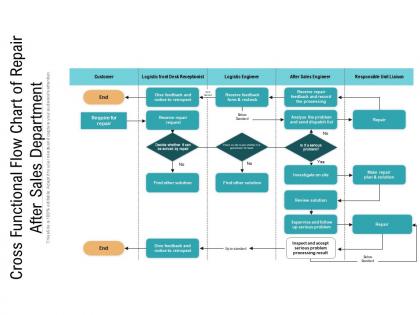
Cross functional flow chart of repair after sales department




Try Before you Buy Download Free Sample Product
 Impress Your
 Audience
 100%
100% Editable
 Save Hours
 of Time


Enlighten folks on baseless intolerance with our Cross Functional Flow Chart Of Repair After Sales Department. Condemn any acts of bigotry.
People who downloaded this PowerPoint presentation also viewed the following :
Cross functional flow chart of repair after sales department with all 2 slides:
Enlighten folks on bigotry with our Cross Functional Flow Chart Of Repair After Sales Department. Bring an end to expressions of intolerance.

FAQs for Cross functional flow chart of repair
So you basically log the issue first and get all the details from the customer. Diagnosing comes next - honestly, this is where it gets interesting because you're like a detective sometimes. Get approval if it's gonna be expensive, order parts, then fix it. Test everything works afterward. I always write down what I did because trust me, you'll forget later when the same weird problem shows up again. Oh, and explain to the customer what you actually fixed when you give it back - they appreciate knowing what went wrong.
Honestly, three things will make the biggest difference: communication, speed, and being upfront about everything. Get automated updates going so people aren't sitting there wondering if you lost their phone or something. Your intake process probably sucks right now - fix that with better forms and checklists so you're not playing phone tag. Actually stick to the timelines you give people (crazy concept, I know). Let them track everything online or through texts. But here's the real game changer: train your staff to call customers about delays before they have to call you. Trust me, people hate surprises when it comes to their broken stuff.
Dude, tech completely transforms repair work. Diagnostic software spots problems fast, and management systems let you track everything in real-time. Your customers can book appointments through mobile apps instead of playing phone tag all day. Honestly, predictive analytics is pretty cool - it catches failure patterns before stuff breaks down completely. Parts ordering gets automated too, which is nice. Oh and definitely get a good repair management platform first - it ties everything together so you're not juggling ten different systems. Trust me, it'll save you tons of headaches.
So I'd start by hitting customers at different points - surveys after jobs wrap up, feedback forms on your website, and honestly just having your techs ask during pickups. But here's the thing that matters most: you've gotta actually DO something with what they tell you. Look for the stuff that keeps coming up - late deliveries, crappy communication, whatever. Then fix those processes. Oh, and tell people when you make changes based on their complaints. Customers eat that up and they'll keep giving you real feedback instead of just being polite.
Honestly, inventory's gonna be your worst enemy - you're either drowning in parts nobody needs or scrambling when someone calls needing that one thing you don't have. Scheduling techs is a mess too, repairs always take way longer than you think. Customers get pissed when you leave them hanging about their repair status (can't blame them). Oh and the whole pickup/delivery thing becomes this logistical headache real quick. My advice? Get a decent tracking system first - seriously, it'll fix most of your communication problems and save you so many angry phone calls.
Honestly, it's all about what industry you're in. Automotive has that whole certified parts thing with trained techs at dealerships. Electronics? Most companies just do mail-in repairs or swap programs since stuff's so hard to fix now. Medical equipment is crazy strict - compliance everywhere and you need specialized people. Can't exactly ship a factory machine, so manufacturing usually means on-site visits. Consumer goods though... they'd rather replace than repair most of the time. Cheaper that way. Figure out what your customers expect first, plus whatever regulations you're stuck with. Then work backwards from there.
First-time fix rate is your golden metric - shows if techs actually solve stuff on the first trip. Track average repair time and customer satisfaction too. Oh, and repeat repairs within 30-90 days - that one's painful but necessary. Parts availability will make or break you since nobody wants to wait around for components. Honestly, I'd add technician productivity metrics even though some people hate being measured like that. Cost per repair and warranty claims are solid for keeping finance happy. Start simple with these, then get fancier once you see what's actually happening.
Automated updates are honestly a lifesaver - send them when you get their device, start looking at it, order parts, whatever. Be real about timelines from day one and actually hit them. Companies that go dark drive me crazy, like why wouldn't you just communicate? Set up some repair portal thing so they can check status themselves without calling you constantly. Oh and definitely get cost approval before you touch anything - nobody likes surprise bills. The automated stuff will cut down your phone calls by like 80%, trust me on that one.
Keep them posted at every big milestone - when their stuff arrives, during diagnosis, before repairs start, and when it's done. Even send updates when nothing's happening because radio silence freaks people out. I swear this saved me so many headaches. Don't sugarcoat delays or give false timelines - they'd rather know the truth. Call them directly about extra costs or new problems instead of hiding behind emails. Automated notifications work great for basic updates, but you'll still need to personally reach out on the complicated cases.
Start with product knowledge - that's your foundation. Your repair team needs to know every product inside out, plus all the ways things typically break. Customer service training comes next because honestly, nobody's happy when their stuff stops working. Safety and compliance stuff is non-negotiable, especially with electronics. Oh, and teach them proper troubleshooting methods so they're not just throwing parts at problems. The customer service piece is huge though - these folks deal with frustrated people all day, so they better know how to handle it.
Your warranty basically controls everything about how you run repairs. Generous coverage? You'll do tons of free work but have to document everything like crazy to stop people from gaming the system. Restrictive warranties are honestly a pain - customers get pissy about paying and you're stuck processing more payments. Parts inventory gets tricky too depending on whether you can use refurbs or need original parts only. I learned this the hard way at my last gig. Just make sure your repair process matches whatever warranty terms you set, otherwise you'll have angry customers and your margins will tank.
Okay so three things have saved me tons of money and time. Preventive maintenance is your best friend - catch stuff before it breaks and you'll avoid those emergency repair bills. Also, find good repair vendors and actually build relationships with them. I know it sounds obvious but most people just call whoever's cheapest. Those relationships get you priority service and better rates. The third thing is having a clear process when shit hits the fan. Map out who calls who, what steps to take, all that. Start by looking at where you're currently wasting the most time - that's your low hanging fruit right there.
Honestly, speed is everything in repair these days. Nobody wants to wait weeks wondering what's happening with their stuff. Real-time updates are a game changer - like, actually tell people where their device is in the process. Pickup and delivery services are clutch too if you can swing it. I'd also think about being proactive - hit people up before their warranty expires or when you know certain models have common issues. The whole industry is pretty frustrating for customers, so you're basically competing against low expectations. Map out what ticks people off most in your current setup and fix those things first.
Honestly, how you handle returns after repairs can totally make or break things with customers. Do it right - quick turnaround, clear updates, smooth process - and they'll actually trust you more than before anything went wrong. Mess it up though? Yeah, you've lost them for good. I'd say the follow-up game is huge here, like actually checking in instead of just hoping for the best. Quality check everything before it goes back out (learned that one the hard way). Keep an eye on how often repaired stuff comes back again - that'll tell you everything you need to know about whether your fixes are actually working.
Honestly, data analytics is a game-changer for repair shops. Start tracking your repair times and success rates - that's your baseline. From there, you can spot patterns in what breaks most often and figure out where your workflow gets stuck. Most companies think they know their weak spots, but the numbers usually tell a different story. Track stuff like first-time fix rates and customer satisfaction too. I know one shop that cut repair times by 30% just by analyzing which techs were most efficient (kinda crazy, right?). You can even predict when customers might need repairs based on usage patterns and reach out first.
No Reviews