

Curve slide of product lifecycle sales graph with description




Try Before you Buy Download Free Sample Product
 Impress Your
 Audience
 100%
100% Editable
 Save Hours
 of Time


Abide by your declaration with the help of our Curve Slide Of Product Lifecycle Sales Graph With Description. Be able to fulfill all commitments.
People who downloaded this PowerPoint presentation also viewed the following :
Curve slide of product lifecycle sales graph with description with all 5 slides:
Convert contacts into friends with our Curve Slide Of Product Lifecycle Sales Graph With Description. They bring about feelings of closeness.

FAQs for Curve slide of product lifecycle sales
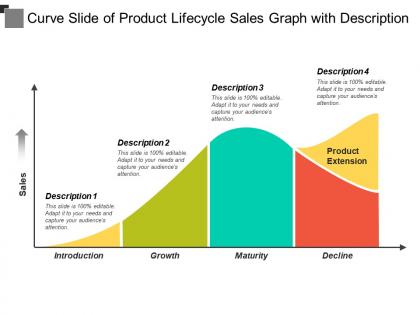
So there are four stages: introduction, growth, maturity, and decline. Introduction is rough - you're basically fighting for every sale while burning cash. Growth is honestly the sweet spot though, sales start climbing fast once people actually get it. Then maturity hits and things level off because suddenly everyone's competing for the same customers. Decline is when newer stuff starts replacing yours and sales drop. The whole point is figuring out where you are so you don't waste money. Like, don't dump your budget into ads for something that's already dying when you could be working on the next thing instead.
Look, you've gotta match your marketing to where your product actually sits in its lifecycle. Early on? Focus on awareness since nobody knows you exist yet. Growth phase is where things get fun - you can really push hard and go after competitors. Maturity gets weird though... honestly it's probably the trickiest part because you're fighting not to become just another commodity. If you hit decline, either innovate like crazy or just manage the exit well. The biggest mistake I see is people using the exact same playbook no matter what stage they're in.
So it really depends on where your product is right now. Early on, you're basically burning cash on awareness, so track market penetration and customer acquisition costs. Once you hit growth mode, focus on revenue growth and market share - that's the fun part honestly. Maturity is all about profit margins and keeping customers around since that's where you actually make bank. If things start declining, watch inventory turnover closely to figure out if it's even worth continuing. Dashboards help but don't overthink it.
Your product lifecycle? Yeah, external stuff totally messes with it. Competition can crush your growth phase or push you into decline way earlier than expected. Market trends either speed things up or drag them out forever. Then you've got economic changes, new tech, shifting consumer habits - all of it can bump your whole curve up or down. Fidget spinners are the perfect example, honestly - those things should've died but went viral instead. Oh, and don't assume your lifecycle graph is permanent. Keep watching these outside forces and pivot your strategy when needed.
Honestly, customer feedback is like having a crystal ball for your product. Early on, it shows you who your real users are and what's broken. Growth phase? That's when you use it to nail down features people actually want. Here's the thing though - maturity stage gets wild because feedback either sparks innovation to keep you alive or screams "time to pivot." I've seen products in decline make crazy comebacks just from listening to customers. Track those feedback patterns religiously. They'll tell you what's coming way before your sales data catches up.
Look at your old sales data from similar products - that's your goldmine. Track how fast they got adopted, when they peaked, seasonal dips, all that stuff. Feed it into some ML models (they're honestly better at spotting weird patterns than we are). Map everything to those four stages: intro, growth, maturity, decline. First though, figure out where your current products sit in their lifecycle. That gives you a baseline to work from. Then you can actually predict when the next phase hits and plan your marketing budget around it. Just make sure your data's clean or you'll get garbage predictions.
Honestly, the biggest trap is thinking every product follows that perfect textbook curve - spoiler alert, they don't! Teams constantly mix up what stage they're in too. Like they'll see a temporary dip and panic thinking it's decline phase. Seasonality messes things up all the time, or market shifts make your data look totally wonky even when everything's fine. Oh, and people love cherry-picking time ranges that support whatever story they want to tell. Before you make any big moves, double-check with customer feedback and market research. Trust me on this one.
Your brand's DNA gets locked in during the intro phase - seriously, changing positioning later is like trying to pivot a freight train. Early messaging and pricing create these sticky expectations that haunt you for years. I'd be super careful with initial sales data though, it's crazy noisy with early adopters throwing off your numbers. Don't get too excited and over-forecast based on launch buzz. The real trick? Nail your brand story from the start and figure out which feedback is actually useful versus just hype. Most founders mess this up by not separating genuine market signals from all the noise.
So when your product's dying, you've got options. Cost-cutting is obvious - ditch unprofitable customers, streamline everything. Or try repositioning for new markets competitors ignored. Bundling with newer products is kinda manipulative but whatever, it works. Price drops might help short-term, just don't kill your margins completely. Oh, and some companies get weird about this stuff but honestly? Pick ONE approach and stick with it. Trying multiple strategies at once just burns through cash faster. I've seen too many businesses mess this up by overthinking it.
Honestly, just watch where your product sits on that lifecycle curve. Growth phase shows you which customers are buying most - that's your goldmine for finding new markets they'd want. Maturity phase is actually great timing (weird, right?) since you've already got solid distribution and brand recognition. When sales start dropping, dig into what competitors are doing that you're not. Or just ask your current customers what they're still missing. Each phase gives you different clues about where to go next. Way better than just panicking when things slow down.
So digital marketing totally changes how products move through their lifecycle. You can hit huge audiences right away, which speeds up adoption like crazy. The growth phase gets way steeper too. What's wild is how the maturity stage stretches out - you're constantly finding new customer segments through targeting and data stuff. Even when products should be dying off, they just... don't. Retargeting keeps them alive forever, I swear. Some brands that would've been toast years ago are still making bank. You've gotta track different metrics though - engagement rates and conversion funnels matter more than those old-school sales cycles.
Physical products? They're pretty predictable - slow start, big growth phase, then they tank when storage costs pile up and people move on. Digital stuff is totally different though. You can change features on the fly, push updates whenever, even bring back something that flopped by adding cool new features. It's like they get multiple lives or something. Manufacturing really boxes in physical products with all those timelines and expiration dates, but digital products can stick around indefinitely if you keep tweaking them. Focus on quick iteration cycles for digital, traditional launch planning for physical.
Seasonal stuff just makes your product lifecycle way more confusing to read. Like, if you're launching something new, a holiday bump might trick you into thinking adoption is way better than it actually is. Growth and maturity phases get these crazy seasonal spikes - Christmas sales can totally mess with your head if you're trying to figure out real trends. Products that are declining? They weirdly become more seasonal since people only buy them for specific reasons now. Oh, and compare the same seasons year-to-year instead of just looking month-to-month. Way clearer picture of what's actually happening.
Just use whatever CRM you've already got - Salesforce, HubSpot, whatever. That's where your sales data is anyway. Tableau or Power BI are great for making those lifecycle curves actually make sense instead of staring at boring spreadsheets all day. Google Analytics works fine for digital stuff. Mixpanel and Amplitude are fancier options if you want deeper funnel insights, but honestly? Don't go crazy at first. Build some basic dashboards with what you have. You can always get fancier tools later when you figure out what you actually need.
So pricing really depends on where your product is in its lifecycle. Early on, you've got two main options - go cheap to grab market share fast, or price high to milk those early adopters who'll pay anything. Once you hit growth phase, that's when things get fun because demand's picking up but competition's getting fierce too. Maturity is rough though - everyone's fighting on price and you're scrambling to cut costs just to stay profitable. When your product starts dying, you either slash prices to dump inventory or keep them high for the few customers who still care. Just match your strategy to whatever stage you're actually in.
-
It saves your time and decrease your efforts in half.
-
Out of the box and creative design.