

Data Quality Powerpoint Presentation Slides




Try Before you Buy Download Free Sample Product
 Impress Your
 Audience
 100%
100% Editable
 Save Hours
 of Time


This Data Quality PowerPoint presentation gives a brief overview of data quality, its benefits and dimensions. It also outline the dimensions of data quality along with the methods to improve quality of data. It depicts the data quality sophistication curve and time plotting graph of data for data quality analysis. In this Data Quality Management PowerPoint Presentation, we have covered the technical standards and implementation cycle of data quality management. It also covers the dimensions of data quality in risk management along with the best practices for managing data quality. In addition, this Data Governance in Data Quality PPT contains the components of governance, implementation steps of data governance in data quality and the quality assurance directives. It also lists out the high steps to collect and maintain high quality data. Also, the Data Quality Framework PPT presentation includes the steps to create data quality framework. It also describes the tools used for assessment and the core features of tools. It also highlights the data quality control framework. Lastly, this Data Quality Assessment PowerPoint Presentation contains introduction and steps to perform data quality assessment. It also include the selection criteria for indicators and components of data quality assessment report. It also highlights the focal points for data collection and management system along with the metrics monitoring dashboard and impact of data quality in business intelligence and analysis. Download our 100 percent editable and customizable template, which is also compatible with Google Slides.
People who downloaded this PowerPoint presentation also viewed the following :
Content of this Powerpoint Presentation
Slide 1: This slide introduces Data Quality. State your company name and begin.
Slide 2: This slide states Agenda of the presentation.
Slide 3: This slide shows Table of Content for the presentation.
Slide 4: This slide highlights title for topics that are to be covered next in the template.
Slide 5: This slide highlights the introduction to modern data quality in organization which include measurement of dataset with criteria, ensure data driven decisions, etc.
Slide 6: This slide represents the key benefits of good data quality which include enhances decision making and targeting, improves content effectiveness, etc,
Slide 7: This slide outlines the dimensions of data quality which include completeness, uniqueness, validity, timeliness, accuracy, consistency and fitness for purpose.
Slide 8: This slide discusses the methods used to improve data quality which include ensure data adherence, prioritize timeliness, validate data accuracy, etc.
Slide 9: This slide gives an overview of major applications of good data quality which include healthcare, retail, telecommunication, government, education, etc.
Slide 10: This slide represents the use cases of good data quality which include data standardization, data cleaning, geocoding, data governance and data profiling.
Slide 11: This slide highlights the future trends of modern data quality which include systems as data consumers, real time data quality management, governance and compliance, etc.
Slide 12: This slide describes the data quality categories and their dimensions which include intrinsic data quality, contextual data quality, representational data quality, etc.
Slide 13: This slide depicts the good data quality sophistication curve which represents four stages – unaware, reactive, proactive and optimized.
Slide 14: This slide depicts the time plotting of data for data quality analysis. The data include feed gas temperature, feed gas flowrate, feed gas pressure, feed gas dewpoint, etc.
Slide 15: This slide highlights title for topics that are to be covered next in the template.
Slide 16: This slide gives an overview of data quality assessment which is a systematic approach to review quality of data set and helps user know data health, etc.
Slide 17: This slide briefly outlines the step guide to data quality assessment which include select indicators, review available documents, develop DQA matrix, etc.
Slide 18: This slide discusses the steps to perform data quality assessments which include data profiling, data quality rules, data reconciliation rule, data drift detection, etc.
Slide 19: This slide outlines the selection criteria for indicators in data quality assessment which include indicators of high importance, indicators with high targets, etc.
Slide 20: This slide highlights the components of data quality assessment report which include executive summary, project background, data validation, etc.
Slide 21: This slide describes the points to be focused on for assessment of data collection and management system which include check monitoring, review meta data, etc.
Slide 22: This slide highlights title for topics that are to be covered next in the template.
Slide 23: This slide outlines the routine data quality assessment tools which include data quality audit tool, routine data quality assessment tool, single indicator RDQA tool, etc.
Slide 24: This slide highlights title for topics that are to be covered next in the template.
Slide 25: This slide gives an overview of steps to collect high quality data which include implement data collection plan, set data quality standards, plan for data correction, etc.
Slide 26: This slide discusses the key steps to maintain high quality data which include access control, data encryption, audit trails and logs, error handling techniques, etc.
Slide 27: This slide highlights title for topics that are to be covered next in the template.
Slide 28: This slide outlines the technical standards to manage data quality which include ISO 8000 standard, ISO 8000-60, ISO 8000-61, ISO 8000-62, ISO 25012 standard, etc.
Slide 29: This slide represents the data quality management implementation cycle which include data quality planning, information and technology, data quality improvement, etc.
Slide 30: This slide outlines the dimensions of data quality in risk management which include data traceability, data suitability, data consistency, data timeliness, etc.
Slide 31: This slide discusses the data quality management best practices which include set clear metrics, implement reporting for data issues, establish investigation, etc.
Slide 32: This slide highlights title for topics that are to be covered next in the template.
Slide 33: This slide lists out the essential components of data governance frameworks for quality which include communication structures, data requirements, data request process, etc.
Slide 34: This slide highlights the implementation steps for data quality governance which include gain organizational support, promote transparency, create audit trails, etc.
Slide 35: This slide highlights title for topics that are to be covered next in the template.
Slide 36: This slide depicts the six P’s of data quality framework which include perform, purpose, principles, process, people and plan.
Slide 37: This slide lists out the dimensions of data quality assessment framework which include integrity, methodological soundness, serviceability, accessibility, etc.
Slide 38: This slide describes the steps to create and implement robust data quality framework which include data discovery, metadata service, ownership of data quality, etc.
Slide 39: This slide depicts the big data quality framework structure which include exploratory quality profiling, big data sampling and profiling and data quality repository.
Slide 40: This slide highlights title for topics that are to be covered next in the template.
Slide 41: This slide showcases the processes in data quality control framework which include data sourcing, data sampling and profiling, establish data quality standards, etc.
Slide 42: This slide briefly explains the data quality control framework for enterprise data lakes which include data quality capabilities, framework and cloud data platform.
Slide 43: This slide highlights title for topics that are to be covered next in the template.
Slide 44: This slide outlines the comparative analysis of data integrity and quality based on aspects such as focus, mechanisms and scope of data integrity and data quality.
Slide 45: This slide highlights title for topics that are to be covered next in the template.
Slide 46: This slide represents the data checklists for quality assessments in organizations which include data discovery, data quality rules, data reconciliation rules and data drift detection.
Slide 47: This slide describes the data pipelines checklist for quality assessments which include end-to-end visibility, performance analytics, pipeline monitoring, cost benefit analysis, etc.
Slide 48: This slide highlights title for topics that are to be covered next in the template.
Slide 49: This slide represents the training plan for data quality management and includes modules on data quality tools, data profiling, data cleansing, data governance, etc.
Slide 50: This slide highlights the implementation budget for data quality management and includes expenses such as data quality software, training and education, etc.
Slide 51: This slide represents the different roles in data quality and their responsibilities to ensure good data quality and include data owner, data steward and data manager.
Slide 52: This slide highlights title for topics that are to be covered next in the template.
Slide 53: This slide depicts the generic framework for monitoring data quality which include data governance, data quality management, quality assurance and quality control.
Slide 54: This slide describes the data quality metrics monitoring dashboard which include freshness rules, SQL rules, ML freshness monitors, volume rules and field health.
Slide 55: This slide depicts the data quality score monitoring dashboard which include overall data quality score, total rows processed and failed rows.
Slide 56: This slide highlights title for topics that are to be covered next in the template.
Slide 57: This slide describes the impact of data quality in business intelligence and analysis which includes gain competitive advantage by 78% through high quality data, etc.
Slide 58: This slide contains all the icons used in this presentation.
Slide 59: This slide is titled as Additional Slides for moving forward.
Slide 60: This slide presents Bar chart with two products comparison.
Slide 61: This is a Timeline slide. Show data related to time intervals here.
Slide 62: This slide depicts Venn diagram with text boxes.
Slide 63: This is a Financial slide. Show your finance related stuff here.
Slide 64: This slide contains Puzzle with related icons and text.
Slide 65: This is Our Goal slide. State your firm's goals here.
Slide 66: This is an Idea Generation slide to state a new idea or highlight information, specifications etc.
Slide 67: This slide provides 30 60 90 Days Plan with text boxes.
Slide 68: This slide shows Post It Notes. Post your important notes here.
Slide 69: This is a Thank You slide with address, contact numbers and email address.
Data Quality Powerpoint Presentation Slides with all 77 slides:
Use our Data Quality Powerpoint Presentation Slides to effectively help you save your valuable time. They are readymade to fit into any presentation structure.
-

Data Quality
-
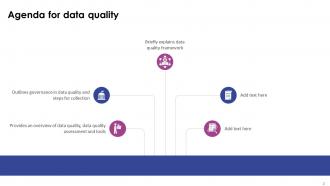
Agenda for data quality
-
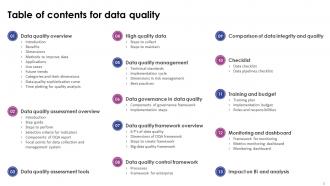
Table of contents for data quality
-

Table of contents for data quality
-

Introduction to modern data quality in organization
-

Key benefits of good data quality
-

Major dimensions of good data quality
-
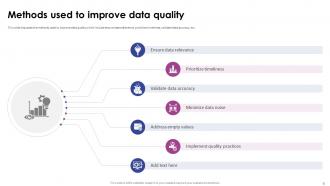
Methods used to improve data quality
-

Major industrial applications of data quality
-

Practical use cases of data quality
-

Future trends of modern data quality
-

Data quality categories and dimensions in organizations
-

Data quality framework sophistication curve
-

Time plotting in data quality analysis
-

Table of contents for data quality
-

Introduction to data quality assessment process
-

Step guide to data quality assessment
-

Steps to perform data quality assessments
-

Selection criteria for indicators in data quality assessment
-

Components of data quality assessment report
-

Assessment focal points of data collection and management system
-

Table of contents for data quality
-

Routine data quality assessment tools
-

Table of contents for data quality
-

Steps to collect high quality data
-

Key steps to maintain high quality data
-

Table of contents for data quality
-

Technical standards to manage data quality
-
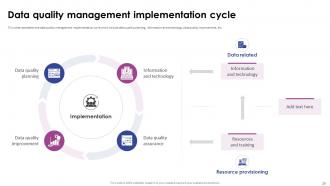
Data quality management implementation cycle
-

Data quality dimensions for risk management
-

Data quality management best practices
-
Table of contents for data quality
-

Quality components of data governance frameworks
-

Data quality governance implementation steps
-

Table of contents for data quality
-

6 P s of data quality framework
-
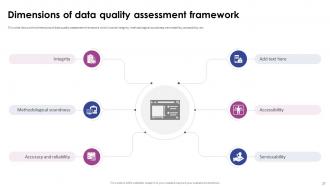
Dimensions of data quality assessment framework
-

Steps to create and implement robust data quality framework
-

Big data quality framework structure
-

Table of contents for data quality
-
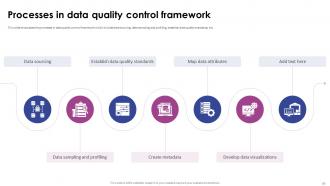
Processes in data quality control framework
-

Quality control framework for enterprise data lakes
-

Table of contents for data quality
-

Comparative analysis of data integrity and quality
-

Table of contents for data quality
-
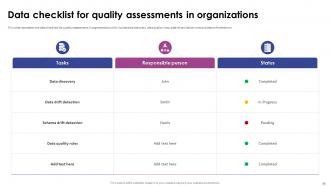
Data checklist for quality assessments in organizations
-

Data pipelines checklist for quality assessments
-

Table of contents for data quality
-

Training plan for data quality management
-

Implementation budget for data quality management
-

Roles and responsibilities to ensure good data quality
-

Table of contents for data quality
-

Generic framework for monitoring data quality
-

Data quality metrics monitoring dashboard
-

Data quality score monitoring dashboard
-

Table of contents for data quality
-

Impact of data quality in business intelligence and analysis
-

Icons slide for Data Quality
-

Additional slides
-

Bar chart
-

Timeline
-

Venn
-

Financial
-

Puzzle
-

Our goal
-

Idea generation
-

30 60 90 days plan
-

Post it notes
-
Thanks for watching
-

-

-

-

-

-

-

-

FAQs for Data Quality
Focus on accuracy, completeness, consistency, timeliness, validity, and uniqueness. Compare your data against trusted sources for accuracy. Check for missing values to measure completeness. Look for contradictions between systems - that's your consistency check. Timeliness matters big time for real-time stuff, obviously. Validity means checking if everything follows the right formats and business rules. Hunt down duplicates for uniqueness. Most people use automated profiling tools to get percentages. Shoot for 95%+ completeness as a benchmark. Honestly though, just pick 2-3 that actually matter for what you're doing first.
Ugh, bad data is honestly the worst - you end up making decisions based on complete garbage. Like, if your customer info is even 20% off, you're basically throwing marketing dollars at the wrong people. My old company learned this the hard way and lost serious money because nobody caught issues in their sales forecasts. Super painful to watch. You really gotta check your sources before making big calls. Also set up those regular data quality checks on whatever datasets you use most. Trust me on this one - it'll save you so much headache later.
Ugh, data quality issues are everywhere. Missing phone numbers, addresses spelled twelve different ways, duplicate customers with tiny name differences - it's chaos. People move constantly and don't update their info, plus companies merge and nobody syncs the databases. My old job had one customer listed as "John Smith," "J. Smith," and "Jonathan Smith" in three separate systems. Absolute nightmare. Your best bet? Set up validation rules from day one instead of playing cleanup later. Way easier to prevent the mess than fix it afterward.
Oh absolutely, automated tools are total lifesavers for data quality. They'll catch duplicates and missing values way faster than you ever could manually - honestly saved my sanity on my last project. Real-time validation is where things get interesting though, watching data get cleaned as it comes in is oddly satisfying. The best part? You can actually focus on the weird edge cases that need human brains instead of mindlessly checking formats. I'd start with profiling tools first to see what mess you're dealing with, then build validation rules from there. Trust me, it's worth the setup time.
So basically, data governance is like quality control for your info. You set up clear ownership and standard processes, then actually stick to them. Catches problems early before they become a nightmare. Without it? You'll get duplicate records, wonky formatting, missing chunks - makes any analysis pretty much useless. Honestly, most companies skip the "actually enforcing" part and wonder why their data's still garbage. The trick is getting those data steward roles figured out from the start. Way easier than trying to clean up the mess later.
Honestly, data quality makes or breaks everything in ML. Your models will basically copy whatever garbage you feed them - biased data equals biased predictions. I've seen so many projects crash because teams rushed past the boring data cleanup stuff. Clean datasets early or you'll hate yourself later when your model fails in production. Messy training data means your AI won't work in the real world, period. Quick tangent - I always tell people to audit their data like three times more than they think they need to. Trust me on this one.
Honestly, the biggest thing is getting executives to actually talk about data quality in meetings - other departments will follow their lead. Train people on why messy data screws up *their* specific work, not just some abstract concept. Most folks have no clue how much time they waste on bad data until you show them real examples from their own stuff. Give them easy tools to catch problems early. Oh, and definitely set up data stewards from different departments - they're great at translating between teams. Celebrate when departments clean up their act too. People love recognition, and it builds momentum fast.
First thing - profile your data to see what mess you're dealing with. Missing values, duplicates, all that fun stuff. Set up validation rules early based on your business logic. Trust me, automated checks will save you hours of mind-numbing manual work. Standardize formats for dates and addresses consistently. Document every step you take so you can actually repeat the process later (learned that one the hard way). Track your progress with quality scorecards. The real trick? Make it part of your regular routine instead of some massive one-off project.
First thing - ask to see sample data and test it against records you know are good. Check how often they update their datasets and what their accuracy rates actually look like. Any decent vendor should be totally open about their sources and validation process, so if they're being sketchy about that, run. Look into their client history too. Once you're using their data, set up monthly audits with specific accuracy benchmarks - honestly, this part is super boring but data quality can tank over time without you noticing. The upfront benchmarking thing will save you headaches later.
So you want to track the basics first - completeness (how much data is missing), accuracy (error rates), and consistency (duplicates driving you crazy). Timeliness matters too - nobody wants stale data. Honestly, start with just 2-3 metrics that actually matter for your situation. Don't go overboard initially. Set up automated alerts because manually checking dashboards is soul-crushing work. Uniqueness rates and validity checks against your business rules will catch tons of problems early. Once you've got a solid baseline running, then you can add more metrics. Way easier than trying to boil the ocean from day one.
Ugh, regulatory stuff is such a pain but honestly it forces you to get your data quality act together. No more flying by the seat of your pants - now you need proper documentation, audit trails, all that fun stuff to prove compliance. Healthcare and finance are the worst about it, they're super strict. But here's the thing - once you build those quality controls, your data actually becomes way more reliable overall. I'd start by figuring out which regulations hit your specific data, then set up processes that automatically generate the paperwork auditors love. It's annoying but worth it.
Start with validation at entry points - that's your best defense. Automated profiling and anomaly detection will catch problems in real-time instead of hours later when someone's already acting on garbage data. Schema validation is absolutely critical, especially with APIs or streaming stuff. I've watched so many teams get burned by skipping this step. Data lineage tracking helps too since you can trace issues back to where they started. Oh, and build all this into your pipeline from the start - retrofitting sucks and never works as well.
Honestly? Bad data is probably why your customers are bailing. When you've got messy info, you end up sending people the wrong stuff or calling them by someone else's name - super awkward. It's like prepping for a meeting with Sarah but then Bob walks in, you know? Customers pick up on these screwups fast and just... lose faith in you. Companies that actually clean up their data see retention jump 15-20%, which is huge. My old manager used to say this but I swear it's true - if you're bleeding customers, check your data first. Nine times out of ten, that's your problem right there.
Ugh, legacy systems are such a pain for data quality. You'll get the same customer info stored three different ways across different systems because they can't communicate properly. Really frustrating when you're trying to get accurate reports. These old systems don't have decent validation either, so bad data just keeps getting dumped in there. Honestly, I'd focus on getting some integration tools first - way easier than trying to replace everything at once. Set up validation standards where you can. It's not perfect but at least you'll stop the bleeding while you figure out the bigger picture.
Just add a data quality section to your regular onboarding - but make it specific to what each person actually does. Sales team? Show them how crappy contact info kills their follow-up game. Analysts get the data lineage stuff. Use real examples from your own systems instead of boring generic slides (nobody remembers those anyway). Honestly, the interactive approach works way better than lectures. End with a quick quiz so you know they got it. The whole point is making it feel like something that'll help their day-to-day work, not just another training they have to sit through.
-
I am extremely pleased with these PPT slides that we used for our event. They were easy to modify and came out great in all aspects!
-
The website is jam-packed with fantastic and creative templates for a variety of business concepts. They are easy to use and customize.