

Data Science Technology Powerpoint Presentation Slides





Try Before you Buy Download Free Sample Product
 Impress Your
 Audience
 100%
100% Editable
 Save Hours
 of Time


Data science is an area of study that combines domain experience, computer abilities, and mathematical and statistical understanding to extract valuable insights from data. Grab our insightfully designed Data Science Technology template that will be of great assistance for companies to present an overview of their current scenario and assess the need for data science adoption. Further, this data science module showcases the gap analysis of the company and the introduction of data science. In addition, it contains information on the requirements of the data science adoption, life cycle and phases of data science, and critical components of the data science. Furthermore, this data mining template includes the data science tools such as SAS, Apache Spark, Excel, Tableau, NLP, and TensorFlow, along with this role of data science in decision making. Moreover, this module highlights the difference between data science and other tools, data science workflow, job roles in data science, and top data science applications such as healthcare, logistic, finance, airlines, and business. Lastly, our template comprises a checklist, a timeline, a roadmap, a 30-60-90-day plan, a dashboard, and impacts of the data science integration on the organization. Get access to the data science ppt templates now.
People who downloaded this PowerPoint presentation also viewed the following :
Content of this Powerpoint Presentation
Slide 1: This slide introduces Data Science Technology. State your company name and begin.
Slide 2: This is an Agenda slide. State your agendas here.
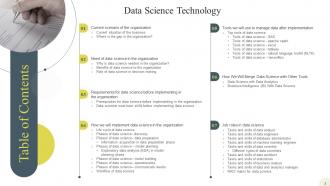
Slide 3: This slide shows Table of Content for the presentation.
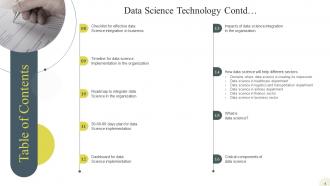
Slide 4: This is another slide continuing Table of Content for the presentation.
Slide 5: This slide highlights title for topics that are to be covered next in the template.
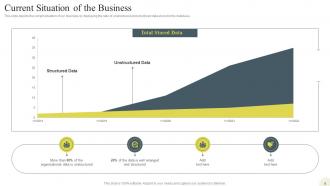
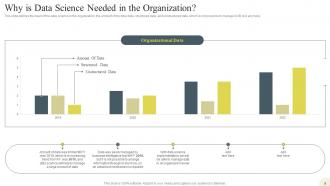
Slide 6: This slide presents current situation of our business by displaying the ratio of unstructured and structured data stored in the database.
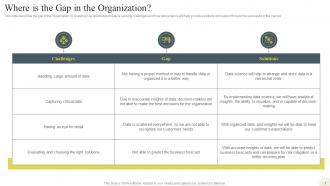
Slide 7: This slide shows how unstructured data is causing challenges and how data science will help provide solutions.
Slide 8: This slide highlights title for topics that are to be covered next in the template.
Slide 9: This slide represents the need of the data science in the organization.
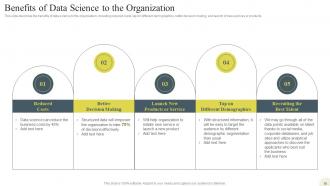
Slide 10: This slide shows Benefits of Data Science to the Organization.
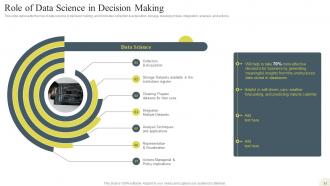
Slide 11: This slide presents the role of data science in decision making, and it includes collection & acquisition, storage, cleaning of data, etc.
Slide 12: This slide highlights title for topics that are to be covered next in the template.
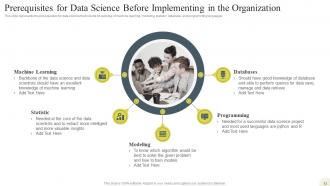
Slide 13: This slide displays the prerequisites for data science that include knowledge of machine learning, modeling, statistic, database, and programming languages.
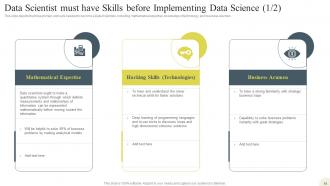
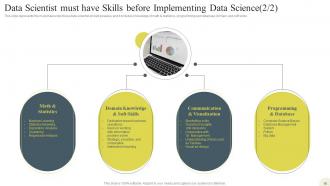
Slide 14: This slide represents Data Scientist Must Have Skills Before Implementing Data Science.
Slide 15: This is another slide showing Data Scientist must have Skills before Implementing Data Science.
Slide 16: This slide highlights title for topics that are to be covered next in the template.
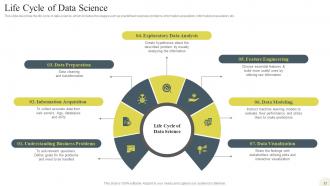
Slide 17: This slide describes the life cycle of data science, which includes the stages such as predefined business problems, information acquisition, etc.
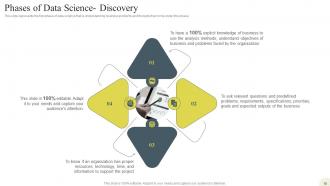
Slide 18: This slide displays the first phase of data science that is understanding business problems and the facts that come under this phase.
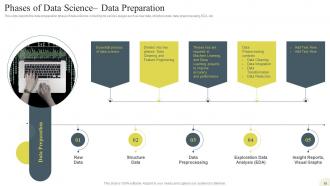
Slide 19: This slide represents the data preparation phase of data science, including its various stages such as raw data, structure data, data preprocessing, EDA, etc.
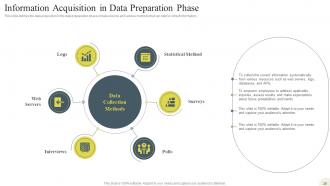
Slide 20: This slide shows Information Acquisition in Data Preparation Phase.
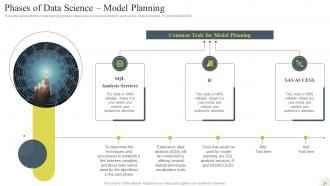
Slide 21: This slide presents model planning phase in data science and shows its tools, such as SQL Analysis Service, R, and SAS/ACCESS.
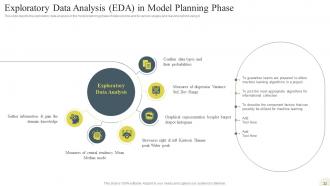
Slide 22: This slide shows exploratory data analysis in the model planning phase of data science and its various stages and reasons.
Slide 23: This slide displays various tools that could help in data modeling such as SAS enterprise miner, SPCS modeler, MATLAB, etc.
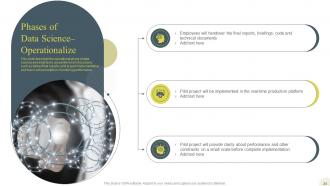
Slide 24: This slide represents operational phase of data science and what tasks are performed in this phase.
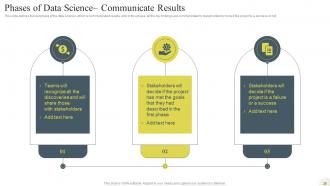
Slide 25: This slide shows last phase of the data science and in this phase, all the key findings are communicated to stakeholders.
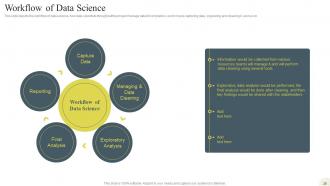
Slide 26: This slide presents how data scientists throughout the project manage data till completion.
Slide 27: This slide highlights title for topics that are to be covered next in the template.
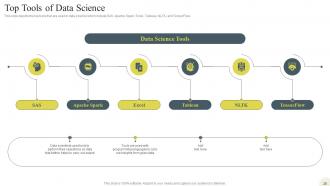
Slide 28: This slide displays top tools that are used in data science which include SAS, Apache Spark, Excel, etc.
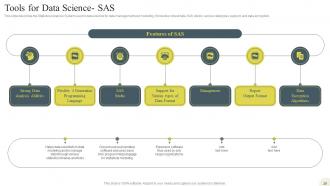
Slide 29: This slide represents Statistical Analysis System used in data science for data management and modeling.
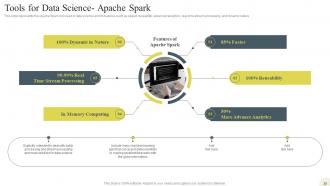
Slide 30: This slide shows Apache Spark tool used in data science and its features such as speed, reusability, advanced analytics, etc.
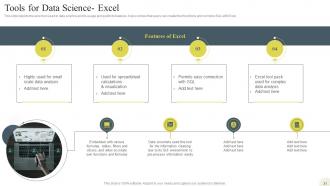
Slide 31: This slide presents excel tool used in data science and its usage along with its features.
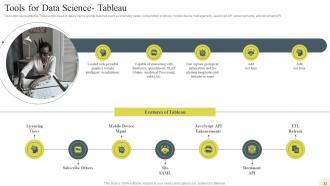
Slide 32: This slide shows tool used in data science and its features such as licensing views, subscription of others, etc.
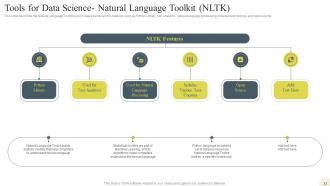
Slide 33: This slide displays Tools for Data Science- Natural Language Toolkit (NLTK).
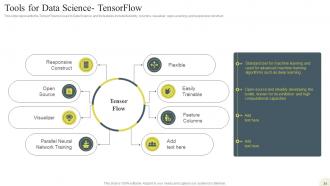
Slide 34: This slide represents TensorFlow tool used in Data Science, and its features include flexibility, columns, visualizer, etc.
Slide 35: This slide highlights title for topics that are to be covered next in the template.
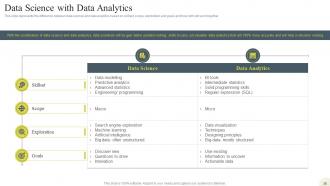
Slide 36: This slide presents difference between data science and data analytics based on skillset, scope, exploration and goals.
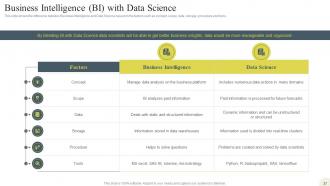
Slide 37: This slide shows difference between Business Intelligence and Data Science based on the factors such as concept, scope, data, etc.
Slide 38: This slide highlights title for topics that are to be covered next in the template.
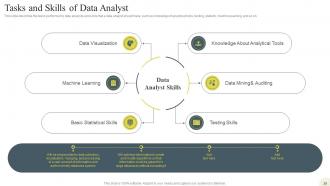
Slide 39: This slide represents tasks performed by the business analyst and how he will be helpful to improve business operations.
Slide 40: This slide shows data engineers’ responsibilities and skills that they should possess.
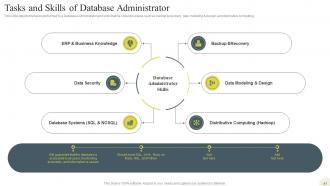
Slide 41: This slide presents tasks performed by a Database Administrator and skills that he should possess.
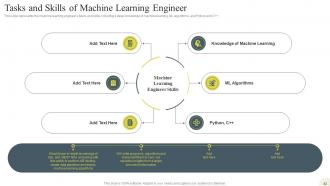
Slide 42: This slide shows machine learning engineer’s tasks and skills, including a deep knowledge of machine learning, ML algorithms, and Python and C++.
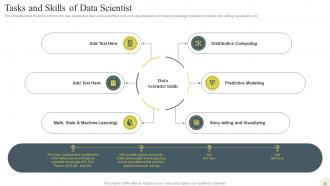
Slide 43: This slide displays the tasks performed by data scientists in data science and their skills.
Slide 44: This slide represents the different types of data scientists, including vertical experts, stat DS managers, generalists, etc.
Slide 45: This slide shows data architect’s tasks in data science projects and their skills.
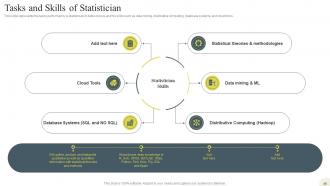
Slide 46: This slide presents tasks performed by a statistician in data science and his skills such as data mining, distributive computing, etc.
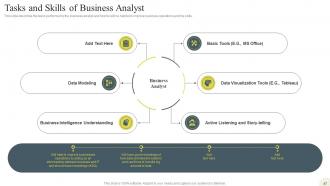
Slide 47: This slide shows tasks performed by the business analyst and how he will be helpful to improve business operations.
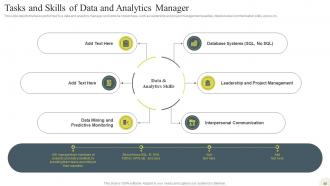
Slide 48: This slide displays tasks performed by a data and analytics manager and skills he should have.
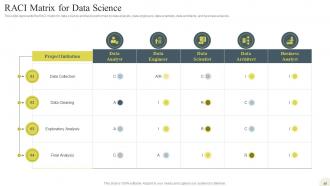
Slide 49: This slide represents RACI matrix for data science and tasks performed by data analysts, data engineers, data scientists, etc.
Slide 50: This slide highlights title for topics that are to be covered next in the template.
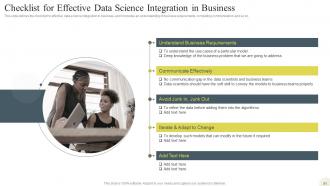
Slide 51: This slide presents Checklist for Effective Data Science Integration in Business.
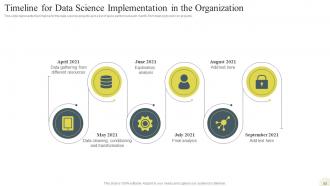
Slide 52: This slide shows Table of Content highlighting Timeline for Data Science Implementation in the Organization.
Slide 53: This slide highlights title for topics that are to be covered next in the template.
Slide 54: This slide represents Table of Content highlighting Roadmap to Integrate Data Science in the Organization.
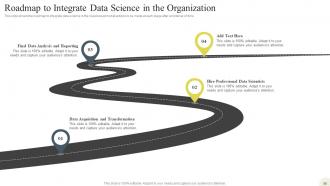
Slide 55: This slide shows Roadmap to Integrate Data Science in the Organization.
Slide 56: This slide presents Table of Content highlighting 30-60-90 Days Plan for Data Science Implementation.
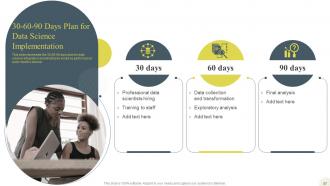
Slide 57: This slide shows 30-60-90 Days Plan for Data Science Implementation.
Slide 58: This slide displays Dashboard for Data Science Implementation.
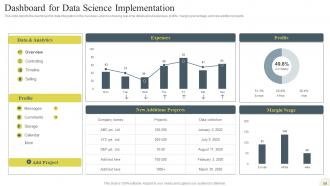
Slide 59: This slide represents dashboard for data integration in the business, and it is showing real-time details about expenses, profits, margins percentage, etc.
Slide 60: This slide shows Table of Content highlighting Impacts of Data Science Integration in the Organization.
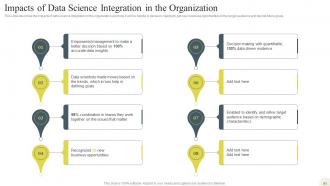
Slide 61: This slide presents Impacts of Data Science Integration in the Organization.
Slide 62: This slide shows Table of Content for the presentation.
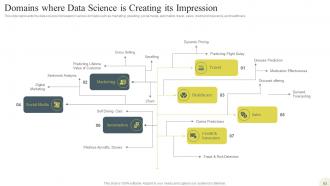
Slide 63: This slide displays Domains where Data Science is Creating its Impression.
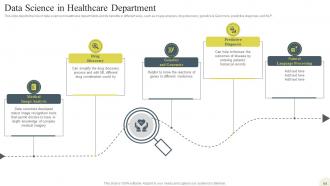
Slide 64: This slide represents data science in healthcare departments and its benefits in different ways.
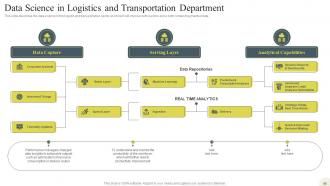
Slide 65: This slide shows Data Science in Logistics and Transportation Department.
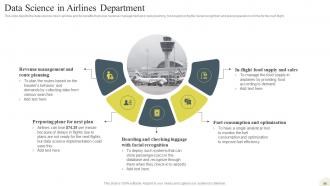
Slide 66: This slide presents data science role in airlines and its benefits that cover revenue management and route planning.
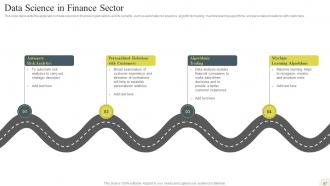
Slide 67: This slide shows application of data science in financial organizations and its benefits.
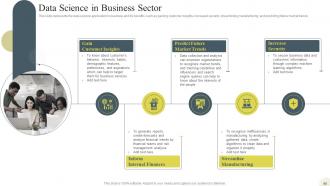
Slide 68: This slide displays the data science application in business and its benefits.
Slide 69: This slide highlights title for topics that are to be covered next in the template.
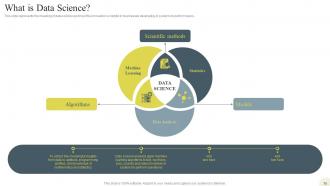
Slide 70: This slide shows the meaning of data science and how this innovation is helpful in businesses developing AI systems.
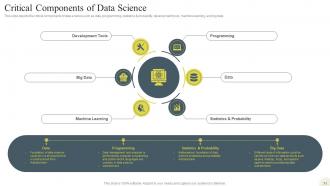
Slide 71: This slide presents critical components of data science such as data, programming, statistics & probability, etc.
Slide 72: This slide contains all the icons used in this presentation.
Slide 73: This slide is titled as Additional Slides for moving forward.
Slide 74: This is About Us slide to show company specifications etc.
Slide 75: This is Our Target slide. State your targets here.
Slide 76: This slide depicts Venn diagram with text boxes.
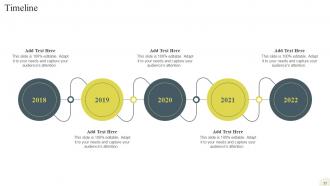
Slide 77: This is a Timeline slide. Show data related to time intervals here.
Slide 78: This is a Thank You slide with address, contact numbers and email address.
Data Science Technology Powerpoint Presentation Slides with all 83 slides:
Use our Data Science Technology Powerpoint Presentation Slides to effectively help you save your valuable time. They are readymade to fit into any presentation structure.














FAQs for Data Science Technology
Supervised learning uses labeled training data to predict specific outcomes, while unsupervised learning discovers hidden patterns in unlabeled datasets through clustering, association rules, and dimensionality reduction techniques. These approaches enable organizations to enhance customer segmentation, automate predictive analytics, and streamline decision-making processes, with many financial services and retail companies finding that combining both methods delivers comprehensive business intelligence and competitive advantage.
Data visualization techniques enhance understanding of complex datasets by transforming abstract numbers into intuitive charts, graphs, heat maps, and interactive dashboards that reveal patterns, trends, and outliers instantly. These visual approaches enable organizations across sectors like healthcare, finance, and retail to identify correlations, communicate insights effectively, and accelerate decision-making processes, ultimately delivering faster strategic responses and competitive advantages.
Data scientists must consider privacy protection, informed consent, data minimization, algorithmic bias prevention, and transparent data usage when handling personal information. These ethical frameworks help organizations build trust while ensuring compliance, with many healthcare institutions and financial services finding that robust data governance ultimately delivers better customer relationships, regulatory adherence, and sustainable competitive advantage in increasingly privacy-conscious markets.
Machine learning model effectiveness is determined through performance metrics like accuracy, precision, recall, F1-score, and ROC curves, combined with cross-validation techniques and real-world testing scenarios. These evaluation methods enable organizations across healthcare, finance, and retail to measure predictive reliability, minimize deployment risks, and optimize decision-making processes, ultimately delivering improved operational efficiency and competitive advantage.
Feature engineering significantly enhances model performance by creating, selecting, and transforming variables that better represent underlying patterns, reducing noise, and improving data quality for algorithms. Through techniques like dimensionality reduction and variable transformation, organizations in healthcare, finance, and retail achieve more accurate predictions, faster processing times, and ultimately deliver better customer experiences while gaining competitive advantages.
Missing data can be handled through multiple imputation, domain-specific imputation using business logic, listwise deletion when data is missing completely at random, and pattern analysis to understand missingness mechanisms. These techniques preserve statistical integrity by maintaining data distributions, avoiding systematic bias introduction, and ensuring representative samples, with many data science teams finding that combining multiple approaches delivers more robust analytical outcomes than single-method strategies.
Big data limitations in predictive analytics include data quality issues, storage and processing costs, privacy concerns, algorithm complexity, and potential bias amplification. While these technologies streamline forecasting capabilities, organizations in healthcare, finance, and retail find that managing massive datasets requires significant infrastructure investment and specialized expertise, ultimately demanding strategic resource allocation to balance analytical power with operational efficiency.
Choosing the right algorithm depends on your problem type, data characteristics, interpretability requirements, and performance constraints. Classification problems benefit from algorithms like random forests or support vector machines, while regression tasks often utilize linear regression or neural networks, with financial services and healthcare organizations finding that starting with simpler, interpretable models before advancing to complex ones delivers optimal results.
Cross-validation is crucial for assessing model performance on unseen data, preventing overfitting, and ensuring reliable generalization across different datasets. This technique enables data scientists to validate model robustness before deployment, with organizations in finance, healthcare, and retail finding that proper cross-validation significantly reduces prediction errors and enhances decision-making accuracy.
Natural language processing enhances customer service by automating response classification, enabling real-time sentiment analysis, and powering intelligent chatbots for instant query resolution. Through NLP technologies, companies streamline support workflows, reduce response times, and deliver personalized customer interactions, with many retail and financial services organizations finding that automated language understanding significantly improves satisfaction while reducing operational costs.
Common pitfalls in data preprocessing include inadequate handling of missing values, improper outlier treatment, data leakage, inconsistent scaling methods, and insufficient validation of data quality. These preprocessing errors significantly compromise model accuracy and business insights, with many organizations finding that thorough data auditing, standardized cleaning protocols, and cross-validation techniques ultimately deliver more reliable analytics and strategic decision-making capabilities.
Deep learning uses neural networks with multiple layers to automatically learn complex patterns from raw data, while traditional machine learning relies on manually engineered features and simpler algorithms like decision trees or linear regression. Through these sophisticated architectures, organizations in healthcare, finance, and retail achieve superior accuracy in image recognition, fraud detection, and customer personalization, ultimately delivering more precise insights and competitive advantages.
Data science contributes to business decision-making by enabling predictive analytics, identifying customer behavior patterns, optimizing operational efficiency, and providing real-time market insights through advanced statistical modeling. Through machine learning algorithms and data visualization tools, organizations across retail, finance, and healthcare sectors streamline strategic planning, minimize risks, and ultimately deliver faster, more informed decisions that enhance competitive advantage.
Key classification model metrics include accuracy, precision, recall, F1-score, ROC-AUC, and confusion matrix analysis. These metrics enable data scientists to assess model performance across different dimensions, with financial services using precision for fraud detection, healthcare leveraging recall for disease diagnosis, and retail organizations optimizing F1-scores for customer segmentation, ultimately delivering more reliable predictions and strategic competitive advantage.
Overfitting significantly reduces model reliability by creating algorithms that memorize training data rather than learning generalizable patterns, leading to poor performance on new datasets. While these models appear highly accurate during development, they fail in real-world applications, with many organizations finding that rigorous validation and testing protocols help ensure models deliver consistent, actionable insights across diverse business scenarios.
-
Thanks to SlideTeam, we have an ideal template to present all the info we need to cover. Their slides give our numbers and projections a more clear and enchanting look.
-
Excellent products for quick understanding.