

Data security powerpoint presentation slides





Try Before you Buy Download Free Sample Product
 Impress Your
 Audience
 100%
100% Editable
 Save Hours
 of Time


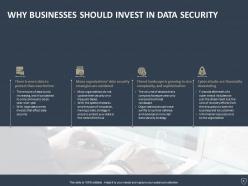
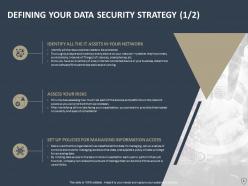
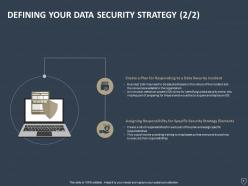
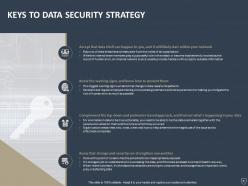
Data security is the discipline of safeguarding digital data throughout its lifespan from unwanted access, corruption, or theft. It's a notion that incorporates all aspects of information security, from hardware and storage device physical security to administrative and access controls, as well as the logical security of software applications. It also comprises policies and procedures for the organisation.Robust data security measures, when effectively executed, will safeguard an organization's information assets not just from cybercriminals, but also from insider threats and human mistake, which are still among the primary causes of data breaches today. As we enter a new era of cyber threats, it is more important than ever to ensure that your data is secure. That’s why SlideTeam has created a library of cyber security PowerPoint templates to help you build presentations that educate and inform your audience about the latest threats, how to protect themselves, and what to do if their data is compromised. These templates are easy to use and can be customized to fit your specific needs. So don’t wait – download them now and start protecting your data today.
People who downloaded this PowerPoint presentation also viewed the following :
Data security powerpoint presentation slides with all 22 slides:
Our Data Security Powerpoint Presentation Slides ensure you have extra time. They create a cushion for you.




FAQs for Data security
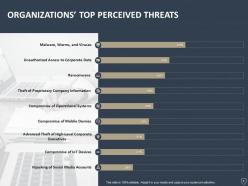
Look, phishing is still the biggest pain - people just can't help clicking suspicious links even after tons of training. Ransomware's another nightmare that'll completely freeze your systems until you cough up money. Then there's insider threats, which honestly might be your trickiest problem since these folks already have access. Could be a disgruntled employee or just someone who screwed up. Don't forget third-party vendors getting breached and dragging your data down with them. Keep tabs on user permissions and run those security training sessions regularly.
First thing - figure out what actually needs encrypting. Don't go crazy and encrypt everything, it'll just slow you down. Customer data, financials, passwords - that's your priority stuff. AES-256 works great for stored files, TLS 1.3 for anything moving around. Oh and databases/backups too obviously. Here's the thing though - key management is where people mess up. Keep those keys separate from your encrypted data, maybe use a proper key service. Honestly I'd start with just your most sensitive data and build from there once you get the hang of it.
Dude, train your employees - it's literally your best defense. Most breaches happen because someone clicks a sketchy email or uses "password123" (I wish I was joking). Hackers aren't usually breaking in through some Hollywood-style cyber heist. They're just waiting for Karen from accounting to fall for a fake IT email. Teach people to spot phishing, create decent passwords, and handle sensitive data properly. Way cheaper than cleaning up after a breach, trust me. Just make the training actually useful - not some boring generic slideshow everyone sleeps through.
Yeah so basically GDPR and CCPA changed the game completely. No more collecting whatever data you want - now you need explicit consent for everything. The fines are insane too, like GDPR can hit you with 4% of your entire global revenue. Ouch. But honestly? These rules push you toward way better security practices anyway. You'll want encryption by default, regular audits, proper breach notifications. Users get real control over their stuff. Oh and start by figuring out what personal data you're actually collecting and where it all lives - that's like step one for getting compliant.
Honestly, just make your passwords stupidly long - like 12+ characters minimum. Mix up uppercase, lowercase, numbers, and weird symbols. I used to reuse the same password everywhere (terrible idea btw) until I got a password manager. Bitwarden's free and does all the heavy lifting for you. Also, turn on two-factor authentication for anything important - email, banking, all that stuff. Oh, and here's something I learned recently: passphrases work great too. Like "PurpleCat47!Runs" is way easier to remember than some random jumble but still secure.
Honestly, get an incident response plan sorted before anything goes wrong - that's the big one. Figure out who's doing what, how you'll talk to customers and your team, plus the technical steps to lock things down. I've watched companies totally panic without one and it's painful to see. Run practice drills so nobody's learning on the job during actual chaos. Quick containment is everything when it hits. Oh, and keep evidence intact - you'll need it later. Be upfront with people affected too. Seriously though, start writing that plan this week if you haven't already.
So there's some cool stuff happening with data privacy tech right now. Zero-trust architecture is probably the biggest one - basically assumes everything's already hacked until you can prove it isn't. Makes total sense honestly. Homomorphic encryption is pretty mind-blowing too - you can actually run analytics on encrypted data without ever decrypting it. There's also differential privacy and privacy-preserving AI for sensitive datasets. I'd definitely start with zero-trust though, since you can actually implement that with what you've got. The encryption stuff is amazing but way more complex to roll out.
Honestly, just start by figuring out what data you actually have and where it's sitting around. Map out who can access what - you'd be surprised how messy this gets over time. Run some vulnerability scans and dig up whatever policies you've got documented (if any lol). Test your incident response plan too because most teams freeze up when stuff hits the fan. Third-party vendors? Those guys are usually your biggest headache security-wise. Be ruthlessly honest about the gaps instead of just going through the motions. Quarterly check-ins help keep things fresh.
Look, cloud storage scares me sometimes - data breaches and account hijacking are real threats. Two-factor authentication is your best friend here. Encrypt anything sensitive before you upload it. Pick providers with solid security certs, not some sketchy startup. Those terms of service are mind-numbing but actually read them so you know where your data ends up. Golden rule though? Never store anything that'd tank your business if it leaked. My cousin learned this the hard way with client contracts. Always keep backups somewhere else too.
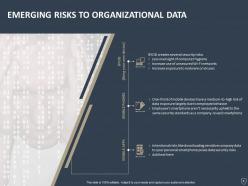
Honestly, insider threats are scarier than external hackers. Your employees already know where all the good stuff is stored and can walk right past your security. Meanwhile, outside attackers have to actually break in first - which gives you way more opportunities to spot them. The real problem? Insiders look totally normal in your system logs. Their sketchy behavior just blends in with regular work stuff. I'd watch for weird data access patterns and only give people the minimum permissions they need. Oh, and fun fact - insider attacks cause like 60% more damage and take forever to detect. Not great.
Honestly, security audits are like preventive maintenance for your tech stuff - they spot problems before hackers find them first. You'll catch outdated software, wonky access controls, all that boring but important stuff. I know it sounds like a pain, but it's way better than dealing with a breach later. Plus you need the documentation anyway for compliance stuff (assuming that applies to you). I'd do them quarterly minimum, or whenever you change something major in your systems. Short bursts of annoyance vs potential disaster - pretty easy choice.
Honestly, you don't need to break the bank on this stuff. Bitwarden's free and works great for passwords - way better than using "password123" everywhere lol. Turn on two-factor auth wherever you can. I hate those update notifications as much as anyone, but they actually fix security holes so just do them. Back everything up to the cloud or a drive. Your biggest risk? Someone clicking a sketchy email link. Train people to spot phishing attempts because that's how most companies get screwed. Free antivirus is fine, and encrypt anything sensitive. The trick is actually sticking to these habits consistently.
Dude, AI is a game-changer for catching data breaches. It spots weird patterns in network traffic way faster than old-school security tools ever could. Basically works like a super smart guard dog that never gets tired - learns what's "normal" for your systems and flags anything sketchy. Real-time responses mean you catch hackers in the act instead of finding out weeks later when it's too late. It'll analyze user behavior, catch suspicious logins, even predict vulnerabilities before they get exploited. Just make sure your security team actually knows how to use whatever AI tools you end up with, or you're kinda wasting money.
Honestly, you've gotta be super picky about who you work with. Get their security audits, compliance certs, references - the whole deal before handing over any data. Contracts are huge too - nail down exactly how they'll handle your stuff, breach notifications, liability, all of it. Most companies totally blow this off and pay for it later. Oh, and don't give them access to everything - just what they actually need. I'd also do regular check-ins and security assessments. Basically treat their security like it's part of yours, because it kinda is.
Dude, it's seriously bad news. Data breaches will hit you with massive GDPR fines - we're talking millions if you handle EU data. Your reputation gets destroyed overnight and customers bail immediately. Legal costs stack up fast, plus you'll probably face lawsuits from users whose data got compromised. Business operations get completely disrupted too. The worst part? Rebuilding trust takes forever - way longer than you'd think. Honestly, just start with basic encryption and security audits now. Don't become another company that thought "it won't happen to us" until it did.
No Reviews