


Devops for data use cases it powerpoint presentation slides




Try Before you Buy Download Free Sample Product
 Impress Your
 Audience
 100%
100% Editable
 Save Hours
 of Time


This PowerPoint presentation covers the Use Cases of DevOps templates. This presentation will be helpful for companies using DevOps applications. This PPT can be used by Online Financial Trading companies, Car manufacturing Industry, Airlines Industry, etc. The outline of this deck is as follows software test automation solution, configuration management, monitoring for containers and serverless, etc. Further, this PPT includes DevOps test management and automation, artificial intelligence for IT AIOPs, continuous integration and delivery. Lastly, this presentation covers constant integration and continuous delivery or continuous deployment solution. Download our 100 percent editable and customizable template, which is also compatible with Google Slides.
People who downloaded this PowerPoint presentation also viewed the following :
Content of this Powerpoint Presentation
Slide 1: This slide displays the title i.e. 'DevOps for Data Use Cases (IT)' and your Company Name.
Slide 2: This slide presents the table of contents.
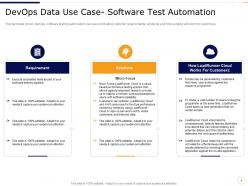
Slide 3: This slide exhibits DevOps software testing automation use cases including customer requirements, solutions, etc.
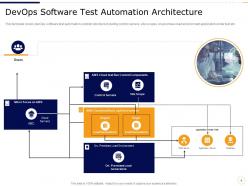
Slide 4: This slide covers DevOps software test automation solution structure including control servers, site scopes, etc.
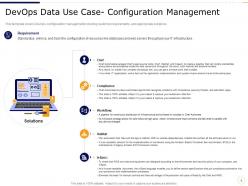
Slide 5: This slide covers DevOps configuration management including customer requirements, and appropriate solutions.
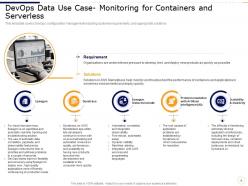
Slide 6: This slide presents DevOps monitoring for containers and serverless.
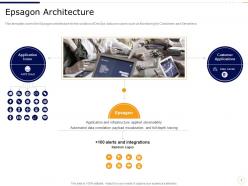
Slide 7: This slide covers the epsagon architecture for the solution of DevOps data use cases such as Monitoring for Containers and Serverless.
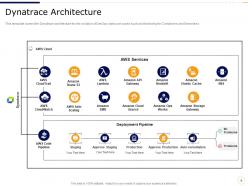
Slide 8: This slide displays the Dynatrace architecture for the solution of DevOps data use cases such as Monitoring for Containers and Serverless.
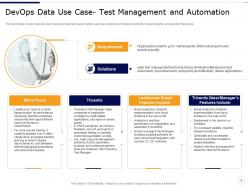
Slide 9: This slide exhibits DevOps test management and automation use case solution including customer requirements, and product features.
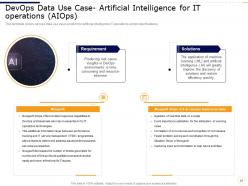
Slide 10: This slide covers DeVops data use case solution for artificial intelligence IT operations and product features.
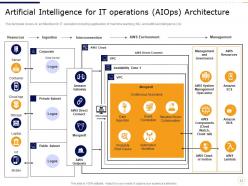
Slide 11: This slide depicts AI architecture for IT operation including application of machine learning ( ML) and artificial intelligence ( AI).
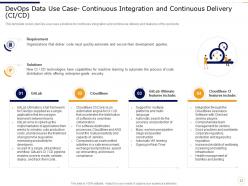
Slide 12: This slide covers DevOps use case solutions for continues integration and continuous delivery and features of the products.
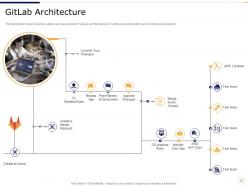
Slide 13: This slide explains DevOps data use case solution GitLab architecture for Continuous Integration and Continuous Delivery.
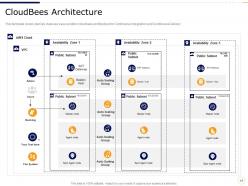
Slide 14: This slide covers DevOps data use case solution cloudbees architecture for Continuous Integration and Continuous Delivery.
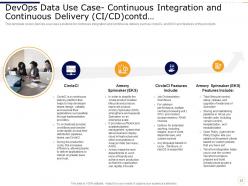
Slide 15: This slide displays DevOps use case solutions for continues integration and continuous delivery.
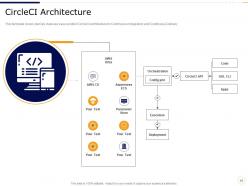
Slide 16: This slide covers DevOps data use case solution CircleCI architecture for Continuous Integration and Continuous Delivery.
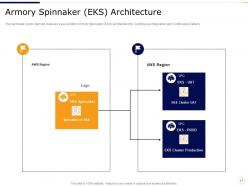
Slide 17: This slide presents DevOps data use case solution Armory Spinnaker (EKS) architecture.
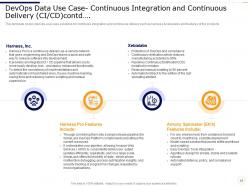
Slide 18: This slide displays DevOps use case solutions for continues integration and continuous delivery.
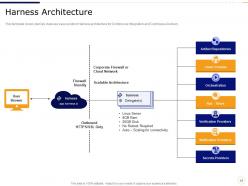
Slide 19: This slide covers DevOps data use case solution Harness architecture for Continuous Integration and Continuous Delivery.
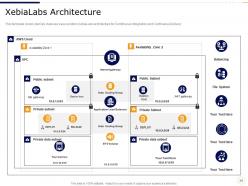
Slide 20: This slide displays DevOps data use case solution XebiaLabs architecture for Continuous Integration and Continuous Delivery.
Slide 21: This is the icons slide.
Slide 22: This slide depicts title for additional slides.
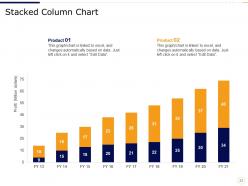
Slide 23: This slide shows yearly profits stacked column chart for different products. The charts are linked to Excel.
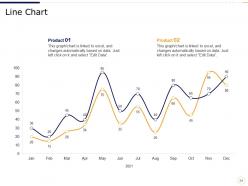
Slide 24: This slide shows monthly line chart for different products. The charts are linked to Excel.
Slide 25: This slide displays about the company, target audience and its client's values.
Slide 26: This slide presents vision, mission and goals.
Slide 27: This slide exhibits posts for past feedbacks of clients.
Slide 28: This slide covers your targets.
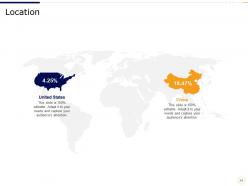
Slide 29: This slide showcases location in world map.
Slide 30: This slide displays puzzle for your company.
Slide 31: This slide presents quotes.
Slide 32: This slide exhibits venn for company.
Slide 33: This slide shows the ideas generated.
Slide 34: This is thank you slide and contains contact details including office address, phone no., etc.
Devops for data use cases it powerpoint presentation slides with all 34 slides:
Use our DevOps For Data Use Cases IT Powerpoint Presentation Slides to effectively help you save your valuable time. They are readymade to fit into any presentation structure.
FAQs for Devops for data use cases it
DevOps for data differs from traditional DevOps through data pipeline orchestration, schema versioning, data quality validation, lineage tracking, and specialized testing frameworks for datasets rather than applications. While traditional DevOps focuses on software deployment and infrastructure automation, data-centric DevOps emphasizes data governance, compliance requirements, and statistical validation, with organizations in finance and healthcare finding that robust data workflows ultimately deliver faster insights and regulatory compliance.
Organizations integrate data governance within DevOps through automated policy enforcement, embedded data quality checks, and continuous compliance monitoring throughout development pipelines. This strategic combination enables teams to maintain regulatory standards while accelerating deployment cycles, with financial services and healthcare sectors finding that automated governance reduces manual oversight by 60% while ensuring data integrity and compliance at scale.
**INPUT**: What tools are most effective for managing data workflows in a DevOps environment? **OUTPUT**: Effective data workflow management tools include Apache Airflow, Jenkins, GitLab CI/CD, Kubernetes, Docker, and cloud-native solutions like AWS Step Functions or Azure Data Factory. These platforms streamline data pipeline automation, version control, and deployment processes, with many financial services and healthcare organizations finding that integrated toolchains ultimately deliver faster data processing, improved reliability, and enhanced operational efficiency.
CI/CD in data pipelines automates testing, validation, and deployment of data workflows, ensuring code changes, schema updates, and pipeline configurations are systematically integrated and delivered. This approach enables data teams to deploy faster, more reliable data solutions while minimizing downtime, with organizations in finance and healthcare finding that automated testing catches data quality issues early, ultimately delivering more trustworthy analytics and reduced operational overhead.
Versioning and managing datasets in DevOps presents challenges including data lineage tracking, schema evolution management, storage scalability, integration complexity, and synchronization across development environments. These challenges require strategic combination of data governance frameworks, automated versioning tools, and robust pipeline architectures, with many organizations finding that proper dataset management ultimately delivers improved data quality, faster deployment cycles, and enhanced collaboration between development teams.
Machine learning models can be efficiently deployed and monitored using DevOps practices through automated CI/CD pipelines, containerization with Docker and Kubernetes, infrastructure as code, and comprehensive monitoring systems. These approaches streamline model deployment by enabling version control, automated testing, and real-time performance tracking, with many organizations finding that MLOps frameworks ultimately deliver faster model iterations and improved operational efficiency.
Automation streamlines data model testing through continuous integration pipelines, automated unit testing, regression testing, performance benchmarking, and real-time validation checks. These automated processes enable data teams to detect model drift, validate accuracy against production data, and ensure consistent performance across environments, ultimately delivering faster deployment cycles and more reliable data-driven insights.
Teams ensure data quality and integrity during rapid DevOps cycles through automated testing pipelines, continuous data validation, schema version control, and real-time monitoring systems. These practices enable organizations to catch data anomalies early, maintain consistent data formats across environments, and implement rollback capabilities, with many financial services and healthcare companies finding that automated quality gates significantly reduce production errors while accelerating delivery timelines.
Key metrics include deployment frequency, lead time for data changes, mean time to recovery, data quality scores, and pipeline success rates. These metrics enable organizations to monitor operational efficiency, identify bottlenecks, and ensure reliable data delivery, with many enterprises finding that tracking these indicators ultimately delivers faster insights, reduced downtime, and enhanced competitive advantage.
Cross-functional teams improve collaboration for data projects through shared repositories, automated testing pipelines, integrated communication tools, and standardized deployment processes that align data scientists, engineers, and operations teams. These practices streamline workflows by eliminating silos, accelerating model deployment, and ensuring consistent data quality, with many organizations finding that collaborative DevOps approaches reduce project timelines while enhancing reliability.
DevOps data security practices include encryption at rest and in transit, role-based access controls, automated vulnerability scanning, secrets management systems, and data masking techniques. These approaches streamline compliance while minimizing exposure risks, with financial services and healthcare organizations finding that strategic implementation ultimately delivers enhanced regulatory adherence and operational confidence.
Data observability in DevOps environments is enhanced through automated monitoring pipelines, real-time data quality checks, comprehensive logging systems, distributed tracing capabilities, and integrated alerting mechanisms. These technologies streamline visibility by tracking data lineage across systems, identifying anomalies instantly, and enabling proactive issue resolution, with many organizations finding that enhanced observability ultimately delivers faster incident response and improved data reliability.
Containerization revolutionizes data application management in DevOps by enabling consistent deployment environments, simplified scaling, automated orchestration, and enhanced resource isolation. Through Docker and Kubernetes, organizations streamline data pipeline deployments, accelerate development cycles, and ensure seamless portability across cloud environments, with many financial services and healthcare institutions finding significantly improved operational efficiency and reduced infrastructure costs.
Balancing speed and compliance in DevOps data deployments requires implementing automated compliance checks, continuous monitoring frameworks, and governance-as-code practices throughout the development pipeline. Financial services and healthcare organizations achieve this through automated testing protocols, real-time audit trails, and regulatory validation tools, ultimately delivering faster deployments while maintaining strict compliance standards and reducing manual oversight burdens.
Emerging trends include DataOps pipelines for continuous data integration, infrastructure-as-code for scalable data platforms, containerized data processing with Kubernetes, automated data quality testing, and GitOps workflows for data pipeline versioning. These approaches streamline data engineering by reducing deployment times, enhancing collaboration between teams, and ensuring consistent data reliability, with many organizations finding that automated testing and version control significantly accelerate their data-to-insights delivery.
-
Understandable and informative presentation.
-
Presentation Design is very nice, good work with the content as well.
-
Easy to edit slides with easy to understand instructions.