


Devops on cloud powerpoint template slides powerpoint presentation slides




Try Before you Buy Download Free Sample Product
 Impress Your
 Audience
 100%
100% Editable
 Save Hours
 of Time


Introducing DevOps On Cloud PowerPoint Template Slides PowerPoint Presentation Slides. Provide an overview of DevOps with this attention-grabbing PPT slideshow. This presentation helps to understand the need for DevOp, how it is different from traditional IT, DevOps use cases in business, lifecycle, roadmap, and so on. Provide an overview of how DevOps is different from agile by using the content-ready DevOps strategy PPT visuals. The slides also explain the roles, responsibilities, and skills of DevOps engineers. DevOps automation tools and DevOp roadmap for implementation in the organization can be discussed effectively. Provide an overview of DevOps on the cloud by describing cloud computing, characteristics of cloud computing, benefits, top risks related to cloud computing, etc. Cloud computing use cases and cloud deployment models can be presented with the help of visual attention-grabbing DevOps implementation roadmap PowerPoint slides. The roadmap to integrate cloud computing in business can be depicted easily by using the DevOps implementation strategy PowerPoint slideshow.
People who downloaded this PowerPoint presentation also viewed the following :
Content of this Powerpoint Presentation
Slide 1: This title slide introduces DevOps on Cloud PowerPoint Template Slides. Add the name of your company here.
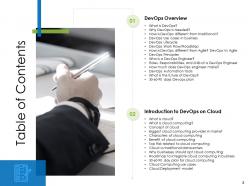
Slide 2: This slide contains the Table of Contents. It includes - DevOps Overview and Introduction to DevOps on Cloud.
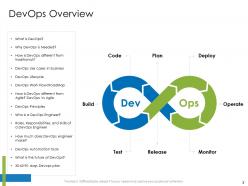
Slide 3: This slide presents the DevOps Overview.
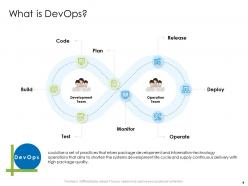
Slide 4: This slide presents What is DevOps?
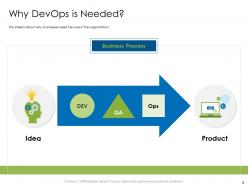
Slide 5: This slide presents Why DevOps is Needed? It is about why businesses need DevOps in the organization.
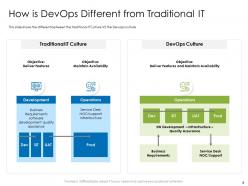
Slide 6: This slide presents How is DevOps different from Traditional IT. It shows the difference between the traditional IT Culture VS the DevOps culture.
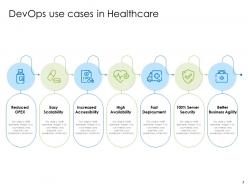
Slide 7: This slide presents the DevOps use cases in healthcare.
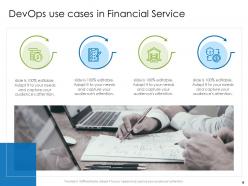
Slide 8: This slide presents the DevOps use cases in Financial Service.
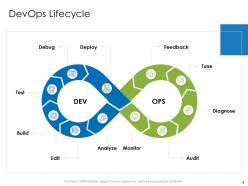
Slide 9: This slide presents the DevOps Lifecycle.
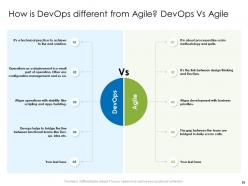
Slide 10: This slide presents How is DevOps different from Agile? DevOps Vs Agile.
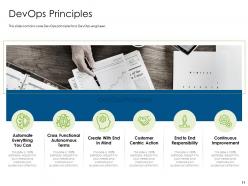
Slide 11: This slide presents the DevOps Principles.
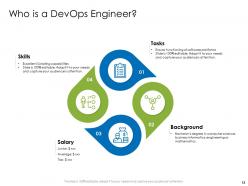
Slide 12: This slide presents Who is a DevOps Engineer?
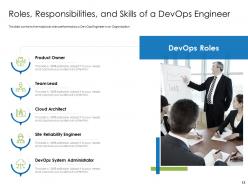
Slide 13: This slide presents the Roles, Responsibilities, and Skills of a DevOps Engineer.
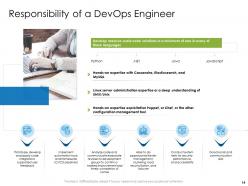
Slide 14: This slide presents the Responsibility of a DevOps Engineer.
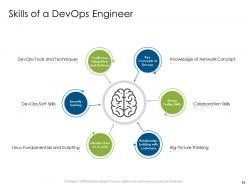
Slide 15: This slide presents the Skills of a DevOps Engineer.
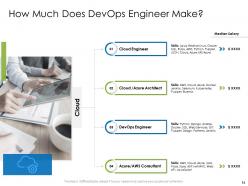
Slide 16: This slide presents How Much Does DevOps Engineer Make?
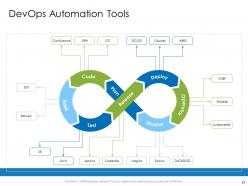
Slide 17: This slide presents the DevOps Automation Tools.
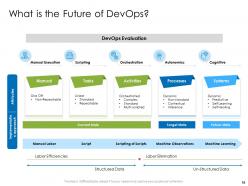
Slide 18: This slide presents What is the Future of DevOps?
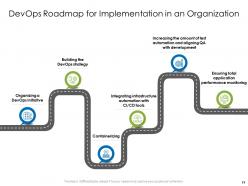
Slide 19: This slide presents the DevOps Roadmap for Implementation in an Organization.
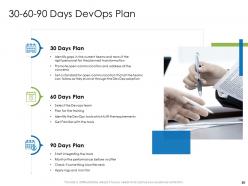
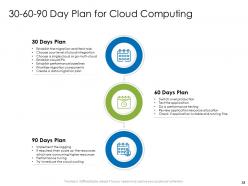
Slide 20: This slide presents the 30-60-90 Days DevOps Plan. Identify gaps in the current teams and recruit the right personnel for the planned transformation.
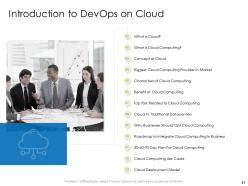
Slide 21: This is a table of content slide showing the Introduction to DevOps on Cloud.
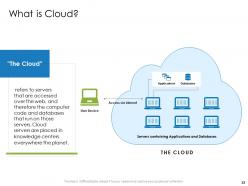
Slide 22: This slide presents What is Cloud? It refers to servers that are accessed over the web, and therefore the computer code and databases that run on those servers.
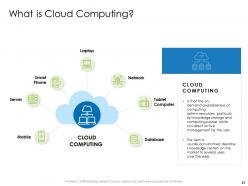
Slide 23: This slide presents What is Cloud Computing? The term is usually accustomed to describe knowledge centers on the market to several users over the web.
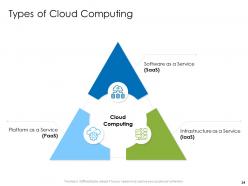
Slide 24: This slide presents the Types of Cloud Computing.
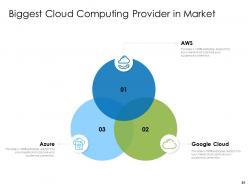
Slide 25: This slide presents the Biggest Cloud Computing Provider in Market.
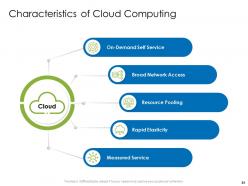
Slide 26: This slide presents the Characteristics of Cloud Computing.
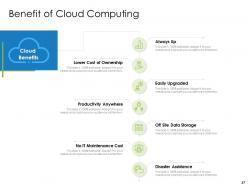
Slide 27: This slide presents the Benefit of Cloud Computing.
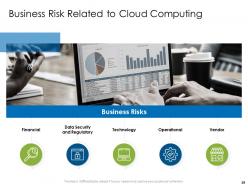
Slide 28: This slide presents the Business Risk Related to Cloud Computing.
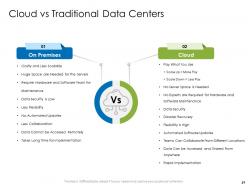
Slide 29: This slide presents the Cloud vs Traditional Data Centres.
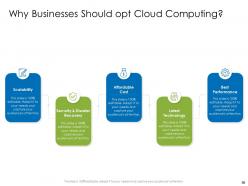
Slide 30: This slide presents Why Businesses Should opt for Cloud Computing?
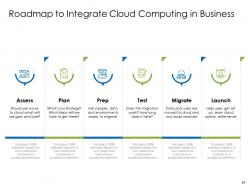
Slide 31: This slide presents the Roadmap to Integrate Cloud Computing in Business.
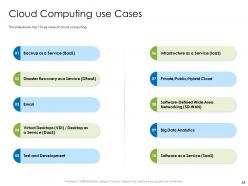
Slide 33: This slide presents the Cloud Computing use Cases.
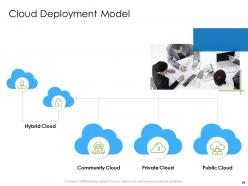
Slide 34: This slide presents the Cloud Deployment Model.
Slide 35: This is the DevOps on Cloud Powerpoint Template Slides Icons Slide.
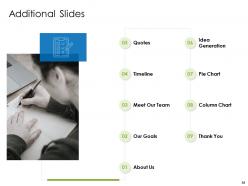
Slide 36: This slide introduces the Additional Slides. It includes - Idea Generation, Pie Chart, Column Chart, etc.
Slide 37: This slide contains the information about the company aka the ‘About Us’ section. This includes the Value Clients, the Target Audience, and Preferred by Many.
Slide 38: This slide presents Our Goals.
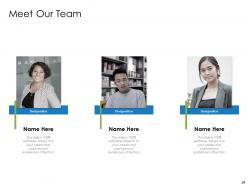
Slide 39: This slide shows the members of the company team with their name, designation, and photo.
Slide 40: This slide is a Timeline template to showcase the progress of the steps of a project with time.
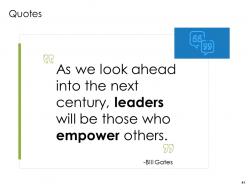
Slide 41: This is the Quotes slide.
Slide 42: This slide is the Idea Generation slide. It is used to brainstorm ideas for a project.
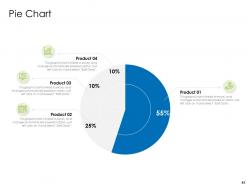
Slide 43: This slide presents the Pie Chart.
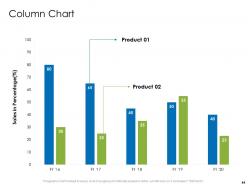
Slide 44: This slide shows a Column Chart that compares 2 products’ sales over a timeline of financial years.
Slide 45: This is a Thank You slide where details such as the address, contact number, email address are added.
Devops on cloud powerpoint template slides powerpoint presentation slides with all 45 slides:
Use our Devops On Cloud Powerpoint Template Slides Powerpoint Presentation Slides to effectively help you save your valuable time. They are readymade to fit into any presentation structure.
FAQs for Devops on cloud powerpoint template slides
Honestly, the biggest wins are speed and not bleeding money on servers you don't need. Your deployment cycles get crazy fast since cloud stuff spins up instantly. Scaling is where it really shines though - you're only paying for what you actually use instead of those expensive servers sitting around doing nothing half the time. Dev and ops teams finally stop hating each other since they're all using the same dashboards. Oh, and the monitoring tools are actually decent compared to older setups. I'd start with getting your CI/CD pipeline automated first - that's where you'll notice results right away.
Honestly, just pick one of the big cloud CI/CD tools first - CodePipeline if you're on AWS, Azure DevOps, or Google Cloud Build. They hook right into your existing infrastructure which is clutch. Set up triggers from your repos, configure builds to use cloud compute, and get your deployment permissions sorted. The cool part? Auto-scaling means no more "build server's down again" headaches. Oh, and definitely use infrastructure as code so everything's tracked in version control. I'd start with just one service though - don't go crazy trying to migrate everything at once.
Dude, automation is literally what makes DevOps work in the cloud. You've got Infrastructure as Code spinning up environments the same way every time, CI/CD pipelines pushing your code without drama, and auto-scaling that just... handles traffic spikes while you're getting coffee. Trust me, doing this stuff manually is pure hell - I've been there. Cloud platforms throw so many automation tools at you it's almost overwhelming. My advice? Start with automating deployments first. That'll save you the most headaches. Then work your way up to infrastructure and monitoring once you're comfortable.
So microservices and DevOps are like a perfect match - they fix each other's pain points. With microservices, your CI/CD gets so much easier since you can ship individual services without breaking everything else. DevOps stuff like automated testing and containers make juggling all those services actually doable instead of pure chaos. Cloud platforms handle the scaling and infrastructure headaches for you. Honestly, I'd start simple though - just containerize one service first and get that deployment automated. Then you can go crazy with the rest. Trust me, trying to do everything at once is a recipe for losing your sanity.
Start with centralized logging - ELK stack or CloudWatch will save your sanity when things break. Distributed tracing too. Set up alerts for response times, error rates, and resource usage, but don't go crazy or you'll end up ignoring everything (been there). Tag consistently so you can actually filter by environment and service. JSON structured logging is honestly a game changer for searching through stuff. I'd focus on your critical user flows first, then build out from there. Oh, and monitor end-to-end journeys - partial visibility is almost worse than none.
Don't wait until the end to think about security - build it right into your pipeline from day one. Automated scanning tools like Snyk or Aqua are lifesavers for catching issues in your code and containers during builds. Yeah, "shift left" sounds like corporate speak, but it actually makes sense here. Set up proper IAM roles and log everything you can think of. Never hardcode credentials - use secrets management instead (learned that one the hard way). The trick is making your builds fail automatically when security issues pop up. Honestly, just start with one tool in your CI/CD and add more later.
Honestly, complexity is gonna be your biggest headache. Each cloud provider has totally different APIs and tools, so your CI/CD pipelines turn into this nightmare to manage. Security gets weird too when you're bouncing between AWS, Azure, GCP - different access controls everywhere. It's like... imagine trying to juggle while riding a unicycle, but the balls keep changing shape. My advice? Start with platform-agnostic stuff like Terraform and Kubernetes right away. Trust me on this one. Otherwise you'll be drowning in configurations that don't talk to each other.
Honestly, cloud-native tools are a total game-changer for DevOps stuff. They come with automation and scaling built right in, so you don't have to cobble everything together yourself. Your CI/CD pipelines scale automatically, containers fix those annoying "works on my machine" problems, and the monitoring actually catches issues before users start complaining. Most tools work well together since they're all designed for cloud environments. Infrastructure as code is probably my favorite part though - you can spin up entire environments with just a few commands. I'd say start small, containerize one app and try a managed CI/CD service first.
So IaC lets you treat infrastructure like regular code - version it, test it, deploy it. No more "works on my machine" headaches. You can spin up identical environments in minutes instead of waiting around for days. Your team reviews infrastructure changes through pull requests, catches weird configs early, and if something breaks you just roll back instantly. Honestly once you try it there's no going back. I'd start small with Terraform on one service first - don't go crazy trying to convert everything at once. Trust me, you'll get why people won't shut up about it.
Focus on these four: how often you're deploying, lead time from commit to production, recovery time when stuff breaks, and your change failure rate. Recovery time is gonna shock you - it's always worse than you think. Don't forget cloud costs per deployment either, that stuff adds up fast if you're not careful. Pick just one to start with this week and get decent visibility into it. I'd probably go with deployment frequency since it's straightforward. Then slowly build out your dashboard from there. You'll burn out trying to track everything at once.
Honestly, cost management changes everything about how you do DevOps in the cloud. It's actually pretty stressful at first - you're trying to move fast but also not blow your budget. You'll end up automating resource scaling and getting really good at tagging stuff properly. The weird thing is, those constraints actually make your practices better. You start right-sizing everything, auto-shutting down dev environments, monitoring like crazy. Oh, and set up cost alerts ASAP. Way better than explaining a surprise $8K AWS bill to your boss (learned that one the hard way). Smart cost controls aren't just about money - they force better DevOps habits.
Dude, version control is everything in cloud DevOps - it's literally your safety net. You'll want Git tracking all your code, infrastructure configs, deployment scripts, the whole mess. Teams working remotely? Multiple devs? Without it you're asking for chaos and people overwriting each other's work. Plus when stuff breaks (spoiler: it will), you can actually roll back instead of panic-debugging at 2am. The compliance folks eat up those audit trails too. Honestly, treat your infrastructure like code and commit everything. I learned this the hard way trying to recreate environments from memory - never again.
So basically containers let you package your app with all its dependencies, which makes moving between different cloud platforms way easier. Docker's pretty much the standard - I was skeptical at first but it's actually a game changer. The same container runs identically on your laptop and in production, which is huge for deployment consistency. Scaling gets faster, rollbacks are cleaner, and you don't get those annoying "works on my machine" issues anymore. I'd suggest picking one simple app to containerize first. Don't try to do everything at once or you'll hate yourself.
So you're gonna want to hit three main things: cloud basics (AWS, Azure, whatever), CI/CD stuff like Jenkins, and infrastructure-as-code with Terraform. The automation part always trips people up first - I've seen it happen so many times. Get your devs learning Docker and Kubernetes. Ops team needs monitoring tools like Prometheus or Datadog. Oh, and the soft skills thing is huge - breaking down silos means people actually have to talk to each other, which is harder than it sounds. Start with hands-on labs. Cloud certs are worth it too since they give you a clear path to follow.
So these tools basically tear down those annoying walls between your dev, ops, and QA people. Real-time chat plus CI/CD notifications all flowing into shared dashboards where everyone sees what's actually happening. Game-changer when monitoring alerts hit your team channel instead of disappearing into email hell - trust me on this one. The async stuff is clutch too since cloud teams are scattered everywhere. Honestly? Just start by piping your deployment notifications into Slack or Teams. You'll be shocked how fast problems get fixed when people aren't working in the dark.
-
Top Quality presentations that are easily editable.
-
Attractive design and informative presentation.
-
Enough space for editing and adding your own content.
-
Great quality product.
-
Really like the color and design of the presentation.