


Differences Between Machine Learning ML Artificial Intelligence AI And Deep Learning DL





Try Before you Buy Download Free Sample Product
 Impress Your
 Audience
 100%
100% Editable
 Save Hours
 of Time


Our Differences Between Machine Learning ML Artificial Intelligence AI And Deep Learning DL are topically designed to provide an attractive backdrop to any subject. Use them to look like a presentation pro.
People who downloaded this PowerPoint presentation also viewed the following :
Differences Between Machine Learning ML Artificial Intelligence AI And Deep Learning DL with all 10 slides:
Use our Differences Between Machine Learning ML Artificial Intelligence AI And Deep Learning DL to effectively help you save your valuable time. They are readymade to fit into any presentation structure.


FAQs for Differences Between Machine Learning ML Artificial Intelligence AI And
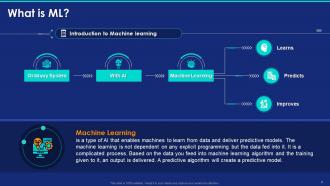
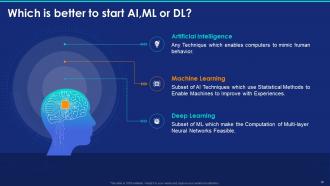
So AI is basically the big umbrella term for anything that mimics human thinking. Machine learning sits under that - it's where you feed data to algorithms so they learn patterns and make decisions on their own. Deep learning? Just ML but with neural networks that have tons of layers (that's the "deep" part). Picture it like nesting dolls - AI holds ML, ML holds deep learning. Honestly, most stuff people call "AI" these days is really just machine learning anyway. But using the right term when you're talking to clients or whoever makes you sound like you actually know what you're talking about instead of just buzzword dropping.
Okay so AI is basically the catch-all term for any system that can do stuff humans usually do with their brains. Machine learning is how you actually build AI - you feed algorithms tons of data so they learn to make predictions. Deep learning gets more specific - it's ML but with these crazy complex neural networks that have multiple layers (that's the "deep" part). Picture it like nesting dolls, but backwards? AI is the biggest one, ML fits inside that, and deep learning is the smallest. Honestly the terms get thrown around interchangeably which drives me nuts. But yeah - AI is what you're trying to build, ML is how you build it, and deep learning is just one particular way to do ML.
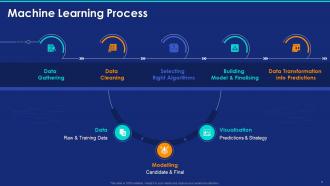
Honestly, good data makes or breaks everything in ML. Your model's only gonna be as smart as what you feed it - show it garbage examples and it'll give you garbage back. I've watched too many projects crash because people got all excited about cool algorithms but skipped the boring data cleanup part. Quality beats quantity here, hands down. You want stuff that actually represents your real problem, not just whatever's easiest to grab. Sure, you need enough data to work with, but I'd rather have a smaller dataset that's clean and relevant than some massive mess. Trust me, spend the time upfront getting your data right.
Smaller datasets? Go with traditional ML. Deep learning needs tons of data to work well - otherwise you're just making your life harder. Random forests or logistic regression will probably give you the same accuracy anyway. Plus they train way faster and you can actually explain what's happening under the hood. That matters more than people think, especially in business settings. Tabular data especially works better with traditional methods. I mean, why spend weeks training some complex neural network when a simple model does the job? Start basic first - if it sucks, then maybe consider the fancy stuff.
So neural networks are like the engine that makes deep learning tick. Picture layers of connected nodes processing info - similar to how brain neurons work together. "Deep" just means you're stacking tons of these layers on top of each other. Simple features get learned first, then more complex stuff as you go down. That's how it crushes things like image recognition that regular ML can't handle well. Honestly, I'd mess around with basic neural networks before jumping into the deep learning rabbit hole - way less overwhelming that way.
Okay so basically it comes down to whether you're spoon-feeding the algorithm answers or not. Supervised learning means you give it labeled examples - like "here's 1000 dog pics, here's 1000 cat pics, now figure out what this new one is." Way easier to work with honestly. Unsupervised is when you just throw raw data at it and say "find me some patterns" - stuff like grouping customers or spotting weird outliers. It's cooler but also way more of a pain to debug. I'd definitely start with supervised learning first, you'll actually know if it's working or completely broken.
Deep learning's literally everywhere now. Facebook tags your photos, Google Photos searches through your pics, and those Netflix suggestions that know you too well? That's all deep learning. Self-driving cars use computer vision to not crash into things (hopefully). Banks catch fraud with it, hospitals analyze scans, and Alexa understands what you're mumbling about. Oh, and Spotify somehow knows your music taste better than you do. If you want to try implementing it, pick something where you've got tons of data and need to spot patterns. That's where it really shines.
Pick your metrics based on what you're actually trying to solve. Classification problems? Yeah, accuracy seems obvious but precision/recall/F1 will tell you way more about what's really happening. MSE or MAE work great for regression stuff. I got burned by accuracy once with a super imbalanced dataset - it looked amazing but the model was trash. Cross-validation saves you from that kind of embarrassment since it shows if your model actually works on new data. Just grab 2-3 metrics that make sense for your problem and test on a separate holdout set. That's honestly all you need.
Honestly, the biggest issues are bias, privacy stuff, and job losses. Your training data can be super biased without you realizing it - like, garbage in, garbage out, you know? Plus these systems hoover up tons of personal data which is sketchy. The "black box" thing drives me crazy too - AI makes decisions but can't explain why, which is terrible for medical or legal stuff. Oh, and don't get me started on automation killing jobs. I'd say audit your datasets first and actually think about who gets hurt by whatever you're building.
Honestly, just look at your data first. Got simple patterns or structured stuff? Regular ML will do fine and trains way faster. But complex things like images or natural language? That's where deep learning actually makes sense. I mean, sometimes deep learning feels like using a sledgehammer to hang a picture, but whatever works, right? Start with basic ML - you can always upgrade later if you're not hitting the accuracy you want. The massive datasets thing matters too, since deep learning kinda needs tons of data to work properly.
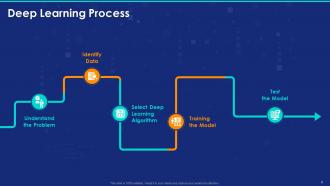
Oh man, data quality is gonna be your biggest headache - bad data basically ruins everything. Training costs add up crazy fast too. Finding clean datasets is honestly such a nightmare, and don't get me started on labeling. Your model might just memorize the training stuff instead of actually learning (overfitting). Hyperparameter tuning? Pure torture with all that trial and error. Deep networks sometimes get this vanishing gradient thing that's annoying. But seriously, just start with something simple first. Scale up later once you know what works - saves you so much pain.
Honestly, just start with Python - the whole ecosystem is pretty solid. Scikit-learn is perfect for traditional ML stuff, and you'll need pandas for data wrangling (trust me, you'll live in pandas). NumPy handles all the math behind the scenes. When you're ready for deep learning, PyTorch has way better docs than TensorFlow, though both work fine. Keras is nice if you want something simpler on top. Oh, and grab Jupyter notebooks for experimenting - makes life so much easier. Matplotlib or seaborn for plotting. Start simple with scikit-learn, then jump to PyTorch later.
So you know how training models from scratch takes forever? Transfer learning basically lets you cheat the system. Grab a pre-trained model that's already learned a bunch of features from huge datasets, then just tweak the last few layers for your specific problem. Honestly, it's a game changer - I've seen training times drop from weeks to like a day. Super helpful when you don't have tons of data too. For vision stuff, check out ImageNet models first. BERT's your go-to for text work.
Honestly, most people think AI is way smarter than it actually is. Like, they picture some human-level brain that truly "gets" things. Nope! It's mostly just pattern matching on steroids. Sure, it's impressive pattern matching, but still. Everyone's either convinced AI will solve everything or end the world next week - both are pretty ridiculous at this point. Even something like ChatGPT? Just a really sophisticated autocomplete. It doesn't actually understand your question, it's just predicting what words should come next based on training data. So when you're looking at AI tools, ignore the flashy marketing and focus on what they're actually good at doing.
Honestly, figure out what actual problems ML would solve for you first - don't just jump on the bandwagon because everyone's doing it. Your data needs to be clean though, because bad data = useless results every time. Pick one small pilot project with clear goals that people actually care about. Then decide if you want to build this stuff internally or work with outside vendors (depends on your team and budget obviously). I learned this the hard way, but start tiny, see what happens, then grow from there. Way better than trying to overhaul everything and failing spectacularly.
-
Helpful product design for delivering presentation.
-
The Designed Graphic are very professional and classic.
-
Professional and unique presentations.
-
Visually stunning presentation, love the content.
-
Innovative and attractive designs.
-
Presentation Design is very nice, good work with the content as well.
-
Informative design.
-
its soooo good
-
its soooo good