


Digital Business Revolution Powerpoint Presentation Slides




Try Before you Buy Download Free Sample Product
 Impress Your
 Audience
 100%
100% Editable
 Save Hours
 of Time


Digital transformation is required to meet changing business and market requirements by creating new or modifying existing business processes, culture, and customer experiences. Check out our competently designed Digital Business Revolution template that will optimize the business process and meet customer needs in a better way. We have covered the companys current state, which defines the need for digital transformation for the companys growth, financial performance, and competitor analysis to assess the companys market position. Furthermore, industry analysis of the digital market has been depicted by focusing on the global digital transformation market, digital revolution, SWOT analysis, and growth drivers. Here, we have also focused on the organizations digital maturity model overview, its assessment tool, etc. We have also discussed the digital transformation challenges an organization faces and its solutions. Calculation of the companys investment and ROI is done to accelerate growth and productivity in the business. The transformation plan has been covered in this template. The impact of introducing digital transformation in the industry is focused on this slide and the various dashboards to track and manage business transformation, digital finance, and inventory management progress. Get access now.
People who downloaded this PowerPoint presentation also viewed the following :
Content of this Powerpoint Presentation
Slide 1: This slide introduces Digital Business Revolution. State Your Company Name and begin.
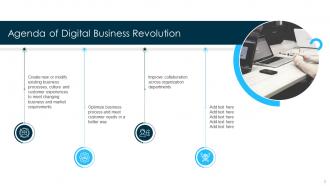
Slide 2: This slide states Agenda of the presentation.
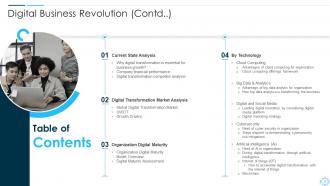
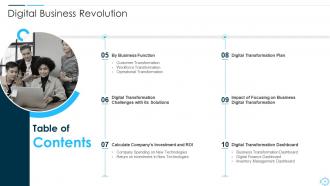
Slide 3: This slide presents Table of Content for the presentation.
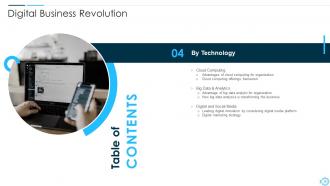
Slide 4: This is another slide continuing Table of Content for the presentation.
Slide 5: This slide highlights title for topics that are to be covered next in the template.
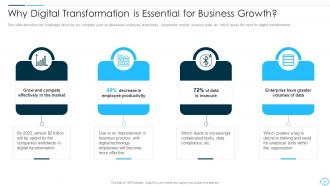
Slide 6: This slide represents Why Digital Transformation is Essential for Business Growth.
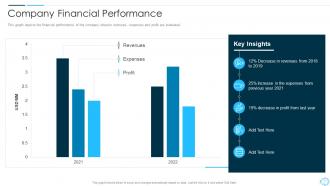
Slide 7: This slide shows financial performance of the company wherein revenues, expenses and profit are evaluated.
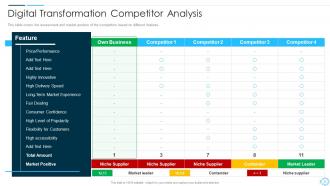
Slide 8: This slide presents assessment and market position of the competitors based on different features.
Slide 9: This slide highlights title for topics that are to be covered next in the template.
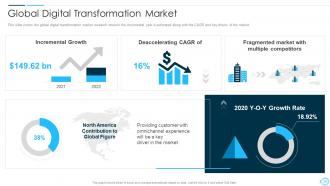
Slide 10: This slide displays the global digital transformation market research wherein the incremental year is estimated along with the CAGR and key drivers of the market.
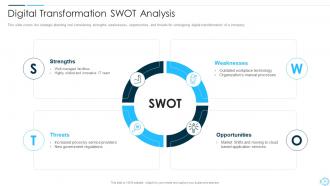
Slide 11: This slide represents the strategic planning tool considering strengths, weaknesses, opportunities, and threats for undergoing digital transformation of a company.
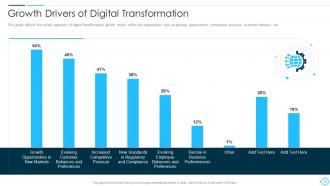
Slide 12: This slide shows holistic approach of digital transformation growth drivers within the organization.
Slide 13: This slide highlights title for topics that are to be covered next in the template.
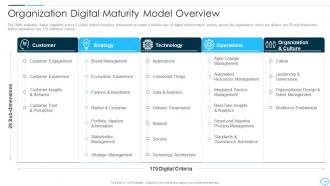
Slide 14: This slide shows digital capability across 5 clearly defined business dimensions to create a holistic view.
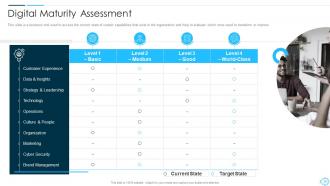
Slide 15: This slide is a business tool used to access the current state of certain capabilities that exist in the organization.
Slide 16: This slide highlights title for topics that are to be covered next in the template.
Slide 17: This slide highlights title for topics that are to be covered next in the template.
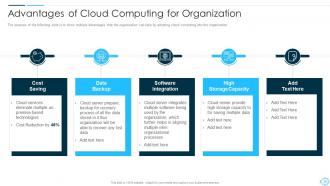
Slide 18: This slide presents Advantages of Cloud Computing for Organization.
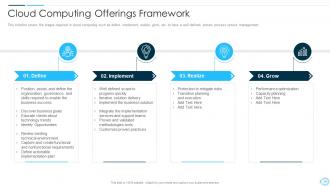
Slide 19: This slide shows Cloud Computing Offerings Framework.
Slide 20: This slide highlights title for topics that are to be covered next in the template.
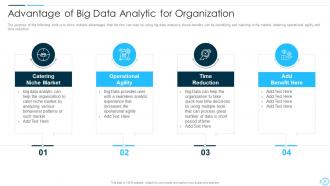
Slide 21: This slide represents Advantage of Big Data Analytic for Organization.
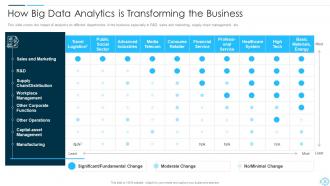
Slide 22: This slide shows How Big Data Analytics is Transforming the Business.
Slide 23: This slide highlights title for topics that are to be covered next in the template.
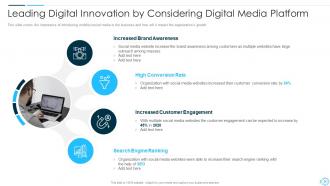
Slide 24: This slide shows Leading Digital Innovation by Considering Digital Media Platform.
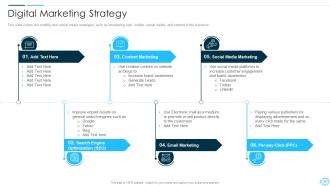
Slide 25: This slide displays mobility and social media strategies, such as introducing web, mobile, social media, etc.
Slide 26: This slide highlights title for topics that are to be covered next in the template.
Slide 27: This slide shows Table of Contents for Exhaustive Digital Transformation Deck.
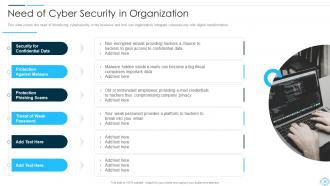
Slide 28: This slide presents need of introducing cybersecurity in the business and how can organization integrate cybersecurity with digital transformation.
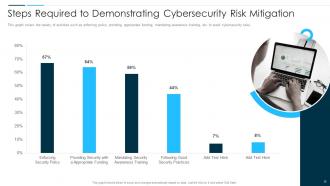
Slide 29: This slide shows Steps Required to Demonstrating Cybersecurity Risk Mitigation.
Slide 30: This slide highlights title for topics that are to be covered next in the template.
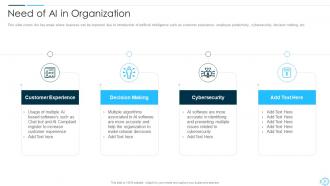
Slide 31: This slide represents the key areas where business can be improved due to introduction of artificial intelligence.
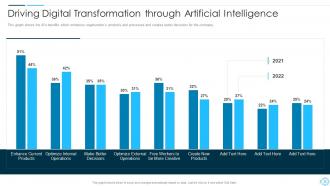
Slide 32: This slide shows Driving Digital Transformation through Artificial Intelligence.
Slide 33: This slide highlights title for topics that are to be covered next in the template.
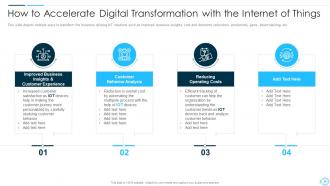
Slide 34: This slide shows How to Accelerate Digital Transformation with the Internet of Things.
Slide 35: This slide highlights title for topics that are to be covered next in the template.
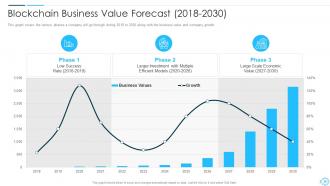
Slide 36: This slide represents Blockchain Business Value Forecast (2018-2030).
Slide 37: This slide highlights title for topics that are to be covered next in the template.
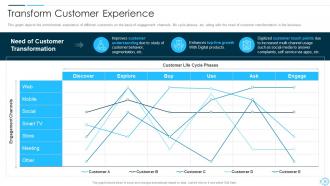
Slide 38: This slide presents omnichannel experience of different customers on the basis of engagement channels, life cycle phases, etc.
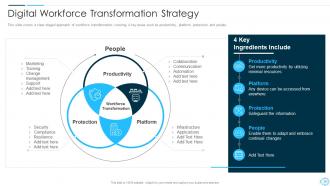
Slide 39: This slide shows clear staged approach of workforce transformation covering 4 key areas such as productivity, platform, etc.
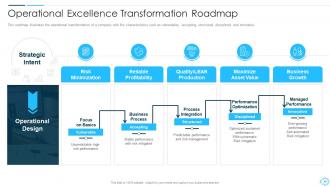
Slide 40: This slide displays Operational Excellence Transformation Roadmap.
Slide 41: This slide highlights title for topics that are to be covered next in the template.
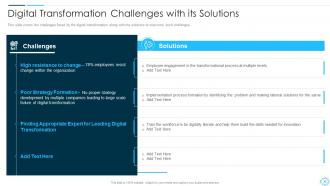
Slide 42: This slide shows Digital Transformation Challenges with its Solutions.
Slide 43: This slide highlights title for topics that are to be covered next in the template.
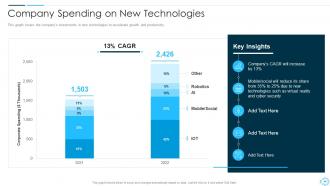
Slide 44: This slide shows company’s investments in new technologies to accelerate growth and productivity.
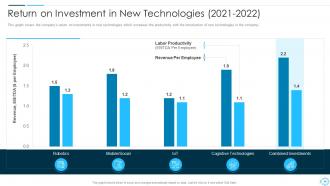
Slide 45: This slide displays Return on Investment in New Technologies (2021-2022).
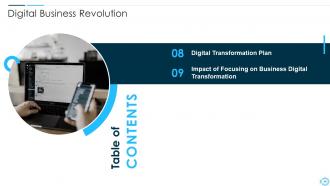
Slide 46: This slide highlights title for topics that are to be covered next in the template.
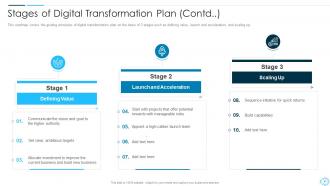
Slide 47: This slide shows guiding principles of digital transformation plan on the basis of 3 stages such as defining value, launch and acceleration.
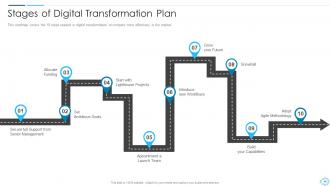
Slide 48: This slide presents 10 steps needed in digital transformation to compete more effectively in the market.
Slide 49: This slide highlights title for topics that are to be covered next in the template.
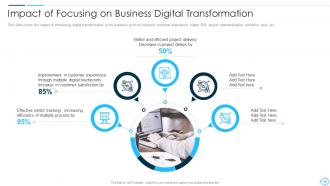
Slide 50: This slide displays Impact of Focusing on Business Digital Transformation.
Slide 51: This slide represents transformation dashboard covering various stages of a business.
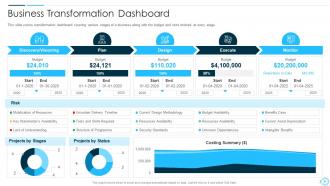
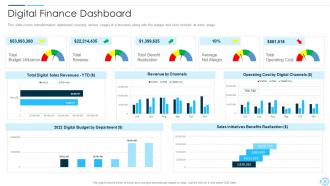
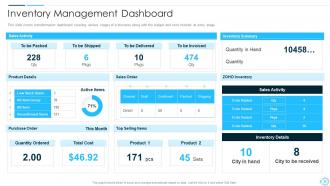
Slide 52: This slide shows dashboard covering various stages of a business along with the budget and risks involved at every stage.
Slide 53: This slide presents transformation dashboard covering various stages of a business along with the budget and risks involved at every stage
Slide 54: This slide displays Icons for Digital Business Revolution.
Slide 55: This slide is titled as Additional Slides for moving forward.
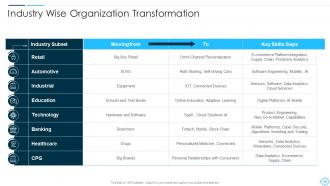
Slide 56: This slide represents Industry Wise Organization Transformation.
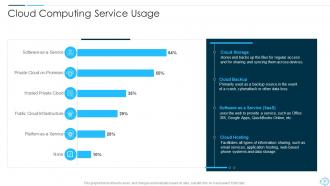
Slide 57: This slide showcases Cloud Computing Service Usage.
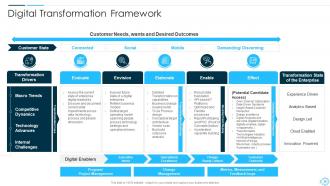
Slide 58: This slide presents Digital Transformation Framework with additional textboxes.
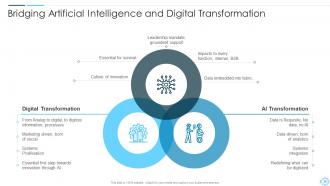
Slide 59: This slide shows Bridging Artificial Intelligence and Digital Transformation.
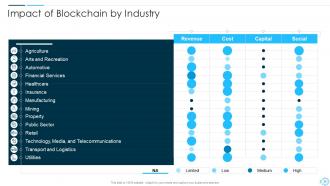
Slide 60: This slide displays Impact of Blockchain by Industry.
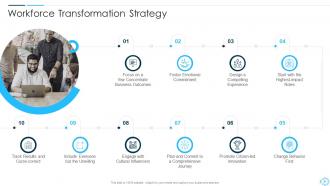
Slide 61: This slide represents Workforce Transformation Strategy describing- Foster Emotional Commitment, Design a Compelling Experience, Change Behavior First, etc.
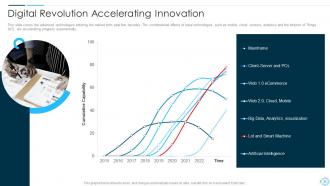
Slide 62: This slide shows advanced technologies entering the market from past few decades.
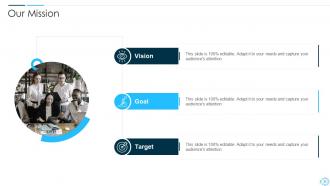
Slide 63: This is Our Mission slide with related imagery and text.
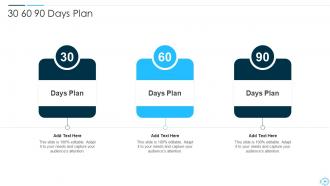
Slide 64: This slide provides 30 60 90 Days Plan with text boxes.
Slide 65: This is a Financial slide. Show your finance related stuff here.
Slide 66: This slide depicts Venn diagram with text boxes.
Slide 67: This slide shows Post It Notes. Post your important notes here.
Slide 68: This slide contains Puzzle with related icons and text.
Slide 69: This is a Timeline slide. Show data related to time intervals here.
Slide 70: This is a Thank You slide with address, contact numbers and email address.
Digital Business Revolution Powerpoint Presentation Slides with all 75 slides:
Use our Digital Business Revolution Powerpoint Presentation Slides to effectively help you save your valuable time. They are readymade to fit into any presentation structure.






FAQs for Digital Business Revolution
Honestly, it's mostly about what customers expect now - they want everything instant and personalized because Amazon spoiled them. Technology made it cheaper too. Cloud stuff, AI, mobile apps... it's not just for big companies anymore. Your competitors probably already jumped on this and are stealing your customers (which sucks but it's reality). COVID definitely pushed everyone to go digital faster than planned. If you don't digitize how you work and interact with customers, you're basically giving your business away to people who did.
Honestly? Work backwards from what your customers actually want, not what seems cool tech-wise. Train your team first - I can't stress this enough because they'll either make it work or tank the whole thing. So many companies I know dropped serious cash on platforms that just collect digital dust. Pick one process to start with and nail it before moving on. The whole "fail fast" thing is real though - better to try stuff and course-correct than spend months planning the "perfect" system that never happens. Oh, and don't digitize everything just because you can.
Honestly, data analytics is what separates successful digital strategies from total shots in the dark. Instead of guessing what customers want, you'll actually know based on their behavior patterns. Track the metrics that align with your specific goals - don't get caught up measuring everything just because you can. The real magic happens when you spot trends early and personalize experiences before competitors catch on. Yeah, it sounds nerdy, but having concrete numbers beats making decisions on hunches every single time. Build your analytics around what actually moves the needle for your business.
Dude, this AI and blockchain stuff is completely flipping how businesses work. Smart contracts cut out middlemen entirely. AI lets you automate tons of processes and predict things you never could before - it's honestly kind of crazy how accurate some of this gets. Here's the thing though: don't just use these to make your current business better. Build totally new revenue streams instead. Maybe you stop selling products and start selling AI services, or create some token-based system. I'd mess around with small experiments now before everyone else catches up.
Digital marketplaces have totally changed what customers expect from you. Amazon spoiled everyone - they want that mind-reading experience where you somehow know what they need. Real-time support, seamless shopping across all channels, everything customized to how they actually behave. Netflix and Uber honestly made it worse by setting these crazy high standards. Now you're competing on pure convenience and speed instead of just having good products. The trick? Use your data smartly to spot what people need before they even ask. Map out their whole digital journey and smooth out every annoying bump.
Honestly, most companies just try to do everything at once instead of picking what actually matters to customers. Change management is way harder than people think - your team's gonna hate the new systems at first. Leadership always wants instant results too, which is totally unrealistic. Oh, and don't get me started on how they'll buy fancy tech without figuring out how it works with their current setup. Training gets forgotten half the time. My advice? Pick one thing, start there, get people on board early. Measure what's working before you go crazy with it.
You'll want to watch the obvious stuff - ROI, customer acquisition costs, conversion rates, revenue from digital channels. That's your foundation. But engagement metrics and customer satisfaction matter just as much, honestly. Some benefits are weird to measure though, like how fast you can pivot when the market shifts or getting better customer insights. I'd say set your KPIs upfront before you launch anything (learned this the hard way). Then check quarterly to see what's actually working. The soft stuff is harder to track but don't ignore it - sometimes that's where the real value hides.
Honestly, your team needs to get comfortable with data first - like actually reading analytics instead of just winging decisions. The constant learning thing is huge too because these platforms change SO fast (I swear Slack updates every week). Everyone's gotta work together on problem-solving since nothing in digital happens in isolation. Oh, and basic automation knowledge helps tons. Communication across different channels matters too - email, Slack, video calls, whatever. I'd probably start by figuring out where everyone's weakest, then build some training around those gaps. Way more effective than generic workshops.
Honestly, you can compete with way bigger companies if you're smart about it. Start with automation - Zapier, HubSpot, basic social schedulers. Makes you look like you've got a whole team when it's literally just you sitting there in pajamas. AWS and Google Cloud are game changers too, giving you enterprise stuff without the crazy costs. Your secret weapon? You can change direction fast while big companies are stuck dealing with endless meetings and red tape. Pick one thing first though - maybe customer management or marketing automation. Get that down solid, then move on. Don't spread yourself too thin right away.
Honestly, there's three big things to worry about: data privacy, algorithmic bias, and people losing their jobs. You'll be collecting way more customer data with these new tools, so you need proper consent and transparency about what you're doing with it. AI bias is actually way scarier than most companies want to admit - it just amplifies all the unfair stuff that already exists. Then there's automation killing jobs, which... yeah, that's a whole ethical mess. Oh, and don't try to add ethics stuff later - build it into your planning from the start or you'll regret it.
Honestly, digital marketing has changed everything about how brands talk to people. Instead of just blasting ads everywhere, you're actually having real conversations now. Social media and email let you target super specific audiences - like, the data you can get is kind of insane. The whole "spray and pray" approach is basically dead. Now it's all about creating content that people actually want to see and building relationships. Your strategy has to be way more interactive than it used to be. My advice? Pick one platform where your customers actually spend time and just focus on showing up consistently there. Don't try to be everywhere at once.
Dude, remote work basically forces you into digital transformation whether you want it or not. All those face-to-face processes? You'll have to digitize them, which honestly makes most companies way more efficient down the road. Cloud stuff takes off, collaboration tools become absolutely critical. The whole "we've always done it this way" thing just dies because it has to. Your customers start interacting with you online more too, so you get better data out of it. Oh, and don't treat it like some temporary fix - the smart move is embracing what's actually going to stick around.
Look, you gotta bake security in from the start - can't just slap it on later like some afterthought. Zero-trust is your friend here. Sounds super paranoid but trust me, it'll save your ass down the road. Encrypt everything, use multi-factor auth religiously, and honestly? Train your people on phishing because they're gonna be your biggest risk. Oh and find security tools that actually help your digital stuff move faster, not slower. Regular pen testing is clutch too - better you find the holes than some random hacker does.
Honestly, if your CEO's still printing out emails, you're screwed before you even begin. Get leadership doing the digital stuff first. Training has to meet people where they actually are - not some fantasy version of tech-savvy employees. Quick wins are everything. Find teams that already kinda want this change, let them run pilot programs. Their success will do way more convincing than any PowerPoint deck ever could. Make the digital tools easier than the old way of doing things (this is harder than it sounds btw). Most crucial part? Show people exactly how this connects to business results. Nobody cares about "digital transformation" - they care about what's in it for them.
So there's actually tons you can do with digital stuff to go greener. Remote work tools slash your office energy costs big time. Cloud computing means way less hardware sitting around. IoT sensors are pretty cool - they track your resource use in real time so you're not wasting anything. Digital supply chain tracking is where it gets interesting though. You'll find waste you had no clue about. Sustainability dashboards make tracking progress dead simple too. The visibility into your data is honestly incredible once you see it. Start by checking what digital tools you already have and figure out what clunky processes they could replace.
-
“One of the best experiences with SlideTeam for my presentation.Everything on time, communication is efficient and price is reasonable. All good in one place.”
-
Qualitative and comprehensive slides.