


Powerpoint-Präsentationsfolien zu digitaler Innovation und Transformation





Try Before you Buy Download Free Sample Product
 Impress Your
 Audience
 100%
100% Editable
 Save Hours
 of Time


Präsentieren Sie mithilfe unserer PowerPoint-Präsentationsfolien zu digitaler Innovation und Transformation, wie Sie neue Technologien in bestehende Infrastrukturen integrieren können. Mit dieser Präsentationsvorlage für die digitale Transformation können Sie innovative Geschäftsmodelle entwerfen. Mithilfe des PPT-Themas der Transformation Roadmap können Sie sich auf den Prozess der Digitalisierung konzentrieren, der das Leistungsmanagement verbessert. Nutzen Sie die PowerPoint-Grafiken des digitalen Änderungsmanagements, um die Kundenbedürfnisse zu erfüllen und den Vertriebsvorsprung effektiv zu maximieren. Nutzen Sie die PPT-Visuals zur digitalen Geschäftstransformation und schulen Sie Ihre Mitarbeiter in Bezug auf digitale Fähigkeiten. Sie können neue Ideen entwickeln, um die Effizienz und Flexibilität Ihres Unternehmens zu verbessern, indem Sie dieses professionell gestaltete Transformations-Roadmap-PPT-Deck verwenden. Verwenden Sie dieses PowerPoint-Layout für die Transformation der Unternehmenstechnologie, um verschiedene Möglichkeiten zu präsentieren, die zur Erreichung der digitalen Transformation beitragen. Durch die Präsentation von digitalen Transformationstools können Sie über die verschiedenen Strategien und Planungen sprechen, die zum Unternehmenswachstum führen. Laden Sie daher unser gebrauchsfertiges PowerPoint-Deck zur digitalen Transformation herunter und demonstrieren Sie die Werkzeuge der Technologietransformation.
People who downloaded this PowerPoint presentation also viewed the following :
Inhalt dieser Powerpoint-Präsentation
Folie 1 : Diese Folie stellt digitale Innovation und Transformation vor. Geben Sie Ihren Firmennamen an und beginnen Sie.
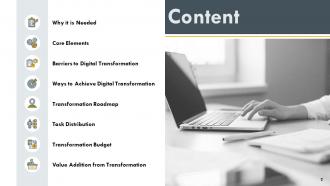
Folie 2 : Diese Folie zeigt den Inhalt der Präsentation.
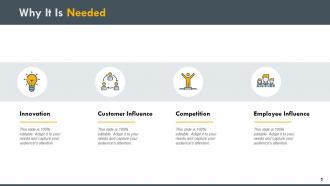
Folie 3 : Diese Folie zeigt, warum eine Beschreibung erforderlich ist – Innovation, Kundeneinfluss, Wettbewerb, Mitarbeitereinfluss.
Folie 4 : Diese Folie stellt die Kernelemente vor, die beschreiben – Kundenverständnis, Kundenkontaktpunkte, digital modifiziertes Geschäft, Leistungsmanagement, Prozessdigitalisierung, Top-Line-Wachstum.
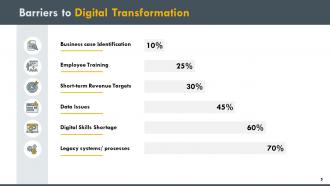
Folie 5 : Diese Folie zeigt Hindernisse für die digitale Transformation in grafischer Form.
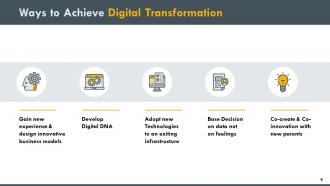
Folie 6 : Diese Folie stellt Wege zur Erreichung der digitalen Transformation dar.
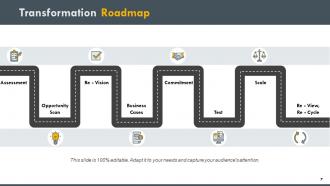
Folie 7 : Diese Folie zeigt eine Transformations-Roadmap mit Beschreibungen von Opportunity Scan, Re-Vision, Business Cases, Commitment, Test, Scale, Re-View, Re-Cycle, Assessment.
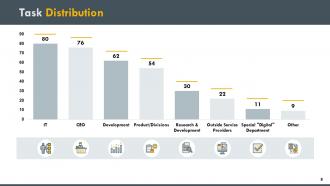
Folie 8 : Diese Folie zeigt die Aufgabenverteilung in grafischer Form.
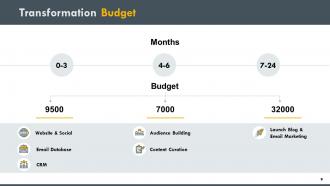
Folie 9 : Diese Folie zeigt das Transformationsbudget. Sie können Daten nach Bedarf hinzufügen oder bearbeiten.
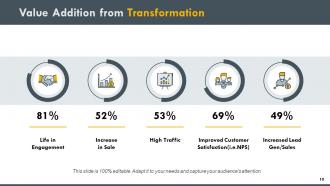
Folie 10 : Diese Folie repräsentiert die Wertschöpfung durch Transformation.
Folie 11 : Diese Folie zeigt Symbole für digitale Innovation und Transformation.
Folie 12 : Diese Folie trägt den Titel „Zusätzliche Folien“, um vorwärts zu gehen.
Folie 13 : Dies ist die Folie „Unsere Mission“ mit entsprechenden Bildern und Textfeldern.
Folie 14 : Dies ist die Folie „Meet unser Team“ mit Namen und Bezeichnung.
Folie 15 : Dies ist eine Über uns-Folie, um Firmenspezifikationen usw. zu zeigen.
Folie 16 : Diese Folie trägt den Titel Post It. Veröffentlichen Sie hier Ihre wichtigen Notizen.
Folie 17 : Dies ist die Folie „Unser Ziel“. Zeigen Sie hier die Ziele Ihres Unternehmens.
Folie 18 : Dies ist eine Silhouetten-Folie, um personenspezifische Informationen usw. anzuzeigen.
Folie 19 : Diese Folie zeigt eine Lupe, um Informationen hervorzuheben.
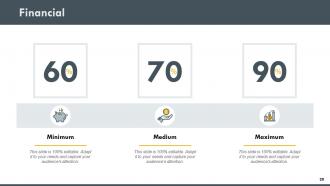
Folie 20 : Dies ist eine Finanzfolie. Zeigen Sie hier Ihre Finanzinformationen.
Folie 21 : Dies ist eine Folie zur Ideengenerierung, um eine Idee zu präsentieren oder Informationen, Spezifikationen usw. hervorzuheben.
Folie 22 : Dies ist eine Zitate-Folie, um Botschaften, Überzeugungen usw.
Folie 23 : Diese Folie zeigt ein Kombinationsdiagramm mit drei Produktvergleichen.
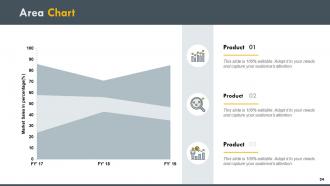
Folie 24 : Diese Folie zeigt ein Flächendiagramm mit drei Produktvergleichen.
Folie 25 : Dies ist eine Dankesfolie mit Adresse, Kontaktnummern und E-Mail-Adresse.
Digitale Innovation und Transformation Powerpoint-Präsentationsfolien mit allen 25 Folien:
Dank unserer Powerpoint-Präsentationsfolien zu digitaler Innovation und Transformation nehmen Ihre Ideen eine bestimmte Form an. Es sorgt dafür, dass sie glänzen.






FAQs for Digital innovation and transformation
Honestly, most companies mess this up because they overthink the tech side first. You need leadership that actually gets it - not just lip service. Focus on your customers, obviously, but also build processes that let you pivot quickly when things don't work. The culture piece is huge though - people have to be cool with failing fast instead of spending months perfecting something nobody wants. Oh, and don't forget decent analytics so you're not just guessing. Partner with startups or vendors who know their stuff. But here's the thing - it all has to connect to real business results, not just shiny new toys. Start by figuring out what you're already doing right.
Okay so first thing - grab data from everywhere your customers interact with you. Website, app, support calls, sales convos, literally everything. Analytics tools will help you find the actual pain points (not the ones you assume exist). Here's what I've learned though - those insights are basically your innovation blueprint. Hunt for gaps between what people want vs what you're giving them. The magic happens when you act quickly instead of overthinking it forever. Weekly dashboard check-ins are clutch, and honestly? Just test one data-driven tweak per month. Don't overcomplicate it.
UX is what turns cool tech into stuff people actually want to use. Apple didn't invent smartphones but made them intuitive - that's the power of good design. Without solid UX, even brilliant innovations just sit there unused because they're too confusing or frustrating. It's basically the bridge between "this is technically amazing" and "normal people will love this." Start with user research early on (seriously, don't skip this step). Figure out real pain points first, then build solutions people will actually engage with. Otherwise you'll end up with something technically impressive but completely impractical. I've seen too many startups learn this the hard way.
Start with making people feel safe to mess up - nobody's gonna try new stuff if they're terrified of getting fired. The 10% time thing actually works if leadership doesn't just pay lip service to it. Cut through the red tape for small experiments and pilots. Honestly, celebrating failures is just as crucial as celebrating wins - sounds cheesy but I've watched teams completely transform when they stop being paranoid about screwing up. Mix different departments together on projects. Oh, and find that one broken process everyone complains about at lunch? Perfect place to start.
Honestly, going digital transforms how customers connect with your business. AI recommendations and mobile apps make people feel understood - like you actually know what they want. Everyone expects this stuff now anyway. Real-time tracking means you can fix problems fast and create those moments that keep people hooked. Chatbots sound annoying but they work surprisingly well for basic questions. The trick is solving actual problems, not just throwing random tech at everything. Short bursts of innovation usually beat massive overhauls too.
Honestly, AI and blockchain are completely changing how we approach digital stuff. You've got AI automating crazy complex tasks and finding patterns in data that would take us ages to spot manually. Blockchain's the wild card though - it's creating these trust systems where you don't need banks or middlemen anymore, which is pretty nuts if you think about it. They work great together too, powering everything from supply chains to those chatbots that actually don't suck. Just make sure you're using them to fix actual problems, not because they're the shiny new thing everyone's talking about.
Honestly, the worst part is dealing with people who just don't want to change how they work. Budget's always tight too - good luck convincing your boss to drop serious cash when you can't promise immediate results. Oh, and trying to get new software to work with whatever ancient system you're already using? Total headache. I'd say start with something small first, like a pilot program. That way you can actually show it works before going all-in. Also spend real money on training people properly - I've seen so many projects fail just because nobody knew how to use the damn thing. Make sure you've got your integration plan sorted before you sign anything.
Honestly, being small is actually your secret weapon here. Big companies get stuck in committee hell for months just to change a button color - you can test something new by next week. Focus on one thing that'll make your customers' lives easier, then expand from there. The personal touch you can give through digital stuff? That's gold. Sure, your budget's tight, but that just means you won't waste money on flashy nonsense that doesn't work. Pick your spots wisely and you'll move circles around the corporate giants.
Track the money stuff first - ROI, revenue, cost savings. That's what your boss actually cares about. User adoption and satisfaction scores matter too, obviously. Oh, and time-to-market is massive if you're racing competitors. Honestly? Most teams obsess over flashy metrics that mean nothing. I've seen it so many times. Pick like 3-5 things that actually connect to real business goals. Check them monthly. Don't get distracted by vanity numbers that look impressive but won't save your job when budgets get tight.
So basically, you're drowning in manual stuff that's just eating up time, right? Digital tools can automate all that busywork - like customer service bots handling basic questions or inventory systems that update themselves. Real-time dashboards show you what's actually going on instead of playing guessing games. Your team gets to do meaningful work instead of data entry hell. AI and cloud platforms honestly blow humans out of the water for repetitive tasks. I'd start by figuring out what's wasting the most time daily, then find tools that fix those specific problems first.
Start thinking about ethics stuff right from the beginning - data consent, bias in your algorithms, how it'll affect different communities. Don't just slap it on at the end. That whole "move fast and break things" approach is honestly pretty reckless when you're messing with people's personal data or jobs. Environmental impact matters too, plus making sure it's accessible to everyone. Oh, and get diverse people involved in regular check-ins throughout development. Way cheaper than trying to fix everything later when you realize you've screwed up.
Honestly, working with startups can really speed up your digital stuff. They're willing to try crazy things that big companies won't touch - plus they move way faster than your usual dev teams. I've watched companies cut 6-12 months off their timelines just by finding the right startup partner. The thing is, these smaller teams are laser-focused on specific problems, so they come up with solutions you'd never think of internally. Don't go all-in right away though. Pick 2-3 startups in your space and test them out with small pilot projects first. Way smarter approach.
Honestly, once you start paying attention, these examples are everywhere. Take John Deere - they've got tractors that basically drive themselves using IoT sensors and data stuff. Pretty crazy. Domino's totally flipped pizza delivery on its head with their tracking app and GPS (they even tried drones for a while). JPMorgan Chase does AI fraud detection and trading algorithms now. Nike went hard on their direct-to-consumer apps and customization platforms. The thing that stands out to me is none of them just took their old processes and made them digital - they completely rethought how customers actually experience their brand.
Start with pilot programs - small budget, tight timeline, limited scope. That way if things blow up, you're not toast. Document everything so you can actually learn from it (this part's boring but super important). Get your IT security people involved early - trust me on this one. Finance loves phased rollouts way more than those big scary launches. I've watched companies dump money into flashy tech without thinking it through first... it never ends well. Set clear metrics upfront and always have a backup plan. Scale what works, ditch what doesn't.
Dude, AI stuff is everywhere now - not just chatbots but actual workflow automation that's pretty sick. Edge computing is blowing up too, especially for IoT and real-time processing. The whole thing is moving so fast it's kinda crazy to keep up with honestly. Low-code platforms are letting non-technical people build apps now, which is wild. Oh and quantum computing is finally doing real things in some industries (though that might be further out for most of us). My take? Just pick like one or two things that actually make sense for what you're doing and mess around with them. Don't wait.
-
Designs have enough space to add content.
-
Professional and unique presentations.
-
Commendable slides with attractive designs. Extremely pleased with the fact that they are easy to modify. Great work!