


Canais de marketing digital Slides de apresentação em PowerPoint






Try Before you Buy Download Free Sample Product
 Impress Your
 Audience
 100%
100% Editable
 Save Hours
 of Time


Fale sobre canais de marketing online com canais de marketing digital prontos para apresentação em PowerPoint. Este PPT de e-marketing exclusivo será muito útil para as pessoas do marketing digital. Apresente diferentes maneiras de promover seus negócios, serviços e produtos usando nosso modelo de e-marketing do PowerPoint. A apresentação do canal de e-marketing pronta para conteúdo consiste em um total de 62 slides. Todos os slides são completamente editáveis e podem ser facilmente alterados de acordo com sua necessidade. A apresentação completa do PowerPoint do canal de marketing de mídia social cobre vários tópicos, como estatísticas-chave de marketing digital, marketing por e-mail, publicidade paga por clique, otimização de mecanismo de pesquisa, publicidade gráfica, marketing de mídia social, marketing de conteúdo, elementos de marketing digital, canais de marketing digital, ROI em marketing digital, estrutura de estratégia de marketing digital, roteiro para estratégia de marketing digital, painel de resumo de marketing digital, relatório de ROI de marketing digital e muitos outros slides. Baixe este tema do PowerPoint do canal de publicidade digital para expandir os horizontes do seu negócio e aumentar a receita de vendas. Nossos canais de marketing digital slides de apresentação em PowerPoint agem como uma pasta de cotovelo. Eles aumentam a força do seu esforço.
People who downloaded this PowerPoint presentation also viewed the following :
Conteúdo desta apresentação em PowerPoint
Slide 1 : Este slide apresenta os Canais de Marketing Digital. Indique o nome da sua empresa e comece.
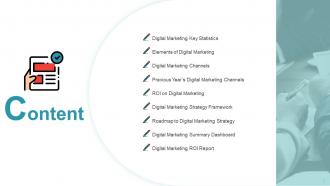
Slide 2 : Este slide mostra o conteúdo da apresentação.
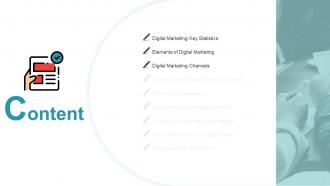
Slide 3 : Este slide destaca os três primeiros tópicos do Conteúdo.
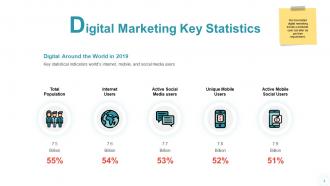
Slide 4 : Este slide apresenta as principais estatísticas de marketing digital que descrevem - População total, Usuários de Internet, Usuários ativos de mídia social, Usuários móveis únicos, Usuários sociais móveis ativos.
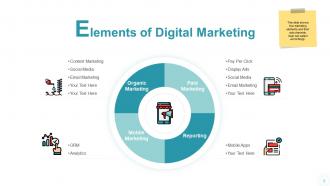
Slide 5 : Este slide exibe Elementos de marketing digital, marketing pago, marketing móvel, relatórios, marketing orgânico.
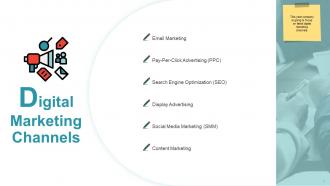
Slide 6 : Este slide representa os canais de marketing digital que descrevem - marketing por e-mail, publicidade paga por clique (PPC), otimização de mecanismos de pesquisa (SEO), publicidade gráfica, marketing de mídia social (SMM), marketing de conteúdo.
Slide 7 : Este slide exibe Email Marketing com imagens relacionadas.
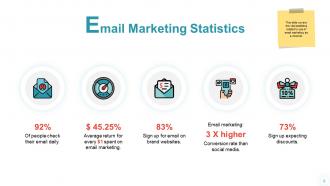
Slide 8 : Este slide mostra Estatísticas de marketing por email com ícones relacionados.
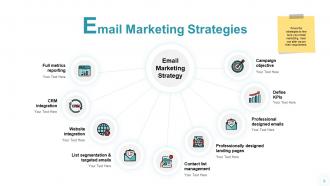
Slide 9 : Este slide apresenta Estratégias de Email Marketing como - Objetivos da Campanha, Definir KPLS, Emails Projetados Profissionalmente, Landing Pages Profissionalmente Projetados, Gerenciamento de Lista de Contatos, Segmentação de Lista e Emails Direcionados, Integração do Site Quarta, Integração de CRM, Relatórios Completos de Métricas.
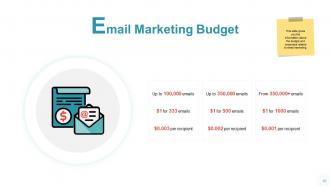
Slide 10 : Este slide fornece informações sobre o orçamento e despesas relacionadas ao marketing por email.
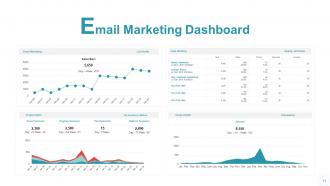
Slide 11 : Este slide representa o Painel de Email Marketing com a ajuda de gráficos, tabelas e tabelas.
Slide 12 : Este slide exibe Publicidade Pay-Per-Click (PPC) com imagens relacionadas.
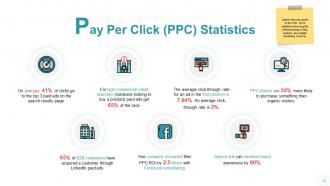
Slide 13 : Este slide mostra as estatísticas de pagamento por clique (PPC) que descrevem a eficácia desse meio como um canal de marketing digital.
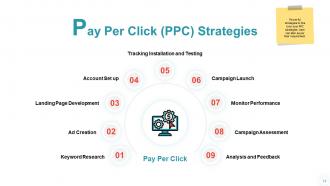
Slide 14 : Este slide apresenta estratégias de pagamento por clique (PPC) que descrevem - pesquisa de palavras-chave, criação de anúncios, desenvolvimento da página de destino, configuração da conta, instalação e teste de rastreamento, lançamento de campanha, desempenho do monitor, avaliação de campanha, análise e feedback.
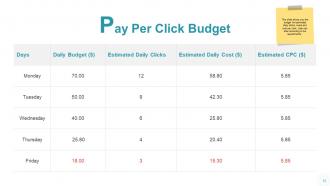
Slide 15 : Este slide mostra o orçamento para cliques diários estimados, custos e custo por clique. O usuário pode alterar de acordo com suas necessidades.
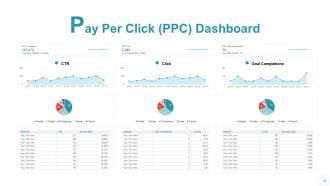
Slide 16 : Este slide representa o Painel de pagamento por clique (ppc) mostrando dados com a ajuda de gráficos de barras e gráfico de pizza.
Slide 17 : Este slide exibe a Otimização de Mecanismos de Pesquisa (SEO) com imagens relacionadas.
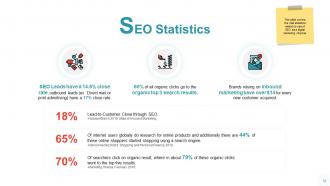
Slide 18 : Este slide cobre as estatísticas vitais relacionadas ao uso de SEO como um canal de marketing digital.
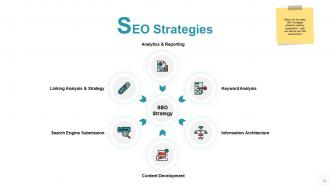
Slide 19 : Este slide mostra estratégias de SEO que descrevem - Arquitetura de Informação, Envio de mecanismo de pesquisa, Análise e estratégia de links, Análise e relatórios, Análise de palavras-chave, Desenvolvimento de conteúdo.
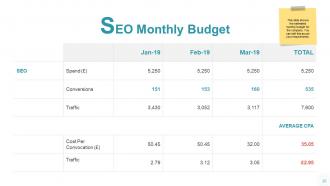
Slide 20 : Este slide mostra a estimativa do orçamento mensal da empresa. Você pode editar isso de acordo com seus requisitos.
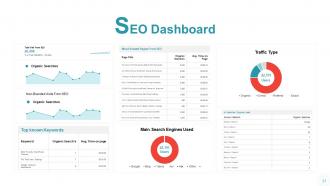
Slide 21 : Este slide apresenta o SEO Dashboard mostrando os dados em forma tabular e gráfica.
Slide 22 : Este slide mostra a publicidade gráfica com imagens relacionadas.
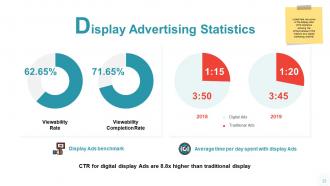
Slide 23 : Este slide apresenta as estatísticas de publicidade gráfica, mostrando a eficácia desse meio como um canal de marketing digital.
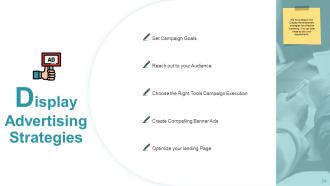
Slide 24 : Este slide mostra estratégias de publicidade gráfica que descrevem - Definir metas de campanha, alcançar seu público, escolher as ferramentas certas para execução de campanha, criar banners de anúncios atraentes, otimizar sua página de destino.
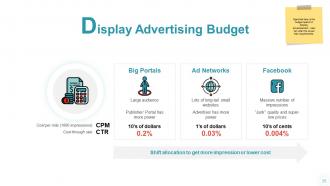
Slide 25 : Este slide representa o orçamento de publicidade gráfica. O usuário pode alterar isso de acordo com seus requisitos.
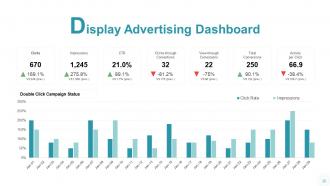
Slide 26 : Este slide mostra o painel de publicidade gráfica que descreve - Cliques, Impressões, CTR, Convenções de cliques, Conversões de exibição, Total de conversões, Atividade por clique.
Slide 27 : Este slide mostra o Social Media Marketing (SMM) com imagens relacionadas.
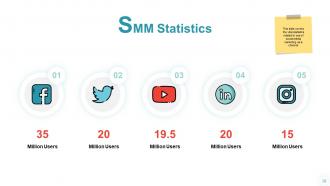
Slide 28 : Este slide cobre as estatísticas vitais relacionadas ao uso do marketing de mídia social como um canal.
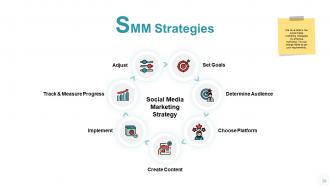
Slide 29 : Este slide mostra estratégias de SMM que descrevem - Escolha a plataforma, crie conteúdo, determine o público, implemente, defina metas, acompanhe e avalie o progresso, ajuste.
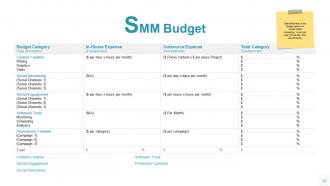
Slide 30 : Este slide apresenta o orçamento SMM para criação de conteúdo, publicidade social, engajamento social, software / ferramentas, promoção / concurso.
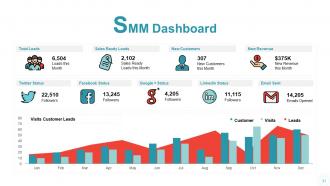
Slide 31 : Este slide mostra o painel SMM. Você pode adicionar ou editar dados de acordo com os requisitos.
Slide 32 : Este slide mostra Marketing de Conteúdo com imagens relacionadas.
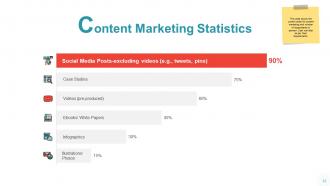
Slide 33 : Este slide mostra as estatísticas atuais de marketing de conteúdo e o número de entrevistados em porcentagem.
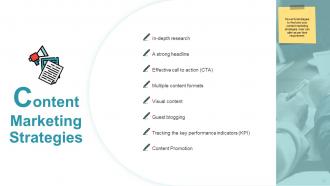
Slide 34 : Este slide apresenta estratégias de marketing de conteúdo que descrevem: Pesquisa em profundidade, Um título forte, Call to action (CTA) eficaz, vários formatos de conteúdo, conteúdo visual, guest blogging, promoção de conteúdo, acompanhamento de indicadores-chave de desempenho (KPI).
Slide 35 : Este slide representa o orçamento de marketing de conteúdo mensalmente.
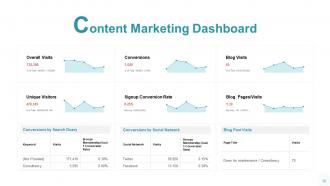
Slide 36 : Este slide mostra o Painel de Marketing de Conteúdo com dados em formato gráfico.
Slide 37 : Este slide mostra o conteúdo restante da apresentação.
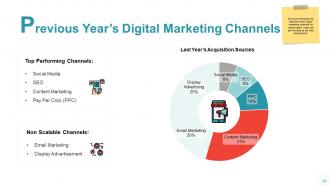
Slide 38 : Este slide apresenta os canais de marketing digital do ano anterior, descrevendo os melhores e os piores canais de marketing digital para alcançar o mercado.
Slide 39 : Este é outro slide com os canais de marketing do ano anterior, descrevendo os canais de marketing digital mais eficazes no ano anterior.
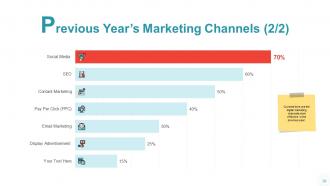
Slide 40 : Este slide representa os canais de marketing do ano anterior com a ajuda de um gráfico de barras.
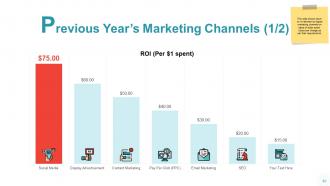
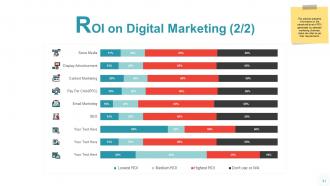
Slide 41 : Este slide mostra o ROI em Marketing Digital, apresentando informações sobre o nível percebido de ROI gerado por canais de marketing selecionados.
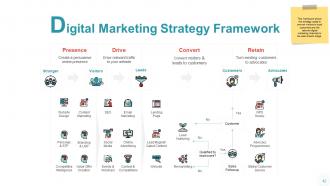
Slide 42 : Este slide exibe a Estrutura de Estratégia de Marketing Digital, mostrando a estratégia escolhida para converter visitantes em clientes fiéis e os canais de marketing digital relevantes a serem usados em cada etapa.
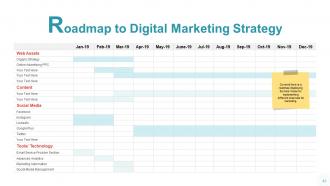
Slide 43 : Este slide apresenta o Roteiro para a Estratégia de Marketing Digital, exibindo o prazo para a implementação de diferentes canais de marketing.
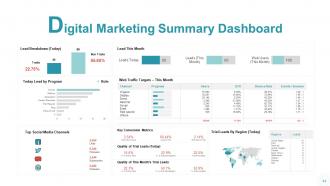
Slide 44 : Este slide mostra o Painel de Resumo de Marketing Digital com dados na forma de gráficos e tabelas.
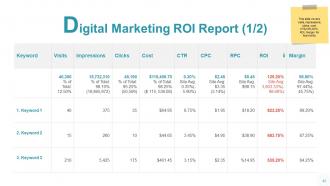
Slide 45 : Este slide mostra o Relatório de ROI de Marketing Digital cobrindo visitas, impressões, cliques, custo, CTR, CPC, RPC, ROI, Margem para palavras-chave.
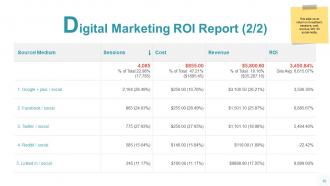
Slide 46 : Este é outro slide sobre o Relatório de ROI de Marketing Digital que cobre o retorno sobre o investimento, sessões, custo, receita, ROI para mídia social.
Slide 47 : Este slide exibe ícones de canais de marketing digital.
Slide 48 : Este slide lembra uma pausa para o café de 15 minutos.
Slide 49 : Este slide é intitulado como Slides adicionais para avançar.
Slide 50 : Este slide mostra o gráfico Coluna-Linha em cluster com comparação de três produtos.
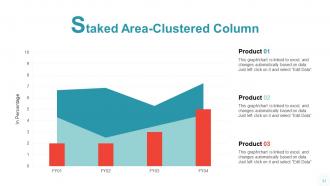
Slide 51 : Este slide mostra o gráfico Área piquetada-Coluna agrupada com três comparações de produtos.
Slide 52 : Este slide é sobre nós para mostrar as especificações da empresa, etc.
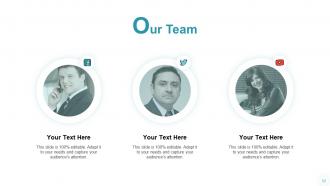
Slide 53 : Este é o slide da Nossa Equipe com nomes e designações.
Slide 54 : Este é o slide Nossa Missão com imagens e caixas de texto relacionadas.
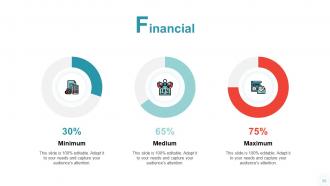
Slide 55 : Este é um slide financeiro. Mostre seu material relacionado a finanças aqui.
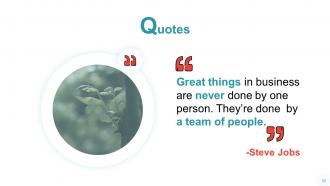
Slide 56 : Este é um slide de cotações para transmitir mensagens, crenças, etc.
Slide 57 : Este é um slide de quebra-cabeça com caixas de texto para mostrar informações.
Slide 58 : Este é um slide da linha do tempo. Mostre informações relacionadas ao período de tempo aqui.
Slide 59 : Este é outro slide que dá continuidade à linha do tempo.
Slide 60 : Este slide é intitulado como Post it. Publique suas notas importantes aqui.
Slide 61 : Este é um slide de Venn com caixas de texto.
Slide 62 : Este é um slide de agradecimento com endereço, números de contato e endereço de e-mail.
Canais de marketing digital Slides de apresentação em PowerPoint com todos os 62 slides:
Dê o gás com os nossos slides de apresentação em PowerPoint dos canais de marketing digital. Sua carreira vai acelerar.






FAQs for Digital Marketing Channels
So there's a bunch of options - social media like Facebook and Instagram, Google Ads, SEO stuff, email campaigns. Content marketing through blogs or YouTube works well too. Influencer partnerships are killing it lately, honestly probably the best ROI I've seen. TikTok's massive if your audience skews younger. You've also got display ads, affiliate programs, podcasts depending on your niche. My buddy just started a podcast campaign and... anyway, point is there's tons of channels. Don't try to do everything though - pick 2-3 where your customers actually hang out and nail those first.
Honestly, stop thinking about it like broadcasting and start having real conversations. Behind-the-scenes content works great - people eat that stuff up. Reply to comments fast and actually engage with their posts too. Stories and lives are gold because they're messy and real-time, which feels way more authentic than polished posts. Throw up some polls, ask random questions, share what your followers create. Oh and definitely make a community hashtag if you can swing it. The biggest thing though? Pick like 1-2 platforms where your people actually are and just focus there first. Don't spread yourself too thin.
Honestly, it comes down to money vs time. SEO is technically free but you'll be waiting months to see any real results - super frustrating when you need traffic now. PPC costs money upfront but boom, you're at the top of search results immediately. With SEO you're basically playing the long game, optimizing your site so Google naturally ranks you higher. Builds credibility over time. Paid ads let you bid on keywords and skip the line, though man, those costs add up quick if you're not watching your targeting. I'd probably start with some paid ads for quick wins while slowly building up your SEO game.
Dude, email marketing is seriously underrated for keeping customers around. You're literally sitting in their inbox where they check daily anyway. I love how you can set up those automated sequences - welcome emails, cart abandonment stuff, the works. Once it's running, you don't have to babysit it. The targeting gets pretty wild too. Someone browsed shoes but didn't buy? Hit them with a shoe discount. Haven't seen them in months? Send a "we miss you" offer. It's cheap compared to ads and honestly converts way better since these people already opted in. Just don't be that brand that emails every single day - nobody wants that spam.
So content marketing is like fuel for your SEO game. You write helpful blog posts or make videos, and you're naturally working in keywords that Google loves. Good stuff also gets other sites linking to you - which honestly makes a huge difference for rankings. We've had solid luck with this on our blog too. When people stick around reading your content instead of bouncing right off, that tells Google your page is actually worth something. I'd say pick 3-4 topics your audience actually gives a damn about and just keep creating around those. Fresh content keeps the whole thing moving.
Okay so basically influencers are like your cool friend recommending stuff - way more trustworthy than some random ad. Their followers see them as actual people, not salespeople trying to push products. When someone with a decent following genuinely uses your skincare and talks about it, people actually listen. It's wild how much more believable that is than polished commercials (which honestly feel so fake now). The trick isn't just finding someone with tons of followers though. You want people whose vibe actually matches your brand - that's where the real magic happens for conversions.
So basically start with the metrics that actually matter for what you're trying to do - click-through rates, conversions, cost per acquisition, return on ad spend. Google Analytics is clutch, and Facebook/Google Ads have their own dashboards too. Pick like 3-5 metrics to focus on first because honestly the data gets pretty overwhelming otherwise. Oh and definitely set up conversion tracking right away - that's the only way you'll know which platforms are actually making you money vs just burning through your budget. You can always add more metrics later once you figure out what you're looking at.
Start with HubSpot or Marketo - they're basically your command center for everything. Buffer or Hootsuite will save your sanity for social posting. Obviously you need Google Analytics, but honestly Asana is a lifesaver too because campaigns turn into chaos without proper organization. Mailchimp plays nice with most platforms for email stuff. The real trick? Make sure your tools actually sync up. Nobody wants to copy-paste data between a million different screens all day. Pick one solid automation tool first, then add pieces as you go. Way less overwhelming that way.
Video works great as your content hub - make one video, then chop it up for everywhere else. Full version goes on YouTube, short clips for Instagram/TikTok, pull the audio for podcasts. Honestly it's probably the best bang for your buck content-wise. Each video should fit somewhere in your funnel though - are you trying to get new people or nurture existing ones? Plan your video calendar with your other stuff so it all connects. Oh and don't forget videos drive solid traffic back to your site and get people engaging way more than text posts.
Okay so three main things - match your headlines to whatever's in your ad, keep forms super short (like seriously, each extra field you add tanks your conversions), and stick to one big call-to-action button. Make sure it loads fast on mobile since that's where most people are coming from anyway. Strip out the nav menu and other random stuff that'll distract them. You want them laser-focused on signing up, not clicking around your site. Try different button colors if you want, but honestly don't get too crazy with it. Nail these basics first and you'll probably see better numbers pretty quick.
Dude, analytics are a game changer - you'll actually know what's working instead of throwing money at random stuff and hoping. Track which channels bring in conversions and what content people actually engage with. Once you see the patterns it gets pretty addictive, not gonna lie. You can spot exactly where people bail on your funnel and fix those weak spots. The whole segmenting audiences thing is clutch too. Honestly though? Start with conversion tracking first - that's your foundation. Then just focus on whatever metrics actually tie back to making money.
Honestly, the biggest pain point is your team getting used to totally different metrics. Traditional stuff like reach and frequency? Easy. But then you're thrown into CTRs, conversion funnels, attribution models - it's a lot. Budget gets weird too because now you're spreading money across like 5 different channels instead of just throwing it all at TV. Digital moves stupid fast compared to what you're probably used to. My take? Pick maybe two channels to start with. Train everyone properly (seriously, don't skip this). And don't feel like you need to flip everything at once - that's a recipe for chaos.
Mobile users scroll with their thumbs while multitasking, so everything needs to be way shorter and faster. Attention spans are basically zero. Make your CTAs huge so they're actually tappable, and vertical video performs way better than landscape. People want quick answers or stuff nearby, so be direct about location. Oh and load times? Super critical - more than desktop honestly. I'd check how your current stuff actually looks on mobile first though. Half the time campaigns are totally broken on phones and nobody realizes it until they actually test it out.
Okay so basically you want to focus on three big things: data privacy, being transparent, and getting real consent. Don't do those sketchy pre-checked boxes - we've all done it but it's annoying as hell when you're on the receiving end. Be upfront about how you're collecting data and what you're doing with it. Avoid dark patterns that trick people into stuff they don't want. Your ad copy should be honest, and don't target vulnerable groups or spread BS. I know it sounds obvious, but just think about how you'd want companies to treat you. Oh, and double-check everything matches your company values before launching.
Honestly, AI has gotten pretty wild for marketing lately. You can personalize content for thousands of people without losing your mind, and the predictive stuff actually works now. Chatbots don't make people want to throw their phones anymore either lol. Real-time ad optimization is huge - no more burning budget on campaigns that aren't working. The targeting is borderline creepy good these days. Some AI tools can even write copy that converts better than most marketers I know (ouch). My advice? Don't try to do everything at once. Pick whatever's driving you crazy right now and test one tool for that specific problem first.
No Reviews