


Digital marketing strategy framework powerpoint images






Try Before you Buy Download Free Sample Product
 Impress Your
 Audience
 100%
100% Editable
 Save Hours
 of Time


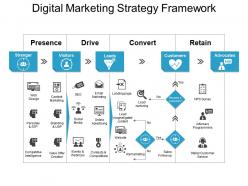
Looking to execute a successful digital marketing strategy? Our predesigned digital marketing strategy framework PowerPoint template images can help you structure your plan. Marketing leaders and managers can showcase it to the marketing heads. This digital marketing plan model PPT template comprises of the various icon of strangers, visitors, leads, customers, advocates, web design, content marketing, SEO, email marketing, personas, branding USB, competitive intelligence, value offer creation, events and webinars, social media, and online advertising. It also consists of graphics of landing page, leads nurturing, remarketing, website, sales follow up, customer service, advocacy programmers, and NPS survey. This tabular online marketing strategy model presentation template has four different columns representing presence, drive converts and retain. The flow chart in this template slide will let you describe the overall process of creating a plan, prompting the traffic to the website and converting the traffic into potential customers. You can utilize this PPT template for outlining presentation on, business marketing, product branding, new product launch, business growth strategies, and product advertising plan. Download this digital marketing strategy framework presentation template. Hear the jingle with our Digital Marketing Strategy Framework Powerpoint Images. Ensure the coins continue to come in.
People who downloaded this PowerPoint presentation also viewed the following :
Digital marketing strategy framework powerpoint images with all 5 slides:
Counter economic depression with our Digital Marketing Strategy Framework Powerpoint Images. Generate alternative avenues of employment.
FAQs for Digital marketing strategy
Okay so you need five main things for digital marketing that actually works: audience personas, clear goals with KPIs, content strategy, budget breakdown, and analytics tracking. Most people totally mess this up by skipping the persona research though - like they just dive into posting random stuff everywhere. Figure out who you're actually talking to first, then pick your channels based on that. Map out your customer journey before anything else. I learned this the hard way lol. Then build everything around those touchpoints - whether it's social, email, SEO, whatever. Just make sure it all connects back to what you're trying to achieve business-wise.
Start with the data you already have - demographics, buying patterns, how people engage with your stuff. Build buyer personas from that info, including what frustrates them and where they hang out online. Most people (myself included sometimes) just wing it instead of doing the research first. Big mistake. Surveys and Google Analytics are your friends here - they'll tell you if you're actually right about who your customers are. You want to get specific enough that you could paint a picture of your ideal customer for anyone. Once that clicks, planning campaigns becomes so much simpler.
SEO is like good plumbing - nobody notices until it breaks, then everything's a mess. But seriously, it makes all your other marketing way more effective. Your keyword research should feed into your ad copy, social posts, content calendar, everything. When you optimize your site structure, you're not just chasing rankings. You're creating better user experiences that actually help your paid ads and email campaigns perform better too. Start by checking what's already ranking for you - I always tell people to build on what's working first rather than starting from scratch.
Honestly, data analytics is a game-changer for digital marketing. No more throwing money at campaigns and hoping something sticks. You'll see exactly which channels bring in actual customers, not just clicks. A/B testing becomes your best friend - test headlines, images, timing, whatever. I used to ignore the timing part but it makes a huge difference. Real-time budget tweaks mean you're not bleeding cash on stuff that doesn't work. Plus you can map out the customer journey and figure out where people actually convert. Set up tracking on your biggest campaigns first, then expand. The ROI speaks for itself.
First, figure out what you actually want to achieve - more brand awareness, leads, whatever. Then check where your audience hangs out online (seriously, don't waste time on TikTok if they're all LinkedIn people). I'd make a content calendar mixing promotional stuff with things people actually want to share. Track engagement and click-throughs instead of just obsessing over follower counts - those vanity metrics don't pay the bills. Oh, and actually respond to comments and messages. People can tell when you're just shouting into the void versus having real conversations.
Think of content marketing as the stuff that actually feeds everything else you're doing online. Blog posts, videos, guides - whatever you make becomes what you share on social media, send in emails, optimize for Google, or run ads with. Honestly, without decent content, you're just shouting into the void. Map out what content works for different parts of your customer journey first. The trick is matching what you create to what your audience actually wants and needs. Oh, and make sure it ties back to your business goals too - sounds obvious but you'd be surprised how many people forget that part.
Honestly, skip the vanity metrics and focus on what actually makes you money. Conversion rates, customer acquisition cost, and lifetime value are your big three. Traffic and engagement are fine to watch, but don't obsess over likes unless they're converting. I learned this the hard way lol. Email open rates and click-through rates matter depending on what you're doing. ROAS is huge if you're running ads. Pick maybe 3-5 metrics that directly hit your revenue and build everything around those. You'll drive yourself crazy tracking everything else.
Honestly, you've gotta make a proper style guide that covers voice, visuals, messaging - the whole thing. I totally screwed this up early on when our Instagram looked completely different from LinkedIn... super awkward. Templates are your best friend here. Make ones for each platform but keep your core brand stuff consistent. Monthly check-ins saved my butt too - way easier to catch weird inconsistencies before they get out of hand. Oh, and don't wing your content calendar like I did at first. Plan that messaging ahead or you'll be stressed posting random stuff last minute.
Honestly, start with Google Analytics and a decent email tool like Mailchimp - those two are non-negotiable. Then grab a CRM (HubSpot's free version is solid) and maybe Hootsuite for scheduling posts because manually posting is exhausting. Canva makes designing stuff way easier even if you're not artsy. Once you're rolling, add SEMrush for keyword stuff and some automation tools to nurture leads without constantly babysitting everything. Oh, and A/B testing is huge but everyone skips it initially. Build slow though - don't try to use everything at once or you'll burn out fast.
Email's your best bet for owned media - you actually control who sees what instead of hoping the algorithm cooperates. I'd map out maybe 3-4 automated flows first: welcome series, nurture sequence, win-back campaign. The ROI is honestly ridiculous if you don't mess it up. You can get super granular with segmentation based on what people actually do, not just demographics. Track opens, clicks, conversions - the whole nine yards. Oh and personalization obviously helps, but don't go overboard with the "Hey [FIRSTNAME]" stuff. Start simple then add complexity as you go.
Honestly, the hardest part is keeping everything consistent while adapting to each platform's vibe. Facebook wants visual stuff, LinkedIn's all professional, emails need that personal touch - but you're trying to sound like the same brand everywhere. It's like speaking different languages while staying yourself, if that makes sense? Then tracking becomes a total mess because people jump around between channels before they actually buy anything. Your data gets scattered and you can't tell what's working. I'd start with a main brand voice doc that everyone can use, then make specific tweaks for each platform.
Honestly, you've gotta stay on top of your audience data like it's your job (well, it kinda is lol). Check analytics weekly - monthly is way too slow these days. I found this out the hard way when COVID hit and everything changed overnight! Watch for shifts in how people engage and where they're converting. Set up Google Alerts for industry stuff and actually scroll through what customers are saying on social. Build your campaigns so you can move budget around quickly when needed. Oh, and do strategy check-ins monthly instead of waiting three months - that's forever in marketing time.
Honestly, customer feedback is like having a GPS for your marketing strategy - shows you where you're actually going vs where you think you are. Use it to check if your messaging makes sense and figure out which channels people actually use. I've watched so many campaigns crash because teams just assumed stuff instead of asking. Survey people, listen on social, have real conversations. Then - and this part's key - actually build what you learn into your strategy reviews. It'll show you what's working, what's confusing people, and what's totally off base. Trust me, it beats guessing every time.
Honestly, first figure out where your organic stuff is falling short - like if you need leads faster or want to boost content that's already doing well. Match your ad types to different stages: awareness campaigns for new people, retargeting for folks considering you, conversion ads for people ready to buy. The trick is supporting what you're doing organically, not fighting against it. I learned this the hard way when my ads were basically competing with my own posts lol. Set specific goals for each campaign so you can tell if it's actually working with everything else you've got going.
Honestly, AI personalization is huge right now - everyone's doing it. Voice search is blowing up too, so optimize for that. Short videos are killing it on TikTok and Reels obviously. Here's the thing though - privacy stuff is getting crazy complicated. Third-party cookies are basically dead, so you've got to collect your own data now and actually build real relationships with people. Interactive content works great - polls, quizzes, those weird AR filters that are everywhere. Social commerce is pretty wild too. People are buying straight from posts now. Just pick one or two things that make sense for your audience and try them out first.
-
Excellent Designs.
-
The Designed Graphic are very professional and classic.