


E Commerce Industry Trends Powerpoint Presentation Slides




Try Before you Buy Download Free Sample Product
 Impress Your
 Audience
 100%
100% Editable
 Save Hours
 of Time


In this age of internet and technology, it is not surprising that the world of e-commerce is growing rapidly. Share your views on online business with our content ready e-commerce industry trends PowerPoint Presentation Slides. This is an effective design, helps to demonstrate the online industry updates and recent business trends. This online business model PPT presentation comprises of e-commerce industry outline, e-commerce emerging trends, e-commerce business model, eCommerce marketing strategy, e-commerce features, Ecommerce marketing solutions, e-commerce challenges, etc. Current and updated trends in Ecommerce PowerPoint complete deck contain ready-to-use templates with all sorts of editable diagrams. Our e commerce ppt presentations are fully editable. You can modify, color, text, and font size. This includes infographics slides that help you to make an inclusive and comprehensive presentation. You can convey your message more meaningfully with this visually strong and appealing online business overview presentation deck. Convince folks to adopt a balanced diet with our E Commerce Industry Trends Powerpoint Presentation Slides. Explain the benefits of different ingredients.
People who downloaded this PowerPoint presentation also viewed the following :
Content of this Powerpoint Presentation
Slide 1: This slide introduces E-commerce Industry Trends. State Your Company Name and begin.
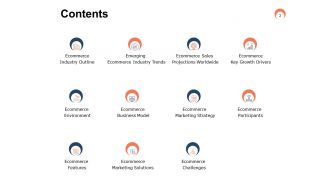
Slide 2: This slide shows Contents of the presentation.
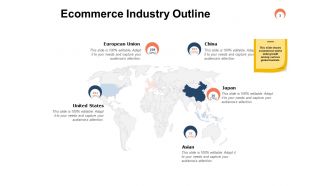
Slide 3: This slide presents Ecommerce Industry Outline to show world wide growth among various global markets.
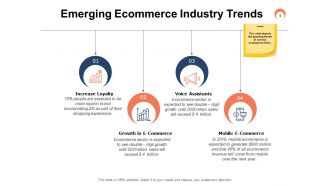
Slide 4: This slide displays Emerging Ecommerce Industry Trends to help in depicting the growing trends of various ecommerce firms.
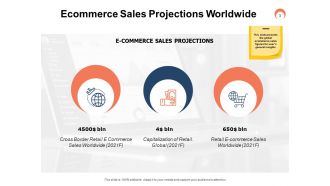
Slide 5: This slide represents Ecommerce Sales Projections Worldwide with sales figures for user’s general insights.
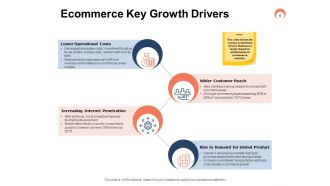
Slide 6: This slide shows the various E-commerce key growth drivers that have a major impact on performance of ecommerce industry.
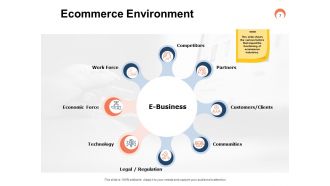
Slide 7: This slide showcases Ecommerce Environment to describe the various factors that impact the functioning of ecommerce industries.
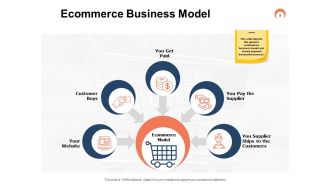
Slide 8: This slide depicts the general E-commerce business model and shows payment transaction process.
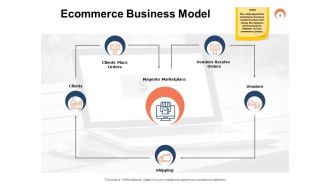
Slide 9: This is an optional slide for Ecommerce Business Model.
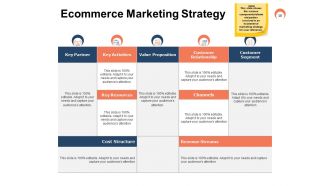
Slide 10: This slide shows the various components/elements/parties involved in an ecommerce marketing strategy for user reference.
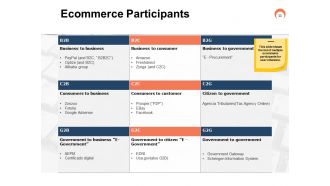
Slide 11: This slide presents the list of multiple ecommerce participants for user reference.
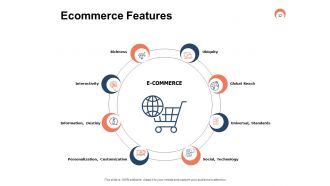
Slide 12: This slide displays Ecommerce Features describing- Richness, Interactivity, Information, Destiny, Personalization, Customization, Ubiquity, Global Reach, Universal, Standards, Social, Technology.
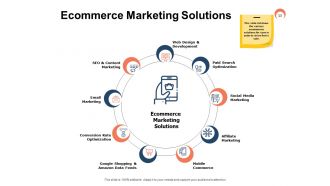
Slide 13: This slide list down the various ecommerce marketing solutions for user in order to drive firm’s sale.
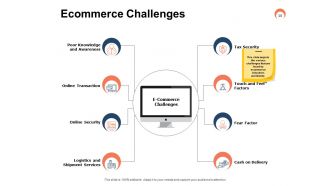
Slide 14: This slide depicts the various challenges that are faced by ecommerce industries worldwide.
Slide 15: This is Our Mission slide with related imagery and text.
Slide 16: This is Our Best Team slide with names and designation.
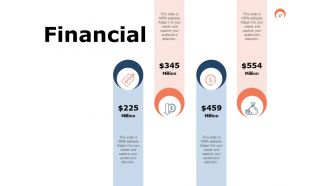
Slide 17: This is a Financial slide. Show your finance related stuff here.
Slide 18: This is Our Goal slide. Show your firm's goals here.
Slide 19: This is a Puzzle slide with text boxes.
Slide 20: This is a Venn slide with additional text boxes to show information.
Slide 21: This is a Lego slide with text boxes.
Slide 22: This is a Thank you slide with address, contact numbers and email address.
E Commerce Industry Trends Powerpoint Presentation Slides with all 22 slides:
Our E Commerce Industry Trends Powerpoint Presentation Slides help clarify all emerging doubts. They are always bound to crop up.



FAQs for E Commerce Industry Trends
Honestly, AI's where it's at right now. Personalized recommendations and chatbots are everywhere - the predictive stuff is getting scary good. AR/VR is cool too, especially for trying on clothes or seeing how furniture looks in your space before buying. Voice shopping through Alexa is picking up steam. Blockchain's helping with supply chains and payments, though that feels more behind-the-scenes. Social commerce is huge - like, TikTok and Instagram are basically shopping apps now. If I had to pick one thing to focus on first? AI personalization, hands down. Most bang for your buck.
Dude, mobile shopping has completely changed the game. People are buying random stuff while they're literally standing in grocery store lines or watching Netflix. It's wild. They've gotten super impatient too - if your checkout process isn't lightning fast, they'll bounce immediately. The small screen thing makes every design flaw glaringly obvious, so you can't hide behind fancy layouts anymore. Make sure everything works with thumbs, not mouse clicks. Honestly, I've watched people abandon full shopping carts just because they had to enter their address twice. One-click buying isn't just nice to have anymore - it's basically survival.
Honestly, social media is where everything happens now. People discover stuff AND buy it without leaving the app - Instagram Shopping, TikTok Shop, all that. Influencers and real customer posts just hit different than regular ads, you know? Like, I can't remember the last time I bought something without stalking the comments first. Pick whatever platform your people actually use (don't spread yourself thin at first), then branch out once you've got that down. Oh, and user reviews are basically everything these days.
Okay so personalized marketing is when you make customers feel like your store was built just for them. You know how Amazon shows "recommended for you"? That's AI tracking what you browse and predicting what you'll actually buy. Honestly it's kinda creepy how spot-on it gets, but people eat it up because they find stuff they want way faster. Your sales will definitely improve since you're showing products they're already interested in. Oh and start collecting customer data ASAP if you haven't - everyone's doing it now so you'll fall behind without it.
Honestly, subscriptions are a game changer for keeping customers around. People hate making the same buying decision over and over - subscriptions just remove that friction completely. Your customers stick around way longer (like 3-5x the lifetime value), and you get regular chances to wow them with personalized stuff. The steady revenue doesn't hurt either, obviously. I'd test it with your top products first. Oh, and definitely experiment with different delivery schedules - monthly might work for some things, quarterly for others. It's basically retention on easy mode once you dial it in right.
Dude, one-click payments are absolutely crushing it right now - we're talking like 60% less checkout friction. Apple Pay, Google Pay, Shop Pay... they let people skip all those annoying form fields. Face ID and fingerprint stuff is way better than those SMS codes that never work half the time anyway. Buy-now-pay-later at checkout is also converting like crazy. Honestly, I'd test 2-3 different options since older folks might prefer different methods than Gen Z. Start with the one-click payments though - that's where you'll see results fast. The biometric auth can come after.
Honestly, you've got advantages Amazon doesn't. Start with Instagram or TikTok shops - you can pivot crazy fast while big companies are stuck in meetings about meetings. Your size is actually perfect for this. Write handwritten thank you notes, remember Mrs. Johnson's favorite colors, do same-day delivery in your neighborhood. I swear, people are craving that personal touch right now. Focus on getting really good at one platform first though - don't spread yourself too thin. Local marketing hits different when you actually know the community.
Packaging's your best starting point - customers definitely notice that stuff first. Go recyclable, shrink down box sizes, ditch plastic where you can. Carbon-neutral shipping's pretty big right now too, so maybe look into carriers with offset programs or bundle deliveries together. People are calling out fake green stuff constantly these days, so you gotta be real about it. Your return policy matters too - like maybe give people incentives to keep stuff instead of sending it back? That whole returns process can be way more eco-friendly. But yeah, start with the packaging thing - it's honestly your easiest win and makes the biggest impression.
So AI basically stalks your entire shopping history - what you click on, buy, dump from your cart, even how long you stare at stuff. Pretty creepy but also genius. Instead of those useless "other customers bought this" recommendations, it builds a profile that actually knows what you want. Netflix does this really well - sometimes I'm honestly surprised by how spot-on their suggestions are. The system learns from millions of users to predict your next purchase, tracks seasonal stuff, and adapts while you're browsing. Companies see way better sales because customers feel understood rather than spammed with random products.
Honestly, the biggest pain is gonna be cost and finding devs who actually know AR stuff. Cross-platform testing is brutal too - what works on iPhone breaks on Android, then Chrome acts weird... it's exhausting. Most customers still think AR is gimmicky, so getting people to actually use it is tough. Oh, and if your AR loads slow, forget it - people will just leave immediately. The hardest part though? Convincing your boss it's worth the money when you can't really prove ROI yet. I'd say start with something basic like virtual try-ons first. Don't go crazy with fancy features right away.
Look, good logistics tech is what separates the winners from everyone else in e-commerce. AI route planning and warehouse automation cut your costs big time. Real-time inventory tracking prevents those nightmare stockout situations - trust me on that one. Same-day shipping isn't just nice anymore, customers expect it. Drone delivery sounds cool but honestly most of us aren't there yet. The demand forecasting stuff is clutch too. You'll burn through cash if you're still doing everything manually. Short version: logistics tech isn't optional if you want fast delivery without going broke.
SSL and two-factor authentication are must-haves, obviously. Tokenize payment data instead of storing actual card numbers - seriously, why would you want that liability? PCI compliance isn't optional either. Set up fraud detection tools and run security audits regularly. Your checkout needs address verification plus CVV checks. Oh, and keep your hosting secure and software updated. I know it sounds like a lot, but think of it this way - hackers just need one crack in your armor. You need everything working together or you're screwed.
Cross-border sales are absolutely crushing it - like 15-20% growth every year because people don't care where they're buying from anymore. Payment processing used to be such a nightmare, but now it's actually smooth. Amazon and Shopify made it stupidly easy for anyone to sell globally. The logistics got way better too. AI handles translations now so you don't need to worry about that cultural stuff as much. Honestly, if you're not doing mobile-first design and accepting local payment methods, you're missing out big time. That's literally where people convert.
Dude, cart abandonment is brutal but there's definitely stuff that works. Email sequences are the obvious play - hit them after like an hour, then maybe a day later with a small discount. Exit popups can feel desperate but honestly they convert. I'd focus on the checkout flow first though - guest options, showing shipping costs upfront, those little security badges that make people feel safe. Some companies are even texting now which seems aggressive but apparently works? Test different email timing with your audience since every crowd's different. Oh and make sure your checkout isn't a nightmare to navigate on mobile.
Dude, reviews are everything for online stores. People literally don't trust your fancy product descriptions - they want to see what real customers actually think. I always check reviews before buying anything online, and I know I'm not alone. The photos other buyers post are gold too, way better than those perfect marketing shots. Make it ridiculously easy for people to leave reviews, maybe throw them a small discount or something. Honestly, even bad reviews can help if you handle them right - shows you're legit and actually care about fixing problems.
No Reviews