


Ecommerce strategy playbook understanding ecommerce customer journey




Try Before you Buy Download Free Sample Product
 Impress Your
 Audience
 100%
100% Editable
 Save Hours
 of Time


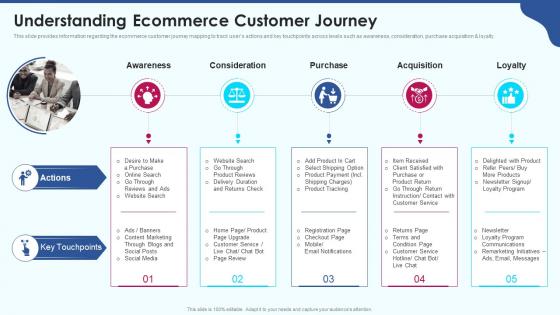
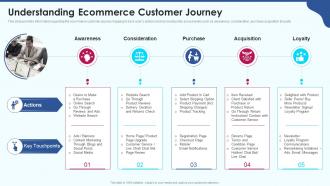
This slide provides information regarding the ecommerce customer journey mapping to track users actions and key touchpoints across levels such as awareness, consideration, purchase acquisition and loyalty.
People who downloaded this PowerPoint presentation also viewed the following :
Ecommerce strategy playbook understanding ecommerce customer journey with all 6 slides:
Use our Ecommerce Strategy Playbook Understanding Ecommerce Customer Journey to effectively help you save your valuable time. They are readymade to fit into any presentation structure.





FAQs for Ecommerce strategy playbook understanding
So basically there are four main stages: awareness, consideration, purchase, and retention. People find you through ads, search, social media - whatever. Then they start comparing you to competitors, which is why your product pages better be solid and your reviews need to be legit. The purchase part has to be seamless or they'll just bounce (seriously, cart abandonment will kill your soul). After they buy, nail the delivery and follow up properly. Oh and retention - most people ignore this but it's huge. Email campaigns, good customer service, loyalty programs. Honestly just map out every single touchpoint and fix what sucks.
Look, personas are huge for eCommerce because they totally change how you think about your site. Once you really get who's buying from you, everything clicks differently. Your homepage, checkout, emails - all of it can actually speak to real people instead of everyone and no one. A busy mom just wants to find stuff fast on mobile, right? But tech guys want all the specs and reviews. Makes sense. Honestly took me way too long to realize this, but you gotta map out what each persona actually needs at different points in their journey. Best place to start? Just go through your current site pretending you're each type of customer.
Look, people hit Google way before they even know your brand exists, right? SEO gets you in front of them during that search phase. You're basically capturing folks when they're asking questions or trying to solve problems - that's pure gold. Honestly, it's probably the cheapest way to get decent traffic that actually converts. The trick is writing about what your customers are actually searching for, not just pushing your product down their throats. I mean, think about it - when's the last time you bought something without googling first? Create content around their real questions and you'll show up when it matters.
Okay so basically you want customers to feel like you actually get them, not like you're just sending the same boring stuff to everyone. Use their purchase history and what they've been looking at to show them things they'd actually want - way better engagement that way. Like, Amazon's product suggestions work because they're not random, you know? Start simple with email subject lines that mention their name or recent order. Then maybe try dynamic website content. Honestly the data's already there, you just gotta be smart about how you use it at different points in their journey.
Honestly, checkout and product discovery are where most people bail. Can't find stuff fast enough? Gone. Surprise shipping fees? Also gone. Registration forms are the worst - nobody wants to fill out 15 fields just to buy a shirt. Trust stuff matters too, like sketchy return policies or payment pages that look sus. Page speed kills everything though - seriously, even two extra seconds and you're toast. Most checkout flows suck on mobile since they're still designed for desktop. I'd dig into your checkout analytics first, then maybe run some quick user tests to see where the real dropoff happens.
Honestly, good UX is everything for keeping customers happy. People bounce so fast if they can't find stuff or your checkout is a nightmare - I've totally abandoned carts over weird payment flows. Make sure your search bar is obvious, pages load quickly, and the whole thing works on mobile. Streamline that checkout process too. Test everything regularly because you'd be surprised how many little annoyances pile up. Oh, and don't underestimate how much fast loading speeds matter - nobody's waiting around for slow sites anymore. Fix the friction points and you'll see way better conversion rates.
So I'd start with conversion rates at each funnel stage - awareness through retention. Website traffic sources matter, plus bounce rates and how long people stay on product pages. Cart abandonment is huge too. Don't sleep on email metrics and customer lifetime value. Honestly, there's SO much data you can track it'll make your head spin. Focus on what actually drives revenue first - like your customer acquisition cost versus lifetime value ratio. Once you nail the basics, then you can get fancy with attribution modeling and all that stuff. Oh, and repeat purchase rates are clutch for subscription businesses.
Dude, checkout payment options are huge for conversions. When people can't pay how they want, they just bounce - I've seen it kill so many sales. Younger customers are all about Apple Pay and digital wallets, but plenty of folks still want regular credit cards or those buy-now-pay-later things. Honestly, the more options you give them, the better. Just make sure the whole process flows smoothly. Oh, and definitely check your cart abandonment data to see exactly where people are bailing out during payment.
Start with an automated email within the first hour - just a gentle nudge. Then wait 24-48 hours before sending something with actual value, like a discount code or free shipping. Trust me, timing is everything here. Retargeting ads work great too - show them the exact stuff they abandoned on Facebook or Instagram. Oh, and those exit-intent popups? Super effective when someone's about to bounce. Just don't be that brand that emails five times in one day. Test different messages to see what actually gets people clicking back.
Okay so basically you'll want different email flows for each stage of your funnel. Welcome series for new people, then educational stuff mixed with some product recs when they're still deciding. For customers who already bought from you - loyalty programs work great, plus cross-selling related items. Oh and definitely set up win-back campaigns for people who went quiet. Timing matters though - like someone who literally just purchased doesn't want you hitting them with sales emails right away, but maybe care tips or accessories? Automate it based on what people actually do on your site so you're not constantly babysitting everything.
Start with Google Analytics 4 and something like Hotjar for heat mapping - those two will get you the most useful data without breaking the bank. Heat maps are honestly kind of addictive once you see where people actually click versus where you think they do. Adobe Analytics is solid too but probably overkill at first. Once you've got those basics down, look into personalization tools like Optimizely or Dynamic Yield to customize experiences based on where customers are in their journey. CDPs like Segment are great for pulling everything into one unified view, but I'd save that for later when you've got more data flowing.
Here's how I see it - social media is basically word-of-mouth on steroids now. People find stuff through ads and influencer posts, then they're stalking the comments and reviews before buying anything. Honestly, they trust random customer photos way more than your fancy product shots. Weird but true. User posts and all those likes build credibility super fast. The biggest thing though? You've gotta actually respond and engage with people on your channels. That back-and-forth is what pushes someone from "maybe" to "add to cart."
Dude, you really need to fix your mobile site. Most people are shopping on their phones now, and if your checkout buttons are tiny or pages take forever to load, they'll just leave. I'm serious - people have zero patience anymore, like 3 seconds max. Google actually ranks mobile-friendly sites higher too, so you'll get more traffic. Your whole process from browsing to buying has to work smoothly on mobile or you're losing tons of customers. Honestly, grab your phone right now and try buying something from your own site. You'll probably see what I mean immediately.
Honestly, most companies collect feedback but then just... ignore it? Such a missed opportunity. Check your reviews, support tickets, and surveys for patterns. Maybe everyone's griping about your confusing checkout or surprise shipping fees - that stuff adds up to lost sales. Focus on whatever keeps popping up repeatedly since those are your biggest conversion killers. Here's the thing though: you've gotta actually fix what people tell you is broken. Make the changes, then circle back to see if it helped. Otherwise you're just collecting complaints for no reason.
Honestly, staying in touch after someone buys from you is everything for building loyalty. Most companies just disappear once they get your money - super weird, right? But when you actually send shipping updates, check how their order went, maybe follow up about their experience... that's what turns a random customer into someone who'll come back. The trick is not being annoying about it. Like, don't bombard them with sales pitches immediately. Just be genuinely helpful and they'll remember you cared enough to stay connected. It's such a simple thing but hardly anyone does it well.
-
Informative presentations that are easily editable.
-
Unique design & color.