

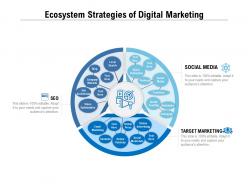
Ecosystem strategies of digital marketing





Try Before you Buy Download Free Sample Product
 Impress Your
Audience
 100%
Editable
 Save Hours
of Time


Our Ecosystem Strategies Of Digital Marketing are topically designed to provide an attractive backdrop to any subject. Use them to look like a presentation pro.
People who downloaded this PowerPoint presentation also viewed the following :
Ecosystem strategies of digital marketing with all 2 slides:
Use our Ecosystem Strategies Of Digital Marketing to effectively help you save your valuable time. They are readymade to fit into any presentation structure.

FAQs for Ecosystem strategies
Look, ecosystem strategy comes down to four things that actually matter. You need a value prop that works for everyone, not just you. Build tech infrastructure that lets partners share data without wanting to pull their hair out. Pick partners based on what they're actually good at - don't just grab whoever's around. But here's where companies mess up constantly: governance. Most people think it'll magically sort itself out. Spoiler alert - it won't. Start by figuring out what winning looks like for each partner first. Then you can work backwards from there and avoid the usual disasters.
So basically, all these different groups - customers, partners, regulators, competitors - they're constantly pulling your ecosystem in different directions based on what they want. The big players set the overall pace while smaller ones carve out their own niches. Yeah, it's messy and feels like chaos half the time. But honestly? That tension actually drives innovation because everyone has to adapt. Short bursts work better than trying to please everyone at once. You'll want to figure out who has real influence first, then align with their direction. Much easier said than done though.
Look, your tech stack is what makes or breaks an ecosystem - boring but true. APIs, data platforms, analytics tools... that's how you actually connect partners and see what's working. AI helps with the smart stuff like matching partners and spotting opportunities (though everyone says they use AI now, so whatever). The cool part? Partners get to use your infrastructure too, which saves them money and headaches. I'd start by checking where your current systems are creating bottlenecks. Those gaps are probably killing your growth more than you realize.
Honestly, treat it like dating - figure out what each partner brings and what they want back. APIs and shared data standards are your best friend here, trust me on this. Otherwise you'll be stuck playing translator between systems constantly. Don't wait for disasters to communicate. Regular check-ins with key partners keep things smooth. Here's the weird part - you might compete with someone in one space but totally collaborate in another. That's just business. Start with small pilot projects first. Build some trust, see what actually works, then go bigger from there.
Track revenue from partnerships and partner engagement rates first - those are your bread and butter metrics. Also watch time-to-market improvements and how much your customer acquisition costs drop. Partner satisfaction scores matter way more than people think, honestly. Don't sleep on retention rates either. Innovation stuff like new integrations coming out of your ecosystem is solid too, though that's harder to measure consistently. The whole balancing act between quick wins and long-term value is annoying but necessary. I'd say pick 3-4 metrics max that actually match your goals and stick with them.
So it really comes down to your industry and what role you want to play. Tech companies usually build platforms - like Apple's App Store or Amazon's marketplace - where other people create stuff on top of yours. Manufacturing is more about coordinating your supply chain ecosystem. Healthcare focuses on getting different providers and systems to actually talk to each other (good luck with that, btw). Financial services build around payments and embedded finance. The big question is whether you're the one orchestrating everything or just contributing to someone else's thing. That totally changes your whole approach.
Oh man, you're gonna hate the coordination stuff - seriously, getting everyone aligned when they all want different things is brutal. Tech integration will make you want to scream when nothing talks to each other properly. Plus the cultural clashes between companies... ugh, so much wasted time in meetings going nowhere. Trust becomes this weird thing you're constantly managing. Honestly though? Start with maybe one or two partners you actually like working with. Get your decision-making process figured out super early or you'll regret it later. And yeah, someone needs to be the relationship person full-time.
So ecosystem strategies are basically about tapping into outside innovation instead of doing everything yourself. You build partnerships and platforms where other companies or startups can jump in with ideas you'd never come up with internally. It's kind of like structured crowdsourcing, I guess? The cool thing is you stay way more adaptable since you're not stuck with just your own thinking or resources. When partners bring fresh tech or market insights, you can pivot fast. Honestly beats traditional R&D by miles. I'd say pick one area where you need outside help and just start experimenting with partners there.
Dude, customer feedback is like your secret weapon for figuring out partnerships. People complain about wanting better integrations? That tells you exactly which partners to chase. They're asking for features you don't have? Perfect - find someone who does. I swear our support tickets have given us more partnership ideas than any strategy meeting ever has. Look for patterns in what customers are saying - it'll show you gaps you didn't even know existed. Then just use that stuff to build your partner roadmap. Way better than guessing what people actually want.
Honestly, you gotta watch the power dynamics here. Don't just extract value from partners - actually create something meaningful for everyone involved. Be upfront about your algorithms and data practices, especially since smaller companies need a real shot at competing on your platform. Those big tech antitrust disasters? Yeah, learn from their mistakes. If you're wiping out traditional industries, think about the workers getting displaced too. The trick is building governance from day one that stops you from becoming a platform bully later. Give partners actual control, not fake participation that looks good on paper.
Instead of trying to tackle everything solo, team up with businesses that complement yours. Like that coffee shop down the street partnering with the bookstore next door - their customers probably love both caffeine and good reads, right? Look for companies where your audiences overlap but you're not competing directly. Cross-promote each other, share resources, maybe even create bundled deals together. Honestly, referral programs are super easy to start with. Just pick 2-3 local businesses and pitch something simple. You don't need some massive partnership right away.
Think about Apple's App Store - they let developers build whatever while taking their cut and keeping things decent quality-wise. Amazon does this too with AWS, basically renting out their tech so others can build on it. Uber's another one, though honestly the whole gig worker thing is kinda sketchy. But you get the pattern, right? The winners become the platform that connects everyone instead of trying to build everything themselves. So maybe look at where your company could be that bridge between different players.
Honestly, culture can make or break your whole ecosystem. Partners who communicate similarly and build trust the same way? Things just click. Mismatched cultures though - that's where partnerships die a slow death. Time's probably the biggest issue I've seen. Some cultures want decisions yesterday, others need endless meetings to reach consensus. Drives everyone nuts if you don't plan for it. Then you've got different views on hierarchy and risk that mess with collaboration. My advice? Map out how your key partners actually operate before you design any processes. Way easier to bridge gaps when you know they exist upfront.
Regulatory frameworks are basically the rules that dictate your entire ecosystem strategy. They control what partnerships you can actually form and how data moves between everyone involved. Map out your industry's key regulations early - this stuff directly impacts which partners you can work with and how you structure those deals. Honestly, I've seen too many companies try to bolt compliance on afterward and it's a nightmare. Build it into your ecosystem design from the start. Way easier than trying to fix it later when you're already deep in partnerships.
Don't wait to think about sustainability - build it in from the start. Pick partners who actually give a damn about the same environmental stuff you do, because mismatched values will bite you later. Track clear metrics together and report on them regularly. Design things so one partner's waste becomes another's raw material - that circular flow thing actually works. Honestly, the companies that nail this treat it as their secret weapon, not just another expense. Map out what you're all accomplishing together and optimize from there. Way better than trying to retrofit everything later.
No Reviews