


Employee Management System Data Flow Diagram




Try Before you Buy Download Free Sample Product
 Impress Your
 Audience
 100%
100% Editable
 Save Hours
 of Time


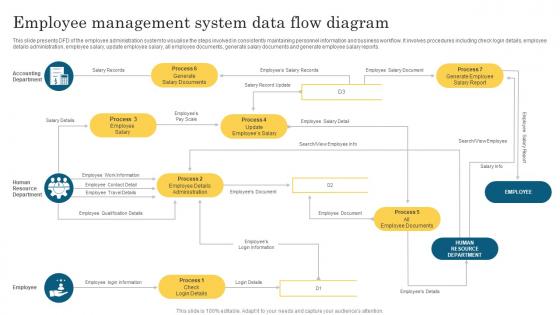
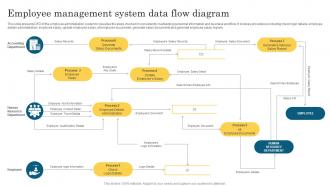
This slide presents DFD of the employee administration system to visualise the steps involved in consistently maintaining personnel information and business workflow. It involves procedures including check login details, employee details administration, employee salary, update employee salary, all employee documents, generate salary documents and generate employee salary reports.
People who downloaded this PowerPoint presentation also viewed the following :
Employee Management System Data Flow Diagram with all 6 slides:
Use our Employee Management System Data Flow Diagram to effectively help you save your valuable time. They are readymade to fit into any presentation structure.





FAQs for Employee Management System
So start with the basics - employee records, payroll stuff, time tracking. Performance management is pretty key too for reviews and goal setting. Leave management will save you SO much headache (trust me on this one). Self-service portals are great because people can just update their own info instead of bugging HR constantly. The reporting features help you actually see what's happening with your team. Honestly though, I'd figure out what's driving you crazy right now and pick something that fixes those specific problems first. No point paying for bells and whistles you won't use.
So these systems basically handle all that annoying onboarding stuff automatically. Welcome emails, account setup, training assignments - it all happens without you lifting a finger. Honestly, it's pretty sweet not having to hunt people down for missing paperwork anymore. The tracking feature shows you exactly where everyone is in the process, which is clutch. Your new hires get a way better experience too since everything just flows. I'd say start by writing down your current steps, then find a system that can automate most of it. Way less headache for everyone involved.
Honestly, automation is a game changer for performance reviews. You're not stuck doing all that boring paperwork anymore. It tracks goals and pulls feedback automatically throughout the year - no more trying to remember what someone did last spring (which is honestly impossible). Real-time data keeps everything consistent across teams too. The time you save? You can actually coach people instead of just checking boxes. I'd start by figuring out what parts of your current process take forever - that's where you'll see the biggest difference.
So these systems basically let you give feedback instantly instead of waiting months for formal reviews. There's usually messaging tools or quick survey features built right in. Your team can share thoughts while they're still thinking about it - way better than trying to remember what happened ages ago, right? Everything gets saved automatically too, which is pretty handy. You'll start noticing patterns and can fix small issues before they blow up. Honestly, I'd just use those quick feedback tools constantly rather than hoarding everything for yearly sit-downs.
Look, it basically saves you from all that attendance nightmare stuff. Tracks clock-ins, calculates hours, handles leave requests - the whole deal. You can set up different leave types and approval workflows so managers aren't constantly emailing back and forth. Reports show you who's always out sick or working overtime. Honestly, spreadsheets are the worst for this kind of thing. Best part though? Employees can actually check their own vacation balance instead of bugging HR every five minutes. Trust me, it'll make your life so much easier if you're dealing with any team bigger than like three people.
Okay so first off, you're sitting on a goldmine for hackers - SSNs, salaries, all that juicy stuff. Encrypt everything, obviously. Set up role-based access so HR can't peek at IT salaries (trust me on this one). Multi-factor authentication is non-negotiable at this point. Password policies matter too - I swear half the breaches I hear about trace back to terrible passwords. Don't forget about tracking who's accessing what data. Insider threats are real, even if Sarah from accounting seems sweet. Start by auditing who currently has access to what, then lock it down properly.
Look, data analytics in your EMS basically takes all that employee info and turns it into stuff you can actually act on. You'll spot patterns - like which teams always miss deadlines or what makes your best performers tick. Skills gaps become obvious too. The cool part is predicting burnout before it hits (trust me, this one's a game-changer). Plus you can finally see if those training programs are worth the money or just draining your budget. Instead of playing guessing games when productivity tanks, you get real data to fix specific problems. Check what metrics you're already tracking first.
Dude, you gotta integrate those systems. No more typing the same employee data twice - hours, PTO, salary changes, all that stuff syncs automatically. Payroll errors drop like crazy too. Your HR team will actually thank you for once lol. Real-time reporting means you catch weird discrepancies before they blow up. Honestly? The time you save probably covers the cost in a few months. Oh, and check if your current software already plays nice together - might be easier than you think.
So basically it automates all the compliance nightmare stuff - tracks hours so you don't accidentally break overtime laws, handles leave requests properly, keeps documentation ready for audits. The alerts are clutch though. Like it'll warn you when someone's hitting max weekly hours or missed their breaks. During inspections? Total lifesaver. You just pull up reports showing you followed everything correctly. Oh and definitely set up those deadline reminders - catching issues early beats scrambling later when lawyers get involved.
Honestly, I'd focus on finding something that bends to fit your team instead of the other way around. Custom workflows and approval chains are huge - you don't want to be stuck with their rigid setup. Reporting should be flexible too, plus you'll definitely need custom fields for whatever random stuff your company tracks (trust me, there's always something). Integration with your current HR and payroll systems will save you headaches later. Oh, and basic branding options are nice if that matters to leadership. The whole point is adapting the tool to your actual processes.
Honestly, mobile apps are a game-changer for remote teams. Your phone becomes this mini HR center where you can clock in from literally anywhere - your couch, a coffee shop, wherever. Time-off requests? Done while you're waiting in line somewhere. Schedule changes pop up as notifications so you're never out of the loop. Everything syncs right away with the main system, which is clutch because who wants to wait until they're back at their computer? Most work offline too, so bad wifi won't mess you up. If your team's spread out, you really need an EMS with decent mobile features. Keeps everyone in sync without the desk chain.
Honestly, cost hits hardest first - these systems love targeting enterprise budgets. Your team will probably hate the learning curve too. People get weirdly attached to their messy spreadsheets, I swear. Data migration becomes this whole nightmare project nobody warns you about. Implementation? Yeah, that "2 week setup" turns into 2 months real quick. Pick something dead simple that fits what you're doing now. Don't get seduced by all the fancy features you'll "definitely use later" - you won't. Core stuff only.
Honestly, these systems actually help with engagement more than hurt it. Your team gets way more visibility into their own stuff - tracking goals, seeing wins get recognized, understanding where they stand career-wise instead of just wondering. The self-service thing is huge too, like updating their info or requesting PTO without bugging HR every time. Better data means you can have real conversations about growth. I'd say just let them poke around the platform first - people love having that control over their work life, you know?
Honestly, start with turnover rates and time-to-hire - those are your bread and butter. Performance ratings matter too, obviously. But here's the thing that took me forever to learn: absenteeism patterns will literally save your ass. I can't tell you how many times spotting those trends early prevented total chaos. Training completion rates are clutch too. Don't sleep on employee satisfaction scores and promotion tracking either - they'll show you retention problems way before people start walking out the door. Just pick like 5-7 max and actually look at them monthly instead of hoarding useless data.
Oh totally, EMS are perfect for this stuff! Upload your training records first, then set up those automated reminders - trust me, nobody remembers when their certifications expire. You can track who's done what training, spot skill gaps, and plan future learning paths. The reporting features are honestly pretty solid for seeing ROI and compliance rates. I'd start with automating your most common cert renewals since that's probably eating up way too much of your time right now. Plus you can monitor development goals all in one spot.
-
Excellent products for quick understanding.
-
The designs by SlideTeam are honestly the best I have seen so far. Will be definitely coming back for more.