


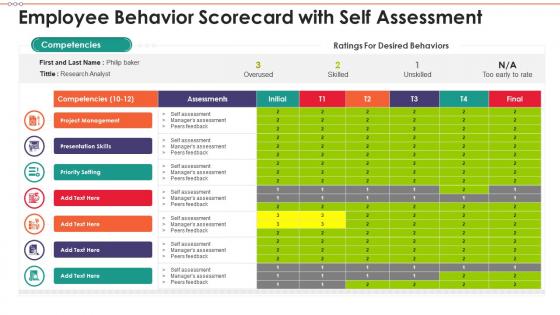
Employee scorecard behavior scorecard with self assessment




Try Before you Buy Download Free Sample Product
 Impress Your
 Audience
 100%
100% Editable
 Save Hours
 of Time


Our Employee Scorecard Behavior Scorecard With Self Assessment are topically designed to provide an attractive backdrop to any subject. Use them to look like a presentation pro.
People who downloaded this PowerPoint presentation also viewed the following :
Employee scorecard behavior scorecard with self assessment with all 6 slides:
Use our Employee Scorecard Behavior Scorecard With Self Assessment to effectively help you save your valuable time. They are readymade to fit into any presentation structure.





FAQs for Employee scorecard behavior scorecard
Mix quantitative stuff with the softer skills that actually matter. Did they hit targets? Cool. But also check work quality, how they collaborate, problem-solving abilities. Peer feedback is gold because your teammates notice things managers totally miss. Growth metrics too - are they learning new skills, taking initiative? Oh and don't use some cookie-cutter template. Pick maybe 4-5 things that actually relate to their job. The biggest thing though? Tell them upfront what you'll be measuring. Nobody likes surprise evaluation criteria.
Dude, regular feedback is a game changer - no more anxiety-inducing annual reviews where people get blindsided. You're basically having normal conversations throughout the year instead of saving up all the criticism for one brutal meeting. Weekly check-ins work great, or even just monthly one-on-ones. People can actually fix stuff as they go rather than finding out they've been screwing up for months. The whole "surprise, here's everything wrong with your performance" thing is so 2010 anyway. Plus your team will thank you for it.
Honestly, you can't do performance reviews properly without setting goals first. Otherwise it's just this weird guessing game where everyone's uncomfortable. SMART goals are clutch here - give both of you something concrete to point to later. Did they hit their numbers? Finish on time? Boost those customer scores? Way better than relying on gut feelings or vague impressions. I learned this the hard way when I used to just wing it and reviews felt super unfair. Set them upfront, then actually reference them during the review. Makes everything feel more legit and less awkward for everyone involved.
Honestly, you've got to get rid of as much subjectivity as you can. Create standardized rating scales that everyone uses - same criteria across the board. Train your managers to spot their own biases (which is harder than it sounds, but worth it). 360-degree feedback helps a lot since you're getting input from multiple people instead of just one person's opinion. Anonymous peer reviews are clutch too. Oh, and definitely audit your data regularly to catch any weird patterns. I'd start simple though - just make a basic rubric for your next review cycle and build from there.
Honestly, just make it feel like an actual conversation instead of some formal interrogation. Ask open questions like "What's your biggest win this quarter?" and let them talk first - seriously, most managers won't shut up during these things. Have them evaluate themselves before you jump in, then you can discuss where you see things differently. Oh, and focus on what's next rather than dwelling on past screw-ups. Ask what they need from you to succeed. The best part? Make it two-way so they can tell you how you're doing as a manager too.
Honestly, quarterly check-ins work best with one big annual review. You'll catch problems early instead of letting them drag on for months (I've watched that happen - it's painful for everyone). Monthly feels way too intense, but yearly? Issues just pile up. Keep the quarterly ones casual - maybe 30 minutes to chat about what's going well, what sucks, and if they need anything. The annual one's where you dive into career stuff and pay changes. Just start scheduling them regularly so people don't panic when they pop up on the calendar.
Honestly, self-assessments are a game changer for performance reviews. Employees come in having already thought through their wins and areas where they struggled - no awkward surprises for either of you. The whole conversation just feels more natural when they've done that reflection work upfront. What's really cool is seeing how their self-perception matches (or doesn't match) what you've observed. Sometimes they're way harder on themselves than you'd ever be! Just don't forget to actually bring up their responses during the meeting. Nothing's worse than spending time on something your manager clearly didn't read.
Honestly, just get a decent platform that does the boring stuff automatically - reminders, feedback collection, goal tracking. Game changer is having everything in one spot instead of digging through old emails trying to remember what Sarah did last quarter (spoiler: you won't). Templates that sync with your project tools are clutch. I'd pick something that plays nice with whatever systems you're already using - don't overcomplicate it. Track stuff throughout the year so you're not doing that frantic end-of-year scramble. Trust me, it'll save you so much time.
Start with bias training - we all judge people without realizing it. Then teach them your actual rating system so everyone's on the same page. Documentation is critical because most managers write garbage feedback that helps nobody. They need practice with difficult conversations too, which honestly nobody enjoys but whatever. Basic employment law training prevents them from saying dumb stuff that gets you sued. Oh, and make sure they know how to give feedback that actually helps people improve instead of just crushing souls. Do a workshop covering all this, then refresh annually.
Yeah, totally. Each industry needs different metrics because success looks completely different everywhere. Like, you can't judge a software dev the same way as a nurse - makes zero sense. Sales teams live and die by revenue numbers, but healthcare is all about patient safety and outcomes. Tech cares more about code quality and hitting deadlines. Honestly, even similar jobs at different companies need different measures based on their culture and business model. The trick is picking 3-4 things that actually show value in your specific situation. Don't just copy what other people are doing.
Dude, don't just ghost people after their reviews like most managers do. Set up monthly check-ins (or quarterly if your team's huge). One-on-ones work best for tracking those goals you set. Write stuff down so you can actually see progress over time - your memory isn't that good, trust me. When someone's struggling, throw them some training or pair them with a mentor. The whole point is keeping the conversation going instead of waiting a full year. Oh, and put those follow-up meetings in your calendar right now before you forget.
Yeah, most people think their performance reviews are total BS - like 60-70% feel it's biased or inconsistent. The main issues? Unclear criteria, zero feedback all year long, then suddenly it's review time. Plus managers who've clearly already decided your fate before you even sit down. Super annoying because people actually want to get better, they just don't know what they're being judged on. My advice? Be upfront about expectations from day one. Give feedback regularly instead of waiting for that awkward annual conversation nobody enjoys.
Oh man, annual reviews are kinda broken tbh. You're waiting an entire year to fix stuff that could've been handled in like, March. By then everything's blown up. Plus everyone's frantically trying to remember what happened 8 months ago - good luck with that lol. The whole thing becomes this weird performance where recent stuff gets way too much weight. Your people end up shocked by feedback they should've gotten ages ago when it actually mattered. Honestly? Try quarterly check-ins instead. Way less stressful and you'll actually catch issues before they become disasters.
Try adding a 360-degree thing where colleagues rate each other on teamwork stuff. Anonymous works best - people actually tell the truth that way. Get 3-5 coworkers who really know the person to give feedback, then combine it with what managers think. Honestly, the structured questions beat open-ended comments every time. Training people on how to give decent feedback is huge though, or you'll get either total fluff or people settling scores. Oh, and definitely pilot it with just one team first before going crazy company-wide.
Honestly, the biggest game-changer is being super specific upfront about what you actually want. Like, don't say "improve communication" - that's setting everyone up to fail. Instead, collaborate with them on setting measurable goals that connect to your team's bigger picture. I always write everything down because people forget stuff (myself included). Check in regularly too - waiting for annual reviews is basically useless. Oh, and here's something I learned the hard way: start by asking them what they think success looks like first. You'll be surprised how different their perspective might be.
-
Unique design & color.
-
Excellent Designs.