


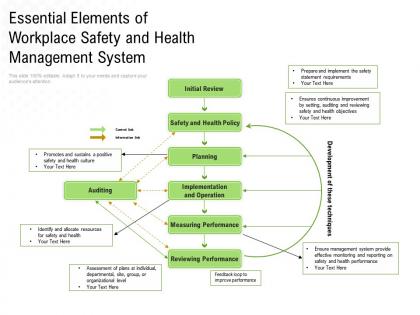
Essential elements of workplace safety and health management system




Try Before you Buy Download Free Sample Product
 Impress Your
 Audience
 100%
100% Editable
 Save Hours
 of Time


Our Essential Elements Of Workplace Safety And Health Management System are explicit and effective. They combine clarity and concise expression.
People who downloaded this PowerPoint presentation also viewed the following :
Essential elements of workplace safety and health management system with all 2 slides:
Give your audience a fulfilling experience. They will find our Essential Elements Of Workplace Safety And Health Management System elevating.

FAQs for Essential elements of workplace safety and
Okay so you'll need hazard ID and risk assessment first - basically figure out what could go wrong. Then build clear safety policies around those specific risks. Training's huge too, gotta keep doing it regularly. Oh and get an incident reporting system going. Honestly though? None of this works without your management actually caring. I've seen so many programs crash because leadership just pays lip service to it. Do regular audits and inspections, have emergency plans ready. The whole thing needs to be systematic - can't just scramble when stuff happens. Start by mapping your workplace hazards, then everything else follows.
Honestly, anonymous surveys are your best bet for getting real feedback - people won't sugarcoat things when they're not worried about their boss reading it. Walk around and actually watch what's happening too, because what people do vs. what they claim to do? Totally different story. Don't just look at accidents either - those near-misses are where the good intel is. Check if anyone's actually following your safety policies or if they're just collecting dust somewhere. Talk to everyone - managers, floor workers, safety folks. Oh and here's the thing: don't try fixing everything at once. Pick the biggest problems first and tackle those.
Dude, training is literally everything when it comes to workplace safety. Like, I can't stress this enough - it's your best shot at preventing accidents. You want your team knowing how to spot hazards and handle emergencies before stuff hits the fan. I've worked places where they just threw people in with zero prep, and yeah... that was a disaster waiting to happen. Plus it keeps you on the right side of regulations. Oh, and it builds this mindset where people actually think about safety instead of just rushing through tasks. Figure out your worst risks first, then train specifically for those.
These devices are pretty cool - they track heart rate, temperature, gas levels, and can tell if someone falls or stops moving. Real-time alerts go straight to supervisors when something's wrong. Honestly, the data helps you catch patterns you'd totally miss otherwise. Air quality, worker fatigue, all that stuff gets monitored constantly. Way better than waiting for an actual incident to happen. I'd start small though, maybe just test a few devices in your riskiest area first. Don't go crazy with it right away.
So the main ones you'll deal with are slips, ergonomic stuff, chemical exposure, and equipment mishaps. Clean up spills right away and keep walkways clear. Ergonomic problems come from repetitive motions or bad posture - fix workstations and take breaks. Chemical exposure? You need ventilation, PPE, and proper training. Equipment accidents happen when maintenance gets skipped or people don't follow safety protocols. Here's the thing though - most accidents happen when people get too comfortable and start cutting corners. Regular safety audits help, but honestly everyone just needs to actually follow the procedures.
Look, regulations are your starting point - OSHA, industry codes, local stuff. You can't skip these. But here's the thing: don't treat compliance like it's the finish line. Yeah, you'll need audits and training programs to stay legal (obviously), but that's just covering your ass. The real win? Use those baseline requirements as a jumping-off point. Build something that actually works, not just something that looks good on paper. Start by mapping what you legally have to do, then add the stuff that'll genuinely keep people safe. Way more effective than just ticking boxes.
Dude, make reporting dead simple - anonymous forms, one-click stuff. Jump on investigations immediately because people forget details crazy fast (trust me, learned this the hard way). Focus on what broke in the system, not who screwed up. People get super defensive otherwise and you'll get nowhere. Document everything but honestly, the follow-up is where most places fail. You can't just write up corrective actions and forget about them. Circle back to see if changes actually stuck. Oh, and definitely share findings with your team so they don't repeat the same mistakes.
Look, you've gotta get everyone owning safety, not just having HR drone on about it. Encourage people to report close calls without getting blamed - that's where you actually learn stuff. Those weekly team chats about safety? Way more effective than boring annual training (seriously). When someone spots a hazard or has ideas, recognize them for it. But here's the thing - you actually have to DO something with their feedback, not just smile and forget about it. Oh, and make it crystal clear that anyone can stop work if something feels unsafe. That's always the right move.
So you'll need both types of metrics - the stuff that already happened (injury rates, workers comp claims, lost days) and the predictive ones that actually matter more. Near-miss reports are honestly the best indicator because it means people feel safe speaking up. Also track safety training completion, hazard IDs, and audit scores. Employee surveys are huge too since engaged workers don't get hurt as much. Oh and don't go crazy with like 15 metrics right away - pick 3 or 4 solid ones first. You can always pile on more later once you've got your baseline down.
Look, your safety programs live or die by whether leadership actually gives a damn. Seriously. Resources need backing up with real money and time. When managers just treat it like paperwork, everyone knows it's BS. But get your leaders walking around, asking questions, actually following through? That changes everything. People start caring because they see their boss cares. I watched one place completely turn around just because the VP started doing safety walks every week - sounds small but it worked. Bottom line: make your leadership visible and hands-on with safety stuff.
Honestly, communication makes or breaks safety programs. People need to get WHY rules exist, not just what they are - that's when they actually follow them. I've noticed places that just slap up signs and call it good always fail. You want regular meetings where people can ask questions without feeling stupid. Clear signage helps too, obviously. The goal is making safety talk feel normal, not just something you do during those boring mandatory sessions. Oh, and definitely make sure workers feel safe reporting issues without getting in trouble.
Honestly, start with a survey about their current home setups - you'll probably be horrified at what you find! Get virtual ergonomic assessments going and give people actual guidelines for home offices. Proper lighting, decent chairs, clear incident reporting from home. I swear half your team is probably hunched over laptops on kitchen tables right now. Digital safety checklists help a ton. Maybe throw in equipment stipends if you can swing it? Regular check-ins about workspace conditions too. Oh, and don't forget transition safety for hybrid folks - different buildings, different protocols. It's messier than office-only but totally doable.
Honestly, make safety feel personal instead of just another corporate thing. Regular meetings help, but let people actually talk - not just sit there while someone drones on. Rotating safety committees get everyone involved eventually. Recognition is huge though. Pizza parties for good safety records? Sounds cheesy but it totally works. Near-miss reporting with small rewards makes people feel like partners, not just rule-followers. Oh, and definitely implement at least one employee suggestion this month and make sure everyone knows about it. That shows you're actually listening.
Think of safety audits like going to the doctor - you wouldn't skip checkups for years, right? Do them every 3-6 months and mix your internal team with outside experts who'll spot things you're blind to. Honestly, most companies just do yearly audits to tick a box, which is pretty useless. Talk to your frontline people during these - they know where the real problems are. Track patterns, not just random incidents. Here's the key part though: make action plans right after and give someone ownership of fixes. Otherwise you're just wasting time.
Honestly, just treat mental stuff like any other safety issue. Add stress checks to your regular safety audits - most accidents have some stress factor anyway, so why not address it? Train your supervisors to actually notice when someone's burning out. Make it normal to report mental health incidents, not just physical ones. Set up those employee assistance programs if you don't have them already. Oh, and create spaces where people can speak up without getting in trouble. The goal is making mental health checks as routine as... I dunno, checking if someone's wearing their hard hat. Start small - just add one mental health question to your next safety meeting.
No Reviews