


Evolution of strategy powerpoint presentation slides




Try Before you Buy Download Free Sample Product
 Impress Your
 Audience
 100%
100% Editable
 Save Hours
 of Time


Select Evolution of Strategy PowerPoint Presentation Slides for the understanding of the strategic process and implementing it. Showcase the phases of business planning using this strategy planning evolution PPT slides. The evolution of strategic management PowerPoint complete deck comprises of templates such as phases in the evolution of strategic management, strategy framework, strategy evolution template, the evolution of innovation strategy, etc. Explain the steps of strategy formulation and implementation like goal setting, structure, analysis, control, and feedback. This assists in the evaluation of strategic alternatives and the dynamic allocation of resources. These ready to use strategy management PowerPoint templates are designed by our team of experts after an in-depth study of the topic. All slides of strategy planning presentation are easy to customize as per the specifications of the users. Users can combine text and graphics to create professional presentations. Download evolution of business strategy presentation slides to present the strategy formation process. Do it with our Evolution Of Strategy Powerpoint Presentation Slides. You will surely do it well.
People who downloaded this PowerPoint presentation also viewed the following :
Content of this Powerpoint Presentation
Slide 1: This slide introduces EVOLUTION OF STRATEGY. State your company name and continue further.
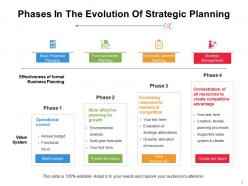
Slide 2: This slide shows Phases In The Evolution Of Strategic Planning. These 4 phases are- Operational control, More effective planning for growth, Increasing response to markets & competition, Orchestration of all resources to create competitive advantage.
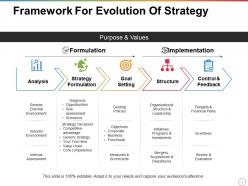
Slide 3: This slide showcases a Framework For Evolution Of Strategy with the following steps- Analysis, Strategy Formulation, Goal Setting, Structure, Control & Feedback.
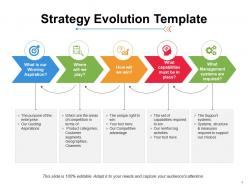
Slide 4: This slide showcases Strategy Evolution Template to state- What is our Winning Aspiration? Where will we play? What capabilities must be in place? What Management systems are required? How will we win?.
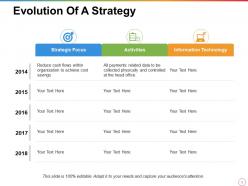
Slide 5: This slide showcases yearly Evolution Of A Strategy with respect to- Strategic Focus, Activities, Information Technology.
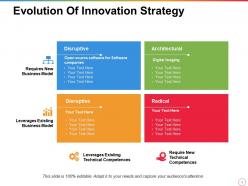
Slide 6: This slide also shows the Evolution Of Innovation Strategy divided into- Disruptive, Architectural, Radical.
Slide 7: This is Evolution Of Strategy Icon Slide. Add/ remove icons according to your business requirement.
Slide 8: This slide is titled Additional Slides to proceed forward. You can change the slide content as per need.
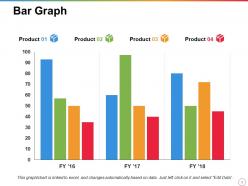
Slide 9: This is a Bar Graph image slide to show product comparison, growth etc.
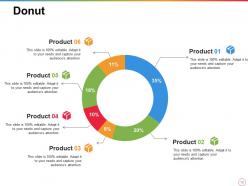
Slide 10: This is a Donut Pie Chart slide to present product/ entity comparison, specifications etc.
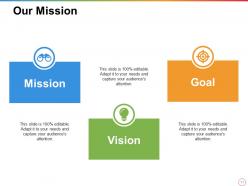
Slide 11: This slide contains Our Mission with text boxes to state goal, mission etc.
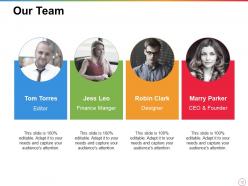
Slide 12: This slide helps depict Our Team with text boxes.
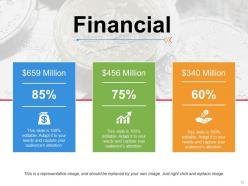
Slide 13: This slide is titled as Financials. Show finance related stuff here.
Slide 14: This is a Puzzle image slide to show information, specification etc.
Slide 15: This slide shows Our Goal. State your goals here.
Slide 16: This is a Lego slide to present information, specification etc.
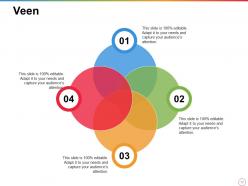
Slide 17: This is a Venn diagram image slide to show information, specifications etc.
Slide 18: This is a Thank You slide with Address# street number, city, state, Contact Number, Email Address.
Evolution of strategy powerpoint presentation slides with all 18 slides:
Our Evolution Of Strategy Powerpoint Presentation Slides will get them bright and cheery again. They will bring back the feel good factor.

FAQs for Evolution of strategy
So it basically starts with Sun Tzu around 500 BCE - dude was writing the original strategy playbook. Fast forward to the 1800s and Clausewitz connects war to politics, which was pretty groundbreaking back then. Corporate planning takes off in the 1960s, then Porter drops his competitive forces framework in the 80s. The 90s brought us resource-based thinking and core competencies. It's crazy how much military strategy influenced business thinking, right? These days we're all about agile and adaptive approaches since your five-year plan is probably useless by next quarter. Learn the frameworks but don't just copy what worked somewhere else.
Honestly, digital disruption has completely flipped how we do strategy. Those old-school 5-year plans? Dead. Everything moves too fast now - I swear strategies have shorter lifespans than TikTok trends these days. Companies are switching to continuous planning instead, using real-time data and customer feedback to pivot constantly. You can't just theorize anymore; you need rapid experimentation and actual numbers driving decisions. Platform economics and hyper-connectivity mean your framework has to bend without breaking. Bottom line: build flexibility in from day one and get comfortable iterating fast based on what the data actually tells you, not hunches.
Cultural stuff really affects how teams make big decisions. Some cultures want everyone to agree first - takes forever but builds buy-in. Others? Boss decides, everyone follows. Asian companies think decades ahead while we're obsessed with quarterly numbers (kinda drives me crazy tbh). Hierarchy matters too. If junior people can't speak up, you miss good ideas from folks actually doing the work. Each team's different though. You gotta figure out your mix and adjust instead of cramming everyone into the same process.
Look, data is everything now when you're planning strategy. You literally can't wing major decisions anymore without numbers to back them up. Companies track stuff in real-time to catch trends and predict what customers will do next. Way better than waiting around for those boring quarterly reports, right? Honestly, the patterns you can spot now that were totally hidden before... it's crazy. Your whole approach gets more flexible because you're always testing your hunches against real data instead of just going with your gut. If you're not doing this yet, start simple - even basic customer insights will totally shift how you think about your next steps.
Dude, military strategy is actually super relevant for business stuff. Sun Tzu's whole "know your enemy" concept? Perfect for sizing up your competition. You learn to focus your resources where you're strongest and keep some cash in reserve for when opportunities pop up. Force multiplication is huge too - basically getting way more done with less. Supply chains become way more obvious when you think about military logistics. Honestly, the biggest thing is learning to plan ahead while staying flexible when everything goes sideways (which it always does).
Here's the thing - Porter's Five Forces and SWOT were built for when markets moved like molasses. Now everything changes overnight. Look at how AI just flipped entire industries upside down in like six months. By the time you finish your analysis, the whole landscape's different. These old frameworks totally miss how connected everything is now, plus they're clueless about digital disruption. Honestly, they're still useful but you gotta mix them with something more flexible. Scenario planning works way better for this crazy fast-paced stuff we're dealing with.
Honestly, you need to connect your day-to-day stuff back to the big picture somehow. I'd start with quarterly goals that actually tie to your yearly plan - sounds obvious but most people skip this part. When random urgent things pop up (they always do), you can quickly figure out if they're worth your time or just distractions. Monthly check-ins work pretty well for reviewing what's actually moving the needle. Oh, and map out what you're currently doing first - you'll probably find half of it doesn't even support where you're trying to go.
Honestly, AI is changing strategy work way faster than I expected. You can crunch huge amounts of data instantly now and catch patterns that would take forever to spot manually. The cool part? It'll actually suggest strategic moves you probably wouldn't think of on your own. But don't worry - you're not getting replaced anytime soon. Human judgment is still crucial for making sense of what the data's telling you. My advice? Start playing around with AI tools for market research or scenario planning, even if it's just basic stuff. Trust me, you'll want to get comfortable with this now rather than later.
Dude, this shift is crazy - even just in the past few years, sustainability and ethics have gone from "oh that's nice" to actual business strategy. Customers are pickier, investors ask harder questions, and honestly your own employees will judge you for it. Companies that get it are baking this stuff right into their business models from day one. You can't just worry about financials anymore - gotta think about ESG scores, whether your suppliers are sketchy, environmental risks down the line. The winners aren't treating it like some side project they'll get to later.
Honestly, disruption works best when you find markets where people are basically stuck with overpriced, complicated solutions they hate. Netflix crushing Blockbuster is the perfect example - or how Uber made taxis look ancient. You're looking for industries that got lazy and only care about their premium customers. Meanwhile, tons of people are getting ignored or priced out. The trick is offering something way simpler and cheaper, even if it's technically "worse" at first. I always think about it like this: if customers feel trapped by complexity or cost, that's your opening right there.
Oh man, leadership is EVERYTHING here. They're the ones who spot change coming and actually get people excited about shifting direction instead of panicking. Without good leaders? Your best strategies just get talked to death in endless meetings - I swear I've watched this happen so many times. But smart leaders don't just dictate from above. They listen to what people on the ground are seeing and aren't afraid to pivot when something's not working. They make it safe for teams to try stuff and screw up quickly. You need leaders with vision but also enough humility to say "okay, that didn't work, let's try something else."
Honestly, just ditch those massive 5-year plans - they're dead on arrival anyway. Break your strategy into 90-day chunks instead. Test one thing, see what happens, then adjust. Way more realistic than pretending you can predict the future, right? Pick one initiative and treat it like you're building a product - quick cycles, fast feedback. Have your team do regular check-ins to figure out what's actually working vs what sounded good in theory. The whole fail-fast approach isn't just startup BS, it genuinely works for strategy too. You'll be shocked how much more responsive you become.
Honestly, most strategies crash because nobody actually knows what they're supposed to do with them. Communication breaks down hard. Then you've got the whole ownership problem - everyone assumes someone else is handling it. Oh, and companies love doing zero follow-up. They'll spend months planning then just... hope it works? Wild. Here's what actually helps: spell out who does what, super specifically. Check in monthly - not those useless meetings, but real progress reviews. Someone needs to own each piece or it dies. Figure out which trap your company usually falls into first. That's your starting point.
Honestly, getting stakeholders involved early is like having cheat codes for strategy. You'll catch blind spots you'd never see otherwise - customers know what actually works, employees understand the real constraints. I learned this the hard way once. People buy into plans they helped create, which sounds obvious but most companies still skip this step. Your brilliant strategy means nothing if it crashes against market reality or nobody wants to implement it. Figure out who can make or break your success, then loop them in from the start. Way better than discovering problems after you've already committed.
Look, every failed strategy I've seen comes down to one thing - being too rigid when you need to bend. Markets change overnight. Customers want something completely different by next quarter. Blockbuster saw streaming coming but couldn't ditch their cash-cow stores fast enough, which honestly still blows my mind. Most teams ignore the red flags or keep throwing money at something because they've already invested so much. Set monthly check-ins to actually review what's working. Always have backup plans ready to go.
No Reviews