

Exemple de présentation PowerPoint sur le Kaizen





Try Before you Buy Download Free Sample Product
 Impress Your
Audience
 100%
Editable
 Save Hours
of Time


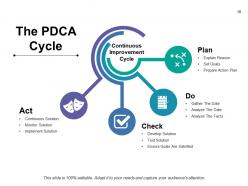
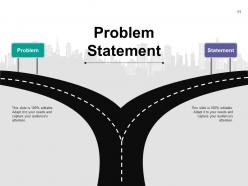
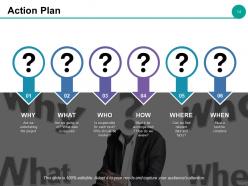
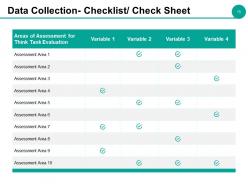
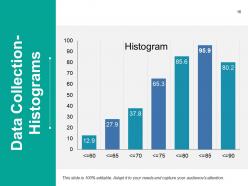
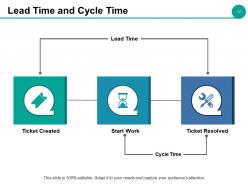
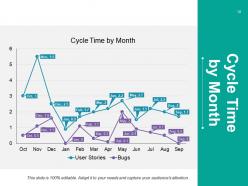
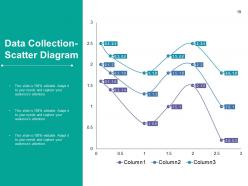
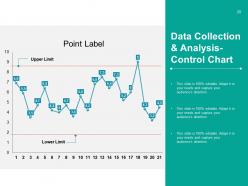
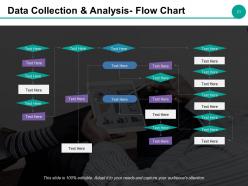
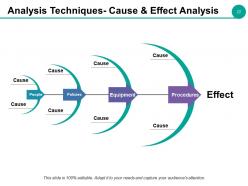
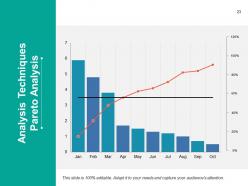
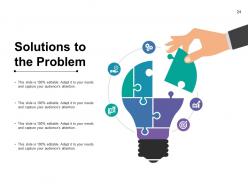
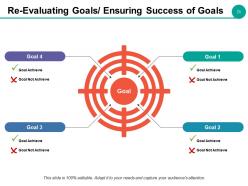
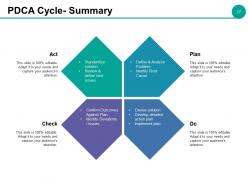
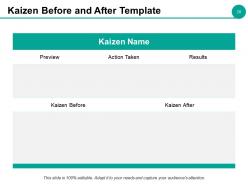
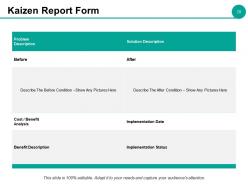
Présentation PowerPoint sur l'exemple de la présentation Kaizen axée sur l'amélioration continue des pratiques de travail. L'amélioration des processus peut directement augmenter la rentabilité. Présentez le concept de kaizen et sa mise en œuvre dans divers aspects avec ces diapositives de cercle de qualité. Le dossier PowerPoint du processus Kaizen comprend des diapositives de contenu prêtes, telles que la signification de Kaizen, le cadre Kaizen 5S, les 3 Mus de Kaizen, la liste de contrôle 4M, les types de gaspillage, Kaizen vs innovation, le cycle PDCA, l'énoncé du problème, le plan d'action, le délai d'exécution et le temps de cycle, le cycle de collecte de données, l'analyse cause-effet, l'analyse de Pareto, la solution au problème, la réévaluation des objectifs, le modèle avant et après, le formulaire de rapport, etc. De plus, la mise en page de la présentation Six Sigma peut être utilisée pour représenter des sujets tels que la réingénierie des processus d'entreprise, l'apprentissage expérientiel, le contrôle des processus, la maintenance productive totale, la stratégie d'amélioration, la gestion allégée et bien d'autres. Téléchargez la mise en page de la présentation sur l'approche Kaizen de l'efficacité opérationnelle pour présenter les initiatives d'amélioration de votre entreprise. Prenez le temps de rendre votre présentation parfaite. Nos diapositives de présentation PowerPoint sur l'exemple de la présentation Kaizen sont à portée de main à un prix abordable.
People who downloaded this PowerPoint presentation also viewed the following :
Contenu de cette présentation Powerpoint
Diapositive 1 : Cette diapositive montre un exemple de présentation Kaizen. Indiquez le nom de votre entreprise et commencez.
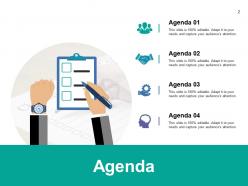
Diapositive 2 : Cette diapositive montre l'ordre du jour de votre entreprise. Ajoutez-les ici et utilisez-les en conséquence.
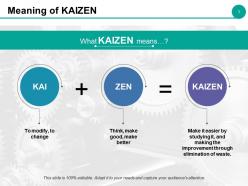
Diapositive 3 : Cette diapositive indique la signification de KAIZEN.
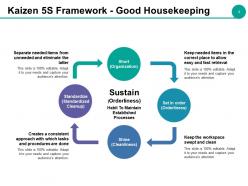
Diapositive 4 : Cette diapositive montre le cadre Kaizen 5S - Bonne tenue de la maison qui comprend les points suivants - Court (Organisation), Ranger (Ordre), Briller (Propreté), Standardiser (Nettoyage standardisé), Maintenir (Ordre).
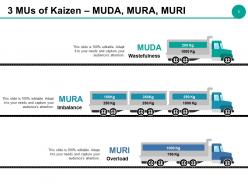
Diapositive 5 : Cette diapositive présente les 3 MU de Kaizen - MUDA, MURA, MURI comme Gaspillage, Déséquilibre, Surcharge.
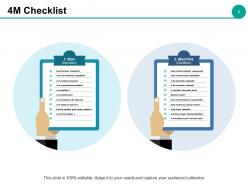
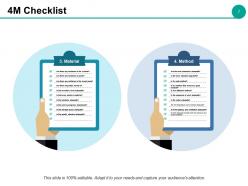
Diapositive 6 : Cette diapositive montre une liste de contrôle 4M catégorisée comme suit - 1. Homme (Opérateur) Suit-il les normes ? Son efficacité au travail est-elle acceptable ? Est-il conscient des problèmes ? Est-il responsable/redevable ? Est-il qualifié ? A-t-il de l'expérience ? Est-il affecté au bon emploi ? Est-il prêt à s'améliorer ? Entretient-il de bonnes relations humaines ? Est-il en forme et en bonne santé ? 2. Machine (Installations) : Répond-elle aux exigences de production ? Répond-elle aux capacités de traitement ? La lubrification est-elle adéquate ? L'inspection est-elle adéquate ? Le fonctionnement est-il interrompu en raison de problèmes de machine ? Répond-elle aux exigences de précision ? Émet-elle des bruits inhabituels ? La disposition est-elle adéquate ? Y a-t-il suffisamment de machines/installations ? Tout est-il en bon état de fonctionnement ?
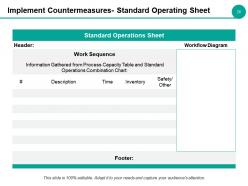
Présentation PowerPoint de l'exemple de présentation Kaizen avec les 58 diapositives.
Couvrez le circuit avec nos Exemple Kaizen Présentation Powerpoint Présentation Diapositives. Ils vous permettent d'aller où vous le souhaitez.







FAQs for Example Kaizen Presentation
So Kaizen is basically about tiny improvements adding up over time - way better than trying to fix everything at once, honestly. Get your team spotting little inefficiencies daily and throwing out ideas, no matter how small. Quick regular meetings work great for this. You don't need big budgets or approvals, which is nice. Just standardize what works, track results, and make tweaking stuff part of your routine instead of some big project. Pick one workflow this week and ask everyone how to make it even 1% better. Those small changes really do compound.
Just grab a couple volunteers and pick one annoying problem to tackle first. Look for obvious waste - like people waiting around or doing the same task twice. That stuff's free to spot anyway. Weekly 15-minute huddles work great where everyone throws out one improvement idea. Honestly, changing how people think is way harder than the actual process. Sticky notes and whiteboards are fine - you don't need expensive software or anything. Make it routine instead of some big deal project. Oh, and definitely pick something you can measure so you've got wins to show off early.
Honestly, your employees make or break Kaizen - no joke. They're on the floor every day seeing stuff management totally misses. You need them feeling comfortable enough to actually speak up about improvements, even tiny ones. The trick is making sure people aren't scared they'll get dumped with extra work for suggesting changes. I'd probably start small - ask everyone to find just one thing they could tweak this week. Once people see their ideas matter, that's when things really start clicking. It's kinda like building trust first, then the improvements follow naturally.
Track the obvious stuff first - cycle times, defect rates, cost savings. Those numbers don't lie. But here's what I've learned: the team engagement piece is actually huge. Are people submitting more improvement ideas? Do they feel like they can actually change things? Survey them regularly. Oh, and measure before each Kaizen event, then check back months later to see if changes actually stuck around. That follow-up part is where most companies drop the ball, honestly. You can't just implement something and assume it's working forever.
Honestly, the biggest pain is just people hating change. Everyone's comfortable with their routine and thinks kaizen means extra work dumped on them. Leadership often wants magic overnight results too, which is super frustrating since it's really about tiny improvements building up. Plus teams are already swamped - where's the time for improvement stuff? Start with easy wins first, get some momentum going. Make sure your boss is actually on board and visible about it. Celebrate the small stuff! Don't try fixing everything at once either. Pick one area and nail that before moving on. Quick wins really do help people buy in.
So basically kaizen is about making tiny tweaks every single day instead of waiting for some massive company restructuring. Get everyone involved - like literally everyone from the warehouse guys to upper management. Those small 1% improvements? They stack up crazy fast, which honestly blew my mind when I first learned about it. The trick is making people feel comfortable speaking up about annoying little things without getting shot down. Rather than those quarterly "improvement initiatives" that everyone forgets about by month two, you're just baking it into how work actually gets done. Start simple: ask your team what one tiny thing drives them nuts during their shift.
Yeah, totally! Hospitals use it all the time for stuff like cutting down wait times or fixing how they handle meds. Schools do it too - tweaking how they teach or figuring out better ways to use their budgets. The whole point is making tiny improvements instead of huge overhauls, which honestly makes way more sense than trying to change everything at once. You can literally pick any process that's bugging you. Maybe just grab one annoying thing in your department and try fixing it this week? Even something super small works.
Here's the thing - Kaizen is way more accessible than the other two. You don't need a statistics degree or huge process overhauls. Six Sigma is super data-heavy and goes after specific defect problems (works great but kinda intense). Lean cuts waste but can get pretty rigid. With Kaizen, your whole team just looks for small daily improvements instead of waiting for some big initiative. Sure, Six Sigma might slash defects by 99%, but honestly? Kaizen builds this culture where people naturally think "how can we do this better?" Start there if you want quick wins without the headache.
Honestly, you've gotta walk the walk first - actually join those kaizen sessions instead of just preaching about them. When your team finds better ways to do stuff, celebrate it publicly. I see way too many leaders who say they want improvement but then get all pissy when things change or aren't perfect right away. Give people room to mess up without getting in trouble. Budget some time each week for this work - maybe even small experiments. Oh, and flip your questions around. Instead of "why didn't this work?" try "what'd we learn from this?" Makes a huge difference in how people approach failures.
So for Kaizen tools, you've got 5 Whys for digging into root causes, plus value stream mapping to see your whole process. A3 reports are solid for problem-solving. PDCA cycles are honestly addictive once you get the hang of them - my old boss was obsessed with Plan-Do-Check-Act everything. Gemba walks get you out there seeing what's really happening on the floor. Then there's 5S for workspace organization, standard work docs, and fishbone diagrams. I'd start with 5 Whys and PDCA though - they're dead simple but work on literally any problem you throw at them.
Oh, this is actually pretty cool - kaizen works because it gives people real input on their own work stuff. Instead of just being told what to do, employees get to spot problems and fix them. That feeling when your idea actually gets used? Pretty awesome. Everyone becomes a problem-solver rather than just going through the motions. I've seen it work best when you start super small though - like ask your team what one tiny thing annoys them daily and tackle that first. People naturally care more when they're helping shape how things run. It's way better than the old "shut up and work" approach honestly.
You need standardization before Kaizen can do anything useful. Think of it this way - how do you know if you're actually improving without a baseline? Everyone doing things their own random way makes it impossible to spot real problems or measure progress. Plus (and this drives me crazy) improvements just vanish when people drift back to old habits. Document whatever your best current process is first. That becomes your starting point. From there you can actually build on something solid instead of just throwing changes at chaos and hoping they stick.
Look, you can't just run Kaizen as a one-time thing and expect it to stick. Build it into how your team actually works - like weekly improvement sessions that become as routine as Monday meetings. Leadership needs to walk the walk too (which honestly is the hardest part). Pick one process first and make small tweaks part of their daily routine, not something extra they have to remember. Track what's actually working after 6+ months because initial wins don't mean much if people revert back. You want those little improvements happening automatically. Set up ways to measure if changes are really sticking - that's where most companies drop the ball.
So Toyota's the obvious answer - they literally invented Kaizen and still use it everywhere. 3M does it too, giving employees time to mess around with ideas (Post-it Notes came from this!). Canon cut their camera production time in half using it. Even Southwest Airlines applies the same thinking to their operations, which honestly makes sense when you think about it. My advice? Don't overthink it. Just grab your team and pick that one annoying process everyone complains about. Start there and see what happens.
So basically, tech makes Kaizen way less of a pain than those old paper systems. Digital suggestion boxes and mobile apps let your team drop ideas instantly - which honestly saves so much time. Real-time dashboards show you actual data instead of just hoping your changes worked. Remote teams can jump in too, which wasn't really possible before. Even basic stuff like shared digital boards speeds up those PDCA cycles. My advice? Don't go crazy with tools right away. Just grab one that fixes whatever's slowing you down most.
No Reviews