


Executing Workforce Reduction Strategy For Stabilizing Profits Complete Deck




Try Before you Buy Download Free Sample Product
 Impress Your
 Audience
 100%
100% Editable
 Save Hours
 of Time


Stabilize your profits in tough times with our cutting-edge PPT on Executing workforce reduction strategy for stabilizing profits. Seamlessly explore different strategies that can be used to downsize the workforce to reduce the firms overall expenditure. Experience effective workforce reduction with the help of modern strategies to decrease expenditure and stabilize profits. With workforce reduction, maximum output can be leveraged with the help of a limited workforce. Leverage output while decreasing the workforce and stabilizing the profits. Upgrade your workforce strategy with our professionally designed PowerPoint to enhance the organizations overall profitability. Download this PPT now.
People who downloaded this PowerPoint presentation also viewed the following :
Content of this Powerpoint Presentation
Slide 1: This slide showcase title Executing Workforce Reduction Strategy For Stabilizing Profits. State Your Company Name
Slide 2: This slide showcase Agenda
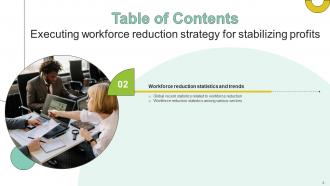
Slide 3: This slide exhibit Table of content.
Slide 4: This slide highlights the Title for the Topics to be covered further.
Slide 5: This slide is to highlight the basic meaning and description of workforce reduction process in an organization along with some global renowned examples.
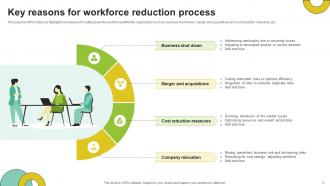
Slide 6: This slide is to highlight core reasons for cutting down the workforce within the organization.
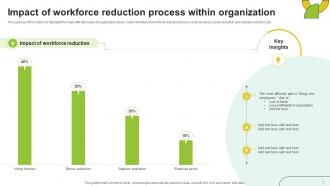
Slide 7: This slide is to highlight the major affected areas of organization due to implementation of workforce reduction process.
Slide 8: This slide highlights the Title for the Topics to be covered further.
Slide 9: This slide is to highlight the recent statistics associated with the workforce reduction at the global level for getting an idea of market conditions.
Slide 10: This slide it to highlight the main industries and sectors affected largely with the workforce reduction and laying-off process at the global level.
Slide 11: This slide highlights the Title for the Topics to be covered further.
Slide 12: This slide shows decreasing profit margins over the quarters of the year for the organization along with the key insights highlighting the major reasons for the same 2024
Slide 13: This slide shows increasing employee turnover rates due to increase in project management conflicts in the organization over the four quarters in a year
Slide 14: This slide highlights the Title for the Topics to be covered further.
Slide 15: This slide is to highlight the major gaps in the current situation of the organization with respect to desired future scenario of the organization with proposed solutions , etc.
Slide 16: This slide highlights the Title for the Topics to be covered further.
Slide 17: This slide is to highlight the execution of workforce reduction strategy in organization for a plenty of reasons.
Slide 18: This slide highlights the Title for the Topics to be covered further.
Slide 19: This slide shows hiring freeze strategy for the workforce reduction process within the organization among the different departments for various reasons.
Slide 20: This slide highlights the Title for the Topics to be covered further.
Slide 21: This slide is to highlight the execution of reskilling and up-skilling strategy for workforce reduction process without any effect on productivity
Slide 22: This slide highlights the Title for the Topics to be covered further.
Slide 23: This slide is to highlight the implementation of furlough strategy for reducing workforce within the organization due to various reasons.
Slide 24: This slide highlights the Title for the Topics to be covered further.
Slide 25: This slide is to highlight the execution of workforce reduction process of non-essential workers within the organization for optimizing the efficiency
Slide 26: This slide highlights the Title for the Topics to be covered further.
Slide 27: This slide is to highlight the comparison matrix for different strategies related to the workforce reduction process in the organization.
Slide 28: This slide highlights the Title for the Topics to be covered further.
Slide 29: This slide is to highlight the key steps for executing the right sizing strategy within the organization for cutting down the associated costs and increasing profits.
Slide 30: This slide highlights the Title for the Topics to be covered further.
Slide 31: This slide shows increasing profit margins over the quarters of next year due to execution of right sizing strategy in the organization along with the highlighted insights.
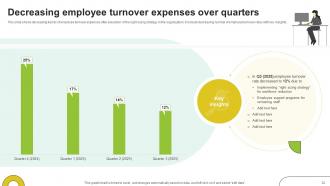
Slide 32: This slide shows decreasing trends of employee turnover expenses after execution of the right sizing strategy in the organization.
Slide 33: This slide highlights the Title for the Topics to be covered further.
Slide 34: This slide is to highlight the various incentive programs that can be offered to laid-off employees for providing them overall support for switching the jobs.
Slide 35: This slide is to highlight various options for providing outplacement services to employees for finding another suitable job in the market
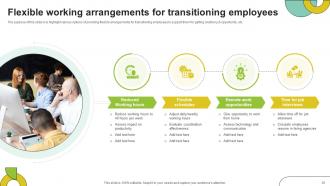
Slide 36: This slide is to highlight various options of providing flexible arrangements for transitioning employees to support them for getting another job opportunity, etc.
Slide 37: This slide highlights the Title for the Topics to be covered further.
Slide 38: This slide shows effective communication plan to communicate the different announcements and updates with team and different departments.
Slide 39: This slide is to highlight the different support services program that can be used to uplift and maintain the morale of employees within the organization
Slide 40: This slide is to highlight the main recognition programs for the remaining employees after the workforce reduction process.
Slide 41: This slide highlights the Title for the Topics to be covered further.
Slide 42: This slide is to highlight the major sections of the workforce reduction process with the major sections strategy implementation.
Slide 43: This slide highlights the Title for the Topics to be covered further.
Slide 44: This slide is to highlight famous workforce reduction process done by microsoft in july, 2014 after acquiring mobile manufacturing unit of nokia.
Slide 45: This slide is to highlight the famous case study of “bank of america” for reducing workforce in 2014 due to various reasons.
Slide 46: This slide shows all the icons included in the presentation.
Slide 47: This slide is titled as Additional Slides for moving forward.
Slide 48: This slide showcase Four criteria of strategic workforce reduction.
Slide 49: This slide showcase Strategic workforce planning framework.
Slide 50: This slide showcase Downsizing strategy implementation in organizational hierarchy.
Slide 51: This slide showcase Major phases of workforce planning
Slide 52: This is Our Target slide. State your targets here.
Slide 53: This slide contains Puzzle with related icons and text.
Slide 54: This is a Timeline slide. Show data related to time intervals here.
Slide 55: This slide presents Roadmap with additional textboxes. It can be used to present different series of events.
Slide 56: This is a Thank You slide with address, contact numbers and email address.
Executing Workforce Reduction Strategy For Stabilizing Profits Complete Deck with all 64 slides:
Use our Executing Workforce Reduction Strategy For Stabilizing Profits Complete Deck to effectively help you save your valuable time. They are readymade to fit into any presentation structure.

















FAQs for Executing Workforce Reduction Strategy For Stabilizing
Companies implement workforce reduction strategies due to economic downturns, declining revenues, operational restructuring, technological automation, and cost containment pressures. These strategic decisions enable organizations to maintain financial stability, reallocate resources more efficiently, and adapt to market changes, with many businesses finding that thoughtful workforce optimization ultimately enhances competitive positioning and long-term sustainability.
Organizations can prepare employees for potential workforce reductions through transparent communication, comprehensive retraining programs, career transition support, enhanced skill development initiatives, and early retirement packages. These strategic approaches help minimize uncertainty while enabling workforce planning, with many companies finding that proactive communication and reskilling opportunities maintain morale, reduce turnover costs, and ultimately preserve institutional knowledge during organizational transitions.
Legal considerations during workforce reduction include compliance with federal and state labor laws, anti-discrimination regulations, WARN Act requirements for mass layoffs, severance agreements, and proper documentation procedures. These legal frameworks help organizations navigate reductions while minimizing litigation risks, ensuring fair selection processes, and maintaining regulatory compliance, with many companies finding that proactive legal planning streamlines transitions and protects organizational reputation.
Communication serves as the foundation for effective workforce reduction, encompassing transparent messaging, timely notifications, clear rationale explanations, and ongoing stakeholder updates throughout the process. Through strategic communication plans, organizations maintain employee trust, minimize legal risks, and preserve company reputation, while ensuring remaining staff understand organizational direction and feel secure in their roles, ultimately delivering smoother transitions.
Businesses can maintain morale during workforce reductions through transparent communication, comprehensive support for remaining employees, strategic workload redistribution, and enhanced recognition programs. By providing clear explanations about decisions, offering professional development opportunities, and implementing flexible work arrangements, organizations enable teams to adapt effectively while preserving productivity, with many companies finding that honest leadership and investment in remaining talent ultimately strengthens operational resilience.
Support systems for layoffs should include comprehensive severance packages, career transition services, mental health resources, extended healthcare benefits, and job placement assistance. These programs help maintain organizational reputation while supporting displaced employees through outplacement counseling, resume workshops, and networking opportunities, with many companies finding that compassionate transitions ultimately preserve employee morale and industry relationships.
Workforce reductions significantly impact company culture through decreased morale, increased workload for remaining employees, and potential erosion of trust and loyalty. While these changes present challenges, organizations that communicate transparently, provide support resources, and involve employees in rebuilding efforts often emerge with stronger, more resilient cultures and higher engagement levels.
Organizations should evaluate workforce reduction success through productivity per employee, operational efficiency ratios, cost savings achievement, employee morale scores, customer satisfaction levels, and time-to-market improvements. These metrics enable companies to assess whether strategic restructuring delivers enhanced competitiveness, streamlined operations, and sustainable growth, with many finding that balanced measurement approaches ultimately optimize both financial performance and organizational health.
Companies leverage technology to streamline workforce reduction processes through automated HR analytics, digital communication platforms, cloud-based documentation systems, and AI-driven compliance tracking. These technologies enhance efficiency by reducing administrative burden, ensuring consistent messaging, and maintaining regulatory compliance, while enabling HR teams to focus on employee support and strategic planning, ultimately delivering more compassionate and legally sound transitions.
Best practices for conducting layoffs include transparent communication, advance notice when possible, comprehensive severance packages, outplacement services, and maintaining dignity throughout the process. These approaches help organizations preserve relationships, protect employer brand reputation, and support remaining employees' morale, with many companies finding that respectful workforce reductions ultimately enable stronger recovery and future talent attraction.
Organizations can re-strategize after workforce reductions by restructuring remaining roles, investing in employee upskilling, implementing automation technologies, diversifying revenue streams, and strengthening cross-functional collaboration. These approaches enable companies to optimize operational efficiency while building resilience, with many finding that strategic workforce planning, enhanced technology integration, and improved resource allocation ultimately deliver sustainable growth and competitive advantage in increasingly dynamic markets.
HR professionals can effectively document workforce reduction by maintaining detailed records of selection criteria, legal compliance checklists, employee communications, and timeline documentation, while ensuring consistent application across all affected positions. Through systematic documentation platforms, many organizations streamline termination processes, protect against legal challenges, and maintain transparency with stakeholders, ultimately delivering smoother transitions and reduced operational risks during restructuring initiatives.
Workforce reductions create immediate costs including severance packages, legal fees, unemployment insurance increases, and potential litigation expenses, while delivering longer-term savings through reduced payroll and benefits. Strategic mitigation involves phased implementations, voluntary separation programs, retraining initiatives, and comprehensive communication plans, with many organizations finding that transparent processes minimize legal risks while preserving workforce morale and operational continuity.
Companies ensure labor law compliance during workforce reductions by consulting employment attorneys, following WARN Act notification requirements, maintaining detailed documentation of selection criteria, and ensuring decisions aren't discriminatory based on protected characteristics. Through transparent communication, proper severance calculations, and adherence to union agreements where applicable, organizations minimize legal risks while preserving relationships, ultimately protecting their reputation and avoiding costly litigation in an increasingly regulated employment landscape.
**INPUT**: What strategies can be employed to retain critical talent during a workforce reduction? **OUTPUT**: Retention strategies during workforce reductions include transparent communication, selective retention bonuses, career development opportunities, flexible work arrangements, and enhanced role responsibilities for key performers. These approaches streamline talent management by maintaining institutional knowledge, preserving operational continuity, and strengthening team morale, with many organizations finding that strategic retention ultimately delivers competitive advantage and faster recovery. [Word count: 56 words]
-
Great experience, I would definitely use your services further.
-
Visually stunning presentation, love the content.