


Effective Workforce Planning And Management powerpoint Presentation Slides




Try Before you Buy Download Free Sample Product
 Impress Your
 Audience
 100%
100% Editable
 Save Hours
 of Time


Streamlined workforce management is essential for employers to strategically allocate resources and people, track attendance and comply with changing labour laws. Grab our Effective Workforce Planning and Management template. It helps reduce risks, optimize productivity, and improve employee relations, customer service and building a positive financial impact. Our Talent Management deck focuses on the four areas of workforce planning and management workforce planning, workforce development, workforce engagement, and workforce management. It also covers assessing new hiring requirements, analyzing sources for talent acquisition, and planning for hiring and onboarding. Further, our Workforce Development PPT highlights workforce development that includes planning for leadership development and career development, schedules for training sessions, and a conflict resolution action plan. It exhibits slides on workforce engagement that caters to employee engagement activities with the calendar. Moreover, our HRD Management module presents workforce management with quarterly performance evaluation and shift and absence management. Lastly, it caters to slides about workforce automation, impact assessment with increasing operational excellence, and dashboards for tracking workforce planning and management improvements. Get access to this powerful template now.
People who downloaded this PowerPoint presentation also viewed the following :
Content of this Powerpoint Presentation
Slide 1: This slide introduces Effective Workforce Planning and Management. Commence by stating Your Company Name.
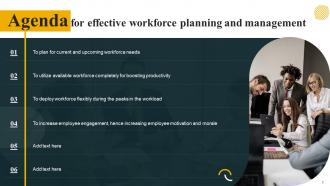
Slide 2: This slide depicts the Agenda
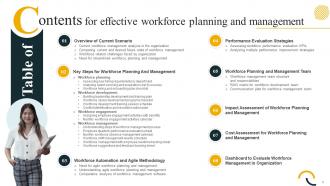
Slide 3: This slide includes the Table of contents.
Slide 4: This slide highlights the Title for the Topics to be covered further.
Slide 5: This slide presents the Current workforce management analysis in the organization.
Slide 6: This slide deals with Comparing current and desired future state of workforce management.
Slide 7: This slide provides glimpse about problems faced by the organization.
Slide 8: This slide exhibits the Need for streamlined workforce planning and management.
Slide 9: This slide includes the Heading for the Contents to be discussed next.
Slide 10: This slide highlights the Key steps for workforce planning and management.
Slide 11: This slide includes the Title for the Ideas to be covered in the following template.
Slide 12: This slide provides glimpse about an assessment plan that can help us analyze open job positions in the organization.
Slide 13: This slide focuses on Analyzing talent sourcing and acquisition cost by sources.
Slide 14: This slide showcases a hiring and onboarding plan that can help our business in filling the open job profiles.
Slide 15: This slide portrays the Heading for the Ideas to be covered in the upcoming template.
Slide 16: This slide talks about Building leadership development and training plan.
Slide 17: This slide exhibits the Workforce career development programs checklist.
Slide 18: This slide shows a weekly schedule that can help our business to train our team and organize different coaching sessions for them.
Slide 19: This slide represents the Conflict identification and resolution action plan.
Slide 20: This slide displays the Title for the Contents to be discussed further.
Slide 21: This slide focuses on Assigning employee engagement activities with benefits.
Slide 22: This slide showcases monthly calendar that can help our business to schedule multiple engagement activities to boost employee morale.
Slide 23: This slide includes the Heading for the Topics to be covered next.
Slide 24: This slide emphasizes on Understanding the steps of workforce management process.
Slide 25: This slide reveals the Employee quarterly performance evaluation sheet.
Slide 26: This slide presents the Monthly workforce absence management calendar.
Slide 27: This slide showcases a weekly calendar that can help our business to manage employees’ shifts of individual employee.
Slide 28: This slide highlights a progress status sheet that can help our business to track employee overtime hours.
Slide 29: This slide portrays the Workforce suggestions and feedback tracking sheet.
Slide 30: This slide incorporates the Title for the Topics to be discussed further.
Slide 31: This slide exhibits the Need for agile workforce planning and management.
Slide 32: This slide deals with Understanding agile workforce planning and management.
Slide 33: This slide reveals the Comparative analysis of workforce management software.
Slide 34: This slide displays the Heading for the Contents to be covered in the forthcoming template.
Slide 35: This slide focuses on Assessing workforce performance evaluation KPIs.
Slide 36: This slide provides glimpse about multiple strategies that will help our company to improve workforce performance.
Slide 37: This slide presents the Title for the Ideas to be discussed further.
Slide 38: This slide showcases the Workforce management team structure and responsibilities.
Slide 39: This slide illustrates the RACI matrix for workforce development team.
Slide 40: This slide highlights the Communication plan for workforce management team.
Slide 41: This slide depicts the Heading for the Ideas to be covered in the forthcoming template.
Slide 42: This slide showcases the impact assessment of new workforce management strategy implementation with key parameters involved.
Slide 43: This slide represents the Title for the Contents to be discussed in the following template.
Slide 44: This slide illustrates the Cost assessment for workforce planning and management.
Slide 45: This slide reveals the Hedaing for the Topics to be covered in the next template.
Slide 46: This slide displays the Dashboard to evaluate workforce management in organization.
Slide 47: This is the Icons slide containing all the Icons used in the plan.
Slide 48: This slide is used for showcasing some Additional information.
Slide 49: This is the Clustered column with line slide.
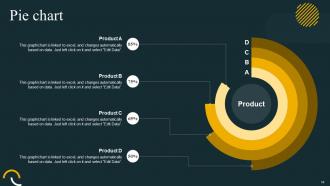
Slide 50: This slide elucidates the Pie chart.
Slide 51: This is the About us slide for stating the company-related information.
Slide 52: This is Meet our team slide. State your team-related information here.
Slide 53: This is the Quotes slide for motivation.
Slide 54: This slide exhibits the Venn diagram.
Slide 55: This slide represents the SWOT analysis.
Slide 56: This slide contains the Post it notes for reminders and deadlines.
Slide 57: This slide highlights the organization's Timeline.
Slide 58: This is the Puzzle diagram slide.
Slide 59: This is the Idea generation slide for encouraging fresh ideas.
Slide 60: This slide represents the firm's Mind map.
Slide 61: This is Our target slide. State your company-targets here.
Slide 62: This is the Magnifying glass slide for minute details.
Slide 63: This is the Thank You slide for acknowledgement.
Effective Workforce Planning And Management powerpoint Presentation Slides with all 68 slides:
Use our Effective Workforce Planning And Management powerpoint Presentation Slides to effectively help you save your valuable time. They are readymade to fit into any presentation structure.
-

Effective Workforce Planning and Management
-
Agenda for effective workforce planning and management
-
Contents for effective workforce planning and management
-
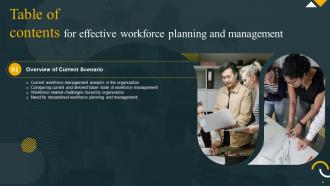
Table of contents for effective workforce planning and management
-
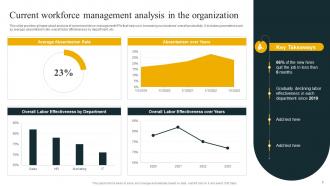
Current workforce management analysis in the organization
-
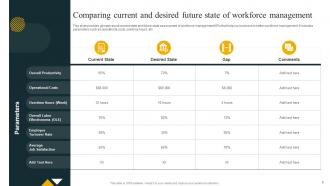
Comparing current and desired future state of workforce management
-
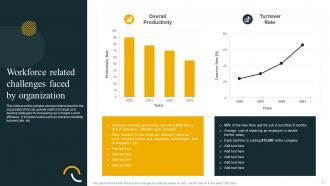
Workforce related challenges faced by organization
-
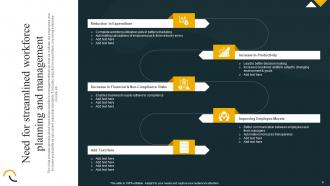
Need for streamlined workforce planning and management
-
Table of contents for effective workforce planning and management
-
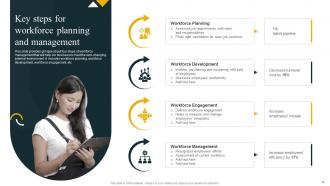
Key steps for workforce planning and management
-
Table of contents for effective workforce planning and management
-
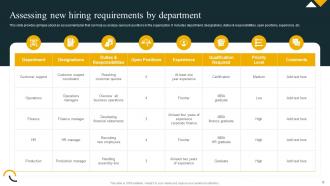
Assessing new hiring requirements by department
-
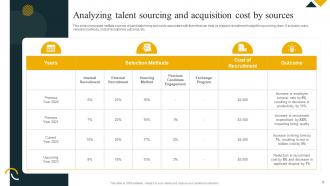
Analyzing talent sourcing and acquisition cost by sources
-
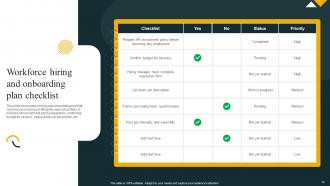
Workforce hiring and onboarding plan checklist
-
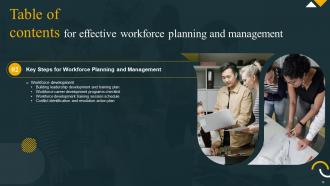
Table of contents for effective workforce planning and management
-
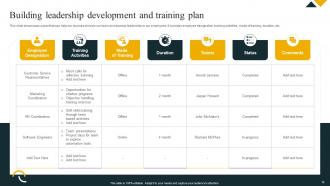
Building leadership development and training plan
-
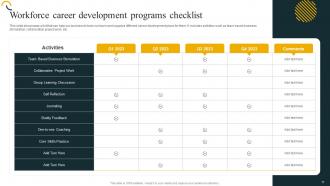
Workforce career development programs checklist
-
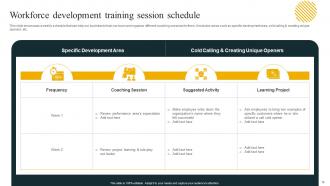
Workforce development training session schedule
-
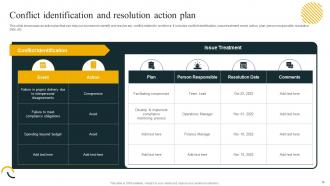
Conflict identification and resolution action plan
-
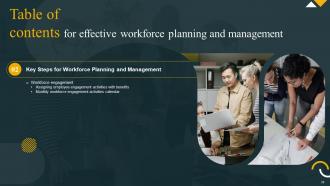
Table of contents for effective workforce planning and management
-
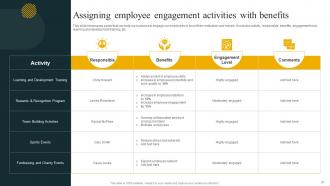
Assigning employee engagement activities with benefits
-
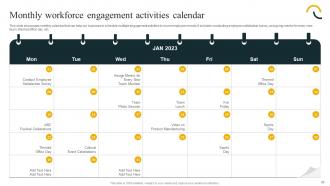
Monthly workforce engagement activities calendar
-
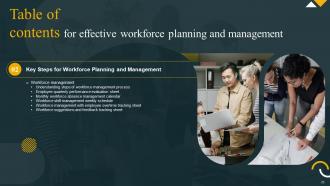
Table of contents for effective workforce planning and management
-
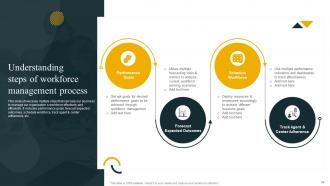
Understanding steps of workforce management process
-
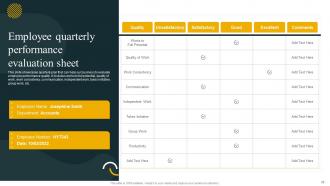
Employee quarterly performance evaluation sheet
-
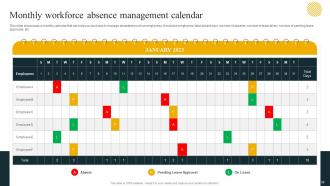
Monthly workforce absence management calendar
-
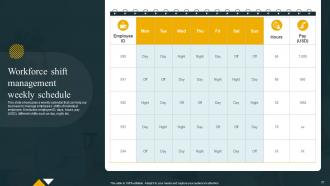
Workforce shift management weekly schedule
-
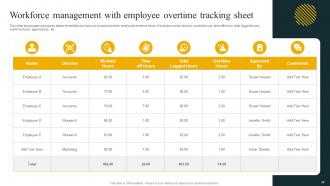
Workforce management with employee overtime tracking sheet
-
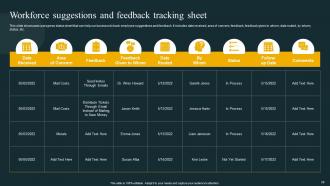
Workforce suggestions and feedback tracking sheet
-
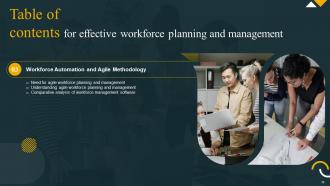
Table of contents for effective workforce planning and management
-
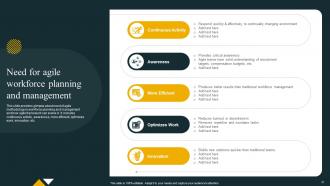
Need for agile workforce planning and management
-
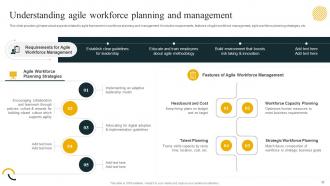
Understanding agile workforce planning and management
-
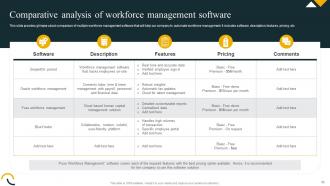
Comparative analysis of workforce management software
-
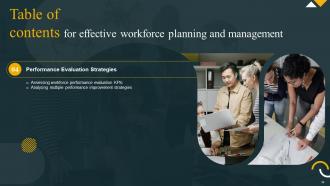
Table of contents for effective workforce planning and management
-
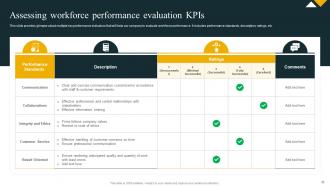
Assessing workforce performance evaluation KPIs
-
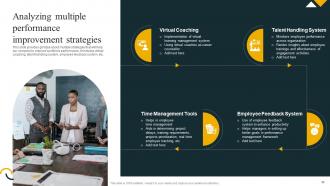
Analyzing multiple performance improvement strategies
-
Table of contents for effective workforce planning and management
-
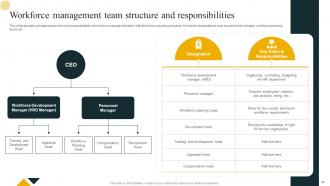
Workforce management team structure and responsibilities
-
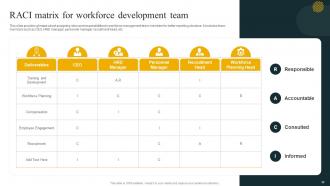
RACI matrix for workforce development team
-
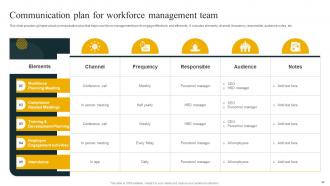
Communication plan for workforce management team
-
Table of contents for effective workforce planning and management
-
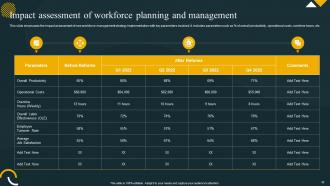
Impact assessment of workforce planning and management
-
Table of contents for effective workforce planning and management
-
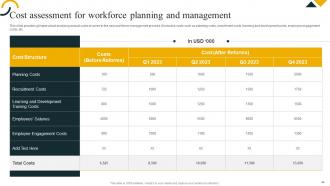
Cost assessment for workforce planning and management
-
Table of contents for effective workforce planning and management
-
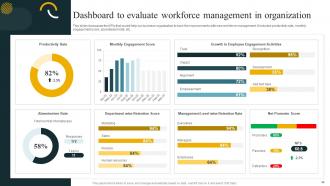
Dashboard to evaluate workforce management in organization
-

Icons slide for effective workforce planning and management
-
Additional slides
-
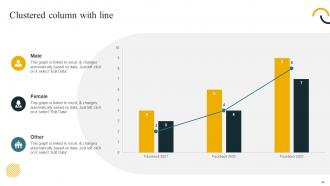
Clustered column with line
-
Pie chart
-
About us
-
Meet our team
-
Effective Workforce Planning and Management
-
Venn diagram
-
SWOT Analysis
-
Post it notes
-
Timeline
-

Puzzle diagram
-
Idea generation
-
Mind map
-
Our target
-
Effective Workforce Planning and Management
-

Thanks for watching
-

-

-

-

-

FAQs for Effective Workforce Planning And Management
Key components of an effective workforce planning strategy include workforce analytics, talent gap analysis, succession planning, skills forecasting, and strategic resource allocation. These elements work together by identifying future talent needs, assessing current capabilities, and developing targeted recruitment strategies, with many organizations finding that integrated workforce planning delivers improved operational efficiency and competitive advantage.
Organizations align workforce planning with business objectives by establishing clear strategic connections between talent needs and company goals, conducting regular skills gap analyses, and implementing data-driven forecasting models. Through integrated planning processes, companies can anticipate future workforce requirements, develop targeted recruitment strategies, and create employee development programs that support growth initiatives, ultimately ensuring human capital investments directly contribute to competitive advantage and operational success.
Effective workforce planning tools include predictive analytics platforms, HR information systems, talent management software, workforce modeling applications, and AI-driven forecasting solutions. These technologies streamline analysis by automating data collection, identifying skill gaps, and predicting future staffing needs, with many organizations finding that integrated platforms deliver enhanced strategic decision-making and improved resource allocation.
Data analytics enables workforce planning through predictive modeling, skills gap analysis, turnover forecasting, performance metrics evaluation, and compensation benchmarking. These insights streamline strategic decisions by identifying future talent needs, optimizing recruitment timing, and enhancing resource allocation, with many organizations finding that data-driven approaches ultimately deliver improved hiring accuracy and reduced operational costs.
Organizations can forecast future workforce needs accurately by analyzing historical data, market trends, business growth projections, and upcoming retirements or departures. Through predictive analytics and workforce modeling, companies streamline succession planning, identify skill gaps, and optimize resource allocation, with many finding that strategic workforce forecasting reduces hiring costs by 30% while ensuring talent availability for critical business functions.
Common workforce planning challenges include skill gaps, inaccurate demand forecasting, talent retention issues, budget constraints, and changing market dynamics. Organizations overcome these by implementing data-driven analytics, cross-training programs, and strategic partnerships with educational institutions, while many companies find that combining predictive modeling with flexible workforce strategies ultimately delivers better resource allocation and competitive advantage.
Workforce planning enhances employee engagement and retention by aligning individual career aspirations with organizational needs, creating clear advancement pathways, and ensuring strategic skill development opportunities. Through systematic talent mapping and succession planning, companies like healthcare systems and financial institutions deliver personalized growth experiences, reduce turnover costs, and build stronger employee loyalty, ultimately creating competitive advantage in talent markets.
Key workforce planning metrics include employee turnover rates, time-to-fill positions, skills gap assessments, productivity ratios, and succession planning readiness scores. These measurements enable organizations to optimize talent acquisition, reduce recruitment costs, and enhance operational efficiency, with many companies finding that comprehensive tracking ultimately delivers improved employee retention and stronger competitive positioning in increasingly dynamic markets.
Diversity and inclusion integrate into workforce planning through targeted recruitment strategies, inclusive job descriptions, bias-free assessment processes, diverse interview panels, and equitable advancement pathways. Organizations enhance these efforts by analyzing demographic data across roles, implementing mentorship programs, and creating inclusive leadership development tracks, ultimately delivering broader talent pools, improved innovation, and stronger competitive advantage in increasingly diverse markets.
Organizations can adapt workforce plans through scenario planning, cross-training programs, flexible staffing models, real-time skills gap analysis, and strategic partnerships with educational institutions. These approaches enable companies to pivot quickly during market shifts, with many businesses in retail, technology, and healthcare finding that agile workforce strategies significantly reduce recruitment costs while maintaining operational efficiency and competitive positioning.
Workforce planning supports talent development by identifying skill gaps, mapping career progression pathways, and aligning training programs with future organizational needs. Through strategic talent mapping and succession frameworks, companies systematically develop high-potential employees, create leadership pipelines, and ensure business continuity, with many organizations finding that integrated workforce planning reduces recruitment costs while accelerating internal mobility.
Remote and hybrid work models significantly transform workforce planning by expanding talent pools beyond geographic constraints, requiring new performance metrics, and reshaping resource allocation strategies. Organizations increasingly find that these models enable access to global talent, reduce overhead costs, and enhance employee satisfaction, while necessitating updated management frameworks and technology infrastructure investments.
Organizations ensure compliance with labor regulations during workforce planning by integrating legal requirements into strategic decisions, conducting regular audits, and maintaining updated policies that reflect current laws. Through automated compliance tracking systems, companies in sectors like manufacturing and healthcare streamline documentation, monitor overtime thresholds, and ensure proper classification of workers, ultimately delivering reduced legal risks and enhanced operational efficiency while maintaining competitive workforce flexibility.
Employee feedback provides critical insights into skill gaps, career aspirations, workload distribution, employee satisfaction levels, and operational bottlenecks that impact workforce effectiveness. Through regular surveys, performance reviews, and strategic conversations, organizations enhance resource allocation, improve retention strategies, and align talent development with business objectives, ultimately delivering more accurate workforce forecasting and competitive advantage.
Scenario planning enhances workforce planning by modeling multiple future possibilities, identifying potential skill gaps, and testing strategic responses across different business conditions. Through predictive analytics and contingency frameworks, organizations can anticipate market shifts, economic changes, and technology disruptions, while building flexible talent strategies that adapt quickly, ultimately delivering competitive advantage and operational resilience.
-
SlideTeam is very efficient when it comes to saving time. I am happy that I chose them for my presentation.
-
I am extremely pleased with these PPT slides that we used for our event. They were easy to modify and came out great in all aspects!