


Workforce Performance Evaluation And Appraisal Powerpoint Presentation Slides





Try Before you Buy Download Free Sample Product
 Impress Your
 Audience
 100%
100% Editable
 Save Hours
 of Time


An efficient performance management system is essential in evaluating overall individual performance. It helps in handling deflated, unmotivated, unengaged, and poor-performing employees. Check out our competently designed Workforce Performance Evaluation and Appraisal template that caters to details about performance planning, measuring, monitoring, reporting, reviewing, and auditing. It allows improved strategy development, effective risk detection, better decision making, improved accountability, etc. It caters to performance review plan implementation timeline, performance enhancement through performance evaluation measures, strategies to enhance performance, checklist for effective feedback to track performance. The deck covers communication and collaboration initiatives slides by engaging target group members, stakeholders communication plans, and coordination modes for better communication. It covers employee training in existing workforce upskilling plans, department-wise employee training, staff training schedule to enhance productivity and performance management calendar. It caters to slides regarding performance management tools in terms of objectives, 360-degree feedback, assessment center methods, behaviorally anchored rating scale, and psychological appraisals. It also covers dashboards to track team and employee performance and appraisal tracking. Get access now.
People who downloaded this PowerPoint presentation also viewed the following :
Content of this Powerpoint Presentation
Slide 1: This slide introduces Workforce Performance Evaluation and Appraisal. State Your Company Name and begin.
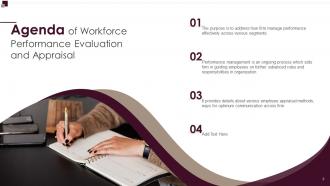
Slide 2: This slide states Agenda of the presentation.
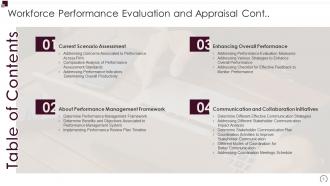
Slide 3: This slide presents Table of Content for the presentation.
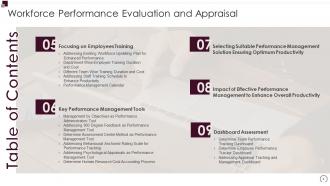
Slide 4: This is another slide continuing Table of Content for the presentation.
Slide 5: This slide displays title for topics that are to be covered next in the template.
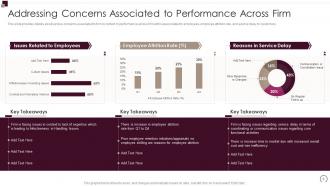
Slide 6: This slide represents various concerns associated to firm in context to performance across firm.
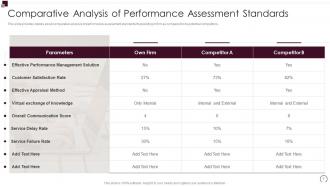
Slide 7: This slide showcases Comparative Analysis of Performance Assessment Standards.
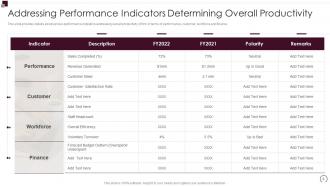
Slide 8: This slide shows Addressing Performance Indicators Determining Overall Productivity.
Slide 9: This slide presents title for topics that are to be covered next in the template.
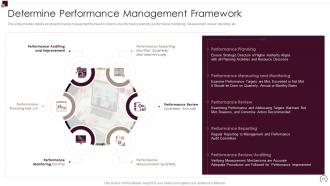
Slide 10: This slide displays performance management framework in terms of performance planning.
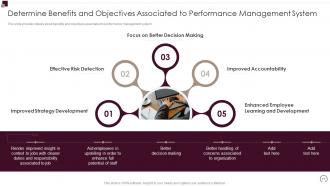
Slide 11: This slide represents Determine Benefits and Objectives Associated to Performance Management System.
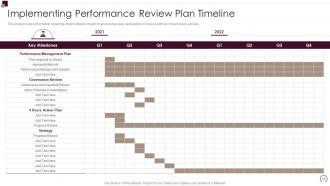
Slide 12: This slide showcases Implementing Performance Review Plan Timeline.
Slide 13: This slide shows title for topics that are to be covered next in the template.
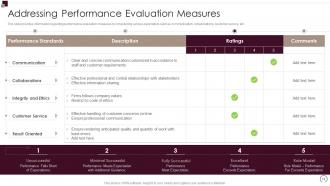
Slide 14: This slide presents Addressing Performance Evaluation Measures.
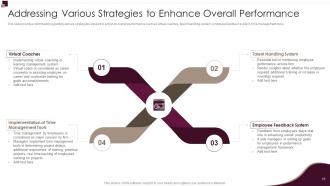
Slide 15: This slide displays various strategies required to enhance overall performance.
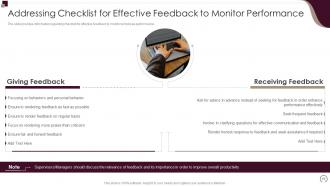
Slide 16: This slide represents Addressing Checklist for Effective Feedback to Monitor Performance.
Slide 17: This slide showcases title for topics that are to be covered next in the template.
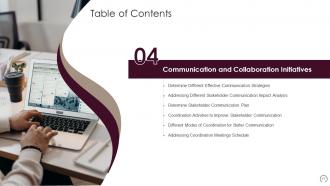
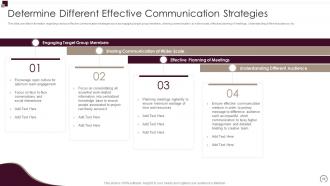
Slide 18: This slide shows various effective communication strategies such as engaging target group members.
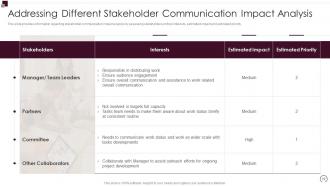
Slide 19: This slide presents Addressing Different Stakeholder Communication Impact Analysis.
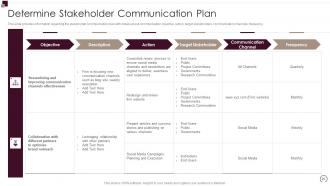
Slide 20: This slide displays stakeholder communication plan with details about communication objective.
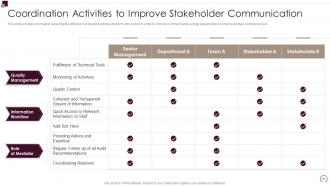
Slide 21: This slide represents Coordination Activities to Improve Stakeholder Communication.
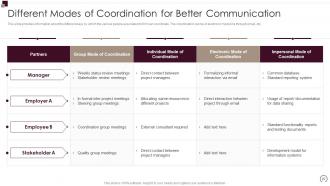
Slide 22: This slide showcases Different Modes of Coordination for Better Communication.
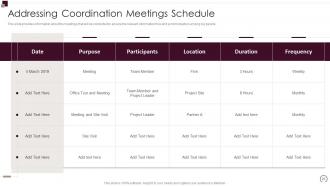
Slide 23: This slide shows Addressing Coordination Meetings Schedule.
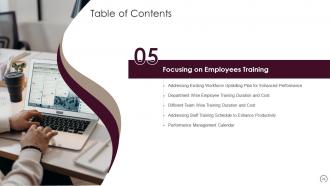
Slide 24: This slide presents title for topics that are to be covered next in the template.
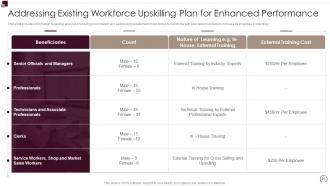
Slide 25: This slide displays Addressing Existing Workforce Upskilling Plan for Enhanced Performance.
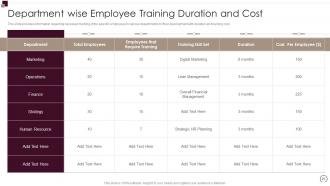
Slide 26: This slide represents Department wise Employee Training Duration and Cost.
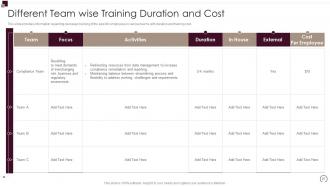
Slide 27: This slide showcases Different Team wise Training Duration and Cost.
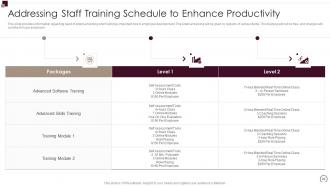
Slide 28: This slide shows Addressing Staff Training Schedule to Enhance Productivity.
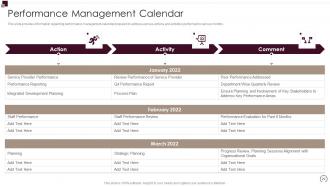
Slide 29: This slide presents performance management calendar prepared to address various actions and activities performed.
Slide 30: This slide displays title for topics that are to be covered next in the template.
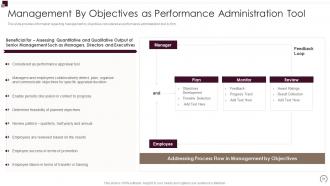
Slide 31: This slide represents Addressing Process Flow in Management by Objectives.
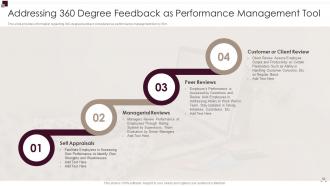
Slide 32: This slide showcases Addressing 360 Degree Feedback as Performance Management Tool.
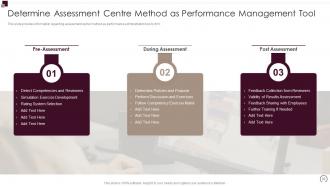
Slide 33: This slide shows Determine Assessment Centre Method as Performance Management Tool.
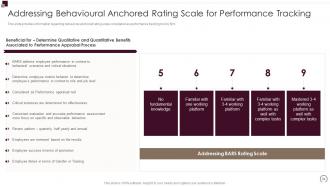
Slide 34: This slide presents Addressing Behavioural Anchored Rating Scale for Performance Tracking.
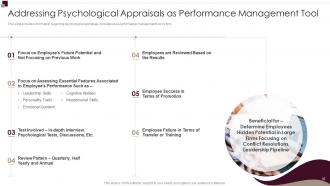
Slide 35: This slide displays Addressing Psychological Appraisals as Performance Management Tool.
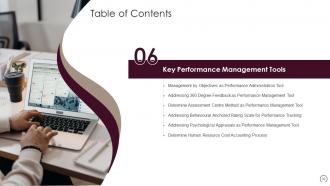
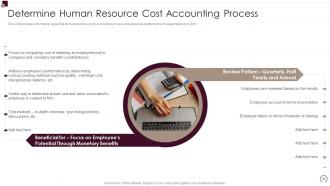
Slide 36: This slide represents Determine Human Resource Cost Accounting Process.
Slide 37: This slide showcases title for topics that are to be covered next in the template.
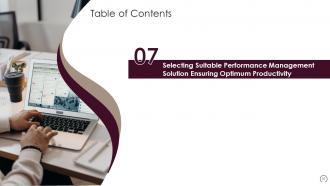
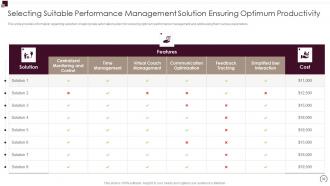
Slide 38: This slide shows Selecting Suitable Performance Management Solution Ensuring Optimum Productivity.
Slide 39: This slide presents title for topics that are to be covered next in the template.
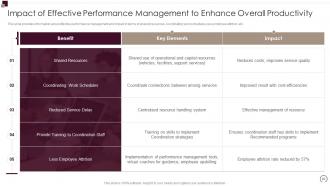
Slide 40: This slide displays Impact of Effective Performance Management to Enhance Overall Productivity.
Slide 41: This slide represents title for topics that are to be covered next in the template.
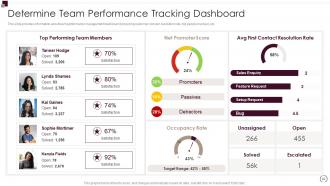
Slide 42: This slide showcases Determine Team Performance Tracking Dashboard.
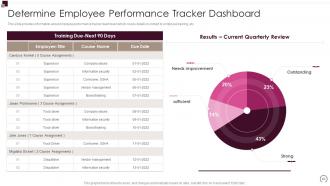
Slide 43: This slide shows Determine Employee Performance Tracker Dashboard.
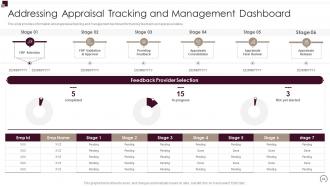
Slide 44: This slide presents Addressing Appraisal Tracking and Management Dashboard.
Slide 45: This slide displays Icons for Workforce Performance Evaluation and Appraisal.
Slide 46: This slide is titled as Additional Slides for moving forward.
Slide 47: This slide provides 30 60 90 Days Plan with text boxes.
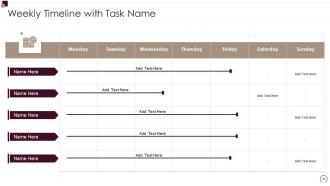
Slide 48: This slide shows Weekly Timeline with Task Name.
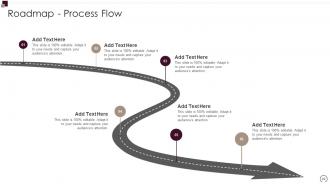
Slide 49: This slide showcases Roadmap for Process Flow.
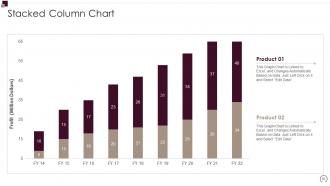
Slide 50: This slide represents Stacked Bar chart with two products comparison.
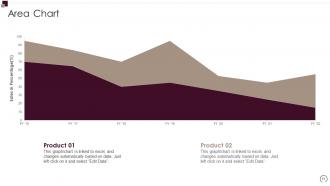
Slide 51: This slide depicts Area chart with two products comparison.
Slide 52: This slide depicts Venn diagram with text boxes.
Slide 53: This slide shows Post It Notes. Post your important notes here.
Slide 54: This slide contains Puzzle with related icons and text.
Slide 55: This is Our Target slide. State your targets here.
Slide 56: This slide showcases Magnifying Glass to highlight information, specifications, etc.
Slide 57: This is a Thank You slide with address, contact numbers and email address.
Workforce Performance Evaluation And Appraisal Powerpoint Presentation Slides with all 62 slides:
Use our Workforce Performance Evaluation And Appraisal Powerpoint Presentation Slides to effectively help you save your valuable time. They are readymade to fit into any presentation structure.








FAQs for Workforce Performance Evaluation And Appraisal
You'll want both hard numbers and the touchy-feely stuff, honestly. Productivity metrics are obvious - output per hour, quality scores, how often people hit their goals. But here's the thing: engagement surveys and retention rates matter just as much because they show if your team's actually happy or just going through the motions. Don't forget 360 feedback either. Oh, and track skills development since that's basically predicting future success. My advice? Pick 3-4 metrics that actually matter to your business first. You can always add more once you figure out what works.
Numbers only tell you what happened, not why. Your metrics might show productivity tanked 15% last quarter, but employee feedback reveals the real story - maybe unclear project priorities or crappy outdated tools are slowing everyone down. That's where qualitative stuff becomes gold. It gives you the human context behind all those statistics. Honestly, data without the employee perspective is pretty useless for actually fixing problems. You'll know something's broken but won't have a clue what to do about it. Together though? That's when you can spot exactly what needs attention.
Honestly, tech just handles all that boring admin stuff that used to kill your schedule during review time. Real-time performance tracking is a game changer - no more digging through old emails trying to remember what someone did three months ago. Automated reminders mean you're not constantly bugging people about deadlines. The analytics actually help you spot trends you'd totally miss otherwise. Digital platforms make collecting self-assessments and peer feedback so much smoother. Those data visualization tools? They turn messy spreadsheets into something that actually makes sense. My advice: pick one tool and test it out this quarter instead of going crazy with a complete overhaul.
Here's the thing - first figure out what success actually means for your company. Then build your review process around measuring that stuff directly. Map roles to strategic goals, like if you need innovation, focus on creative problem-solving instead of boring cookie-cutter metrics. Honestly, most companies measure things that sound impressive but don't matter. Have regular check-ins so teams stay consistent. The real win? When people can connect their day-to-day work to bigger company victories. Quick test - compare your current reviews to your strategic plan. Bet you'll find some obvious holes.
Dude, engagement totally messes with your evaluation results. High engagement? People perform better and give you honest feedback during reviews. But when someone's checked out mentally, their work suffers and you get garbage data about what they can actually do. Here's the weird part though - a disengaged superstar might look average on paper, while an engaged mediocre employee seems like promotion material. I've seen managers get burned by this so many times. You really gotta consider engagement levels when you're looking at performance data, otherwise you'll promote the wrong people.
Look, consistent evaluations are honestly a game-changer for keeping good people. Employees need to know where they stand - feeling invisible at work sucks. It's also your chance to catch flight risks early. Maybe your star performer is getting antsy but hasn't said anything yet? These conversations let you address concerns before they start updating their LinkedIn. You can spot who needs training too. The key is making it a real two-way thing where they can actually tell you what they need. Don't just talk at them. Schedule these regularly and watch your retention improve.
Honestly, you've gotta stop counting hours and start looking at what actually gets done. Set clear goals with your team and do regular check-ins through video calls or whatever project tools you're using. Weekly one-on-ones work way better than waiting around for quarterly reviews - trust me on that one. Track stuff like project completion and work quality instead of whether someone's glued to their desk. The whole "butts in seats" thing is pretty much dead anyway when half your team's working from their couch. Short, frequent check-ins beat long meetings every time.
Honestly, I'd go with adaptability, digital literacy, and critical thinking as your main focus areas. The specific tech skills don't matter as much as whether someone can actually learn new stuff quickly. Ask about times they had to completely pivot or pick up something totally different - way more telling than their resume. Remote work's here to stay, so emotional intelligence and communication skills are huge too. Actually, now that I think about it, collaboration across different platforms is becoming make-or-break. Don't get too caught up in what they know now. Focus on how they handle learning what's next.
Honestly, just bake it into your normal performance reviews - way easier than creating separate processes. Pick maybe 2-3 things that actually matter to your situation first. Track promotion rates by demographic, representation at different levels, those inclusion survey scores. Some teams I know get pretty creative with it too - like measuring mentorship stuff or pay gaps. The trick is treating D&I data exactly like you'd treat sales numbers or whatever other metrics you're already obsessing over. Don't overthink it at the start though. Build it up gradually once you see what's actually useful.
Look, the whole thing is just super subjective - managers drag their personal biases into every review. You get wildly different ratings between evaluators, plus that annoying recency bias where they only remember what happened last month. And don't get me started on halo effects where being good at presentations suddenly makes you "great at everything." What actually helps? Get multiple people reviewing each employee, tie ratings to real business numbers instead of feelings, and do those calibration meetings where managers literally compare notes. Otherwise you're just rolling the dice honestly.
Honestly, ditch the gut feelings and annual review nonsense - data analytics is where it's at. Track stuff like project completion rates, how people actually collaborate, skill development, peer feedback scores. The patterns you'll spot are wild - suddenly you see who's really moving the needle vs. who just dominates meetings (we all know that person). I'd start with maybe 3-5 metrics that actually matter for each role. Build some dashboards to track consistently. Oh, and mix your hard numbers with sentiment analysis from feedback - gives you the real story. Way better than guessing based on whoever spoke up last.
Honestly, specifics are everything - skip the vague "needs improvement" stuff. I swear by the SBI thing: Situation, Behavior, Impact. Like instead of "you're disorganized," say "In last week's client meeting, you couldn't find the project files and it pushed our presentation back 10 minutes." Way more helpful. Mix in some wins with the growth areas too because nobody wants to feel completely terrible about themselves. Oh, and always end with what they should actually DO next. Makes it feel more like you're helping them grow rather than just pointing out what's wrong, you know?
Honestly, once a year is the absolute minimum but that's pretty much worthless these days. Things move way too fast for annual check-ins to matter much. I'd do comprehensive reviews yearly, then shorter ones every six months. Quarterly pulse surveys help catch stuff early - way better than waiting until someone's already frustrated. The trick is actually following through on what you find out (which most companies totally suck at). Map out whatever schedule fits your team's rhythm and don't skip it when things get busy. Consistency beats perfection here.
Honestly, just be fair to everyone - same rules, same standards. Document everything because you'll need it later (learned that the hard way). Don't let personal feelings mess with your judgment, and give real feedback that actually helps people improve. Keep it confidential too - nobody wants their evaluation broadcasted around the office. Oh, and always let people respond if they think you got something wrong. Having an appeal process saves so much drama. Really though, just evaluate people the way you'd want someone judging your work.
Honestly, peer reviews are game-changers because your coworkers see stuff managers completely miss. They know who actually pulls their weight in group projects and who's genuinely helpful when deadlines get crazy. Your boss only sees the polished version of everyone, but teammates? They witness the real day-to-day collaboration. Anonymous feedback works best - people won't sugarcoat things if they know it's confidential. Oh, and doing them quarterly gives you way more insights than just relying on your manager's take. You'll catch blind spots that never surface in those formal sit-downs with leadership.
-
Much better than the original! Thanks for the quick turnaround.
-
“Slides are formally built and the color theme is also very exciting. This went perfectly with my needs and saved a good amount of time.”