

Fashion Marketing Powerpoint Presentation Slides




Try Before you Buy Download Free Sample Product
 Impress Your
 Audience
 100%
100% Editable
 Save Hours
 of Time


Create an astonishing presentation by employing these readily available Fashion Marketing PowerPoint Presentation Slides. Give a brief overview of fashion marketing by utilizing a professionally designed fashion industry PPT slideshow. Fashion marketing is an important part of the fashion industry. Showcase important aspects of fashion marketing in detail by using our content-ready PPT slideshow. The presentation also showcases the case statistics of fashion marketing. This slideshow consists of various eye-catching icons and images that will make your presentation much informative and reliable. Discuss market research and analysis, branding strategies, using these easy-to-use fashion strategies PPT visuals. You can develop and manage advertising campaigns with the use of attention-grabbing fashion merchandising PPT layouts. Showcase pricing strategy, distribution strategy, marketing for the fashion label, market plan, and market budget with the use of this PowerPoint slide deck. Hence, without any further delay create an amazing presentation by downloading this ready-to-use fashion marketing PPT layout.
People who downloaded this PowerPoint presentation also viewed the following :
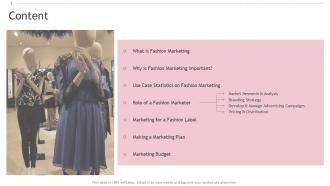
Content of this Powerpoint Presentation
"Style is a way to say who you are without having to speak." - Rachel Zoe.
Every stitch and silhouette is a story, and the marketing is the voice that enables this narrative to be heard loudly. For a fashion entrepreneur, marketing is of utmost significance as it sells the products and, much more critically, builds personalities and starts the bonding process with the consumers. This digital era—where trends last as long as a swipe and an instant can change one’s tastes— stands as proof of how the usefulness of good fashion branding strategies is now in high demand.
Our Fashion Marketing and Promotion PPT Template is an all-in-one unique package that takes care of everything you need during a presentation that captivates your audience.
The presentation is at the core of every effective marketing effort that creates a brand in the memory of its audience, and it sticks in the consumer's mind. This is where our beautifully crafted Fashion Marketing PowerPoint presentation steps in by offering the entrepreneurs a painting on which they could write their vision in a clear way that will convince anyone.
Obtain more of your web environment with our Fashion Website SEO Online Marketing Analysis in a PPT format.
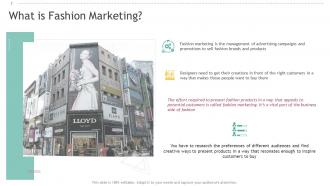
Template 1: What is Fashion Marketing?
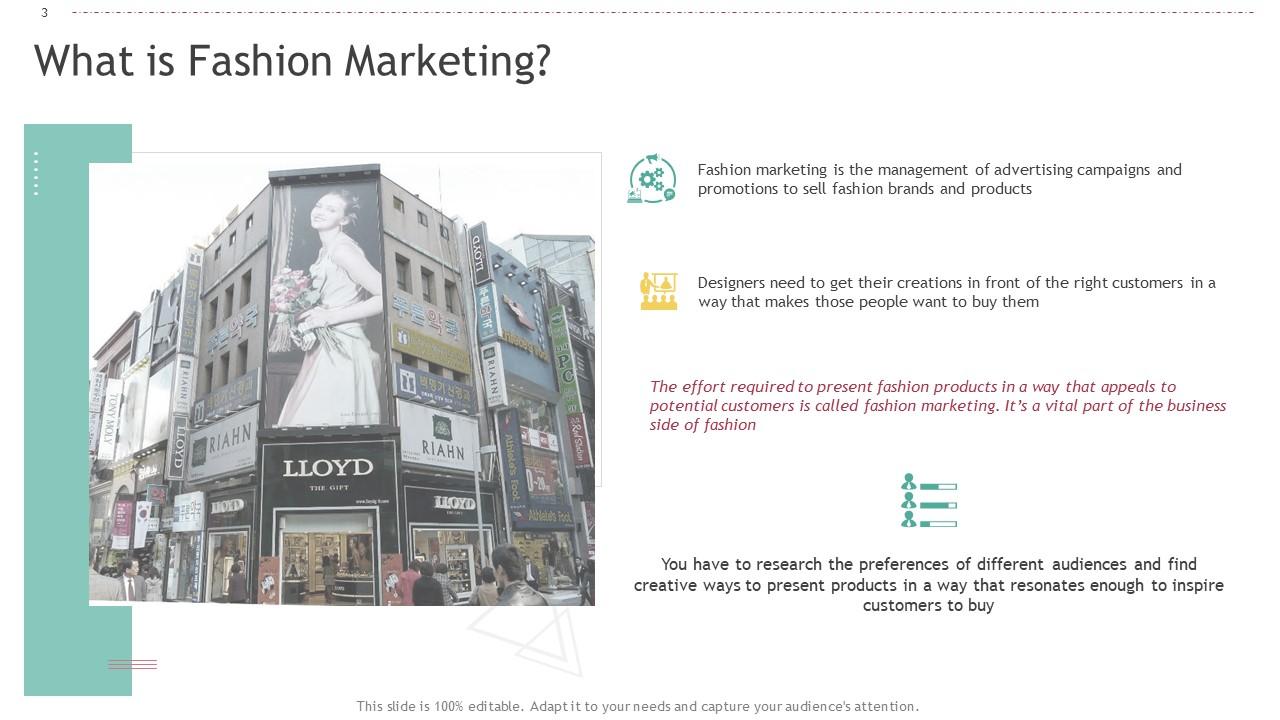
Use this PPT Template to explore the multidimensional aspects of fashion marketing. As far as the supremacy of publicity is concerned, from brand building to consumer behavior study, the slide demonstrates a wide range of strategies applied in fashion houses. Here, it is noted that narrative, trends, and consumers vastly influence how marketing campaigns within the fashion industry are designed, setting the stage for further discussion.
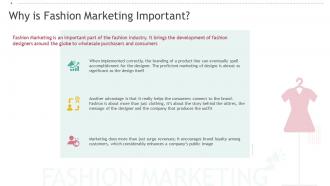
Template 2: Why is Fashion Marketing Important?
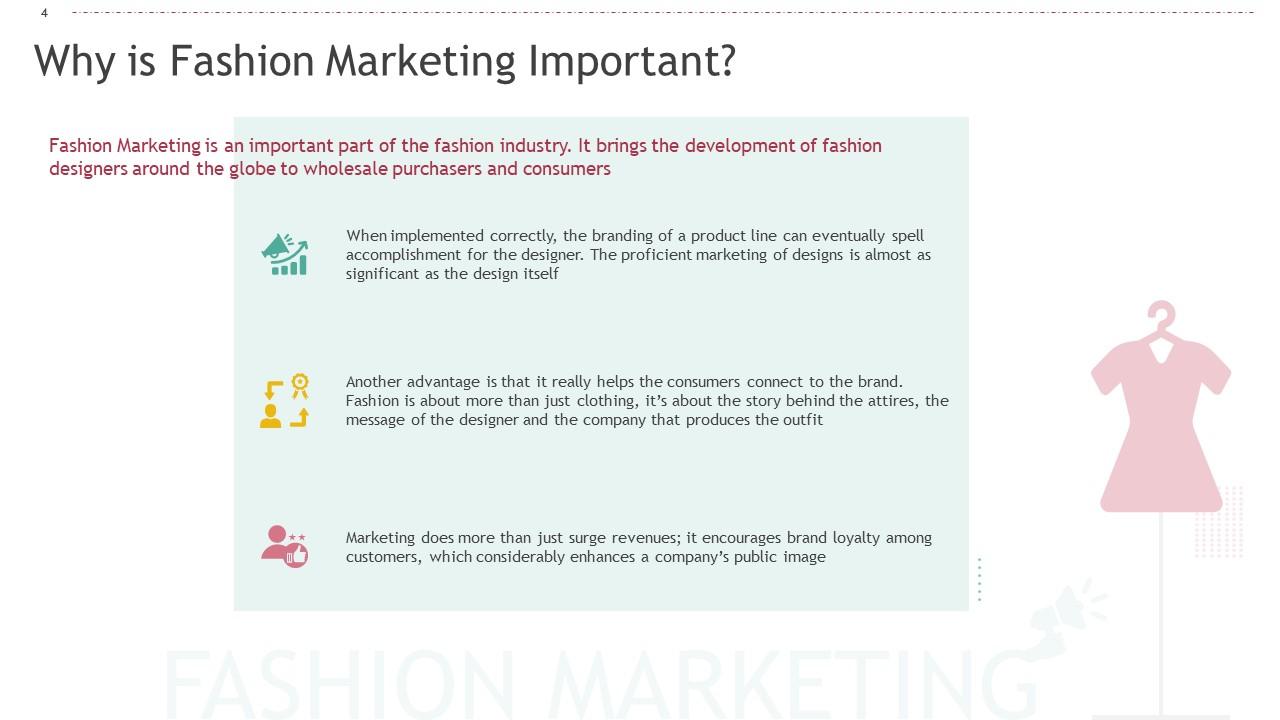
This PPT Slide highlights the role of fashion marketing. It underlines the significance of the brand's visibility and recognition and customers' involvement and loyalty on one side; on the other, it proves that separating the brand from others and being competitive in the market is also crucial. It gives you a clear and grabby general idea of what fashion marketing is for the success of fashion today.
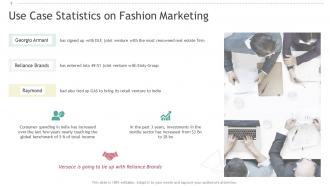
Template 3: Use Case Statistics on Fashion Marketing
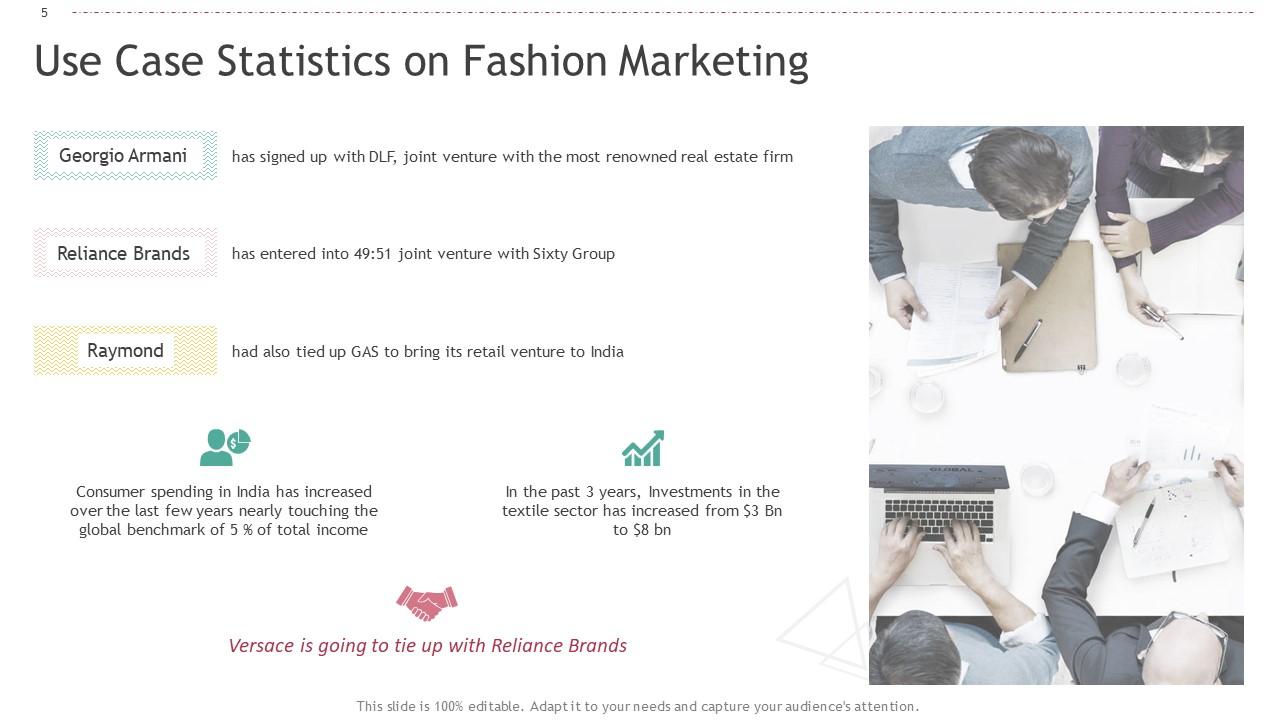
This PPT Slide provides an in-depth understanding of market behavior and competition in the fashion industry. It displays information on the three best brands and their market situational analysis for the past few months. The slide also shows a statistical analysis of the consumer dashboard, indicating important metrics as reflections for marketing engagement. This will help them prepare well for their decisions for survival and competitiveness in the fast-changing fashion sector.
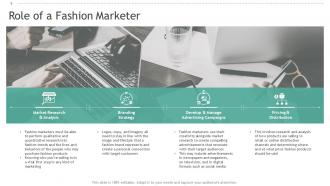
Template 4: Role of a Fashion Marketer
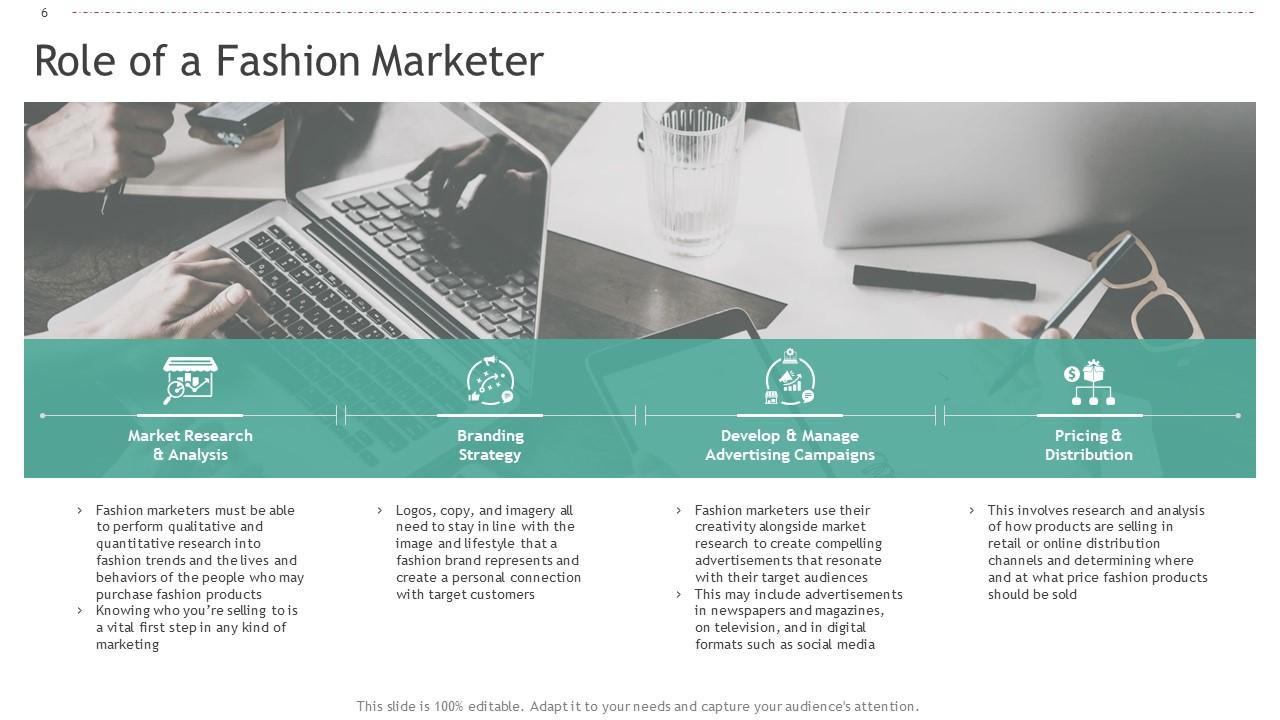
This slide briefly describes a fashion marketer's critical role in creating successful fashion brands. It lists fashion marketers' wide-ranging duties, including brand shaping, consumer engagement, and staying on top of market trends, to understand their contribution to brand success.
Template 5: Market Research and Analysis
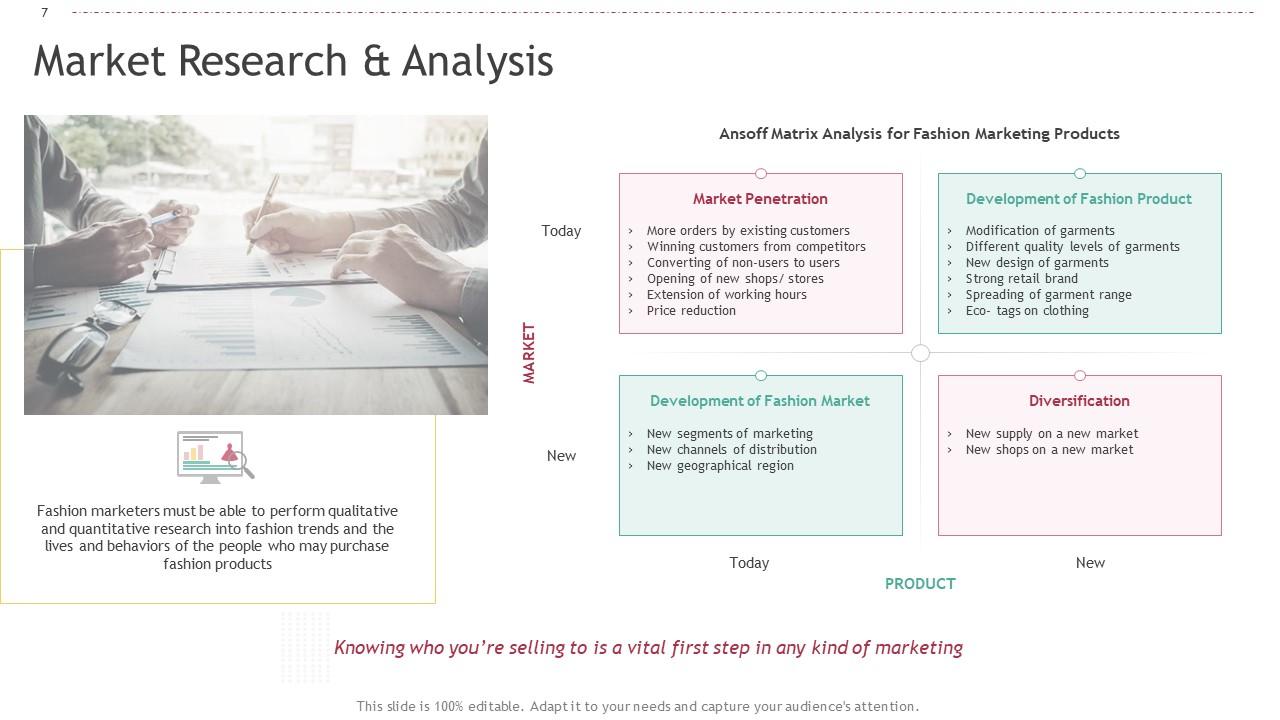
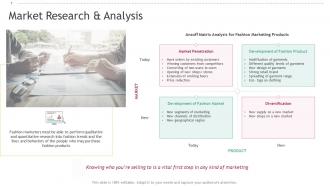
This template elaborates on the Role of a Fashion Marketer: Market Research- Interpretation and Analysis. It presents “The Ansoff Matrix,” a strategic planning tool fashion marketers use to evaluate growth strategies. The slide highlights four segments utilized in the research: Market Penetration, Fashion Product Development, Diversification, and Fashion Market Development. Marketers can use the Ansoff Matrix to strategically maneuver these markets to find growth prospects, increase market penetration, innovate product development, diversify offerings, and expand into new markets. Such an analytical approach provides fashion brands with information on what to do in the future and how to grow sustainably.
Template 6: Branding Strategy
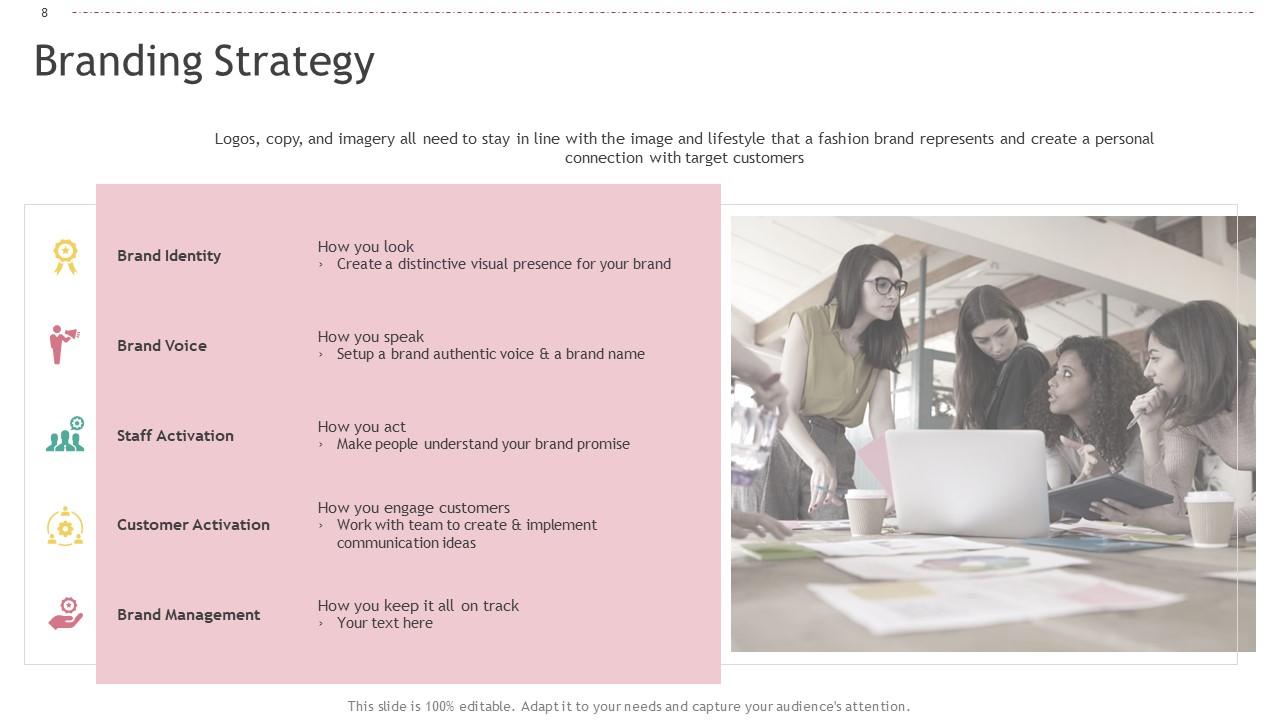
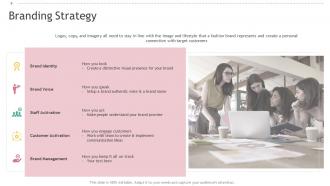
This PPT Preset illuminates the essence of branding strategy. It includes key pillars such as brand identity, voice, staff activation, customer activation, and brand management. It creates a consistent brand image that consumers can relate to, directing brand voice and communication. Staff and customer activation initiatives help align brand values, building loyalty and advocacy. Successful brand management leads to consistency and purity at all brand touchpoints, helping reinforce the brand position and ensuring long-term success. A strong branding strategy is the fundamental principle of a fashion brand’s identity and power within the industry.
Template 7: Develop & Manage Advertising Campaigns
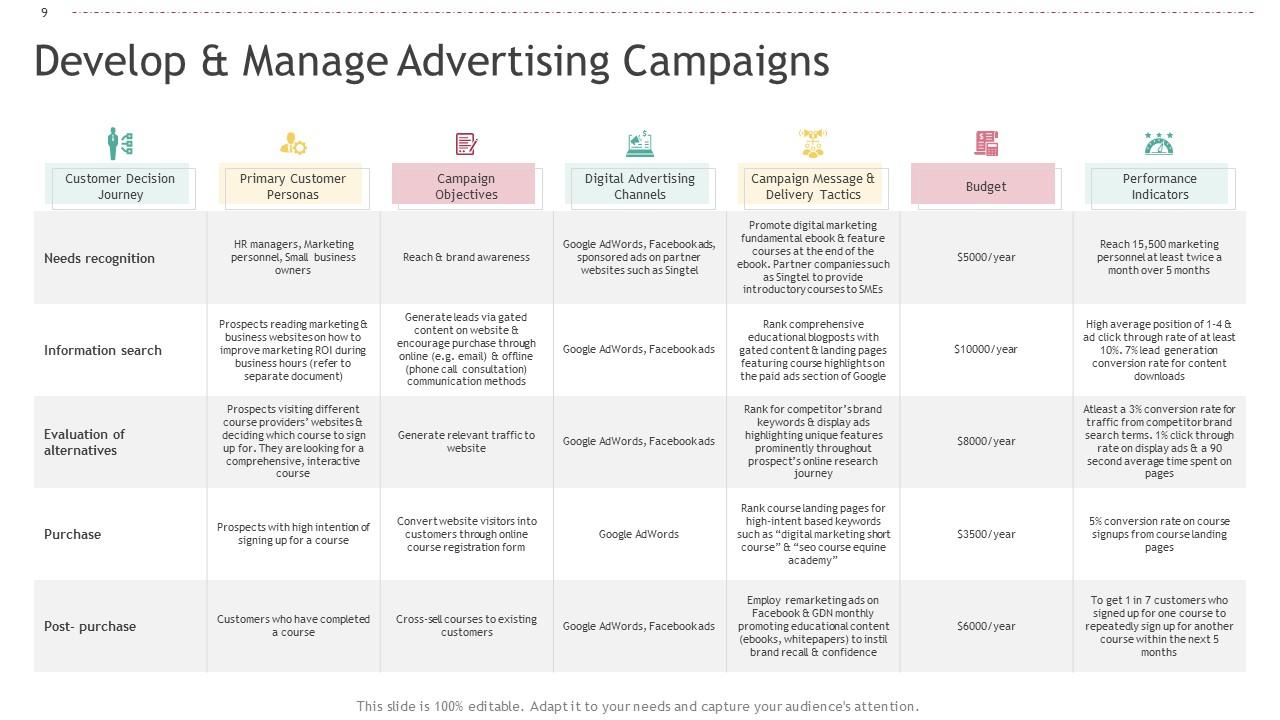
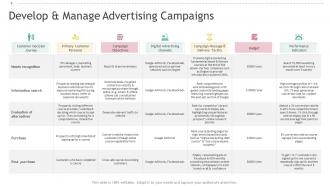
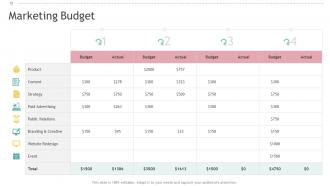
This slide provides a clear, step-based structure that simplifies the development and control of fashion advertising campaigns. The table includes the pertinent subheadings: Customer Decision Journey, Primary Customer Personas, Campaign Objectives, Digital Advertising Channels, Campaign Message Delivery Tactics, Budget and Performance Indicators. Each category is a roadmap for planning and executing advertising campaigns for success. This methodological approach ensures strategic consistency and maximizes the efficiency of advertising activities that reach and engage audience segments.
Template 8: Pricing Strategy

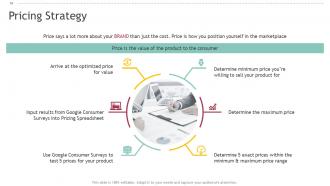
This slide is a summary slide of the pricing strategy with 6 major points and a visual illustration. The pointers are guidelines that help to make the pricing process easy and understandable to fashion marketers. Using these pointers, fashion brands can balance profitability and customer value perception, remaining competitive and sustainable in the market. This pricing chart streamlines the pricing process and helps marketers overcome pricing challenges.
Template 9: Distribution Strategy
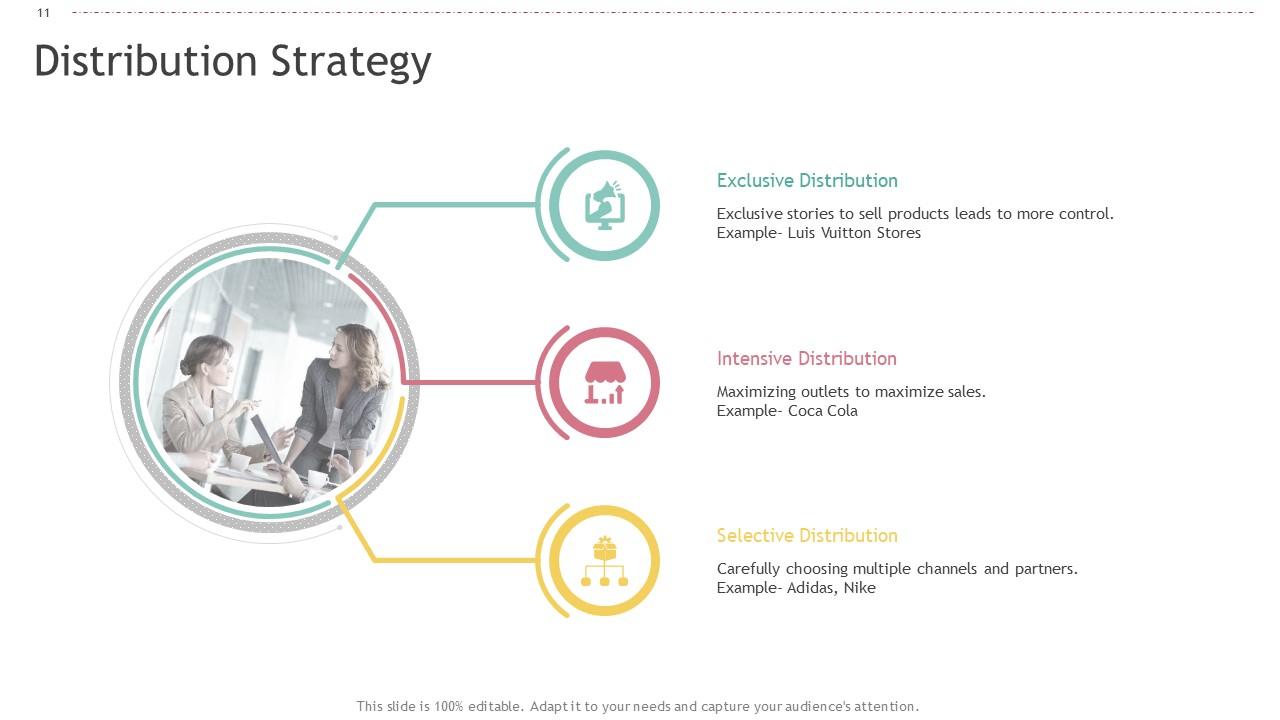
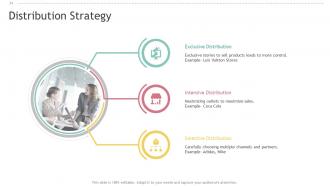
The distribution strategy is crucial for fashion brands to communicate and interact effectively with their target market. This slide outlines three main distribution approaches: exclusive, intensive, and selective. Controlled distribution ensures a focused application of products, continuous brand image, and exclusivity. Inclusive distribution promotes broader market penetration. A compromise theory of selective distribution focuses on some channels for maximum brand display and brand utility.
Template 10: Marketing for a Fashion Label
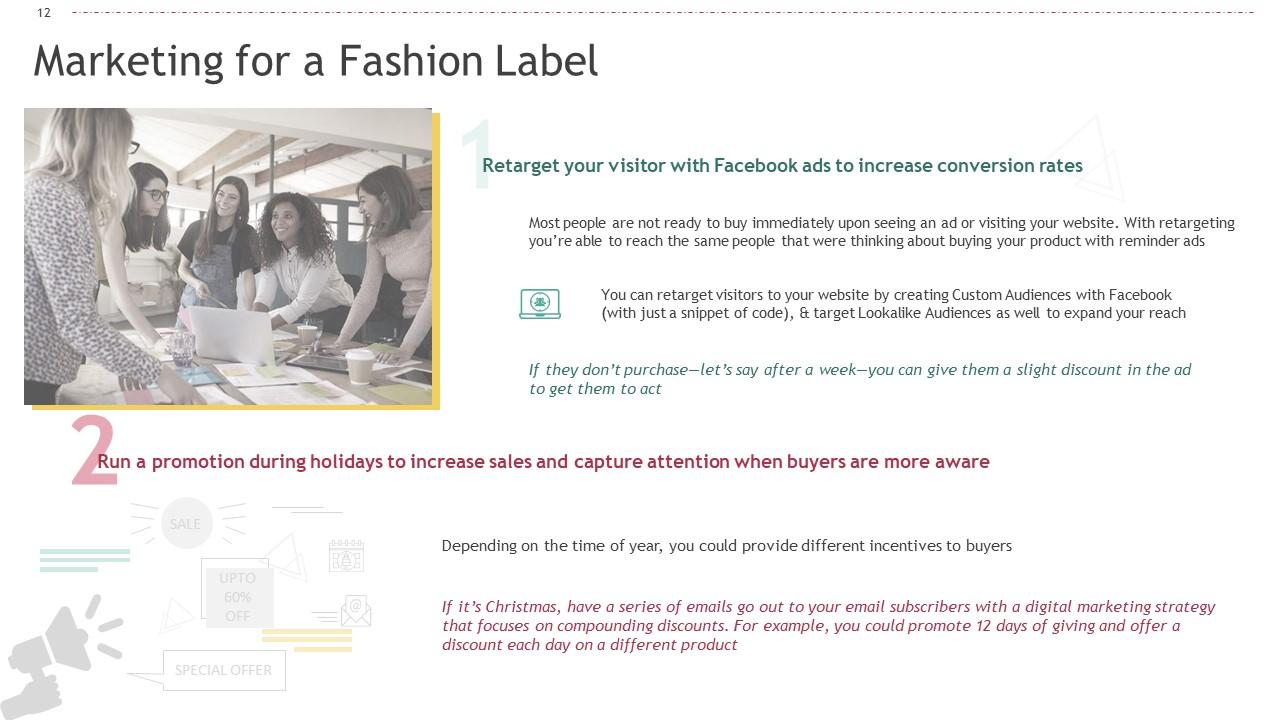
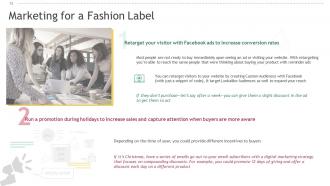
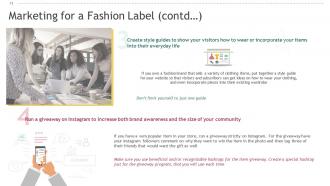
In the fashion market, the success of a brand depends on marketing strategies. It showcases using Facebook Ads to target relevant demographics to create personalized engagement and brand awareness. At the same time, promotional programs for this holiday take advantage of seasonal tendencies and initiate excitement and haste among consumers. Facebook ads and holiday promotions are essential components of the whole marketing approach that assist fashion brands in surviving in the changing industry environment, increasing brand awareness, and maintaining growth.
Conclusion.
This Fashion Marketing PPT has the complete package for fashion business people and marketers to develop their brand strategies. The use provides an easier way to build captivating stories, study market trends, and implement successful marketing plans.
Check out our components of a Fashion Marketing Plan guide for a strategic roadmap toward success.
Fashion Marketing Powerpoint Presentation Slides with all 26 slides:
Use our Fashion Marketing Powerpoint Presentation Slides to effectively help you save your valuable time. They are readymade to fit into any presentation structure.

FAQs for Fashion Marketing
Honestly, social media IS fashion marketing at this point. Instagram and TikTok are where people find new brands and decide what to buy. The cool part? You can see what's working instantly and change course fast. Influencer partnerships are huge too - way better than traditional ads if you ask me. But here's the thing: don't spread yourself thin trying to be on every platform. Figure out where your actual customers hang out first, then go hard there. I learned this the hard way with a client who was posting everywhere but connecting nowhere.
Look for influencers whose vibe actually fits your brand - follower count isn't everything. Micro-influencers are honestly where it's at because their people actually trust them. I made this mistake once with some huge fashion influencer and it was a complete disaster lol. Her audience just didn't care. Build real relationships instead of those random one-off posts. Let them get creative with your stuff rather than giving them some weird script. Oh, and track engagement rates, not just how many people saw it. Those numbers tell the real story.
Honestly, digital gives you way better targeting - you can hit exactly who you want on Instagram or through email instead of just throwing money at billboards and hoping. Traditional stuff like Vogue ads still builds that fancy brand image, but it's pricey and you're kinda shooting in the dark. With digital you actually see what's working in real time, plus people can share your stuff instantly which is everything in fashion rn. I'd probably start there since you can pivot fast if something isn't landing. Way easier to track your ROI too.
Dude, sustainability in fashion marketing is huge right now. Gen Z and millennials are literally investigating brands' supply chains - it's wild how much research they do. They want authentic stories about your eco-friendly materials, circular fashion stuff, or transparent manufacturing. Don't even think about greenwashing because they'll destroy you on social media. Short sentences work. But you also need to back up whatever you claim with real proof. Honestly, being genuine matters way more than being perfect. Your customers can smell fake sustainability from miles away, and they're not afraid to call brands out publicly.
Focus on brand awareness first - reach, impressions, and how people are talking about you online. Engagement rates matter too, but honestly? Saves are where it's at for fashion brands since people bookmark outfits they want to buy later. Track your click-through rates and conversion rates by channel to see what's actually driving sales. Customer acquisition cost is huge. Don't sleep on retention metrics either - repeat purchases and lifetime value tell you if people actually love your brand or just bought once. Stick to maybe 5-6 metrics total or you'll drive yourself crazy.
Honestly, storytelling is what separates boring product ads from campaigns people actually remember. Instead of just showing clothes, tell stories about your brand's journey or how your pieces fit into real life moments. Look at Patagonia - they're not listing jacket features, they're showing epic adventures. Stories give customers something worth sharing with friends, plus they justify higher prices because you're selling an experience, not just fabric. People connect with narratives way more than specs. Find one authentic story your brand owns and build everything around that. It's like... way more powerful than you'd think.
Honestly, AR/VR is pretty incredible for fashion right now. Virtual try-ons let people see how stuff actually looks on them - way better than guessing from photos. You can build these cool immersive experiences that show off your brand's vibe. The tech isn't garbage anymore either, which is huge. Think virtual showrooms, 360 product views, those AR mirrors (I've seen some that are actually good). Virtual fashion shows reach way more people too. My advice? Pick one thing first and make it really smooth before you go crazy with everything else.
Gen Z will absolutely destroy you if you're being fake - they research everything and call out brands instantly. Your values have to match your actions, not just your Instagram posts. They want real social responsibility, not performative BS. Short attention spans but crazy high standards (which tbh I respect). TikTok is a must, but don't just slap trending sounds on millennial content and pray. User-generated content works way better than polished ads. Be transparent about everything - like, actually live your brand values instead of just posting about them on World Environment Day or whatever.
Looking at your customer data helps you figure out who's actually buying what. You can target millennial sneaker heads with street drops while hitting Gen Z with sustainable stuff - way better than generic ads everywhere. Honestly the amount of detail you can get from browsing behavior is pretty wild, but it works. Conversion rates go up when you're not just spraying and praying. I'd start by digging into your current customer patterns first, then build audiences that look similar to your best buyers. Oh and you can spot seasonal trends too which is clutch for timing.
Honestly, focus on three things and you'll be golden. Keep your visuals consistent - same colors, fonts, photo vibe across everything. Glossier does this so well it's almost annoying how good they are at it. Make sure your voice sounds like the same person everywhere, whether it's Instagram or email. Don't spread yourself too thin trying to be on every platform though. Pick 2-3 where your people actually are and crush those instead. Oh, and make a simple brand doc with your colors and tone examples - future you will thank you when you're not stressing about what shade of blue to use at 11pm.
Start planning your seasonal stuff 2-3 months out so you're not scrambling last minute. Fashion weeks and color forecasts are great, but honestly? Social media shows you what's actually happening right now. I probably spend way too much time scrolling for trend research lol. Set up Google Alerts for keywords you care about. Build flexible campaign templates so you can pivot fast when something random goes viral. Don't chase every single trend though – stick to what fits your brand's vibe. Monthly team meetings help too.
Honestly, customer feedback is like having a cheat code for your marketing. Reviews and social comments will show you what's actually working instead of what you *think* should work. I've watched brands flip their whole Instagram game after realizing people were way more into messy behind-the-scenes posts than those perfect product photos. Use that feedback to figure out which styles to promote, what pricing makes sense, and how customers actually describe your stuff (spoiler: probably not how you do). Set up a system to collect it regularly - maybe check it monthly? Trust me, it'll save you from so many marketing disasters.
Honestly, mix digital stuff with hands-on experiences so shopping feels special, not boring. AR try-ons are cool, plus interactive displays and personal styling sessions. Pop-ups in weird places are huge right now – saw this brand do one in an old subway car which was pretty clever. Make customers feel they're finding something exclusive, you know? Create those Instagram moments because everyone wants to post unique stuff. Oh, and don't go crazy at first – just pick one cool element and see what your people actually respond to.
Look, the big ones you'll hit are body image stuff and dodgy sustainability claims. Don't go crazy with photo retouching - people call that out instantly now and it gets messy. Same with slapping "eco-friendly" on everything when it's basically marketing fluff. Targeting younger people gets tricky too, especially with influencer partnerships where they're not being upfront about sponsorships. That whole space is kinda wild right now. Honestly? Just think about whether your campaign might mess with someone's confidence or straight-up mislead them. Saves you headaches later.
Dude, personalization is seriously a game changer for sales. People go crazy when they think something was made just for them - like browsing history recommendations or letting them pick colors and fits. Honestly, customers will drop 20-30% more cash on personalized stuff, which kinda blows my mind. The best part? Way fewer returns since they helped create it. I'd start small - maybe monogramming or basic size suggestions. Then just see what clicks with your customers and build from there. It's that whole "this is exactly what I wanted" vibe that gets them.
-
excellent ppt
-
excellent ppt
-
v.good
-
Content of slide is easy to understand and edit.
-
Qualitative and comprehensive slides.
-
Content of slide is easy to understand and edit.
-
Colors used are bright and distinctive.