


Feasibility Study Templates For Different Projects Powerpoint Presentation Slides




Try Before you Buy Download Free Sample Product
 Impress Your
 Audience
 100%
100% Editable
 Save Hours
 of Time


This deck covers the feasibility studies for various healthcare, restaurant, construction, e-commerce, software, and bank projects. Grab our competently designed Feasibility Study template. Here the assessment is done based on the projects practicality with an objective of an unbiased approach to provide information on various decisions. We have focused on different projects in this deck. We have covered the general project feasibility study wherein executive summary, products and services description, technology considerations, the marketplace, marketing strategy, etc. In the health care feasibility study, we have focused on opening up a new hospital wherein we have covered executive summary, project overview, project program costs, etc. In the construction feasibility study, we shared a survey of commercial center construction wherein details like project overview, significant tasks, financial study, technical analysis, and conclusion and recommendation are discussed. In the e-commerce feasibility study, e-commerce business has been studied wherein executive summary, assessment needs, site selection and evaluation, market analysis, etc. In the software project feasibility study, we have discussed the website development software for online school studies and papers wherein we have covered project objectives, services offered, work breakdown structure, etc. Download it now.
People who downloaded this PowerPoint presentation also viewed the following :
Content of this Powerpoint Presentation
Slide 1: This slide introduces Feasibility Study Template (for variety of projects). State Your Company Name and begin.
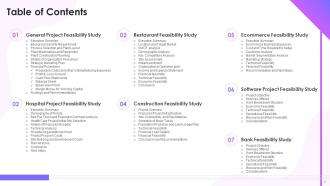
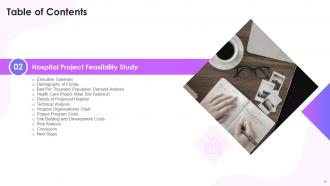
Slide 2: This slide presents Table of Content for the presentation.
Slide 3: This slide highlights title for topics that are to be covered next in the template.
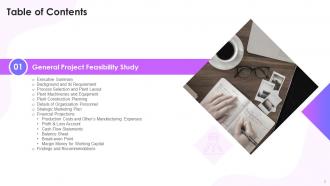
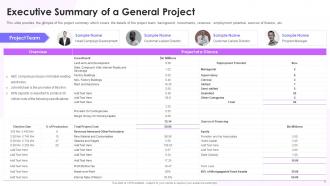
Slide 4: This slide displays Executive Summary of a General Project.
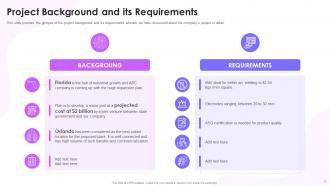
Slide 5: This slide represents Project Background and its Requirements.
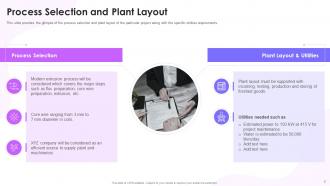
Slide 6: This slide provides the glimpse of the process selection and plant layout of the particular project.
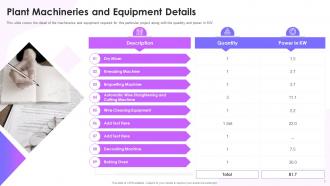
Slide 7: This slide showcases Plant Machineries and Equipment Details.
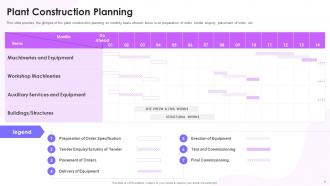
Slide 8: This slide showcases plant construction planning on monthly basis.
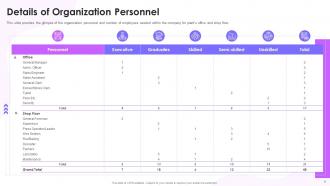
Slide 9: This slide shows organization personnel and number of employees needed within the company.
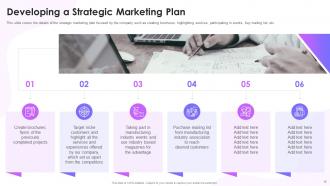
Slide 10: This slide presents details of the strategic marketing plan focused by the company.
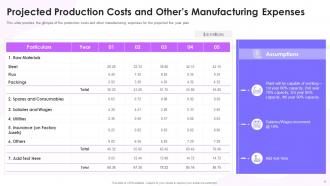
Slide 11: This slide displays Projected Production Costs and Other’s Manufacturing Expenses.
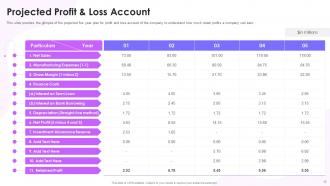
Slide 12: This slide represents projected five year plan for profit and loss account of the company.
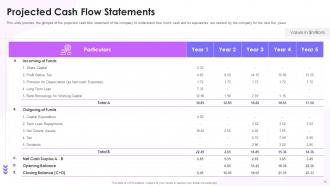
Slide 13: This slide showcases projected cash flow statement of the company.
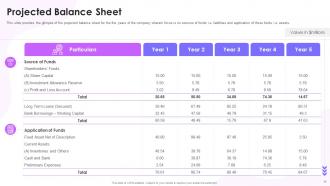
Slide 14: This slide shows projected balance sheet for the five years of the company.
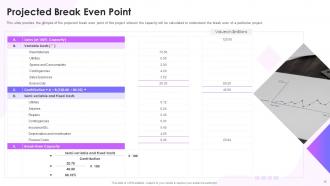
Slide 15: This slide presents projected break even point of this project wherein the capacity will be calculated.
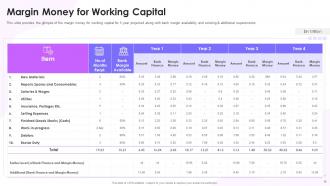
Slide 16: This slide displays Margin Money for Working Capital.
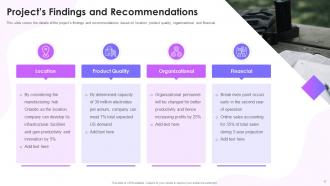
Slide 17: This slide represents Project’s Findings and Recommendations.
Slide 18: This slide highlights title for topics that are to be covered next in the template.
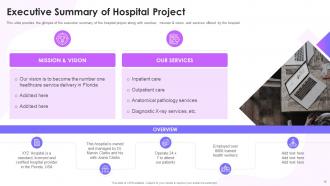
Slide 19: This slide showcases Executive Summary of Hospital Project.
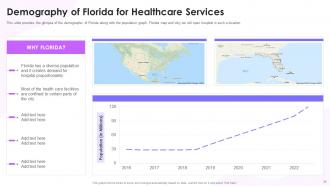
Slide 20: This slide shows Demography of Florida for Healthcare Services.
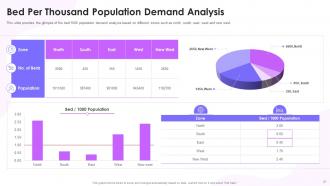
Slide 21: This slide presents Bed Per Thousand Population Demand Analysis.
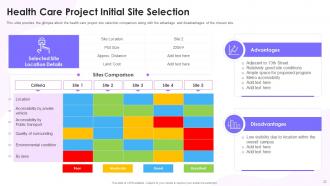
Slide 22: This slide displays health care project site selection comparison along with the advantage and disadvantages of the chosen site.
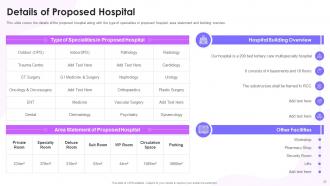
Slide 23: This slide represents proposed hospital along with the type of specialties in proposed hospital.
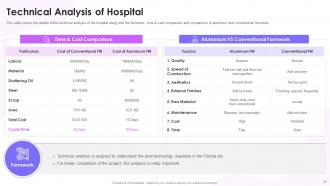
Slide 24: This slide covers the details of the technical analysis of the hospital.
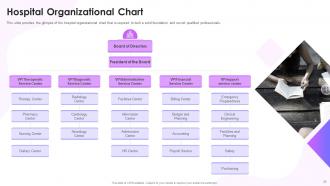
Slide 25: This slide shows hospital organizational chart that is required to built a solid foundation.
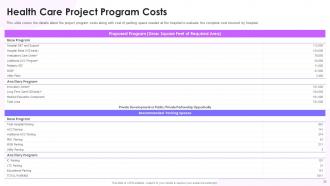
Slide 26: This slide covers the details about the project program costs along with cost of parking space needed.
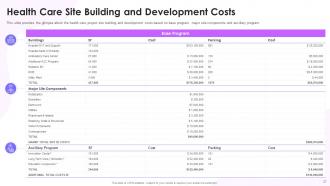
Slide 27: This slide represents Health Care Site Building and Development Costs.
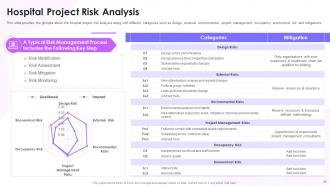
Slide 28: This slide showcases hospital project risk analysis along with different categories.
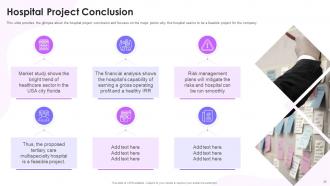
Slide 29: This slide shows hospital project conclusion and focuses on the major points why this hospital seems to be a feasible.
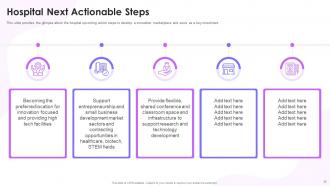
Slide 30: This slide presents hospital upcoming action steps to develop a innovation marketplace and serve as a key investment.
Slide 31: This slide highlights title for topics that are to be covered next in the template.
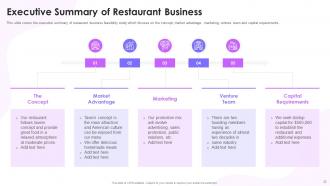
Slide 32: This slide represents Executive Summary of Restaurant Business.
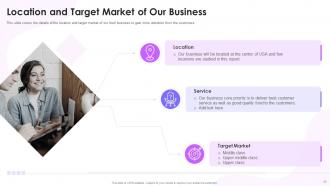
Slide 33: This slide showcases Location and Target Market of Our Business.
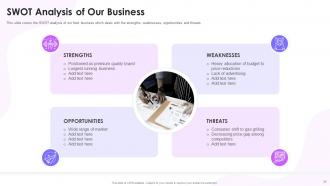
Slide 34: This slide covers the SWOT analysis of our food business.
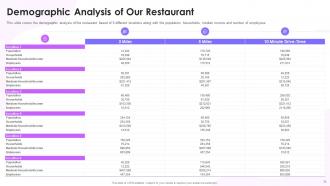
Slide 35: This slide shows Demographic Analysis of Our Restaurant.
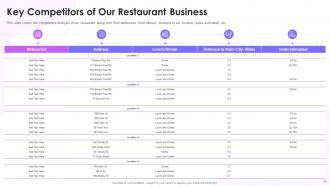
Slide 36: This slide presents Key Competitors of Our Restaurant Business.
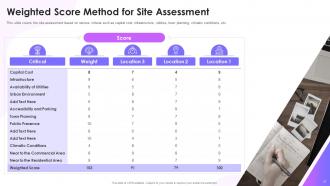
Slide 37: This slide displays Weighted Score Method for Site Assessment.
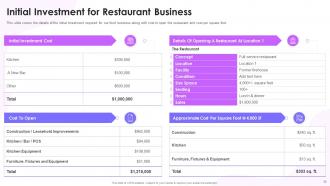
Slide 38: This slide represents Initial Investment for Restaurant Business.
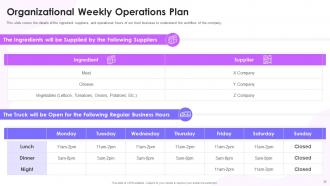
Slide 39: This slide showcases Organizational Weekly Operations Plan.
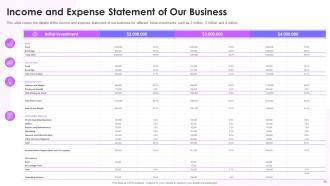
Slide 40: This slide shows Income and Expense Statement of Our Business.
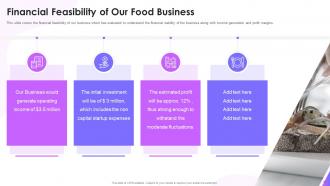
Slide 41: This slide presents Financial Feasibility of Our Food Business.
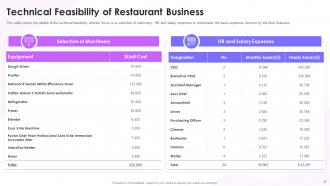
Slide 42: This slide displays Technical Feasibility of Restaurant Business.
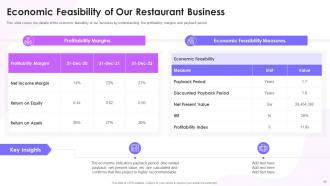
Slide 43: This slide represents Economic Feasibility of Our Restaurant Business.
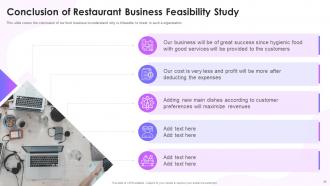
Slide 44: This slide showcases Conclusion of Restaurant Business Feasibility Study.
Slide 45: This slide highlights title for topics that are to be covered next in the template.
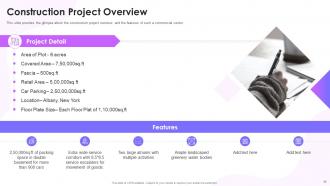
Slide 46: This slide presents construction project overview and the features of such a commercial center.
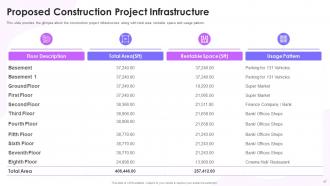
Slide 47: This slide displays Proposed Construction Project Infrastructure.
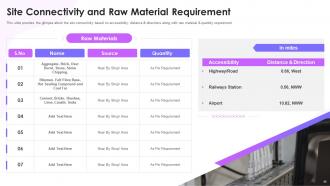
Slide 48: This slide represents Site Connectivity and Raw Material Requirement.
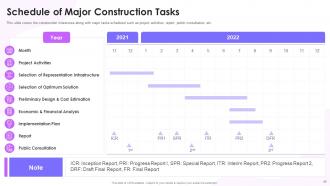
Slide 49: This slide covers the construction milestones along with major tasks scheduled.
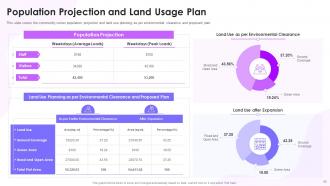
Slide 50: This slide showcases Population Projection and Land Usage Plan.
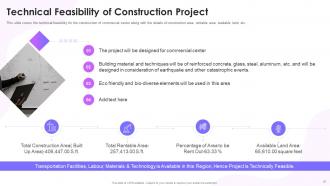
Slide 51: This slide shows Technical Feasibility of Construction Project.
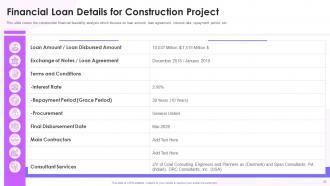
Slide 52: This slide presents Financial Loan Details for Construction Project.
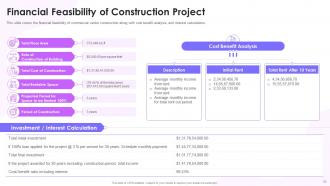
Slide 53: This slide displays Financial Feasibility of Construction Project.
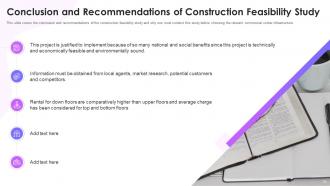
Slide 54: This slide represents Conclusion and Recommendations of Construction Feasibility Study.
Slide 55: This slide highlights title for topics that are to be covered next in the template.
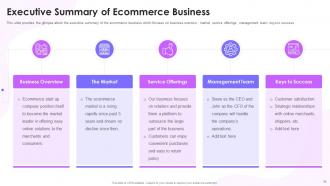
Slide 56: This slide showcases Executive Summary of Ecommerce Business.
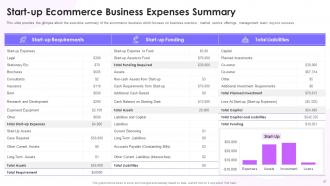
Slide 57: This slide shows Start-up Ecommerce Business Expenses Summary.
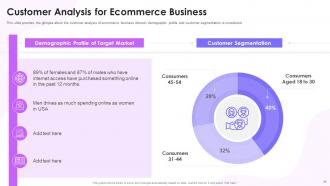
Slide 58: This slide provides the glimpse about the customer analysis of ecommerce business.
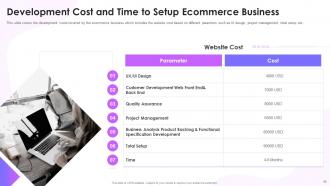
Slide 59: This slide presents Development Cost and Time to Setup Ecommerce Business.
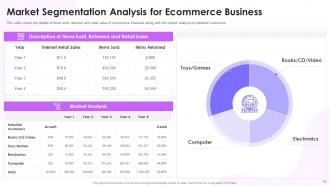
Slide 60: This slide displays Market Segmentation Analysis for Ecommerce Business.
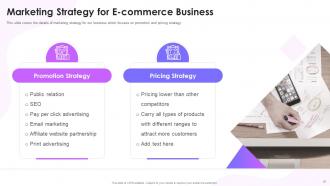
Slide 61: This slide represents Marketing Strategy for E-commerce Business.
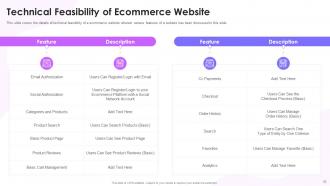
Slide 62: This slide showcases Technical Feasibility of Ecommerce Website.
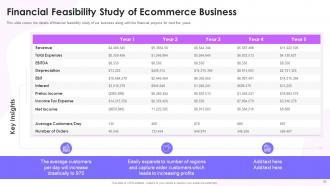
Slide 63: This slide shows Financial Feasibility Study of Ecommerce Business.
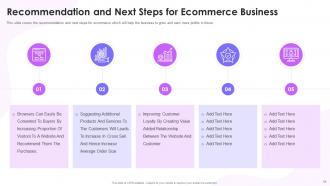
Slide 64: This slide presents Recommendation and Next Steps for Ecommerce Business.
Slide 65: This slide highlights title for topics that are to be covered next in the template.
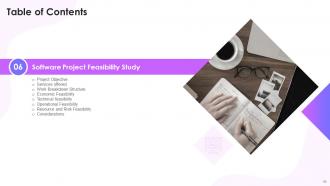
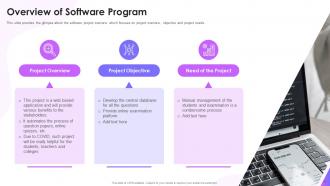
Slide 66: This slide displays software project overview which focuses on project overview, objective and project needs.
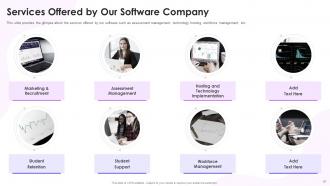
Slide 67: This slide represents Services Offered by Our Software Company.
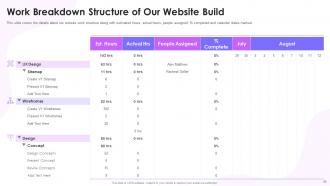
Slide 68: This slide showcases Work Breakdown Structure of Our Website Build.
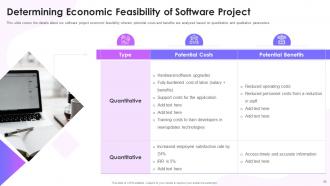
Slide 69: This slide shows Determining Economic Feasibility of Software Project.
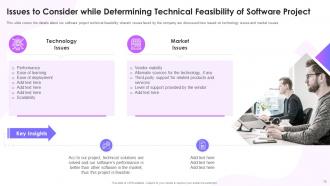
Slide 70: This slide presents Issues to Consider while Determining Technical Feasibility of Software Project.
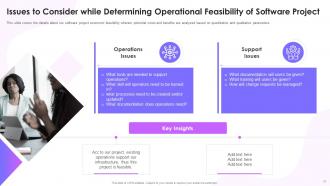
Slide 71: This slide displays Issues to Consider while Determining Operational Feasibility of Software Project.
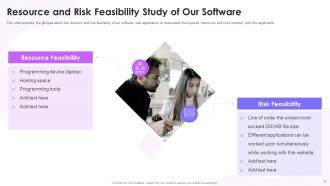
Slide 72: This slide represents Resource and Risk Feasibility Study of Our Software.
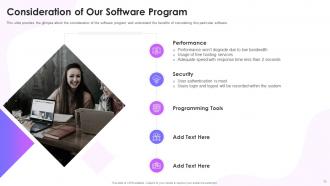
Slide 73: This slide provides the glimpse about the consideration of the software program.
Slide 74: This slide highlights title for topics that are to be covered next in the template.
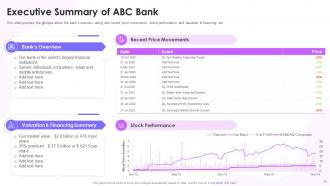
Slide 75: This slide shows bank’s overview along with recent price movements.
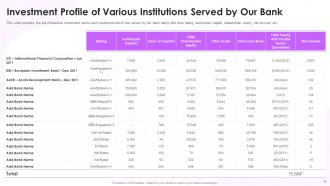
Slide 76: This slide presents Investment Profile of Various Institutions Served by Our Bank.
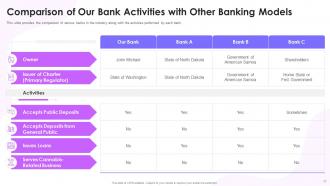
Slide 77: This slide displays Comparison of Our Bank Activities with Other Banking Models.
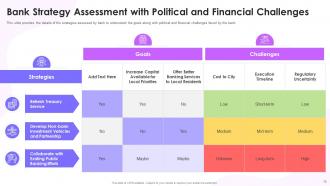
Slide 78: This slide represents Bank Strategy Assessment with Political and Financial Challenges.
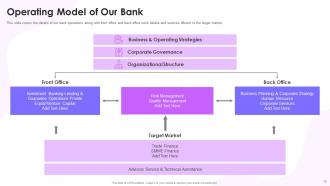
Slide 79: This slide showcases details of our bank operations along with front office and back office work details.
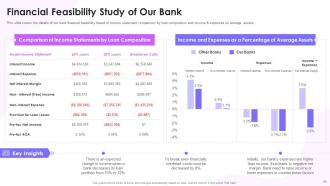
Slide 80: This slide shows Comparison of Income Statements by Loan Composition.
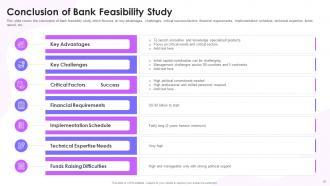
Slide 81: This slide presents conclusion of bank feasibility study which focuses on key advantages.
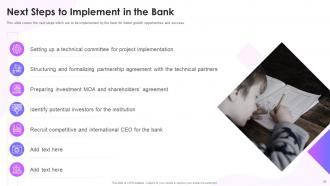
Slide 82: This slide displays Next Steps to Implement in the Bank.
Slide 83: This slide represents Icons for Feasibility Study Templates (for different projects).
Slide 84: This slide is titled as Additional Slides for moving forward.
Slide 85: This is About Us slide to show company specifications etc.
Slide 86: This is Our Mission slide with related imagery and text.
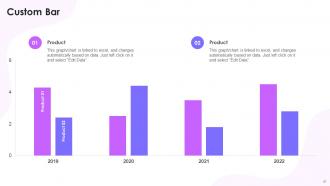
Slide 87: This slide presents Custom Bar chart with two products comparison.
Slide 88: This is Our Team slide with names and designation.
Slide 89: This slide shows Post It Notes. Post your important notes here.
Slide 90: This slide provides 30 60 90 Days Plan with text boxes.
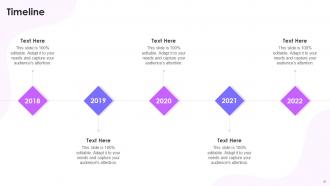
Slide 91: This is a Timeline slide. Show data related to time intervals here.
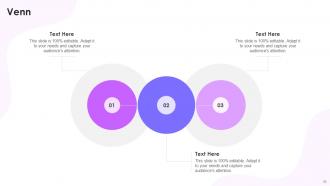
Slide 92: This slide depicts Venn diagram with text boxes.
Slide 93: This is a Thank You slide with address, contact numbers and email address.
Feasibility Study Templates For Different Projects Powerpoint Presentation Slides with all 98 slides:
Use our Feasibility Study Templates For Different Projects Powerpoint Presentation Slides to effectively help you save your valuable time. They are readymade to fit into any presentation structure.










FAQs for Feasibility Study Templates For Different Projects
So you'll want to hit five main things: market analysis (who actually wants this and how much demand is there), technical stuff - like can you even build it, financial projections with real costs and revenue estimates, operational bits like staffing, and risk assessment. Oh, and definitely add a timeline section because I swear every project takes way longer than expected. Start with whatever section you have the most info on already. The whole thing only works if you're completely honest instead of making everything sound amazing. Work through the rest one by one after that.
Just grab a basic template and swap out the sections that don't fit your industry. Tech startups? Focus on scalability and user acquisition costs instead of boring supply chain stuff. Manufacturing needs production capacity analysis. Healthcare has all those regulatory hoops to jump through that restaurants obviously don't deal with. The backbone stays the same - market analysis, financial projections, risk assessment. But honestly, the KPIs are what really matter, and those change completely depending on your sector. I'd start simple then add whatever sections make sense for your specific challenges. Way easier than starting from scratch.
Don't just fill in the blanks - that's the biggest mistake. You'll get some cookie-cutter analysis that totally misses what makes your project different. Those sections that look boring? Like regulatory stuff? Yeah, they can screw you over later if you skip them. Templates are honestly lifesavers for getting started quickly. But here's the thing - you've got to tweak the financial assumptions and risk factors to match your actual industry. Think of it as your foundation, not your finished house. Build around what's really happening in your world, not some generic scenario.
So financial projections are basically what make or break your feasibility study - they show if you'll actually turn a profit. You need revenue forecasts, cost estimates, cash flow stuff, and break-even numbers. Multiple scenarios help too (best case, worst case, realistic). I swear, half the studies I see completely bomb because they forget about obvious expenses or get way too optimistic with their numbers. Document how you got each figure though, so people can actually follow your thinking. Otherwise stakeholders won't trust it.
Honestly, just go with a structured report format - executive summary, market analysis, financial stuff, risks, and your recommendations. Start with a one-page summary since that's literally all most executives will read anyway (learned this the hard way). Break everything else into clear sections with bullet points and charts. Nobody wants to wade through dense paragraphs when they're trying to make decisions. I'd grab a basic business report template and tweak it for your audience. Oh, and don't overthink the language - straightforward beats fancy every time. Your stakeholders will thank you for keeping it digestible.
Figure out who your stakeholders are and what they actually care about - not what you think they should care about. Get them in a room early for workshops to hash out scope and what success looks like. Then don't disappear! Monthly updates or a dashboard keeps everyone in the loop. Honestly, I've watched so many studies crash and burn because leadership got surprised by the final recommendations. Ask for their input at major decision points instead of just dumping findings on them later. Give people specific roles so they know how they're supposed to help. It's way more collaborative than most people realize.
Honestly, Excel's still your best bet for the financial stuff - I know it's boring but it just works. For project planning, Microsoft Project or Smartsheet are solid choices. Lucidchart's great if you need flowcharts and diagrams. Notion or Airtable work well when your team needs to collaborate since everyone can jump in and edit at the same time. There's also specialized stuff like @RISK for risk analysis, but that might be overkill depending on what you're doing. I'd just start with whatever tools you already have and see how it goes. You can always upgrade later if you need something fancier for your industry.
Honestly, I'd say every 6-12 months for ongoing stuff, but don't be rigid about it. Big changes like new regulations or competitors doing something crazy? Update immediately. Market shifts, budget changes, scope creep - all good reasons to revisit your numbers. Quick quarterly check-ins work well too, just to see if your projections still make sense. I've watched projects totally bomb because people clung to old studies that were basically useless by then. For smaller projects, maybe just one solid mid-point update. Trust your gut though - if something feels weird about your original assumptions, don't wait for the calendar to tell you it's time.
Track ROI, payback period, and NPV for the money stuff - that's obvious. But also watch timeline adherence and scope creep because projects always drift. I like adding risk metrics too, like how many of your original assumptions actually panned out (hint: fewer than you think). Don't forget stakeholder satisfaction and whether you hit your tech targets. Here's the thing though - set these benchmarks during feasibility, not after when you're desperately trying to justify everything. Keep it simple with maybe 5-7 metrics and actually check them monthly instead of letting them collect dust.
So I always create separate sections for stakeholder interviews and focus groups - makes everything way cleaner. Direct quotes are gold, especially when they back up your customer acceptance assumptions. Don't forget the "market sentiment" part either (seriously underrated). Short sentences work great here. Then balance everything with your hard numbers so executives aren't flying blind. Oh, and document any regulatory weirdness that spreadsheets can't capture - that stuff bites you later. Start by figuring out which qualitative bits could totally tank your project.
Dude, templates are a game changer - you'll save so much time not starting from scratch every single project. Everything stays consistent too, which makes it way easier when stakeholders want to compare stuff. I've literally watched teams completely forget about market analysis because they didn't have a template to follow (whoops). Less experienced people on your team will actually produce decent work since the structure walks them through it. Reviews go faster when everyone knows where to look for things. Just start simple and tweak it for whatever industry you're in.
Case studies are honestly a game changer - they show you exactly how real companies tackled the same stuff you're dealing with. You'll see their actual language, what metrics they used, and (super helpful) what went wrong. Way better than staring at some empty template wondering where to even start. Look for examples from your industry if you can find them - those will give you the most relevant ideas to steal... I mean, adapt. The concrete examples make it so much easier to figure out what sections to focus on and what formatting actually works.
Honestly, market analysis is what makes or breaks your feasibility study. It shows whether people actually want what you're planning to offer. You'll need to research your target market size, what customers need, who you're competing against, and current pricing. Way too many projects bomb because they skip this part - learned that the hard way on a project last year. The analysis validates your revenue assumptions and spots problems before you waste money. Look at today's market plus where it's heading. Then use everything you find to either back up your project or admit it won't work.
Make a risk matrix with probability vs impact - high, medium, low for both. I break mine into separate tables: technical, financial, market, operational. Otherwise everything just blurs together as "super risky" which isn't helpful. Each risk needs a mitigation plan plus someone actually owning it (not just "the team" - that never works). Add scores so people can scan quickly instead of reading paragraphs. Honestly, the visual layout matters more than you'd think. Stakeholders will totally skip dense text blocks, but they'll actually look at a clean matrix.
Honestly, just put your big findings right up front in an executive summary - those busy execs usually skip to that part anyway. Break everything else into clean sections: market analysis, tech feasibility, financials, and risks. Headers and bullet points are clutch because dense paragraphs will kill people. Charts work great for the money stuff. Stick your detailed calculations in appendices so the main report doesn't get bogged down. Each section should build toward your final recommendation. Oh, and throw in a one-page summary at the end for the "just give me the highlights" crowd.
-
Visually stunning presentation, love the content.
-
Wonderful templates design to use in business meetings.