

Feasibility analysis powerpoint presentation slides





Try Before you Buy Download Free Sample Product
 Impress Your
 Audience
 100%
100% Editable
 Save Hours
 of Time


Monitor the likelihood of your project success by using our content ready Feasibility Analysis PowerPoint Presentation Slides. You can evaluate the processes involved during the execution of the project with the help of this visually appealing market research study presentation slide. With the aid of a financial feasibility PowerPoint graphic, you can inspect the marketability of the products and services. Use feasibility analysis PPT theme to assess the sales of the product in the marketplace. Take the assistance of market analysis PowerPoint layout to demonstrate a business plan that helps to increase the economic value of your organization. Employ market research PPT theme to showcase a feasibility study report that gathers all the relevant data and information of the project. You can identify the requirement of project development more efficiently by using the feasibility study presentation. Therefore, you can download our ready-to-use market viability PowerPoint deck to analyze the project deliverables.
People who downloaded this PowerPoint presentation also viewed the following :
Content of this Powerpoint Presentation
If you follow business news closely, you will know that Elon Musk-backed Swisspod is interested in participating in a Hyperloop feasibility study in India. Hyperloop is a high-speed transportation system that attempts to revolutionize the movement of both people and cargo.
However, a full feasibility analysis is needed to understand whether it can be converted into a service that businesses can invest in. This kind of feasibility analysis is fundamental to business.
Know all there is to know about the economic feasibility of a power plant with a click here.
Without it, no one is sure if the business venture will deliver on its promises. A feasibility analysis is long-winded and detailed and must ensure rigor in seeking answers to questions that are mandated in it. Businesses, however, face the pain point of not having a structured framework using which they could apprise their staff of how to conduct a feasibility analysis of major projects, expansion plans, or go-to-market strategies.
At SlideTeam, we have resolved this major hurdle before businesses with our innovative idea of ready-made and content-ready templates that offer feasibility analysis frameworks for easy dissemination among relevant members of the staff.
Operational feasibility is a segment that deserves its own studies to ensure the investment in business is well-deserved. Find best-in-class operational feasibility analysis checklist here.
The templates are 100% editable and customizable as well, ensuring that you can start using these within minutes of download. Effectively, then, you have off-the-shelf presentation templates that suit your business altogether.
Explore some of the best-in-class feasibility analysis templates below.
Template 1 Industry Description for Business Feasibility Analysis
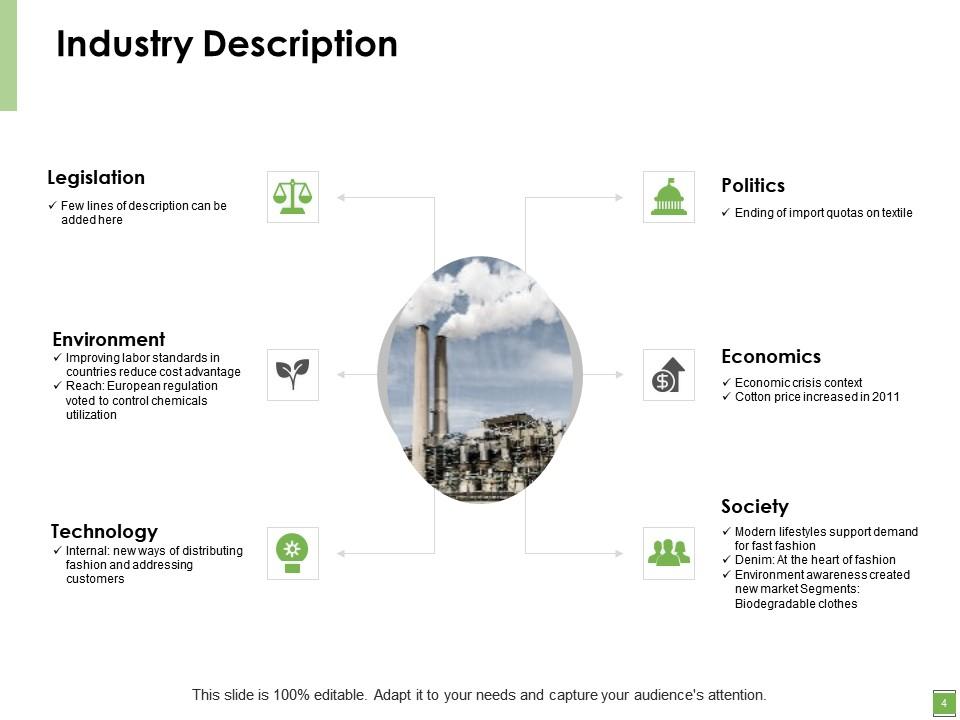
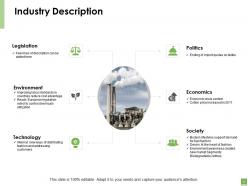
This PPT Template is a comprehensive description of an industry across the domains of legislation, environment, technology, politics, economics and society. As an example, this presentation template illustrates how politics impacts feasibility, reducing it to almost zero, when any government ends import quotas on textile.
Template 2 Industry Analysis Section in Feasibility Report
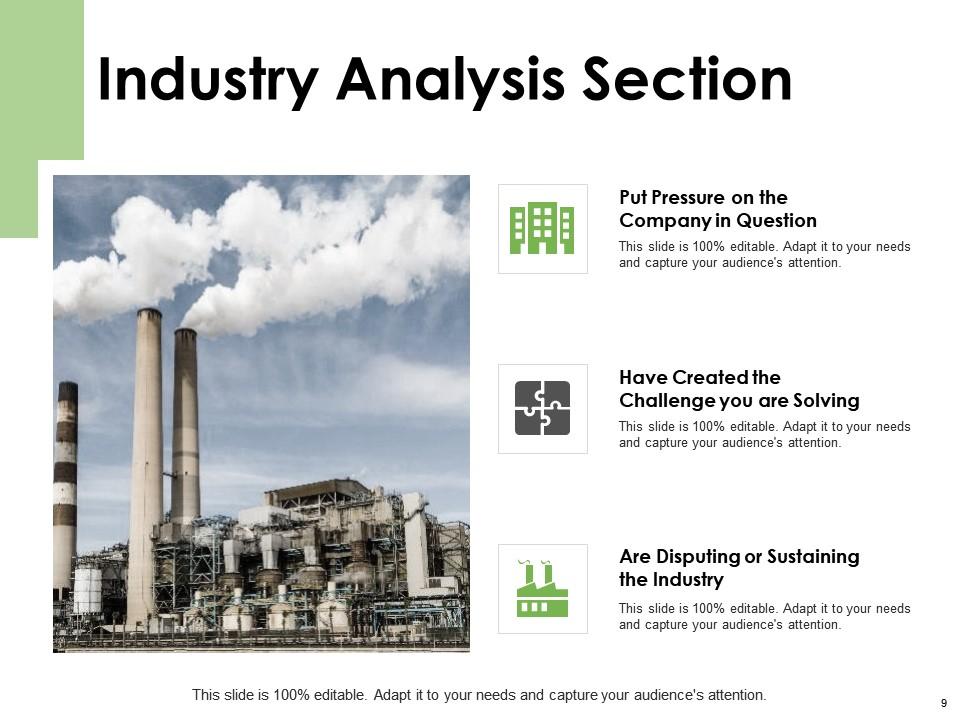
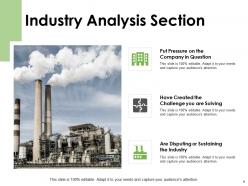
Use this PPT Slide to establish how an industry analysis can be conducted to ensure how feasibility can come about. The PPT Template involves asking whether the company is working on a challenge that is worthy enough and yields the desired result. One also goes deep into understanding whether there is any pressure on the company vis-a-vis feasibility.
Template 3 Industry Market Share PPT Template
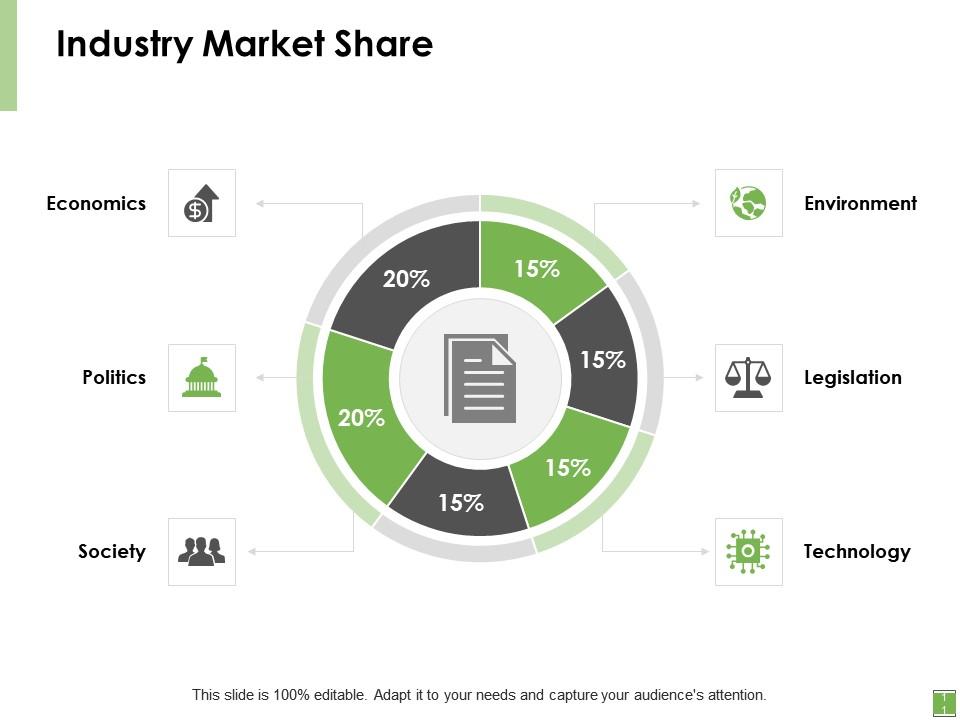
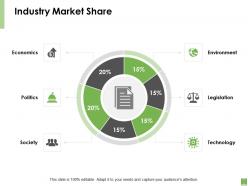
This PPT Template gives you the market share across industries that you must know before calculating feasibility. For instance, no business can run without any of the major pillars of life, such as environment, legislation, technology and so on. As a feasibility analysis specialist, your job is to help clients understand the role and importance of each for your area of operations and expertise, and proceed accordingly.
Template 4 Market Analysis PPT Template for Business Feasibility Analysis
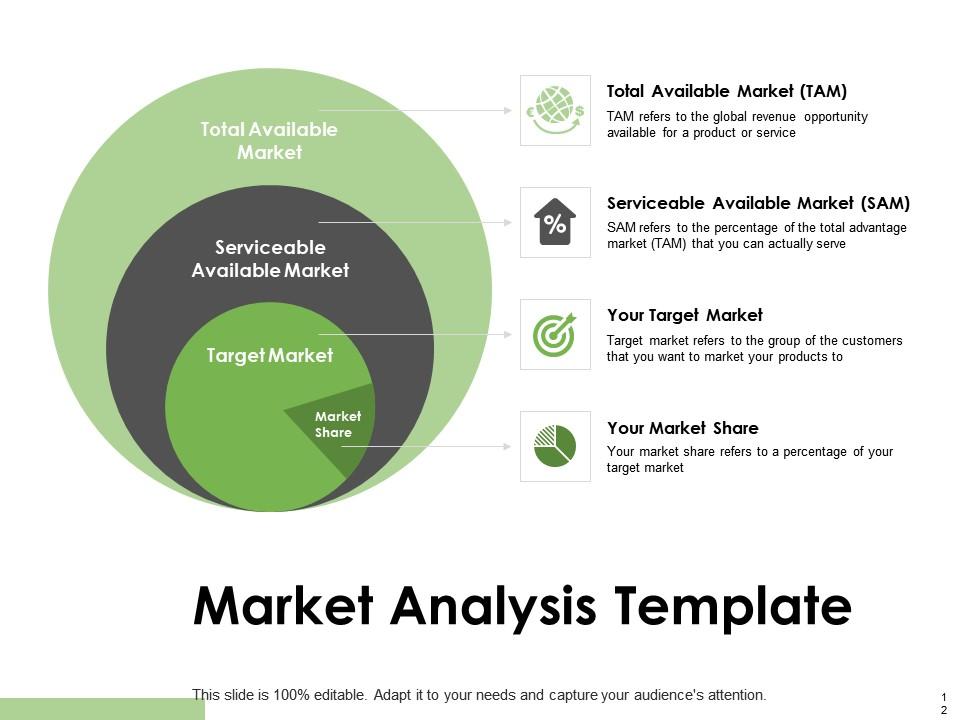
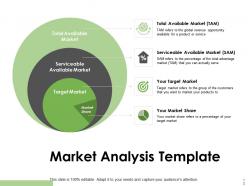
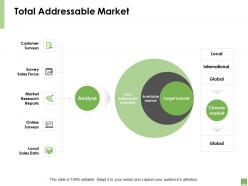
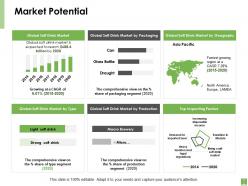
To be realistic and practical when doing feasibility analysis, the knowledge of markets is essential. In this, you need to have an idea of the size of the Total Available Market (TAM), which is the largest of these. TAM refers to the global revenue opportunity available for a product or service. Then comes the Serviceable Available Market (SAM), which is the percentage of the TAM that you can actually serve. The target market refers to the group of customers that you want to market your products to, and finally, your market share will be just a percentage of your target market. Get it now!
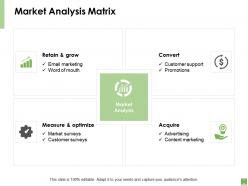
Template 5 Market Analysis Matrix in Business Feasibility Studies
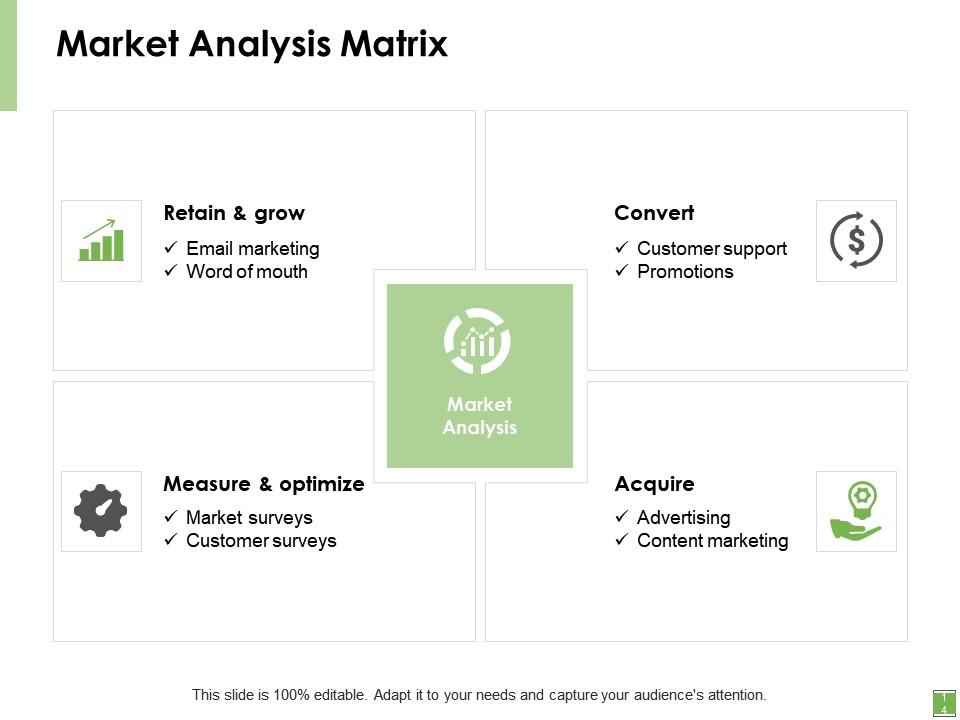
There is a way to conduct market analysis for feasibility studies and this PPT Template illustrates it perfectly. This matrix framework of market analysis comprises the steps of acquiring adequate advertising and content marketing support. This is then used to convert leads into customers and retention of the great business patrons is achieved through channels, such as email or the word-of-mouth sales. The last segment that the PPT depicts is meant to measure and optimize customer support through surveys and the like.
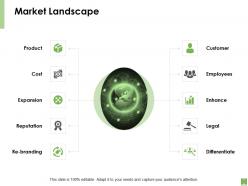
Template 6 Market Landscape in Business Analysis

In any feasibility study, the market landscape is critical, with each element deserving the complete attention of business owners and investors. Use this PPT Template to list the relevant factors that will impinge on your feasibility analysis. In this slide, since the industry is mentioned, we need to remember the following: product, cost, expansion, customer, employees, legal compliance, and product and service differentiators. Employees and customers always have to be on the list.
Template 7 Total Addressable Market in Business Feasibility Analysis
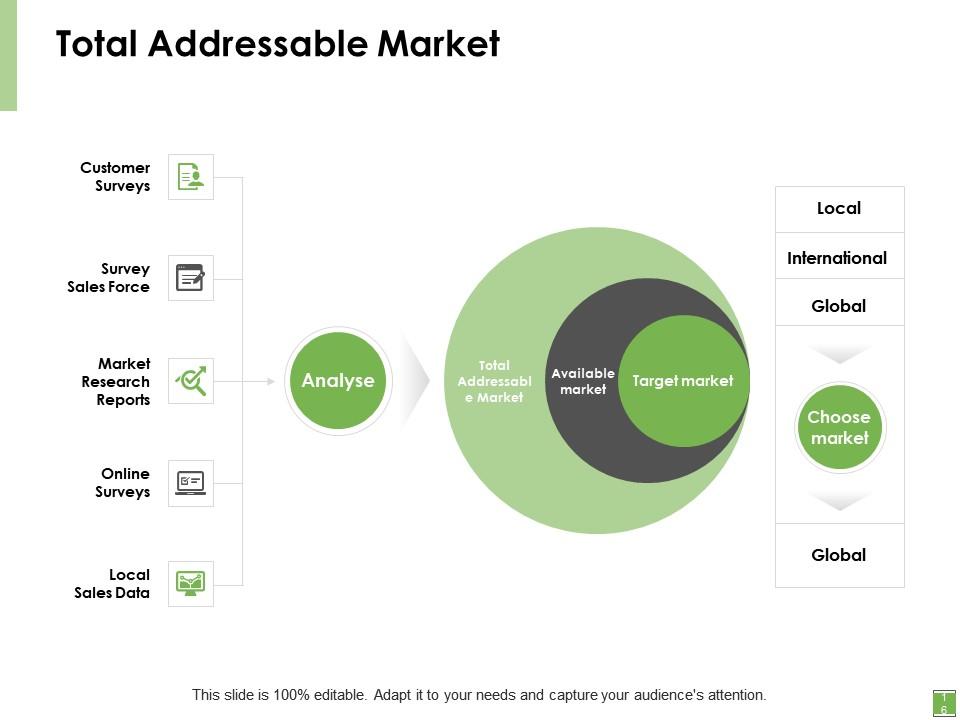
In the analysis of business feasibility, the total addressable market is a huge area that needs due diligence. This PPT Template gives us the five major tools that help evaluate the total addressable market. These tools are customer surveys, survey salesforce, market research reports, online surveys and local sales data. Each of these sheds light on a different area of the addressable market, helping a business decide its target of operations.
Template 8 Market Analysis Summary Business Feasibility
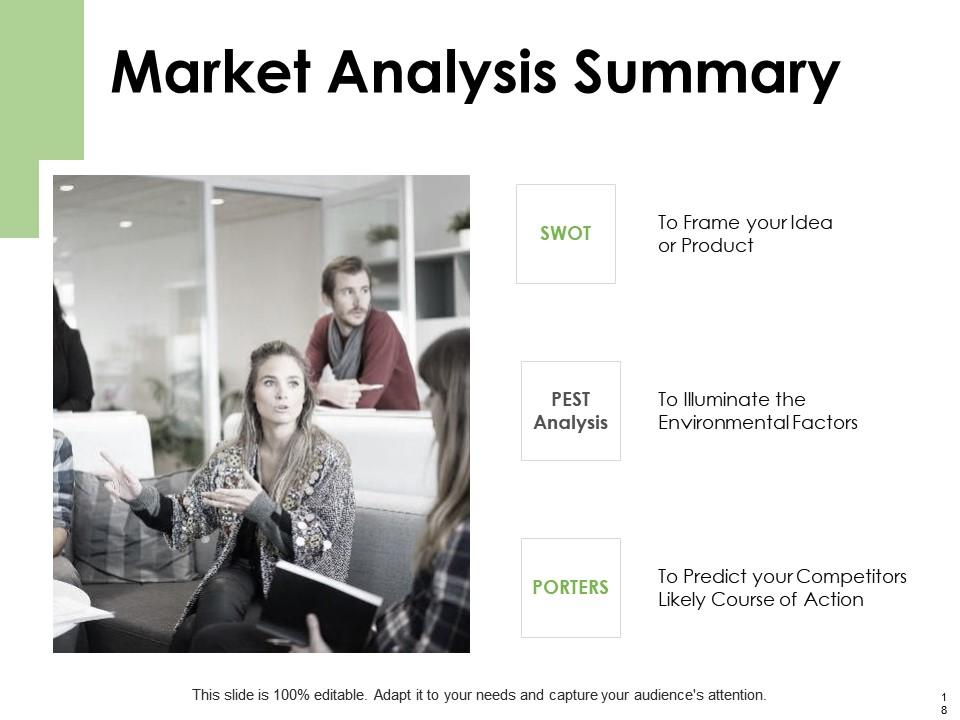
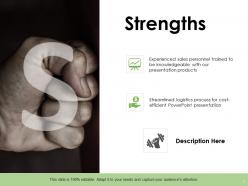
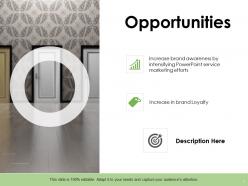
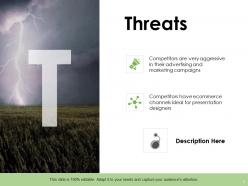
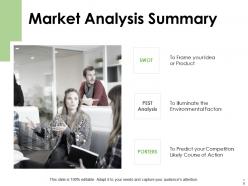
This PPT Template provides users the three most prominent and important methodologies that help aid business feasibility analysis. These are SWOT, PEST Analysis and the Porters’ Theory. Each of these is valuable in that businesses get to frame their idea or product through the Strengths, Weaknesses, Opportunities and Threats (SWOT) deployment. In PEST, owners understand the importance of environment and climate as a business-limiting factor, with Porters being used to check your competition’s likely course of action.
Template 9 Competitor Analysis in Feasibility Analysis
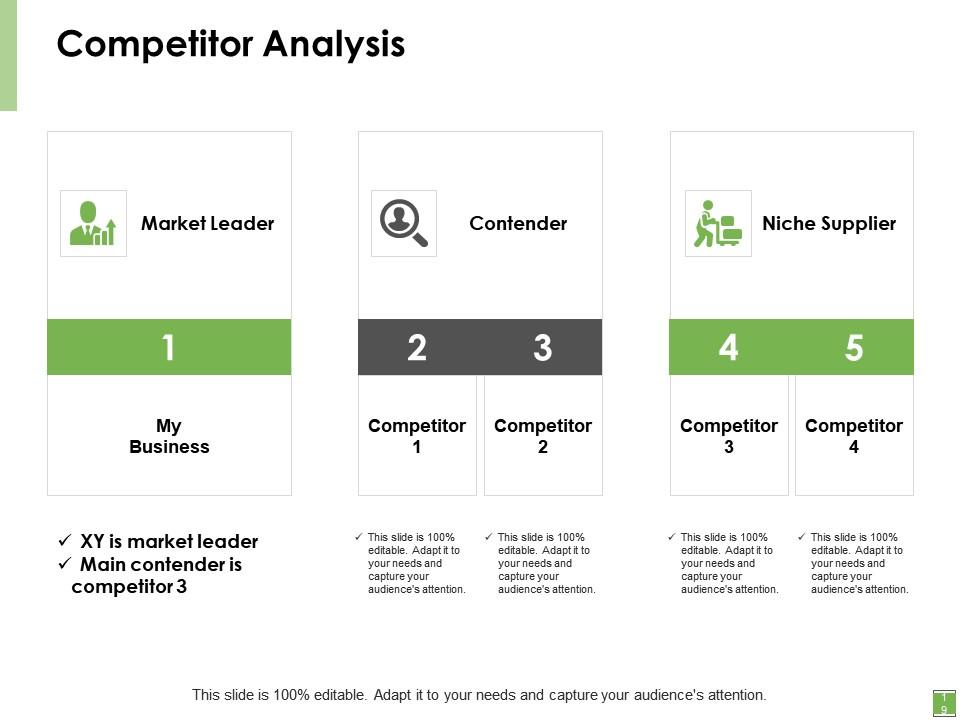
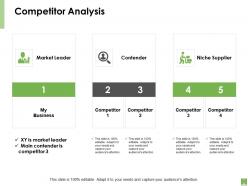
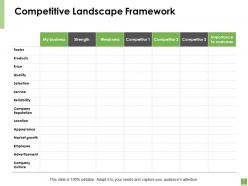
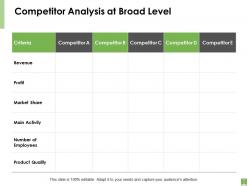
Businesses are more about handling competition well, especially at the feasibility stage, as the absolute best is never known. Use this PPT Template to study how market leaders, contenders, and niche suppliers interact to ensure a balance is maintained in the market. A low-competition market might not always be infeasible. Similarly, a high-competition market could be feasible depending on what you bring to the table, the slide demonstrates.
Template 10 Competitor Characteristics PPT Template
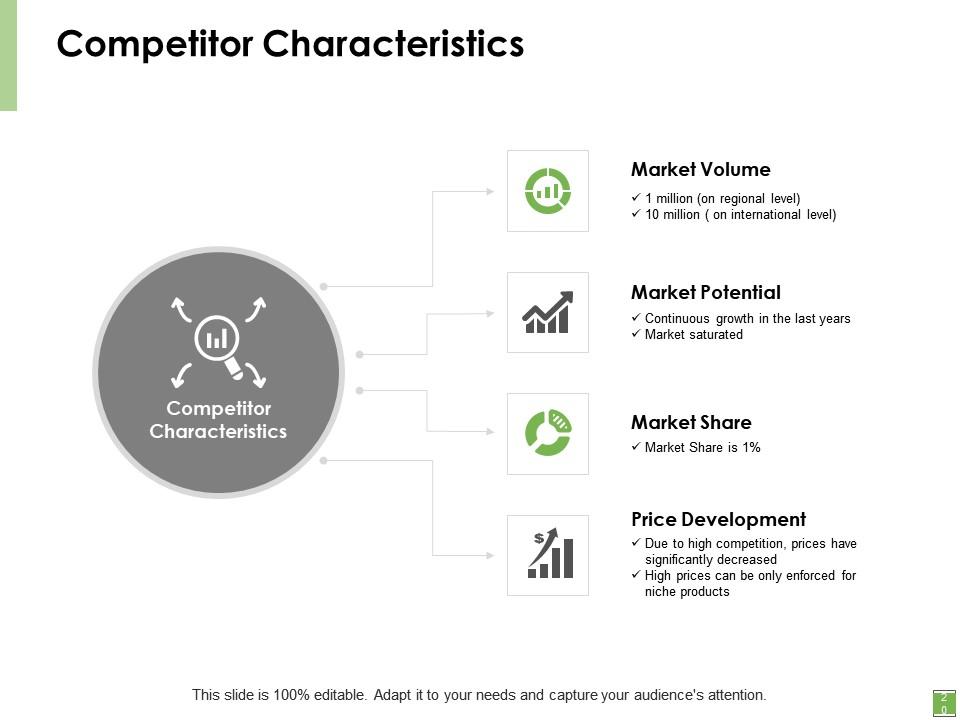
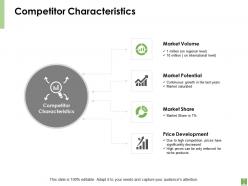
Do you want to really be the market leader? This PPT Template shows the way as we study the competitor characteristics that you must master to carve your own niche. These are understanding market volume, market potential, market share and price development. For instance, entering a saturated market might be counter-productive, and this slide helps you identify a saturated market.
*****
FEASIBILITY NON-NEGOTIABLE
All well-run businesses were mere fantasies 50 years ago. For instance, can anyone have imagined that phones would into our rockets and video calling would be the new default? Be that as it may be, it is clear that feasibility makes businesses operationally viable and successful. For instance, video calling is everywhere only because it was made affordable. Before its cost touched a low, it was infeasible. For all of this, you need feasibility reports, and no one does a better job of it than SlideTeam.
PS What are the key inputs needed for a feasibility analysis? Find the eight-pointers you will inevitably have to arrange here.
Feasibility analysis powerpoint presentation slides with all 40 slides:
Use our Feasibility Analysis Powerpoint Presentation Slides to effectively help you save your valuable time. They are readymade to fit into any presentation structure.





FAQs for Feasibility analysis
So there's basically four things you gotta check: can you actually build it with today's tech (technical), does the money make sense (economic), any legal stuff that'll bite you later, and can your team realistically run this thing day-to-day. That last one trips up so many people - they get excited about the cool tech but forget someone has to maintain it at 2am when it breaks. I'd honestly start with whatever scares you most about the project. Oh and the financial piece is usually make-or-break, so don't sugarcoat those numbers.
Honestly, market demand can totally make or break your whole feasibility study. Strong demand means you'll actually make money and the investment makes sense. But if demand sucks? Your revenue projections are gonna tank hard. I've watched so many projects fail because people skipped the basic step of checking if anyone actually wants their product - which seems crazy to me. You gotta do customer interviews and size up the competition first. Maybe send out some surveys early on to test your ideas before you get too deep into planning.
Start with NPV - seriously, if it's negative just stop there and save yourself the headache. IRR gives you the return rate, which is useful. Payback period isn't the smartest metric but honestly? Every exec I know asks about it first, so calculate it anyway for cash flow stuff. ROI works great for a quick profitability check. Break-even analysis helps you figure out your risk limits too. Oh and NPV actually shows if the project creates real value after factoring in time and risk - that's why I'd tackle it first.
So basically you want to map out what could screw up your project across all the main areas - tech stuff, money, operations, timeline. List out the nightmare scenarios first. Then figure out how likely each one is and how bad it'd mess things up. Honestly, throwing it into a risk matrix spreadsheet makes you look way more professional than you probably are. Build those mitigation costs right into your feasibility numbers though - don't just pretend problems won't happen. Pick your top 3-5 scariest risks and put actual dollar amounts on them. That way when you present to the big shots, they can't say you didn't warn them about the potential chaos.
Dude, check the legal stuff FIRST - seriously learned this the hard way on a past project. Zoning laws, environmental regs, building codes, permits... all that boring paperwork can literally kill your project overnight. I've seen amazing ideas get torched because someone skipped the regulatory research upfront. Permits alone can drag on for months (depending on your city, ugh). Your timeline and budget will thank you if you tackle this homework early instead of after you've already spent money. Trust me, it's way less painful to pivot during planning than mid-execution.
So basically, tech assessment is your sanity check - can you actually build this thing or not? First thing: does the technology even exist yet? Then figure out if your team knows how to use it. I've watched too many projects completely implode because someone went "eh, we'll sort out the technical stuff later" which is just... no. Don't do that. You've got to think about whether your systems can handle it, if it'll scale, what could go wrong. My advice? Get your engineers involved early and hammer out those requirements before you promise any deadlines.
So basically, you gotta figure out if your team can actually pull this off day-to-day. Check if your current staff has the right skills and bandwidth - honestly, this is where most projects crash and burn. Map out what operational changes you'd need first. Then look at your tech systems and workflows to see if they can handle the new stuff without everything falling apart. Oh, and don't underestimate how much people hate change. I've seen well-funded projects die because nobody wanted to adapt their routine. Really comes down to whether your infrastructure and team can realistically make it work long-term.
Honestly, stakeholders can totally make or break your whole project. Get their buy-in early or you're screwed later. They've got the real-world knowledge about constraints you'd never think of, plus they control the money, approvals, all that stuff. I've watched so many "bulletproof" projects completely tank because nobody bothered talking to key people upfront. Their feedback helps you spot risks and validate whether your assumptions actually make sense. Oh, and you'll need them as allies during implementation too. Map out who matters most and start with those conversations first.
So sensitivity analysis is basically stress-testing your project assumptions. You plug in different scenarios - what happens if costs jump 20% or demand tanks by 15%? Shows you exactly where things might break. Honestly, most initial projections are way too optimistic anyway. This tells you which variables actually matter and where you need Plan B ready to go. Instead of pitching stakeholders one perfect scenario (which never happens), you can show them a realistic range. Makes your whole assessment look way more legit and harder to poke holes in.
Honestly, the biggest trap is being way too optimistic about everything. Don't just look at best-case scenarios - Murphy's Law is real and it will find you. Talk to the actual people doing the work, not just the bosses who want it done. Those boring regulatory requirements? Yeah, don't skip them even though they're a pain. Question your own assumptions too - we're all biased whether we admit it or not. Oh, and definitely run your conclusions by someone fresh who wasn't involved from the start. They'll catch stuff you missed.
Dude, time constraints will absolutely wreck your project if you're not careful. Tight deadlines mean you'll need way more people and money - or something's gotta give on quality/scope. That whole project triangle thing is painfully real. Be super honest upfront about what you can actually pull off. Stakeholders love pushing crazy deadlines, so lay out the trade-offs for them clearly. Oh, and always build in buffer time from day one (learned this the hard way). Have that priorities conversation before you agree to anything insane.
Check the market conditions and regulatory stuff first - that can totally kill a project even if the numbers look amazing. Your team's capabilities matter a lot too, plus whether it actually fits your company culture. Timing is huge honestly (I've seen great ideas bomb because of bad timing). Also think about your risk tolerance and how it'll affect your brand reputation. Oh and make sure you actually have stakeholder support - that's critical. I'd create some kind of simple scoring system alongside your financial projections. Way better picture that way.
Honestly, benchmarking is a game changer for this stuff. Find 3-5 projects that are similar to yours and dig into what actually happened - not their rosy initial plans, but the real numbers. Look at their timelines, budgets, how many people they needed, whether they even succeeded. Way better than just winging it with your best guess, you know? I've seen too many people get burned by being overly optimistic. The failures are actually super valuable because they'll show you where things typically go wrong. You can catch potential problems early instead of getting blindsided later.
Honestly, Excel is still your best bet for most feasibility stuff - boring but true. Everyone knows how to use it and you can build pretty complex financial models. If you're doing risk analysis, @RISK and Crystal Ball are solid for Monte Carlo simulations. Tableau's great for visualizing market data, though Power BI works too. For surveys, Qualtrics is what most people use. Project management feasibility? Microsoft Project or Smartsheet will do the trick. Oh and SWOT templates are literally everywhere online - don't overthink that part. Start with whatever you already have though. Most of this work doesn't need fancy software if you're creative with Excel.
Honestly, don't skip the environmental impact stuff when you're planning your project - I've watched people get absolutely wrecked by surprise compliance costs they never saw coming. Figure out your potential environmental expenses upfront, not later when it's too late. Permits can be a nightmare if you don't know what you're dealing with. These assessments show you the real risks and actual costs before you commit. My buddy's construction project got hit with like 40% more expenses because they didn't check wetland regulations first. Start with environmental considerations baked in, or you'll hate yourself later.
-
Innovative and Colorful designs.
-
Editable templates with innovative design and color combination.
-
Excellent work done on template design and graphics.
-
Designs have enough space to add content.