Five steps of effective performance improvement plan
Try Before you Buy Download Free Sample Product
Audience
Editable
of Time
Highlight iconic achievements with our Five Steps Of Effective Performance Improvement Plan. Get folks aware of great human endeavors.
People who downloaded this PowerPoint presentation also viewed the following :
Content of this Powerpoint Presentation
Description:
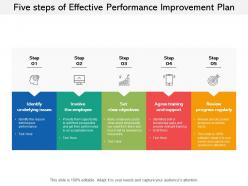
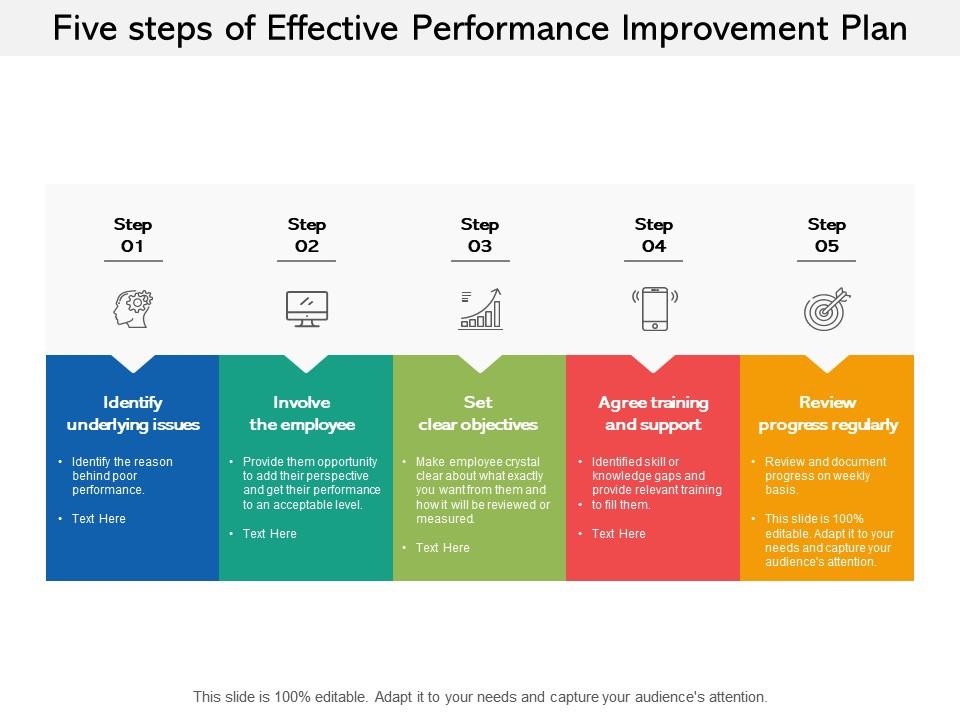
The image presents a slide for an Effective Performance Improvement Plan, divided into five key steps, each with a brief description. This template outlines a structured process designed to help improve employee performance in a workplace setting.
Step 01:Â
Identify underlying issues - This step focuses on determining the reasons behind poor performance. It suggests that one should delve into the root causes that may be impacting an employee's work.
Step 02:Â
Involve the employee - This emphasizes the importance of including employees in the process, giving them the opportunity to share their own perspective and contribute to improving their performance to an acceptable level.
Step 03:Â
Set clear objectives - This step is about setting crystal clear objectives and expectations for employees, ensuring they understand what is expected of them and how their performance will be reviewed and measured.
Step 04:Â
Agree training and support - Here, the plan is to identify any skill or knowledge gaps the employee may have and then provide the necessary training and support to fill those gaps.
Step 05:Â
Review progress regularly - This final step involves a commitment to review and document the employee's progress on a regular basis.
Use Cases:
Below I have outlined seven potential industries where such a Performance Improvement Plan could be relevant.
1. Human Resources:
Use: To enhance employee performance and productivity
Presenter: HR Manager
Audience: Company management and HR team
2. Sales:
Use: To improve sales strategies and team performance
Presenter: Sales Director
Audience: Sales team and associates
3. Healthcare:
Use: To ensure the consistent delivery of high-quality patient care
Presenter: Medical Director or Healthcare Administrator
Audience: Doctors, Nurses, and other healthcare staff
4. Education:
Use: To advance teaching strategies and educator effectiveness
Presenter: Principal or Academic Coordinator
Audience: Teaching staff and faculty
5. Technology:
Use: To optimize project development cycles and software quality
Presenter: CTO or Project Manager
Audience: IT professionals and developers
6. Manufacturing:
Use: To increase productivity and reduce defect rates
Presenter: Plant Manager or Operations Director
Audience: Line supervisors and production workers
7. Customer Service:
Use: To improve customer satisfaction and service delivery
Presenter: Customer Service Manager
Audience: Customer service representatives and support staff
Five steps of effective performance improvement plan with all 5 slides:
Convey ideas cordially with our Five Steps Of Effective Performance Improvement Plan. They ensure you can avoid being harsh.
FAQs for Five steps of effective
Okay so you need five key things: specific examples of what's going wrong (not vague stuff), measurable goals they can actually hit, concrete steps to get there, and a realistic timeline - usually 30-90 days depending on the issues. Also schedule regular check-ins so they're not flying blind. Oh, and don't forget to mention what support you're giving them - training, mentoring, whatever. I've seen managers mess this up by making it sound like a punishment instead of actually trying to help. Document everything though, because yeah, it might end up mattering later. The whole thing should feel like a clear roadmap, not a death trap.
Make those PIP goals super specific with actual numbers. Like "respond to client emails within 4 hours" instead of just "communicate better" - that vague stuff never works. Pick 2-3 things you can actually measure and track. Set real deadlines too. I'd probably do weekly check-ins so nobody's confused about what's expected. Oh and document everything! Make sure they totally get what success looks like before they sign anything. You don't want any "but I thought you meant..." drama later.
Oh totally get their input first - that's where most managers screw up honestly. Ask what challenges they're dealing with, what support they actually need, and how they see the performance issues. Their feedback might reveal bigger problems like crappy training or confusing expectations that you didn't even realize. Document what they say and work reasonable suggestions into the plan. Shows you're not just trying to push them out the door. Makes the whole thing way more realistic too since they know their job better than you think they do.
Connect your PIP goals directly to what the company actually needs to hit. Don't just write "improve communication skills" - that's useless. Instead, try "increase client retention by 15% through better account management." I've watched so many PIPs fail because they're totally disconnected from real business results. Start with your business objectives first, then figure out what employee behaviors would actually drive those outcomes. The performance stuff you're tracking should move the needle on your team's KPIs. Otherwise you're just doing paperwork for no reason. Makes the whole process way more meaningful for everyone involved.
Don't be vague - that's the killer mistake. Say "respond to emails in 24 hours" not "better communication." Also, realistic timelines matter. You can't expect miracles in two weeks. Here's what really bugs me though - some managers use PIPs as firing paperwork, which is honestly just mean and creates legal headaches. Document everything and check in regularly. Don't just hand it over and vanish. Be specific about what you want. Give them a real shot at success if you're gonna do this whole thing.
Figure out what's actually broken first - that's the whole game. Skill gaps? Get them training or pair them with someone good. Behavioral stuff needs clear expectations and frequent check-ins. Low productivity calls for concrete goals with real deadlines. Honestly, generic PIPs are a waste of everyone's time. Different problems need different fixes. A newbie who's drowning needs way different support than some veteran who's just checked out mentally. Document what type of help you're giving for each issue - makes your life easier later when HR starts asking questions.
For tracking progress, I'd go with a mix of hard numbers and softer feedback. Sales figures, customer scores, project deadlines met - that stuff's straightforward to measure. Then you've got the harder-to-quantify things like peer feedback or whether they're actually communicating better. Pick maybe 2-3 metrics tops though, because honestly nobody has time to track a million different data points. The trick is making sure whatever you choose connects directly to what needs fixing. Oh, and make them actually measurable - I've seen too many vague "improvement goals" that don't mean anything concrete.
Weekly check-ins work best, at least for the first month. After that you can probably stretch it to bi-weekly if they're actually improving. I've watched way too many managers ghost their employees during PIPs and then wonder why nothing changed - like, what did you expect? The person needs feedback to fix things, not complete silence until judgment day. Honestly, just put those meetings on the calendar right away when you start the whole process. Consistency matters more than you think it does.
Do it face-to-face and keep it private - this isn't about catching them off guard. Be super direct about what needs to change and set actual deadlines they can hit. Document everything (trust me on this one). The managers I've watched mess this up always get too heated or defensive, so just stick to what they're doing wrong, not who they are as a person. Walk them through what help they'll get - training, check-ins, whatever resources make sense. You're trying to help them improve, not push them out the door. Oh, and book your next meeting before you wrap up so they know you're not just writing them off.
Honestly, frame it as growth, not punishment. Most people actually appreciate the honesty once they get over the initial "oh crap" moment. Be upfront about why they're there but make it clear you're invested in helping them win. Focus on specific skills they'll build and celebrate those small victories - that stuff matters more than you'd think. Don't just dump them into it alone either. Regular check-ins are huge, and ask what they need from you. The whole point is making them feel like you genuinely want them to succeed, not like you're just building a paper trail.
First thing - ask them what support they actually think would help. Training should hit the exact gaps you found in the PIP, not just random stuff you throw at them. Technical workshops work great, or maybe pair them with someone who's crushing it in that area. Job shadowing is honestly underrated. Online courses are fine if there's a real skill gap, but make sure everything connects back to what they need to fix. Oh, and get them proper process docs if those don't exist yet - I've seen people struggle just because nobody wrote things down clearly.
Honestly, communication makes or breaks PIPs. You've gotta be super clear about what needs fixing and check in weekly - don't just dump the paperwork and vanish like most managers do. I swear, half the time people fail because they're basically playing guessing games about what "improvement" even means. Schedule those one-on-ones to talk through progress and catch problems early. Celebrate the small stuff too. The whole point is working together, not setting someone up to fail. Just stay available and let them actually talk back to you, you know?
Get your paperwork together first - specific examples of missed deadlines, quality issues, whatever the problems are. Dates and details matter here. HR's gonna want proof you tried coaching them informally before going nuclear with a PIP. Also grab their job description, performance standards, previous reviews. Basically anything that shows what was expected vs what actually happened. Keep it factual, not "I think Sarah has a bad attitude" type stuff. Honestly, PIPs are such a pain but the documentation part is crucial. Start collecting everything now if you haven't already - you'll thank yourself later.
Track how many people actually hit their PIP goals vs. don't - that's your main number. But also look at retention rates, team productivity, engagement scores before/after. Honestly the data can be pretty brutal sometimes. See how long it takes folks to turn things around and if the changes actually last. Oh and definitely survey both managers and employees about the whole process afterward. Their feedback tells you way more than numbers alone - like whether your PIPs are genuinely helping people improve or just stressing everyone out.
Look, document absolutely everything - that's your safety net if things get messy. Performance issues need to be on record before you even start the PIP. Make the goals realistic and measurable, give them fair timelines. Honestly, I've seen too many companies get burned because they didn't apply the same standards to everyone. Check your employee handbook first though - some places have specific rules you've gotta follow. Every meeting, every conversation, write it down. You really don't want to be scrambling for proof later if they lawyer up.
No Reviews