


Performance improvement strategy powerpoint presentation slides




Try Before you Buy Download Free Sample Product
 Impress Your
 Audience
 100%
100% Editable
 Save Hours
 of Time


Employee performance reviews are an easy way to ensure you and your employee are on the same page. So, our team of dedicated designers have created this performance improvement strategy PowerPoint Presentation slides to fulfill all your important business needs. Our performance improvement Presentation deck highlights the various crucial aspects of performance improvement such as improvement goals, actions and observations, resources, progress checkpoints, performance improvement strategies, etc. Performance improvement plans are tools employers can use to identify areas of inadequate employee performance. This performance improvement PPT template can also help to establish a path that an employee can follow to boost their ability to meet expected performance standards. A plan's goal is to enable an employee to reach his best performance level, which is key to any business reaching optimum performance. Download this performance improvement PPT design to identify other areas of performance where employees may be weak and where training could help to manage and improve performance outcomes. Fulfill your cherished dreams with our Performance Improvement Strategy Powerpoint Presentation Slides. You can help yourself to happiness.
People who downloaded this PowerPoint presentation also viewed the following :
Content of this Powerpoint Presentation
Slide 1: This slide introduces Performance Improvement STRATEGY. State Your Company Name and begin.
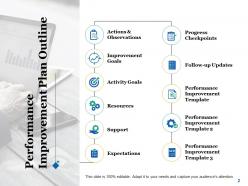
Slide 2: This slide shows Performance Improvement Plan Outline describing- Actions & Observations, Improvement Goals, Activity Goals, Resources, Support, Expectations, Progress Checkpoints, Follow-up Updates, Performance Improvement Template.
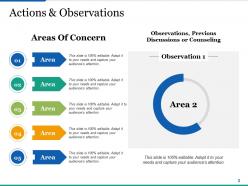
Slide 3: This slide presents Actions & Observations with donut chart and text boxes to show information.
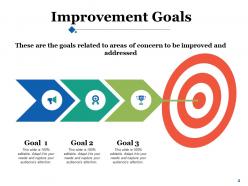
Slide 4: This slide displays Improvement Goals with related imagery and text boxes.
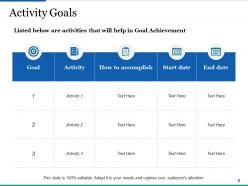
Slide 5: This slide represents Activity Goals in tabular form with categoriews as- Goal, activity, start and end date etc.
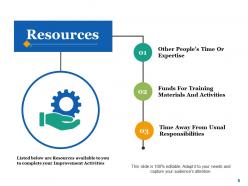
Slide 6: This slide showcases Resources describing- Other People’s Time Or Expertise, Funds For Training Materials And Activities, Time Away From Usual Responsibilities.
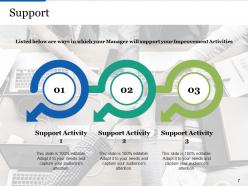
Slide 7: This slide shows Support with related imagery, diagram and additional text boxes.
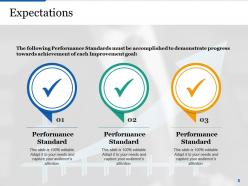
Slide 8: This slide presents Expectations with related diagram and text boxes to show information.
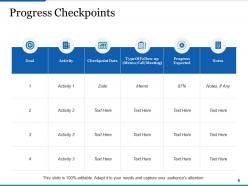
Slide 9: This slide displays Progress Checkpoints with Goal, activity, progress expected, notes etc.
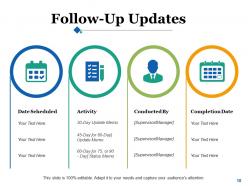
Slide 10: This slide represents Follow-Up Updates describing- Date Scheduled, Activity, Conducted By, Completion Date.
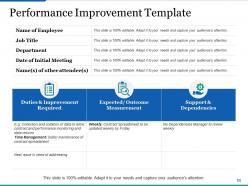
Slide 11: This slide showcases Performance Improvement Template describing- Duties and improvements required, expected outcome and support and dependencies.
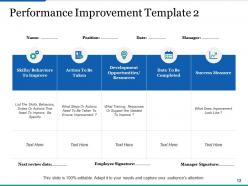
Slide 12: This slide shows Performance Improvement Template 2 with- Next review date, Employee Signature, Manager Signature, Name, Position, Date etc.
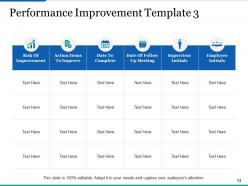
Slide 13: This slide presents Performance Improvement Template 3 with- risk of improvement, action items to improve, date to complete etc.
Slide 14: This slide shows Performance Improvement Strategy icons.
Slide 15: This slide is titled as Additional slide for moving forward.
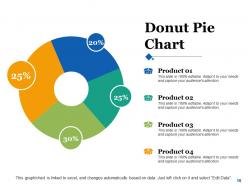
Slide 16: This slide shows Donut Pie Chart with four products comparison.
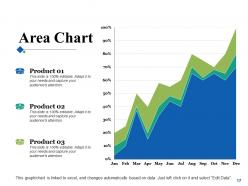
Slide 17: This slide displays Area Chart with three products comparison.
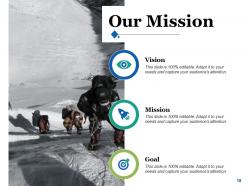
Slide 18: This slide shows Our Mission with related imagery and text.
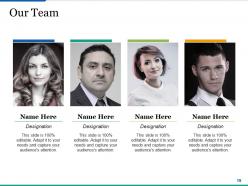
Slide 19: This is Our Team slide with names and designation.
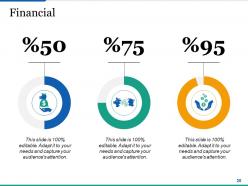
Slide 20: This is a Financial slide. Show your finance related stuff here.
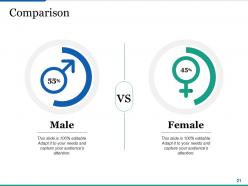
Slide 21: This is a Comparison slide to state comparison between commodities, entities etc.
Slide 22: This is Our Goal slide. Show your important goals here.
Slide 23: This is a Puzzle slide with text boxes to show information.
Slide 24: This is a Lego slide with text boxes. Show relevant information here.
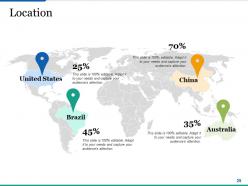
Slide 25: This is a Location slide with maps to show data related with different locations.
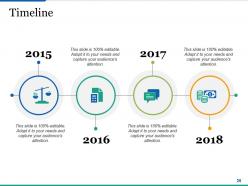
Slide 26: This is a Timeline slide. Show information related with time period here.
Slide 27: This is a Bulb Or Idea slide to state a new idea or highlight specifications, information etc.
Slide 28: This slide displays Magnifying Glass with text boxes.
Slide 29: This is a Thank you slide with address, contact numbers and email address.
Performance improvement strategy powerpoint presentation slides with all 29 slides:
Inspire acts of heroism with our Performance Improvement Strategy Powerpoint Presentation Slides. Bring out the inherent courage in individuals.

FAQs for Performance improvement strategy
Honestly, I'd start with just 3-5 metrics that actually matter for your specific situation - don't go crazy measuring everything. Look at your output stuff first: productivity, quality scores, revenue per employee. That's what really shows if things are working. Process metrics are huge too - cycle times, error rates, how you're using resources. The employee satisfaction surveys might feel fluffy but they're not. Retention rates tell you a lot. Oh, and try to mix leading indicators with lagging ones so you can catch problems before they blow up. Way easier than playing catch-up later.
Honestly, benchmarking is like getting a reality check you didn't know you needed. Compare your numbers to industry standards and you'll spot gaps that were totally invisible before. Yeah, sometimes it's humbling as hell, but that's kind of the whole point. Instead of just winging it with random targets, you can set goals based on what's actually possible in your space. Plus you'll see what the top players are doing differently - which is usually pretty eye-opening. I'd start with maybe 3-5 key metrics that matter most in your industry and find some solid benchmark data to stack up against.
Honestly, you can't build a solid strategy without knowing what your team actually thinks. Anonymous surveys work great - people will tell you the real issues when they don't have to worry about consequences. Focus groups are good too, though sometimes people hold back more in person. The feedback shows you blind spots you'd never catch otherwise, like process problems or skill gaps that seem obvious once someone points them out. When employees help shape the strategy, they're way more invested in making it work. I'd start there and use whatever you learn to figure out which performance issues to tackle first.
Honestly, it's like having x-ray vision for your business - you finally see what's really going down vs what you think is happening. Real-time tracking helps you catch bottlenecks before they blow up into full disasters. The predictive stuff is where it gets interesting though - flags problems before they even hit you. Way better than constantly putting out fires, you know? I'd say start small with whatever data you're already collecting. Set up some basic dashboards and see what patterns jump out. Let that guide where you focus next instead of guessing.
Honestly, the biggest mistake is trying to tackle everything at once. Pick like 2-3 things that'll actually make a difference. Also don't set super vague goals - "improve efficiency" means literally nothing to your team. I learned this the hard way lol. Get your metrics straight from the start because you can't manage what you don't measure. Your team knows where the real problems are way better than you do, so definitely loop them in. Quick wins first, then build from there. Trust me on this one.
Honestly, cross-functional collaboration is a game changer for performance improvement plans. Different departments will catch stuff your team totally missed - it's wild how tunnel vision works. Getting marketing, ops, whoever else involved early means they'll actually help you instead of sabotaging later (which happens more than you'd think). Don't just loop them in when you need approval though. Regular check-ins with stakeholders from other functions let you pivot fast when things aren't working. Oh, and their expertise brings perspectives you probably wouldn't consider otherwise.
Honestly, I'd do weekly or monthly check-ins depending on how fast things are moving. Track the numbers that actually matter - your KPIs, whether you're hitting deadlines, that kind of stuff. But also get feedback from your team, since they'll tell you what's really going on. Anonymous surveys work great because people are way more honest when their name isn't attached. Oh, and build in some pivot points - maybe every quarter you sit down and figure out if you need to change direction. The whole point is staying consistent with tracking but actually doing something when the data shows you're off track.
Figure out exactly where your team's struggling first - don't just throw random training at them. I've watched so many places waste money on generic workshops that nobody remembers a week later. Design something that actually fixes the specific problems you're seeing. Measure performance before and after so you know if it worked. One training session won't stick though - you need follow-up coaching to make it real. Oh, and make sure people understand this isn't just busy work. Connect it directly to why they're having issues day-to-day.
Honestly, it all starts with bosses who don't just talk about change but actually do it themselves. Give your people room to mess up without getting in trouble - that's huge. Nobody's gonna improve random stuff for no reason, so explain why it matters. Quick feedback is everything because people need to see their work paying off pretty fast. Oh, and definitely celebrate the small victories! Makes a difference when improvement doesn't feel like punishment. Pick something your team's already annoyed about fixing first - you'll get way more buy-in that way.
Your leadership approach can totally make or break performance improvements. Too hands-off and people get lost, lose steam. Come on too strong? You'll crush any innovation and team buy-in. What works is adapting to what's actually needed - be direct when setting clear goals, but let the team collaborate on solutions. I've watched autocratic managers completely destroy improvement projects because nobody felt heard (such a waste). During skill-building, coach them. High performers? Let them run with it. Crisis mode calls for being more directive though.
Look, you absolutely need these people in your corner or your whole project is toast. They're the ones who actually know what's broken and can either push your changes through or completely torpedo them. I've watched so many good plans die because someone skipped this step - it's honestly painful to see. Getting their input early helps you spot problems you'd never think of, plus they become your champions when it's time to roll things out. Map out who matters most and keep talking to them throughout the process. Don't just check the box once and disappear.
So basically, goal setting gives your team a roadmap instead of just wandering around hoping things work out. Write down 2-3 specific outcomes you want - and I mean really specific, not vague stuff like "get better." Your team needs to know exactly what success looks like day-to-day. Otherwise you get that weird situation where they think they're crushing it but you're like... eh, not really. Clear expectations kill the guessing game. You'll avoid people spinning their wheels on stuff that doesn't matter, and tracking progress becomes way easier.
Honestly, just be super transparent about what's changing and why. People hate being left in the dark - I've seen way too many initiatives crash because leadership went radio silent for months. Skip the big quarterly meetings and do frequent check-ins instead. Mix up how you communicate too: emails, team huddles, one-on-ones, whatever clicks with your team. The real game-changer though? Make sure it's not just you talking AT people. You need them talking back, telling you when stuff isn't working. Maybe start by figuring out your touchpoints for the next few weeks.
Honestly, managing remote performance is tricky but doable. Clear goals with measurable outcomes are your lifeline since you can't just walk over and see what's happening. Documentation is everything - build shared spaces where everyone can track progress. One-on-ones beat team meetings for performance stuff, trust me on that. Don't forget about time zones when you're setting deadlines (learned that the hard way). Oh, and audit your current feedback systems - half the time they're just broken office processes that nobody bothered fixing for remote work.
Dude, recognition is everything if you want people to actually stick with improving. I've seen teams fall apart without it. When someone makes progress, call it out right away - don't wait for performance reviews or whatever. Be specific too, not just "nice work." Tell them exactly what they did well. People work harder when they know you're paying attention to their effort. Honestly, I think most managers mess this up by being too generic. Set up those regular one-on-ones so you can catch the good stuff happening. Trust me, it makes a huge difference in keeping momentum going.
No Reviews