


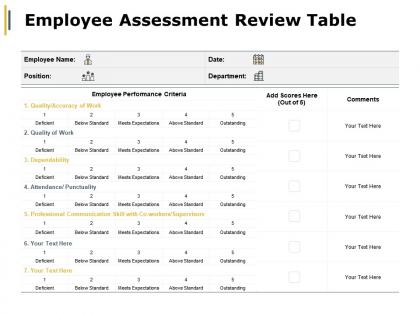
Employee assessment review table employee performance criteria ppt powerpoint presentation




Try Before you Buy Download Free Sample Product
 Impress Your
 Audience
 100%
100% Editable
 Save Hours
 of Time


Even the best ideas need to be presented well to succeed. Choose from thousands of Employee Assessment Review Table Employee Performance Criteria Ppt Powerpoint Presentation to put yours in the best possible light.
People who downloaded this PowerPoint presentation also viewed the following :
Employee assessment review table employee performance criteria ppt powerpoint presentation with all 5 slides:
For pitch perfect presentations select one of our thousands of Employee Assessment Review Table Employee Performance Criteria Ppt Powerpoint Presentation options. Perfect for any presentation need.

FAQs for Employee assessment review table employee performance criteria
So they usually look at whether you hit your goals, work quality, how productive you are, and if you play well with others. Attendance and taking initiative matter too. Different departments weight things differently though - like sales is all about the numbers while marketing cares more about campaign performance and creative stuff. Most managers throw in peer feedback and customer satisfaction scores if that applies to your job. Oh, and problem-solving ability is big everywhere. I'd honestly just ask your manager what they prioritize most since it can vary even within the same team.
Definitely standardize your rubric across similar roles - that's huge. Train managers on unconscious bias because holy shit, personal preferences sneak in everywhere. Base everything on actual documented performance, not just "feelings" or whatever happened last week. 360-degree feedback helps too since you get different viewpoints instead of just one manager's take. Oh, and keep detailed records all year long! Don't be that person scrambling to remember stuff from months ago. Quarterly check-ins work great for staying consistent with tracking progress.
Look, feedback can't wait for yearly reviews - that's way too late. I do quick weekly check-ins now, maybe 10 minutes tops. People actually crave knowing how they're doing (took me forever to figure that out). Small problems stay small when you catch them early. Your team won't feel blindsided during formal reviews either. Honestly, I used to avoid these conversations but now I see how much confidence it gives people. They know exactly where they stand instead of guessing. Try starting with just one person - you'll be surprised how well it goes.
Honestly, tech can totally transform how you handle performance reviews. I'd start with something simple like goal tracking software - way easier than digging through old emails later. The 360-degree feedback tools are actually pretty slick, they automatically collect input from everyone. Plus AI can spot skill gaps you might miss (though sometimes it gets a bit overeager with suggestions, not gonna lie). Everything stays organized digitally, which is a lifesaver during review season. Performance management platforms let you track progress in real-time too. Just pick one thing to digitize first and build from there.
Ugh, don't wing it like I did once - total disaster! You'll fall into recency bias where you only remember last week's stuff. The halo effect is sneaky too - one amazing project and suddenly you forget they struggled with deadlines all quarter. Keep notes throughout the year so you're not scrambling later trying to remember what actually happened. Never compare them to other teammates directly, that just creates drama. Also? Skip the vague "you need to improve communication" garbage. Give specific examples tied to real situations. Balance the good with areas for growth, but make it constructive, not personal.
Self-assessments are honestly pretty eye-opening. Your team members will share strengths you never knew they had, plus stuff they actually want to work on. Some people are brutal on themselves - way harsher than I'd ever be as their manager! But you'll also catch any weird disconnects between how they see their performance versus what you've observed. The best part? Use their answers to kick off your review conversation. Have them pick their top three wins and biggest struggle first - makes the whole thing way more natural than just diving into your feedback.
Honestly? Performance reviews can totally motivate people if you don't screw them up. Focus on growth instead of just pointing out what's wrong. Give specific feedback so they actually know what to improve - nobody wants those generic "needs to communicate better" comments that mean nothing. The trick is helping people see how their daily work connects to the bigger picture. I've watched so many managers kill team morale with vague, punitive reviews. But when you make it conversational and talk about next steps? People get excited about leveling up. It's weird how something everyone dreads can actually energize your team.
Ugh, this is awkward but you gotta be straight up with them about what's not working. I'd sit down and hash out a plan together - like actual goals with deadlines and what support they need. Don't sugarcoat it though. Most managers totally bail at this point, but being direct is way better for everyone involved. Give them check-ins and resources to fix things. Just make sure you're crystal clear about what happens if nothing changes. Oh, and write everything down as you go - trust me on that one. Approach it like you're solving a problem together, not punishing them.
Honestly, the trick is getting them to talk first about what they actually want. Ask what skills they're dying to learn or where they feel stuck. Way more buy-in than just dumping goals on them from corporate. Once you know their hopes, you can connect those to what the team needs - it's like puzzle pieces clicking together. Be super clear about how you'll both know if it's working. The whole thing should feel like brainstorming over coffee, not some formal review where you're just ticking boxes. Trust me, people can smell the difference.
You've gotta totally change how you evaluate people depending on their background. I made this mistake early on - completely misunderstood a few team members because I didn't get their cultural context. What seems like "no initiative" might just be them respecting hierarchy, you know? Some cultures are way more indirect with feedback and prioritize group harmony over speaking up. Eye contact, disagreeing in meetings, even how they participate - it all varies. Honestly, I wish someone had told me this sooner. Best thing you can do is just ask people directly about their communication style and adjust your assessment from there.
Honestly, most managers get thrown into performance reviews with zero training, which is wild. You'll need the basics: how to give feedback without being harsh, setting goals that aren't completely vague, and documenting stuff properly. Active listening is clutch too - half the time people just need to feel heard. Oh, and bias training! We're all biased whether we admit it or not. HR usually has resources, but you might have to push for it. Ask your manager what's available first. Trust me, winging these conversations never goes well for anyone involved.
Dude, continuous feedback is way better than those dreaded yearly reviews. You get to fix stuff right when it happens instead of waiting months to bring up some random project from March that nobody remembers. Monthly check-ins work great - keeps things fresh and your team actually improves throughout the year instead of getting blindsided once annually. Plus you can celebrate wins while they still matter! The whole "let me recall what you did wrong 8 months ago" thing is just awkward for everyone. Real-time coaching beats that ancient one-and-done approach every time.
Definitely set up a proper meeting - don't just wing it in the hallway. Start with specifics about what they're crushing, then get into the stuff that needs work. Like, actual examples though, not that useless "your communication could be better" garbage. I usually jot down a few notes beforehand so I don't blank out mid-conversation. Ask what they think too - makes it way less awkward when it's not just you talking at them. Be honest but not brutal. Oh, and always nail down concrete next steps before wrapping up so they actually know what you expect.
Honestly, don't save development planning for the end like most people do - weave it right into the whole assessment conversation. Figure out skill gaps together first, then let your employee actually help build their own development goals. Way more buy-in that way. Make the goals specific and measurable so you can track progress later. I learned this the hard way - imposing plans from the top just doesn't stick. Connect everything to your performance metrics. Oh, and set up quarterly check-ins to see how it's going and tweak things if needed. Development should feed into your next review cycle.
Honestly, skip the annual review thing and do monthly check-ins instead - way more effective. Document everything as you go rather than scrambling later. I'd set clear KPIs upfront so you're not guessing what success looks like. 360 feedback is decent but kinda tedious if I'm being real. Some performance software can automate the boring stuff and spot patterns you'd miss. The biggest thing? Stay consistent with it. You can't track improvement if you're only paying attention once in a while. Start basic then add complexity later.
No Reviews