


Five years roadmaps for student career success




Try Before you Buy Download Free Sample Product
 Impress Your
 Audience
 100%
100% Editable
 Save Hours
 of Time


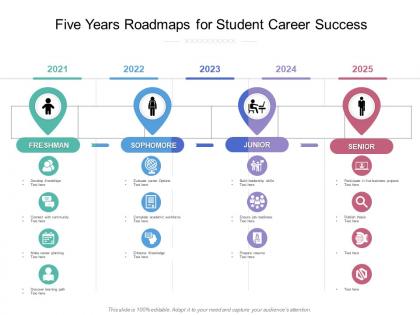
Utilize our pre build Five Years Roadmaps For Student Career Success to present your plan of action in the most effective way. Reduce the paperwork and showcase how different activities are linked to each other by incorporating this attention grabbing PowerPoint theme. This completely editable roadmap PPT layout is suitable to fit all your needs and to have a structured outline of the entire process flow using color coding. Provide guidelines to your teammates about the progression process by employing our PPT theme. Team members can easily be designated into teams by accessing the work milestones to be accomplished within the timeframe. You can easily modify the PowerPoint slide according to real time situations. Download our stunning Five Years Roadmaps For Student Career Success, and you are good to go to prove your expertise in strategic planning.
People who downloaded this PowerPoint presentation also viewed the following :
Five years roadmaps for student career success with all 2 slides:
Use our Five Years Roadmaps For Student Career Success to effectively help you save your valuable time. They are readymade to fit into any presentation structure.
FAQs for Five years roadmaps for
Honestly, you can't escape AI tools anymore - might as well learn to work with them. Digital skills and data analysis are what companies actually care about right now. Communication never goes out of style either. Problem-solving is massive since everything's getting more complicated. Here's something people overlook: emotional intelligence matters way more than you'd think. Being able to handle different personalities and roll with changes? That's gold. Oh, and critical thinking - basically being able to think through stuff logically. I'd just pick one thing that'll help your current job and spend like 30 minutes weekly on it.
Dude, networking is honestly a game changer. So many jobs get filled through connections before they even hit job boards – it's kinda crazy. People will literally recommend you for stuff or give you the heads up on opportunities. Plus you get the real tea about what companies are actually like to work for. I'd start with folks you already know, then maybe hit up some industry events or slide into LinkedIn DMs (but like, don't be weird about it). The key is building actual relationships first instead of just asking people for stuff right away. Once people know your work, they become your biggest advocates. Trust me, it makes climbing the career ladder way easier.
Honestly, mentorship is a game-changer for your career. These people have the inside scoop on office politics and can connect you to opportunities you'd never find on your own. But here's the thing - don't just slide into someone's DMs asking to be their mentor. Super weird move. Start by building actual relationships first. Ask for advice on specific projects or offer to help with something they're working on. Industry events are gold for this stuff too. Once you've got some rapport going (might take a few months, tbh), then you can ask about regular check-ins. The best mentor relationships usually just happen naturally anyway.
Dude, online courses are seriously worth it for career stuff. You can learn whatever's hot right now - AI tools, data analysis, project management - all from your couch. No commute, no pants required lol. The smart move is targeting what your specific industry actually cares about. Technical certs, leadership training, new software, whatever. Most give you certificates for LinkedIn too, which is clutch. Honestly? Just pick 1-2 skills your boss won't shut up about and start there. Don't overthink it.
Honestly, personal branding is huge in competitive fields. Everyone has similar qualifications, so you need something that makes people remember you. Share your expertise consistently - LinkedIn posts, speaking gigs, whatever fits your style. I've watched it work wonders for friends in tech and consulting. Don't try being everything to everyone though, that never works. Figure out what you want to be known for first. Then just keep sharing insights around that theme. Being authentic is way more important than being perfect. Oh, and it takes time - like, months not weeks.
Okay so first thing - write down actual specific goals with deadlines. Like "senior analyst by Q3 2025" not just "get promoted" (trust me, I wasted months being vague about this stuff). Break the big goals into smaller chunks you can actually measure. Figure out what skills you're missing to get there, then start networking with people who already have those roles. Ask your manager for feedback regularly - most people skip this part but it's huge. Oh and definitely celebrate the small wins because this stuff takes forever otherwise. Review everything quarterly to stay on track.
Dude, emotional intelligence matters SO much for moving up - honestly way more than being the smartest person in the room once you hit mid-level. You gotta read people, handle drama without losing your cool, and get buy-in from teammates who don't report to you. I've watched super talented people get stuck because they couldn't take criticism or just rubbed everyone wrong. But here's the thing - you can totally work on this stuff. Pay attention to when you're stressed and how it changes your decisions. Actually listen when people talk instead of planning what you'll say next. Trust me, it makes a huge difference once you're leading teams.
Okay so here's the deal - customize everything for each specific job. Use their exact keywords and match your experience to what they're asking for. Make your resume super scannable with clear sections. Don't just list boring duties either. Instead of "managed projects," write "led 5 cross-functional projects that boosted efficiency by 30%." Numbers are your friend here. Cover letters? Honestly they're pretty outdated, but when you need one, keep it short and explain why you want THAT exact role at THAT company. Skip the "I'm passionate about excellence" garbage - it's meaningless. Show you've researched their actual problems and how you'd fix them.
Honestly, try one of those strengths tests like CliftonStrengths - they're pretty eye-opening. Or just ask people you work with what you're actually good at. We're terrible at seeing our own talents sometimes! Pay attention to what tasks give you energy instead of making you want to hide under your desk. I literally didn't realize I was decent at breaking down complicated stuff until someone pointed it out. Once you figure out your strengths, jump on projects where you can use them. Don't forget to mention these wins during your reviews too. You've got to be strategic about it.
Honestly, remote work isn't going anywhere - it's here to stay. AI skills are becoming mandatory for pretty much everything now, which is wild but true. Companies would rather promote from within than hire externally these days. Skills matter way more than degrees finally (thank god). You'll need to keep learning constantly and probably rebrand yourself online. LinkedIn is basically required now, unfortunately. Oh and soft skills like being adaptable? Super important. I'd say start figuring out what tech is hitting your industry and get training before everyone else catches on.
Honestly, feedback is like having a GPS for your career - shows you exactly where you stand vs. where you wanna be. When people highlight your strengths, that's your ticket to promotions and bigger projects. The brutal stuff? Yeah, it sucks to hear, but that's actually where the real growth happens. I'd create a solid development plan from those critiques - proves you're not just brushing it off. Don't wait around for yearly reviews either. Have regular convos and ask pointed questions like "what would get me promotion-ready?" instead of the generic "how's it going?" approach.
Okay so career stuff - start with those free assessments like O*NET or 16Personalities to see what clicks. LinkedIn Learning has solid courses, and weirdly your library probably does career counseling (who knew, right?). Professional groups in whatever field you're eyeing are amazing for meeting people. Informational interviews work too - most folks actually enjoy talking shop about their jobs. Oh, and Coursera's decent if you need specific skills. Honestly though? Pick like 2-3 things instead of going crazy with everything at once. You'll actually make progress that way.
Honestly, volunteering and internships are amazing for getting real experience without committing to a full-time job. You can try different industries and see what clicks. The networking part is huge too - I've seen people land jobs just from connections they made while volunteering. Plus your resume will actually have substance when you're applying places. Try to pick stuff that matches where you want your career to go though. Don't just grab whatever's available. Oh, and you'll get great stories for interviews! Way better than trying to explain why you have zero experience.
Dude, you've gotta keep learning new stuff or you'll get left behind. Skills expire way faster now - like, what landed you a job five years ago? Probably useless today. AI alone has flipped everything upside down in barely a year and a half. Online courses, podcasts, random side projects - whatever works. Formal school isn't the only way anymore. Pick one thing you're weak at in your current job and just start there this month. I know it sounds exhausting but honestly? It's better than scrambling when your industry changes overnight.
So definitely use the STAR method - situation, task, action, result. Makes your stories way less rambly. Numbers are your friend here. "Boosted sales 30%" hits different than "made sales better." Trust me on this one. I'd prep like 3-4 good STAR examples that show off different skills. You don't want to be sitting there going "umm" while trying to think of something decent. The format feels weird at first but interviewers eat it up since it's actually organized. Oh and you can totally adapt the same story for different questions if you're smart about it.
-
Excellent Designs.
-
Awesomely designed templates, Easy to understand.
-
Easily Editable.
-
Use of different colors is good. It's simple and attractive.
-
Excellent design and quick turnaround.