

Método FMEA para avaliação de um processo Powerpoint Apresentação Slides




Try Before you Buy Download Free Sample Product
 Impress Your
Audience
 100%
Editable
 Save Hours
of Time


FMEA é uma técnica que várias empresas usam para detectar falhas ou defeitos de produtos. É um processo qualitativo e altamente estruturado utilizado por analistas que buscam reduzir as chances de falhas por meio da detecção de problemas e suas possíveis repercussões. Aqui está um modelo projetado profissionalmente sobre o Método FMEA para avaliação de um processo que é útil para empresas especificamente produtoras que desejam identificar riscos potenciais em relação a riscos ocupacionais e de saúde e riscos ambientais. Isso também pode ser usado pelas empresas que acabaram de iniciar um novo processo e desejam identificar as possíveis ameaças ou falhas no processo. O deck cobriu os detalhes relacionados a seções como visão geral do processo FMEA, estrutura e responsabilidades da equipe, possíveis efeitos e causa da falha; Classificação SOD de gravidade, ocorrência e detecção, avaliação de risco, etapas de ação para eliminar a falha, cálculos do número de prioridade de risco RPN, etc. A apresentação abrange etapas críticas envolvidas no processo, análise do processo, modos de falha fundamentais, efeitos potenciais da falha modo, pontuação FMEA sobre SOD, etc. Personalize este modelo 100% editável agora.
People who downloaded this PowerPoint presentation also viewed the following :
Conteúdo desta apresentação em Powerpoint
Slide 1 : Este slide apresenta o método FMEA para avaliar um processo. Indique o nome da sua empresa e comece.
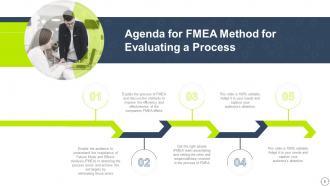
Slide 2 : Este slide apresenta a Agenda da apresentação.
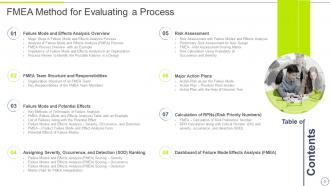
Slide 3 : Este slide apresenta o índice da apresentação.
Slide 4 : Este slide descreve o título de cinco tópicos que serão abordados a seguir no modelo.
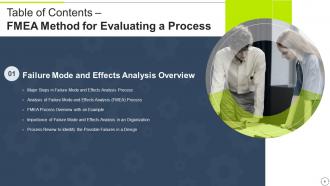
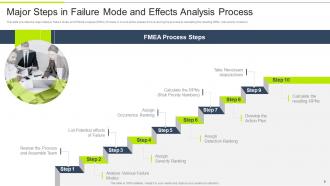
Slide 5 : Este slide fornece as principais etapas do processo de análise de modos e efeitos de falha (FMEA).
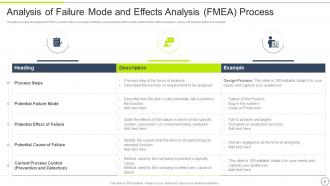
Slide 6 : O slide fornece a análise do processo FMEA, que abrange os principais títulos (etapas do processo, modo de falha, efeito da falha, causa da falha, etc.).
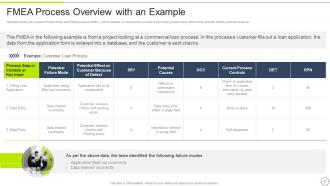
Slide 7 : Este slide explica o processo de Modo de Falha e Análise de Efeitos (FMEA), com um exemplo de processo de empréstimo ao cliente.
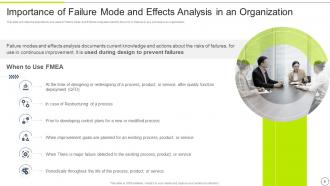
Slide 8 : Este slide mostra a importância e os usos do modo de falha e análise de efeitos para identificar o erro ou falhas em qualquer processo em uma organização.
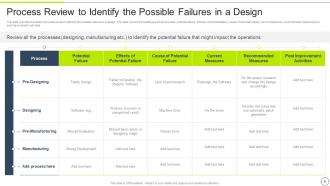
Slide 9 : Este slide fornece a tabela de revisão do processo para identificar as possíveis falhas em um projeto.
Slide 10 : Este slide descreve o título de dois tópicos que serão abordados a seguir no modelo.
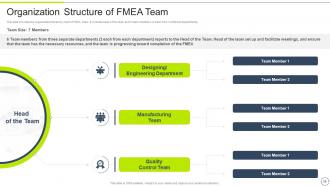
Slide 11 : Este slide fornece o organograma/hierarquia da Equipe FMEA.
Slide 12 : Este slide fornece a imagem, nome, designação e principais funções e responsabilidades dos membros da equipe FMEA.
Slide 13 : Este slide descreve o título de seis tópicos que serão abordados a seguir no modelo.
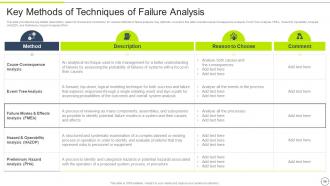
Slide 14 : Este slide fornece os principais detalhes (descrição, razão para escolher e comentários) para vários métodos de análise de falhas.
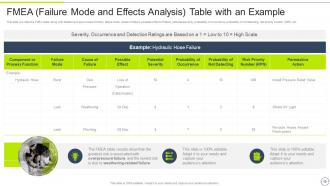
Slide 15 : Este slide fornece a tabela FMEA juntamente com detalhes como função do processo, modo de falha, causa da falha, etc.
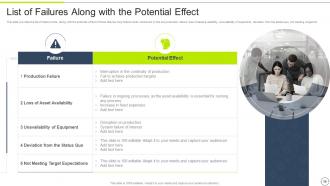
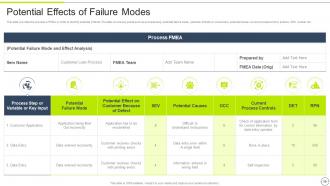
Slide 16 : Este slide fornece a lista do modo de falha, juntamente com o efeito potencial dessas falhas.
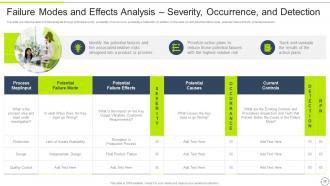
Slide 17 : Este slide fornece a tabela de análise de efeito por meio de gravidade potencial, probabilidade de ocorrência, probabilidade de detecção.
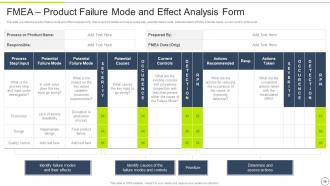
Slide 18 : Este slide fornece o modo de falha do produto e o formulário de análise de efeito, que cobre os detalhes como etapa do processo, modo de falha potencial, etc.
Slide 19 : Este slide apresenta o processo de FMEA para identificar efeitos potenciais.
Slide 20 : Este slide descreve o título de quatro tópicos que serão abordados a seguir no modelo.
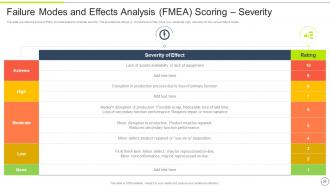
Slide 21 : Este slide fornece a pontuação do processo FMEA com base na gravidade potencial.
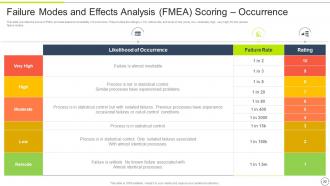
Slide 22 : Este slide fornece a pontuação do processo FMEA com base na probabilidade de ocorrência.
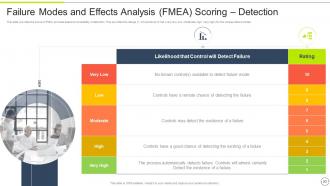
Slide 23 : Este slide fornece a pontuação do processo FMEA com base na probabilidade de detecção.
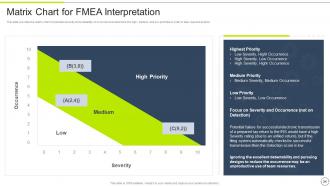
Slide 24 : Este slide fornece o gráfico de matriz de gravidade potencial e probabilidade de ocorrência para determinar as prioridades alta, média e baixa.
Slide 25 : Este slide descreve o título de quatro tópicos que serão abordados a seguir no modelo.
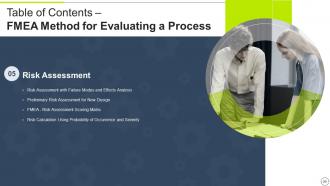
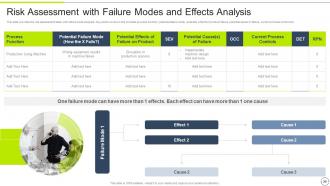
Slide 26 : Este slide fornece a tabela de avaliação de risco com análise do modo de falha.
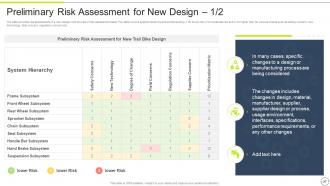
Slide 27 : O slide fornece avaliação de risco de um novo projeto com a ajuda da tabela de avaliação de risco.
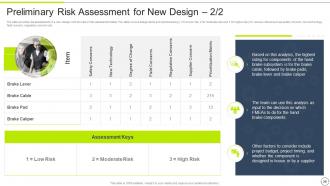
Slide 28 : O slide fornece avaliação de risco de um novo projeto com a ajuda da tabela de avaliação de risco.
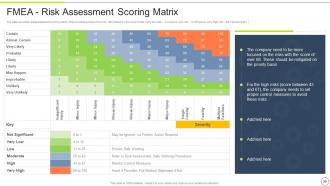
Slide 29 : O slide fornece a matriz de pontuação de avaliação de risco, que fornece pontuações (de 0 a 100) com base no nível de risco.
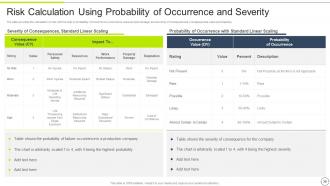
Slide 30 : O slide fornece o cálculo do risco com a ajuda da probabilidade de ocorrência e gravidade das consequências.
Slide 31 : Este slide descreve o título de três tópicos que serão abordados a seguir no modelo.
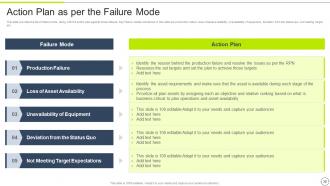
Slide 32 : Este slide fornece a lista do modo de falha, juntamente com o plano de ação contra essas falhas.
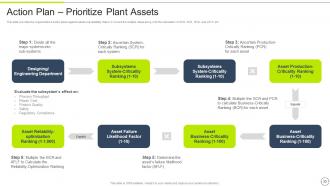
Slide 33 : Este slide apresenta os planos de ação da organização contra falha de indisponibilidade de ativos.
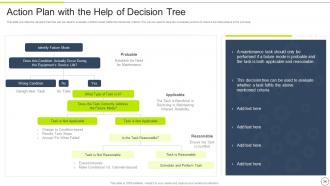
Slide 34 : Este slide fornece a árvore de decisão que pode ser usada para avaliar se uma tarefa atende aos critérios mencionados.
Slide 35 : Este slide descreve o título de dois tópicos que serão abordados a seguir no modelo.
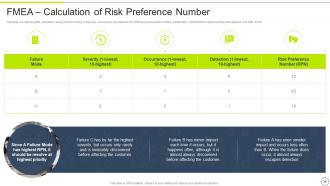
Slide 36 : Este slide fornece o cálculo de RPN junto com a classificação de gravidade, ocorrência e detecção para diferentes modos de falha.
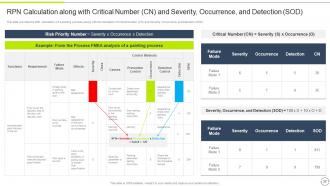
Slide 37 : Este slide fornece o cálculo do RPN (de um processo de pintura) junto com o cálculo do Número Crítico (CN) e Gravidade, Ocorrência, etc.
Slide 38 : Este slide descreve o título de três tópicos que serão abordados a seguir no modelo.
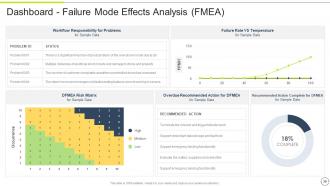
Slide 39 : Este slide apresenta o Painel - Análise de Efeitos do Modo de Falha (FMEA).
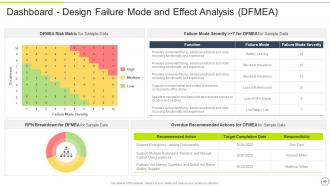
Slide 40 : Este slide exibe o Painel - Modo de Falha de Projeto e Análise de Efeito (DFMEA).
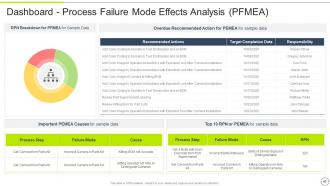
Slide 41 : Este slide ilustra o Painel - Análise de Efeitos do Modo de Falha do Processo (PFMEA).
Slide 42 : Este slide exibe ícones para o método FMEA para avaliar um processo.
Slide 43 : Este slide é intitulado como Slides adicionais para avançar.
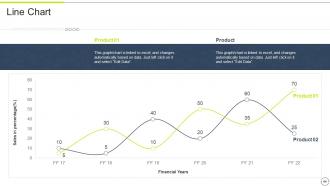
Slide 44 : Este slide descreve o gráfico de linha com a comparação de dois produtos.
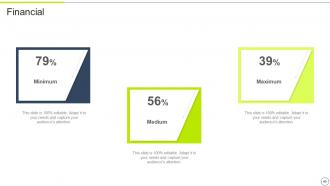
Slide 45 : Este é um slide financeiro. Mostre suas coisas relacionadas a finanças aqui.
Slide 46 : Este slide apresenta o Roteiro com caixas de texto adicionais.
Slide 47 : Este é um slide da linha do tempo. Mostrar dados relacionados a intervalos de tempo aqui.
Slide 48 : Este slide contém um quebra-cabeça com ícones e texto relacionados.
Slide 49 : Este slide mostra Post It Notes. Poste suas notas importantes aqui.
Slide 50 : Este slide mostra o diagrama de Venn com caixas de texto.
Slide 51 : Este é um slide de agradecimento com endereço, números de contato e endereço de e-mail.
Método FMEA para avaliar um processo Apresentação em Powerpoint Slides com todos os 56 slides:
Use nosso método FMEA para avaliar um processo de slides de apresentação do Powerpoint para ajudá-lo efetivamente a economizar seu valioso tempo. Eles estão prontos para caber em qualquer estrutura de apresentação.









FAQs for FMEA Method For Evaluating A Process
FMEA is basically about catching problems before they bite you in the ass. You go through your process step-by-step asking "what could break here?" then rate how bad it'd be and how likely. Honestly, it's kind of like being a professional worrier - but in a good way! The math gives you priority numbers so you know which fires to put out first. Most teams jump around randomly fixing stuff, but this makes you think ahead instead. I'd start with whatever process scares you most. Way cheaper than dealing with disasters later, trust me.
Don't just do FMEA once and call it done - that's where most teams screw up. Run it during concept phase first when fixes are still cheap. Then hit it again during detailed design, prototyping, and right before you launch. Honestly, I've watched so many projects get burned by treating it like a checkbox exercise. Your FMEA needs to be a living doc that grows with the product. Update it whenever you change designs or find new failure modes in testing. Oh, and build those FMEA reviews right into your project milestones from the start. Makes it way less painful later.
So Design FMEA is all about what could break in your actual product - like how parts might fail or interact badly. Process FMEA is different - it's about screwups during manufacturing. Here's how I think about it: Design FMEA asks "what if this component fails?" Process FMEA asks "what if we mess up making it?" You'll want to do Design FMEA first, way early when you're still sketching out specs. Then tackle Process FMEA later when you're planning production. Honestly, catching design issues early will save you so much more money than fixing manufacturing problems down the line. The timing really makes a huge difference in your budget.
So you'll want a 1-10 scale for each one, but make sure your whole team agrees on what the numbers actually mean first. Severity is basically how badly it screws things up for customers - 1 is "meh, whatever" and 10 is "oh shit, everything's broken." Occurrence tracks how often it happens, detection is whether you'll catch it before customers do. Getting everyone on the same page about the criteria is honestly such a pain. Start with whatever rating system your company already uses (or just grab some industry standards) and tweak from there.
Dude, you absolutely need different people in your FMEA sessions. Manufacturing folks will spot assembly problems that designers totally miss. Field service brings the real-world failure data - that stuff's gold. Quality people catch different issues too. I've watched so many FMEAs tank because one department tried doing it alone. Honestly, some of my best sessions got a bit chaotic with everyone talking over each other, but that's where the good insights come from. Get design, manufacturing, quality, and field service in the room. Different perspectives = catching failure modes you'd never think of solo.
Honestly, just start with Excel or Google Sheets - you've already got them and they work fine for basic FMEA stuff. If you end up doing this constantly, then maybe look at the fancy dedicated tools like ReliaSoft XFMEA or Minitab, but they're expensive as hell. Some bigger companies use those all-in-one quality platforms like MasterControl that have FMEA built in. But here's the thing - the software really doesn't matter that much. Getting your team actually engaged and having a solid process is way more important. I'd honestly rather see a good FMEA done on a napkin than a crappy one in expensive software.
Yeah totally! Just switch from thinking about broken parts to broken processes. Map out your whole service flow - like hotel check-in - then figure out what could go sideways at each step. System crash? Undertrained staff? You still rate the same stuff: how bad it'd be for customers, chances it'll happen, how fast you'd catch it. Honestly beats scrambling after things blow up. My friend used this at her restaurant and caught so many potential disasters before they hit customers. Way better than playing defense all the time.
Don't be too vague with your failure modes - get specific. Make sure someone on your team actually understands the process deeply, otherwise you're just shooting in the dark. I've sat through way too many meetings where people are basically making stuff up. Honestly, perfect scoring isn't worth getting stuck for weeks analyzing everything to death. Better to move forward with decent numbers than never finish at all. Set clear boundaries upfront so you don't scope creep into oblivion. Most importantly, actually do something with your results - FMEAs that collect dust are pointless.
Update your FMEA at major milestones - design reviews, prototype testing, before production. Also revisit it when you make big design changes or find new failure modes during testing. Too many teams just file it away after the first draft, which is honestly pretty useless. Monthly reviews work great for active projects. The whole point is that it should grow as you learn more about your system. Got unexpected issues during validation? User feedback revealing problems you missed? Perfect time to go back and update your risk rankings. Oh, and set actual calendar reminders or you'll forget.
Look, FMEA is basically your get-out-of-jail-free card with regulators. You're showing them upfront that you've mapped out what could go wrong and how you'll handle it. Super critical in medical devices, automotive, that kind of stuff. When auditors show up (and they always do), you can wave your FMEA documentation and be like "see, we thought this through already." Just don't be one of those companies that does it once and forgets about it. Keep the thing updated or it's useless. Honestly saved my team's ass more times than I can count during compliance reviews.
Use standardized templates and fill everything out completely - don't get lazy with the columns. Document the real failure modes, not just generic BS that could apply to anything. I've seen way too many worthless FMEAs because people rushed through them! Your RPN calculations need backup reasoning so someone else can actually understand why you rated things that way. Oh, and this is huge - assign clear owners and deadlines for action items. Otherwise you'll spend hours creating something that just sits on a shelf collecting dust. Specific detection methods and occurrence data are what separate good FMEAs from paperwork exercises.
FMEA works best when you treat it like a living process, not just paperwork. Instead of doing it once and forgetting about it, pull it out every quarter - trust me on this. You're building up this knowledge bank of what goes wrong and why, which actually gets referenced (unlike most documentation that sits there unused). The cool part is how it forces you to rank risks, so you're not wasting time on minor stuff when bigger problems need attention. Oh, and the action tracking piece? That's what separates teams that actually improve from ones that just talk about it. Makes your failure analysis way more strategic.
Go after the highest RPN scores first - those are your biggest headaches. Most companies use 100-125 as the cutoff, though honestly every place does it different which drives me nuts. Don't just chase numbers though. High severity stuff needs attention even if you can detect it well, since catastrophic failures suck regardless. Quick wins that drop occurrence or boost detection are your friend. Tackle those before the monster preventive actions that take forever. Set up your action plan with owners and deadlines, then recalculate RPNs after you're done to see if you actually moved the needle.
So aerospace FMEA is basically FMEA on steroids - way stricter because people die if stuff goes wrong. You're dealing with FAA requirements and insane documentation needs. Automotive cares more about cost vs quality for mass production. Honestly, aerospace will make you want to pull your hair out sometimes with all the review cycles. Your severity scores get brutal, detection methods are crazy rigorous. Different stakeholders keep wanting changes too. Oh and figure out which industry standards you're working with first - that's like half the battle right there.
Don't treat FMEA like some one-and-done thing you check off. Build quarterly reviews right into your schedule where teams actually dig into real field data and new problems they've found. Honestly, I've watched way too many of these just sit there rotting in SharePoint folders. Track your risk numbers over time and actually celebrate when your fixes work! Here's what really matters though - give specific people ownership so someone's butt is on the line for keeping it fresh. Oh, and stick those FMEA reviews directly on your project milestone calendars. Makes it way harder to skip.
-
I was confident and well prepared for my presentation for the first time ever. With SlideTeam’s templates, I could deliver one of my best presentations. Will be coming back for more!
-
I was never satisfied with my own presentation design but SlideTeam has solved that problem for me. Thank you SlideTeam!