

Functional Level Strategy Powerpoint Presentation Slides Strategy CD




Try Before you Buy Download Free Sample Product
 Impress Your
 Audience
 100%
100% Editable
 Save Hours
 of Time


Discover the power of functional level strategy with our comprehensive Functional Level Strategy PowerPoint presentation. This insightful deck explores the delegation of tasks and objectives to different departments to support corporate and business level strategies. With a focus on key functional areas like marketing, finance, operations, and human resources, this strategy aims to achieve goals such as increasing brand awareness, enhancing customer loyalty, boosting sales, and improving revenue. The Corporate Level Strategy presentation covers various strategy types, including social, augmented, direct, relationship, person, and service marketing, and addresses common challenges businesses face along with effective solutions. It also highlights the importance of capital raising, budgeting, supply chain optimization, and product innovation. Furthermore, the Customer Satisfaction deck emphasizes the significance of employee recruitment, training, and development plans for successful implementation. By employing functional level strategies, businesses can expect improved productivity, enhanced customer satisfaction, reduced costs, and decreased employee turnover. Download our fully editable template to unlock the potential of functional level strategies and drive your organizations success.
People who downloaded this PowerPoint presentation also viewed the following :
Content of this Powerpoint Presentation
Slide 1: This slide introduces Functional Level Strategy. State your company name and begin.
Slide 2: This is an Agenda slide. State your agendas here.
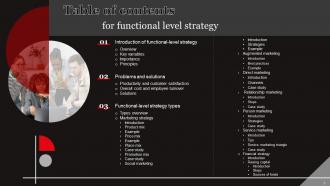
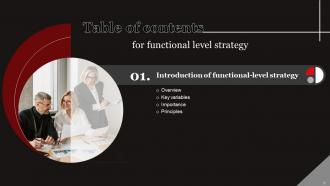
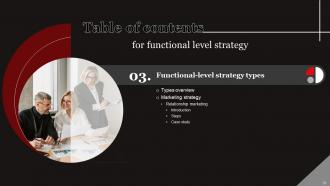
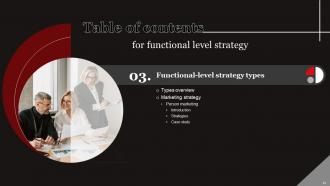
Slide 3: This slide shows Table of Content for the presentation.
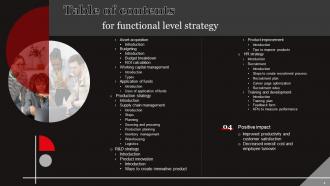
Slide 4: This slide continues showing Table of Content for the presentation.
Slide 5: This slide shows title for topics that are to be covered next in the template.
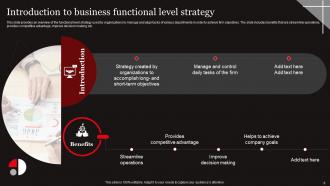
Slide 6: This slide presents an overview of the functional level strategy used by organizations.
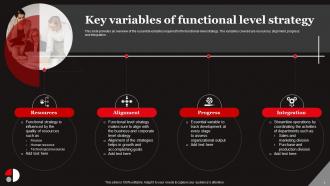
Slide 7: This slide provides an overview of the essential variables required for the functional-level strategy.
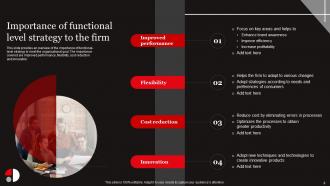
Slide 8: This slide presents an overview of the importance of functional-level strategy to meet the organizational goal.
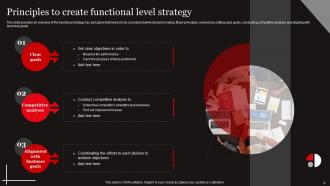
Slide 9: This slide presents an overview of the functional strategy key principles that needs to be considered while decision making.
Slide 10: This slide shows title for topics that are to be covered next in the template.
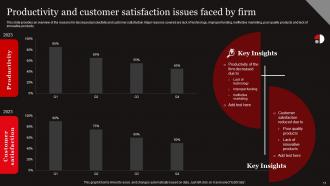
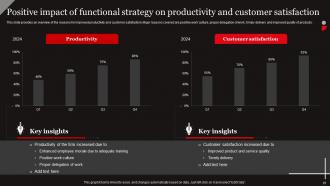
Slide 11: This slide displays an overview of the issues decreased productivity and customer satisfaction with the help of bar graphs.
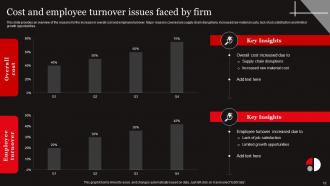
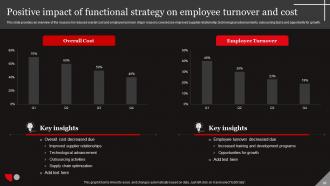
Slide 12: This slide provides an overview of the reasons for the increase in overall cost and employee turnover with the help of bar graphs.
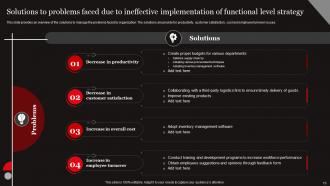
Slide 13: This slide describes an overview of the solutions to manage the problems faced by organization.
Slide 14: This slide shows title for topics that are to be covered next in the template.
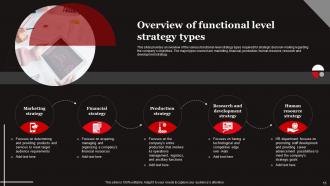
Slide 15: This slide presents an overview of the various functional-level strategy types required for strategic decision-making regarding the company’s objectives.
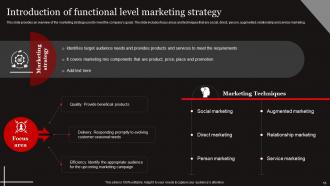
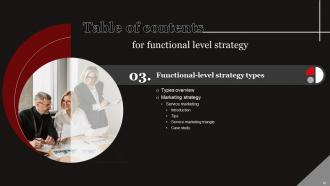
Slide 16: This slide presents marketing strategy used to meet the company’s goals.
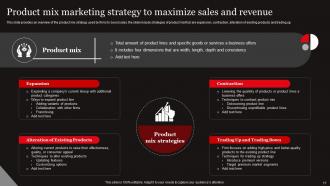
Slide 17: This slide describes product mix strategy used by firms to boost sales.
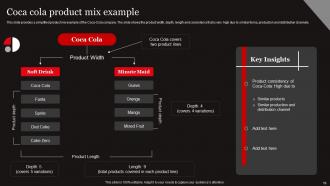
Slide 18: This slide showcases a simplified product mix example of the Coca-Cola company.
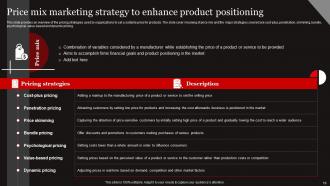
Slide 19: This slide presents an overview of the pricing strategies used by organizations to set a suitable price for products.
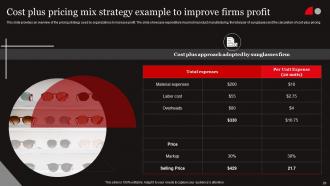
Slide 20: This slide displays the pricing strategy used by organizations to increase profit.
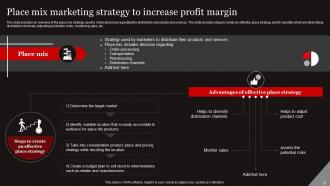
Slide 21: This slide presents place mix strategy used to make decisions regarding the distribution of products and services.
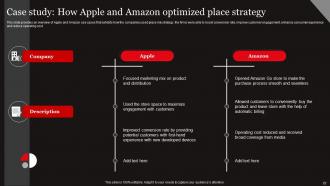
Slide 22: This slide contains an overview of Apple and Amazon use cases that exhibits how the companies used place mix strategy.
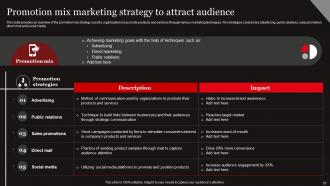
Slide 23: This slide presents promotion mix strategy used by organizations to promote products and services through various marketing techniques.
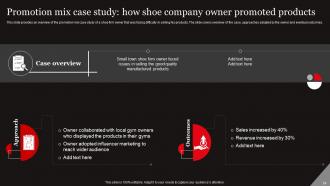
Slide 24: This slide displays promotion mix case study of a shoe firm owner that was facing difficulty in selling his products.
Slide 25: This slide shows title for topics that are to be covered next in the template.
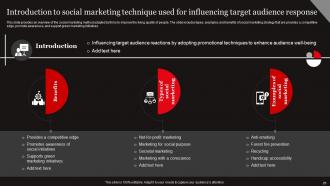
Slide 26: This slide describes social marketing method adopted by firms to improve the living quality of people.
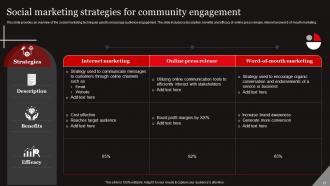
Slide 27: This slide presents social marketing techniques used to encourage audience engagement.
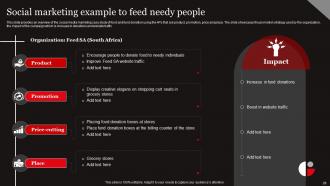
Slide 28: This slide presents social media marketing case study of food and fund donation using the 4Ps that are product, promotion, price and place.
Slide 29: This slide shows title for topics that are to be covered next in the template.
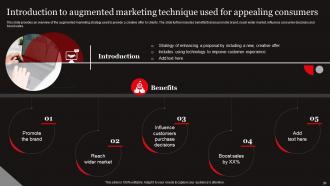
Slide 30: This slide contains augmented marketing strategy used to provide a creative offer to clients.
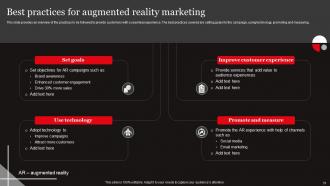
Slide 31: This slide displays an overview of the practices to be followed to provide customers with a seamless experience.
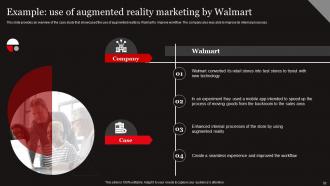
Slide 32: This slide describes case study that showcased the use of augmented reality by Walmart to improve workflow.
Slide 33: This slide shows title for topics that are to be covered next in the template.
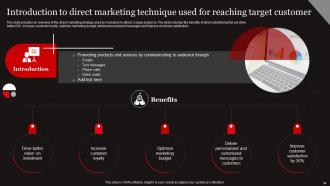
Slide 34: This slide provides direct marketing strategy used by marketers to attract a large audience.
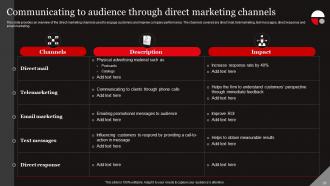
Slide 35: This slide provides direct marketing channels used to engage customers and improve company performance.
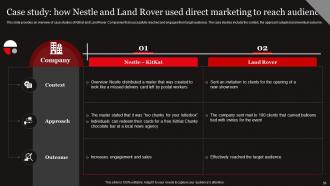
Slide 36: This slide describes case studies of KitKat and Land Rover Companies that successfully reached and engages their target audience.
Slide 37: This slide shows title for topics that are to be covered next in the template.
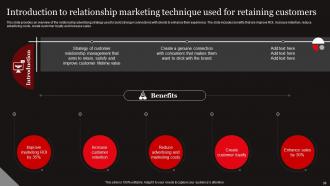
Slide 38: This slide describes relationship advertising strategy used to build stronger connections with clients to enhance their experience.
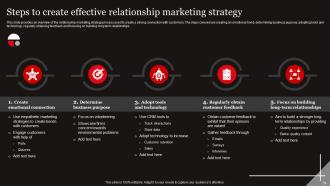
Slide 39: This slide presepnts relationship marketing strategy process used to create a strong connection with customers.
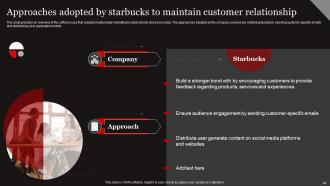
Slide 40: This slide contains an overview of the coffee house that adopted relationship marketing to retain clients and boost sales.
Slide 41: This slide shows title for topics that are to be covered next in the template.
Slide 42: This slide provides individual marketing strategy adopted by businesses to enhance the client experience.
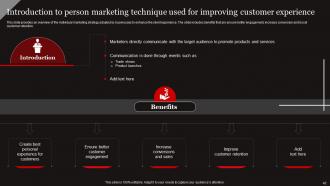
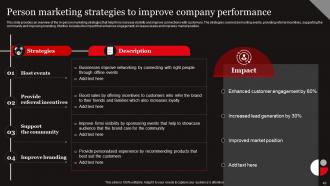
Slide 43: This slide describes in-person marketing strategies that help firms increase visibility and improve connections with customers.
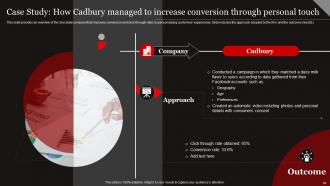
Slide 44: This slide presents a case study of the chocolate company that improves conversion and click-through rates by personalizing customers’ experiences.
Slide 45: This slide shows title for topics that are to be covered next in the template.
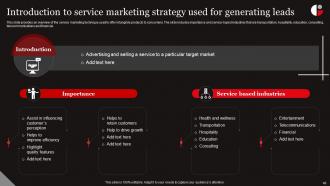
Slide 46: This slide presents an overview of the service marketing technique used to offer intangible products to consumers.
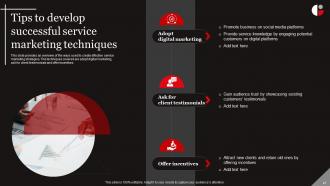
Slide 47: This slide describes ways used to create effective service marketing strategies.
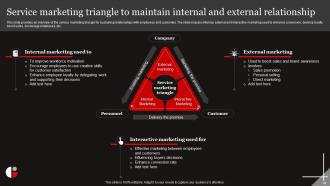
Slide 48: This slide depicts an overview of the service marketing triangle for sustaining relationships with employees and customers.
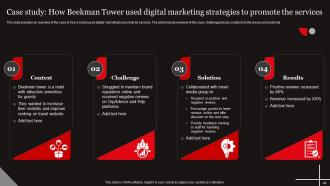
Slide 49: This slide describes the case of a brand using digital marketing to promote its services.
Slide 50: This slide shows title for topics that are to be covered next in the template.
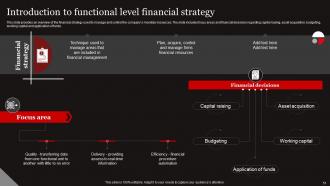
Slide 51: This slide presents financial strategy used to manage and control the company’s monetary resources.
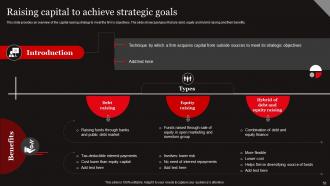
Slide 52: This slide presents capital raising strategy to meet the firm’s objectives.
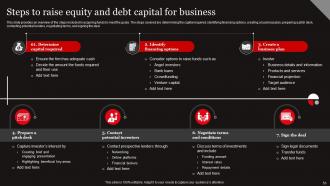
Slide 53: This slide describes steps included in acquiring funds to meet the goals.
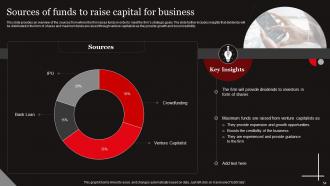
Slide 54: This slide describes sources from where the firm raises funds in order to meet the firm’s strategic goals.
Slide 55: This slide shows title for topics that are to be covered next in the template.
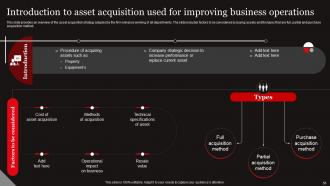
Slide 56: This slide presents an asset acquisition strategy adopted by the firm enhance working of all departments.
Slide 57: This slide shows title for topics that are to be covered next in the template.
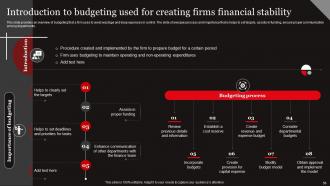
Slide 58: This slide presents an overview of budgeting that a firm uses to avoid wastage and keep expenses in control.
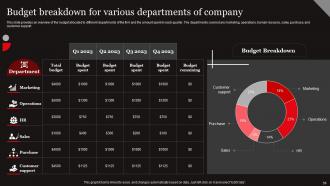
Slide 59: This slide contains an overview of the budget allocated to different departments of the firm and the amount spent in each quarter with data in percentage.
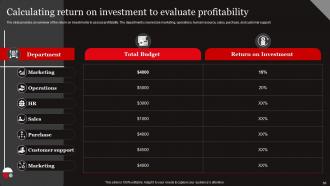
Slide 60: The slide depicts return on investments to assess profitability.
Slide 61: This slide shows title for topics that are to be covered next in the template.
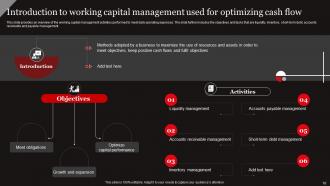
Slide 62: This slide presents working capital management activities performed to meet daily operating expenses.
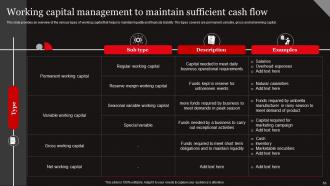
Slide 63: This slide showcases various types of working capital that helps to maintain liquidity and financial stability.
Slide 64: This slide shows title for topics that are to be covered next in the template.
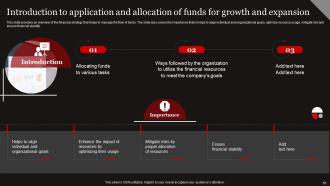
Slide 65: This slide presents financial strategy that helps to manage the flow of funds.
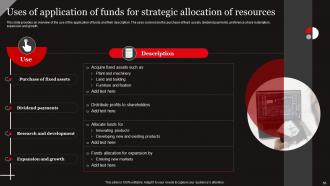
Slide 66: This slide describes use of the application of funds and their description.
Slide 67: This slide shows title for topics that are to be covered next in the template.
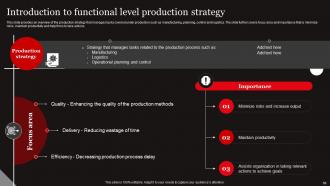
Slide 68: This slide contains production strategy that manages tasks covered under production such as manufacturing, planning, control and logistics.
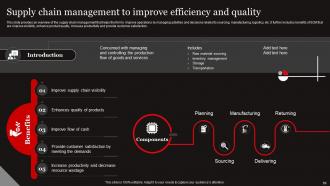
Slide 69: This slide displays supply chain management that helps the firm to improve operations by managing activities and decisions.
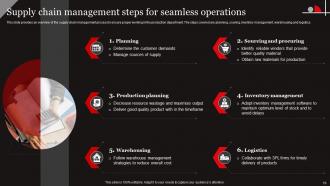
Slide 70: This slide presents an overview of the supply chain management process to ensure proper working in the production department.
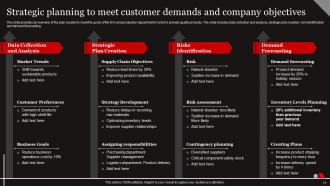
Slide 71: This slide describes plan created to meet the goals of the firm and production department in order to provide quality products.
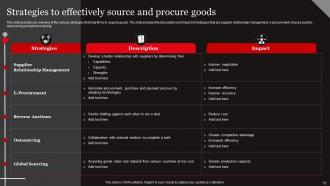
Slide 72: This slide presents various strategies that help firms to acquire goods.
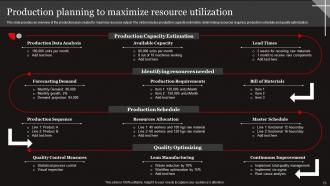
Slide 73: This slide showcases production plan created to maximize resource output.
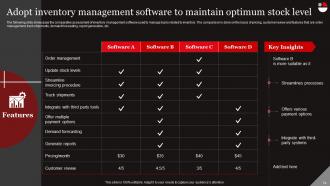
Slide 74: This slide showcases the comparative assessment of inventory management software used to manage tasks related to inventory.
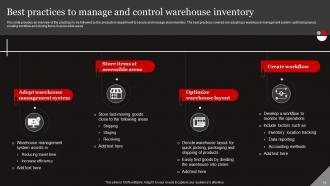
Slide 75: This slide describes practices to be followed by the production department to secure and manage store inventory.
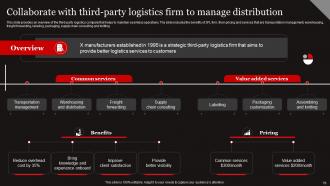
Slide 76: This slide presents an overview of the third-party logistics company that helps to maintain seamless operations.
Slide 77: This slide shows title for topics that are to be covered next in the template.
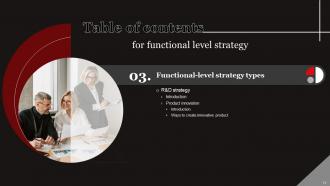
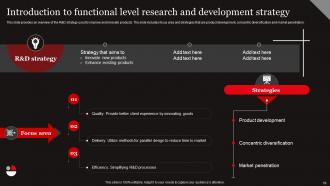
Slide 78: This slide presents R&D strategy used to improve and innovate products.
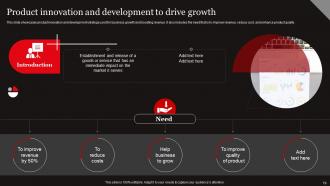
Slide 79: This slide showcases product innovation and development strategy used for business growth and boosting revenue.
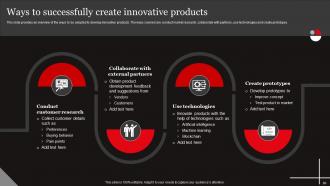
Slide 80: This slide provides ways to be adopted to develop innovative products.
Slide 81: This slide shows title for topics that are to be covered next in the template.
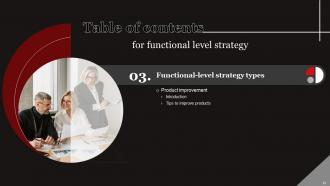
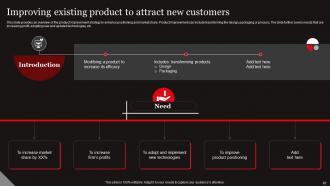
Slide 82: This slide presents product improvement strategy to enhance positioning and market share.
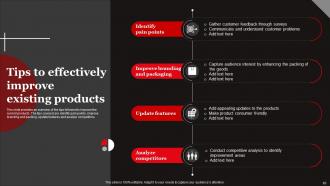
Slide 83: This slide describes tips followed to improve the current products.
Slide 84: This slide shows title for topics that are to be covered next in the template.
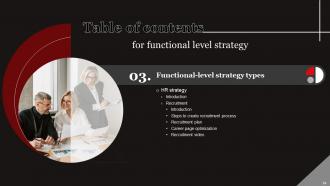
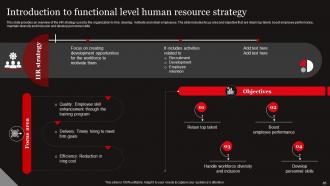
Slide 85: This slide presents HR strategy used by the organization to hire, develop, motivate and retain employees.
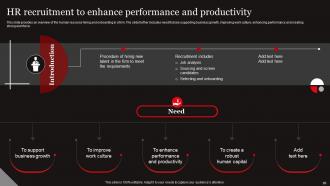
Slide 86: This slide describes overview of human resource hiring and onboarding in a firm.
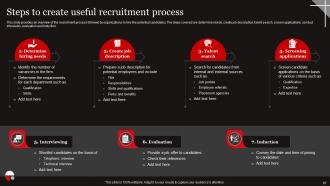
Slide 87: This slide describes recruitment process followed by organizations to hire the potential candidates.
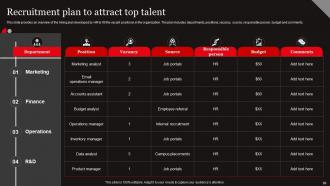
Slide 88: This slide presents hiring plan developed by HR to fill the vacant positions in the organization.
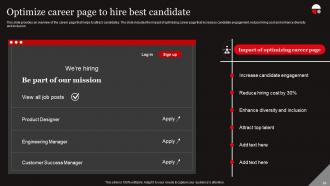
Slide 89: This slide provides an overview of the career page that helps to attract candidates.
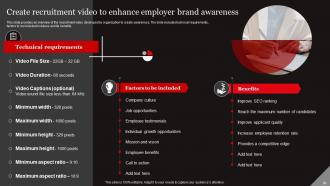
Slide 90: This slide presents recruitment video developed by organization to create awareness.
Slide 91: This slide shows title for topics that are to be covered next in the template.
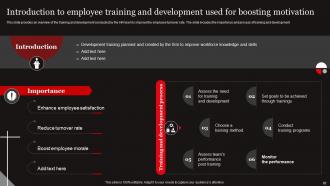
Slide 92: This slide describes training and development conducted by the HR team to improve the employee turnover rate.
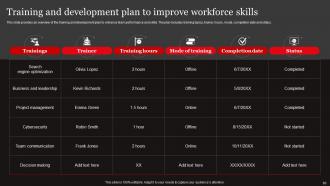
Slide 93: This slide depicts training and development plan to enhance team performance and skills.
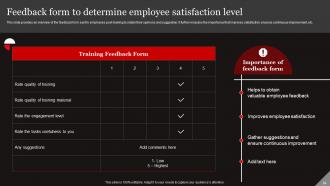
Slide 94: This slide presents feedback form sent to employees post-training to obtain their opinions and suggestion.
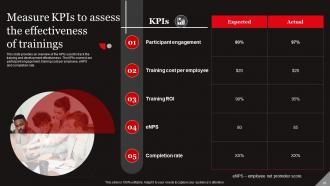
Slide 95: This slide displays KPI used to track the training and development effectiveness.
Slide 96: This slide shows title for topics that are to be covered next in the template.
Slide 97: This slide describes reasons for improved productivity and customer satisfaction.
Slide 98: This slide presents reasons for reduced overall cost and employee turnover with the help of bar graphs.
Slide 99: This slide shows all the icons included in the presentation.
Slide 100: This slide is titled as Additional Slides for moving forward.
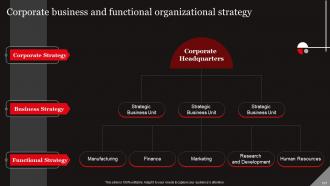
Slide 101: This slide displays corporate business and functional organizational strategy.
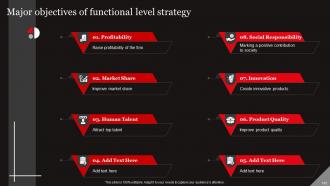
Slide 102: This slide displays major objectives of functional level strategy.
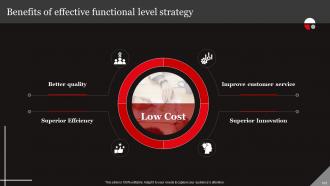
Slide 103: This slide depicts benefits of effective functional level strategy.
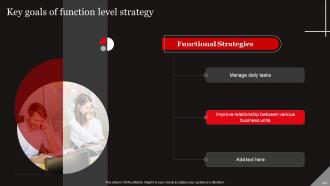
Slide 104: This slide depicts Key goals of function level strategy.
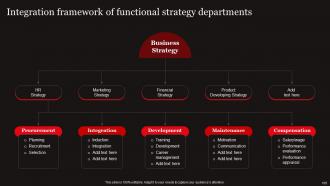
Slide 105: This slide describes integration framework of functional strategy departments.
Slide 106: This slide presents Roadmap with additional textboxes.
Slide 107: This is a Timeline slide. Show data related to time intervals here.
Slide 108: This slide provides 30 60 90 Days Plan with text boxes.
Slide 109: This is About Us slide to show company specifications etc.
Slide 110: This is an Idea Generation slide to state a new idea or highlight information, specifications etc.
Slide 111: This slide depicts Venn diagram with text boxes.
Slide 112: This slide shows Our mission ,vision & goal.
Slide 113: This is Our Target slide. State your targets here.
Slide 114: This is a Thank You slide with address, contact numbers and email address.
Functional Level Strategy Powerpoint Presentation Slides Strategy CD with all 119 slides:
Use our Functional Level Strategy Powerpoint Presentation Slides Strategy CD to effectively help you save your valuable time. They are readymade to fit into any presentation structure.







FAQs for Functional Level Strategy Powerpoint Presentation
So basically you need four main things: how you split up resources, what metrics you're tracking, streamlining your processes, and developing your team's skills. Here's the thing though - most people totally blow it by not connecting their department goals to the bigger company strategy. Map out how your team's work actually supports the main business objectives first. Then figure out what KPIs make sense, clean up your processes so they're not a mess, and plan how you'll build up the capabilities you need. Oh and make sure your function isn't just doing its own thing in isolation. The different departments should actually help each other out.
So corporate strategy is like the big picture stuff - what industries you want to jump into, buying out competitors, going global, that kind of thing. Then functional strategy is where each department actually makes it happen. Like if corporate decides "we're going premium" (which honestly sounds way easier than it is), marketing has to figure out the messaging, operations redoes their quality processes, and finance tweaks pricing. Corporate picks where you're headed. Functional teams figure out how to actually get there without everything falling apart.
So basically, functional strategies help you optimize how each department actually gets stuff done. Map out your current processes first - you'll spot the biggest bottlenecks pretty fast. Then streamline everything by cutting redundancies and aligning daily tasks with your bigger goals. Marketing might automate lead qualification, operations could redesign workflows, whatever. Each function should focus on their strengths and ditch the busy work that doesn't add real value. Honestly, most companies have way more waste than they realize. The whole point is making things run way smoother without all the friction.
Look, you've gotta align your marketing with whatever your main strategy is. Cost leadership? Push value and low prices everywhere. Going for differentiation? Show off what makes you special and charge premium. Honestly, I see teams mess this up constantly - they'll run ads that completely go against their strategy and wonder why nothing works. Super frustrating to watch. Map out what you're doing now versus your actual priorities. You'll probably find some weird conflicts. Once you spot them, fix the messaging and channels so everything points the same direction. Consistency is everything here.
Honestly, HR is way more important for functional strategy than most people realize. They're the ones who actually figure out what skills you're missing and how to get the right people in place. Plus they design compensation packages that'll attract talent where you need it most - which trust me, makes a huge difference. When you're doing strategic changes, someone has to deal with all the reorganizing and cultural stuff that comes with it. That's typically them. Short version? Don't wait until the end to bring HR into your planning. Loop them in early or you'll just have some nice strategy document that nobody can actually execute.
So basically, tech adoption gives you a competitive edge by speeding things up and making your operations way more efficient. Plus competitors can't easily copy what you've built. Like when you add AI to marketing or automate supply chains - you're creating real advantages, not just minor improvements. The trick is picking tech that actually fits your goals instead of chasing whatever's trendy (guilty of that myself sometimes). I'd start with whatever functional areas bring the most customer value, then find tech solutions for those first. Makes way more sense than doing it backwards.
Really depends on what your team does, but mix efficiency stuff with quality and impact. Operations should track cycle time and defect rates. Marketing needs conversion rates and customer acquisition costs. Finance - accuracy metrics plus how fast you process things. HR gets tricky with retention rates and time-to-fill (those numbers can seriously make your whole department look bad). Pick like 3-5 metrics that actually connect to what your team's supposed to accomplish and bigger company goals. Start with figuring out what "winning" looks like for you guys, then just build measurements around that. Don't overthink it.
Look, you'll want to revisit your strategy when big stuff hits - new competitors rolling in, customers wanting different things, or some tech shaking up your whole industry. Obviously if your current plan just isn't working anymore, that's a red flag too. Internal shake-ups count as well. New leadership, department restructures, whatever. I honestly think you should check in on it every year anyway because everything changes so damn fast now. Oh, and definitely when you're moving into new markets - that's huge. Start with figuring out what's actually working versus what's dead weight, then match everything up with your bigger business goals.
Okay so basically you don't want to put all your eggs in one basket, right? Diversify your supply chain, cross-train people across departments, build backup systems for critical stuff. I know it sounds super paranoid but trust me - having backups for your backups actually pays off. Each department (HR, operations, finance, whatever) should have their own risk plans that work together. The trick is making sure they're not just doing their own thing in isolation. Map out your biggest risks in each area first and see where they connect - that's where you'll spot the real vulnerabilities.
Honestly, the worst part is getting departments to stop acting like they're separate companies. Operations wants to slash every expense while marketing's pushing for huge brand campaigns - and you're stuck making both work together somehow. Budget fights get brutal because everyone thinks their strategy matters most. Different teams track completely different metrics too, which makes everything messier. What's worked for me? Get everyone in a room and actually explain how their stuff connects to the big picture. Then do regular check-ins - trust me, you'll catch problems way earlier before they blow up.
Company culture totally dictates how your teams actually get stuff done. Got a risk-averse culture? Your R&D folks will stick to safe, incremental changes instead of swinging for the fences. Collaborative cultures are great though - marketing and ops naturally sync up instead of doing their own thing. Decision-making speed varies wildly too. Some places debate every tiny detail (which drives me crazy honestly), while others just move fast and course-correct later. Bottom line: your functional strategies need to match how people naturally work there, or you'll be swimming upstream trying to force things that just don't fit.
First thing - your strategy has to match what the company's actually trying to do overall. Get your team involved in planning this stuff because honestly, they'll catch things you won't. I've watched so many strategies crash because executives just locked themselves in a room and figured it out alone. Focus on what your department does best, but fix the obvious weak spots too. Set KPIs that actually mean something - not just numbers that look good in meetings. Oh, and build in time to check how it's going regularly so you can change course. Keep it simple, make sure everyone knows what they're supposed to do.
Look, customer feedback is basically your strategy compass - it shows you exactly what's broken and what's working. Slow delivery complaints? Time for your ops team to fix those logistics workflows. Quality issues keep popping up? Your manufacturing focus shifts to better quality control. Marketing gets reshaped by how people actually respond to your messaging (not how you think they should). Service complaints tell you where to restructure support. The trick is actually collecting this stuff systematically and turning specific problems into real fixes instead of just... you know, acknowledging people are mad.
Dude, functional strategies are all over the map depending on your industry. Tech companies blow like 20% of revenue on R&D because innovation is everything - utilities? Maybe 2%. Manufacturing is obsessed with cutting costs and lean processes, but if you're in consulting, operations is more about how well you're using your people and delivering for clients. Healthcare marketing has to deal with all these regulations (such a pain), while consumer brands just focus on making you feel something. Honestly, the biggest mistake is copying what works somewhere else. You've got to figure out what actually drives success in your specific space.
Dude, going global totally flips your strategy on its head. You can't just copy-paste what works domestically - trust me, I've seen that crash and burn. Different countries mean different rules, your supply chain becomes this tangled mess, and don't even get me started on trying to make your marketing land across cultures. HR suddenly deals with international hiring laws they've never touched. Finance is juggling currencies and tax codes that change by country. Honestly, the whole thing requires way more flexibility than most companies think. I'd start by looking at what you're doing now and asking which parts assume everyone operates like your home market.
-
They had the topic I was looking for in a readymade presentation…helped me meet my deadline.
-
Visually stunning presentation, love the content.