


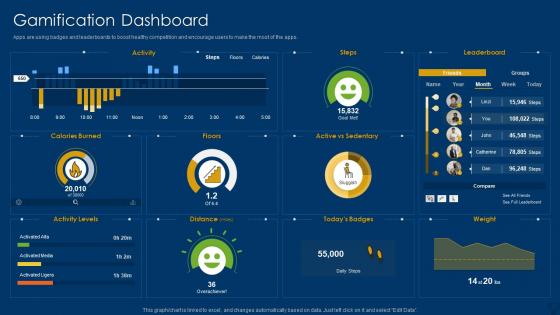
Gamification Dashboard Using Leaderboards And Rewards For Higher Conversions




Try Before you Buy Download Free Sample Product
 Impress Your
 Audience
 100%
100% Editable
 Save Hours
 of Time


Apps are using badges and leaderboards to boost healthy competition and encourage users to make the most of the apps.
People who downloaded this PowerPoint presentation also viewed the following :
Gamification Dashboard Using Leaderboards And Rewards For Higher Conversions with all 7 slides:
Use our Gamification Dashboard Using Leaderboards And Rewards For Higher Conversions to effectively help you save your valuable time. They are readymade to fit into any presentation structure.





FAQs for Gamification Dashboard Using Leaderboards And Rewards
Track progress, set clear goals, throw in some rewards - you're basically turning your audience into gamers. Make challenges doable, give quick feedback when people jump in, maybe add competition or teamwork vibes. Points and badges are solid, but honestly? Simple stuff like polls or "complete this to unlock next part" works just as well. Don't force it though - participation should feel good, not like homework. Oh, and leaderboards can get weirdly addictive if you do them right. Start with one interactive thing that makes people feel accomplished, then keep building.
Honestly, points and badges work surprisingly well - people get weirdly obsessed with tracking their progress. Team challenges are fun too, but don't make it so competitive that slow learners feel awful. I'd throw in some interactive quizzes and maybe that whole "unlock the next level" thing. The trick is picking stuff that actually helps them learn, not just random flashy nonsense. Oh, and start small! Pick like 2-3 features max and see what happens. You can always add more later if they're into it.
Competition is basically like hitting the turbo button on any game or system. People suddenly care way more when there's a leaderboard involved - it's weird how competitive we get over the dumbest stuff! Add some challenges or team competitions and everyone's trying to beat their coworker's score. Same thing happens with those workplace step challenges where suddenly Karen from accounting is walking laps around the building. The trick is keeping it fair though. If the same person always dominates, everyone else just gives up. Mix individual and team competitions so there's different ways to win and stay motivated.
So basically, feedback in gamification works because people get instant responses to what they're doing. Progress bars, badges, that kind of stuff - it shows them exactly where they stand. Real-time feedback is huge since they can fix mistakes right away instead of realizing weeks later they've been screwing up. You want specific feedback though, not just generic "nice work!" messages that don't mean anything. Point systems work really well, or those little milestone pop-ups that connect directly to what they're supposed to be learning. It's honestly like having someone coaching you through everything.
Oh totally, there's some cool examples out there! McDonald's made this cashier training game that literally cut their training time in half - pretty smart honestly. Deloitte added badges and leaderboards to their leadership stuff and got 46% more people actually using it. IBM does these "quest" things where you unlock skills like you're playing a video game. Duolingo for Business works great too but that's almost cheating since it was already a game. The pattern I notice? They all show your progress visually and let you compete with coworkers. Don't overthink it though - just start with basic points or badges instead of building some crazy complex system.
Dude, storytelling is what takes your gamified presentation from feeling like a bunch of random tasks to something people actually give a shit about. Like instead of just "do this, get points," you're creating a whole narrative - maybe they're helping someone solve a crisis or whatever. People get way more invested when there's an actual story connecting everything. Makes each challenge feel like it matters instead of just being... gimmicky? I swear the difference is huge. Try building yours around a simple hero's journey thing or some kind of quest where they're solving problems. Works every time.
Honestly, the trickiest part is not getting so caught up in the bells and whistles that you forget your actual point. Polls are fun but they can totally derail your message if you're not careful. Also, know your crowd - executives hate different stuff than your typical sales team does. Tech will probably fail you at the worst possible moment (Murphy's law and all that). But here's the thing - if your gamification feels super corporate and fake, people tune out immediately. Like, faster than you'd think. My advice? Just try one interactive thing first. See how it goes before you turn your presentation into some kind of game show.
Track stuff like how long people actually stay on each slide and whether they're clicking your interactive bits. Heat maps are super helpful - shows you where people engage vs. just scroll past mindlessly. Also watch completion rates and participation in your polls or quizzes. Oh, and definitely compare this data against regular boring presentations so you know if gamification actually works. The trick is setting up tracking before you start - learned that one the hard way when I forgot to enable analytics once. Short sentences work. Longer ones with natural flow keep things interesting.
Honestly, the key is making sure your game stuff actually connects to what people need to learn. Progress bars for skills, badges when they nail concepts - that kind of thing. Points are cool but only if they reward the right stuff (and trust me, just memorizing facts isn't it). Try to tap into why people naturally want to learn instead of just dangling carrots everywhere. Oh, and definitely test this with actual learners super early - I've seen so many projects where designers thought something was amazing but users were just confused. Their feedback matters way more than what sounds good in theory.
Dude, visual design can make or break your gamification stuff. Those progress bars and badges need to actually look good - not like some crusty 2010 clip art garbage. I swear, half the templates out there just throw random "achievement unlocked" graphics everywhere and call it a day. Pick maybe 2-3 colors for your game elements and stick with them. Your icons should be obvious so people get what they've earned right away. The whole color scheme thing helps guide people's eyes to the important scores and milestones too. Just keep it consistent and make sure it matches your brand vibe.
Okay so basically you want to hit three things: let people make choices about how they participate, show them they're actually improving at something, and tie it back to why it matters. Instant feedback is huge - nobody wants to wait around wondering if they're doing well. I'd honestly start super simple with basic points or badges, then add fancier stuff once people are into it. Oh and here's the thing about competition - some folks love it, others hate it and will just quit. Really depends on your audience. The progression thing is key though, people need to feel like they're leveling up.
Oh, you should totally try apps like Kahoot or Mentimeter! They basically turn everyone's phones into game controllers. Set up live quizzes or word clouds where people earn points - honestly, audiences get weirdly competitive about this stuff. I've seen speakers do scavenger hunts where you scan QR codes around the room, which sounds cheesy but actually works. Team competitions are fun too. Just make sure scores stay visible on the big screen and throw in some prizes. Start with one simple poll question first though - you don't want the tech to crash on you.
Honestly, the biggest thing is avoiding the whole digital slot machine trap - I've seen way too many apps that just hook people instead of actually helping them. Make sure you're being real about helping users hit actual goals, not just boosting your engagement numbers. Competitive stuff can be tricky too since not everyone's on equal footing to participate. Kids and people prone to addiction? Be extra careful there. Oh, and transparency matters - don't hide how your system works. Random test but ask yourself: would you be cool with your own family using it? That usually tells you everything.
So basically, healthcare gamification has to be way more careful since you're dealing with actual medical stuff. They stick to simple progress tracking and streaks - like those step counter apps that celebrate when you hit your daily goal. Education gets to be much more playful though! Points, badges, leaderboards, the whole nine yards. Students eat that competitive stuff up, but imagine putting a leaderboard on cancer recovery - totally inappropriate, right? The education world can make everything feel like a game because learning new math isn't life-or-death. When you're designing for either space, just think about whether people need gentle encouragement for serious habit changes or if they want that fun competitive energy.
Okay so Kahoot is probably your easiest starting point - super quick to set up and people actually get into the competitive vibe. Mentimeter's solid too for live polls. If you want something fancier, Classcraft does the whole point system thing really well, and Badgr handles digital badges. PowerPoint actually has some interactive stuff built in now (though honestly most people have no idea). Oh, and Slido's great for Q&A sessions where people can vote on questions. I'd just start with Kahoot though - you can literally throw together a quiz in like 5 minutes and watch people get way more engaged than usual.
-
I want to thank SlideTeam for the work that they do, especially their customer service.
-
Happy to found you SlideTeam. You guys are value for money. Amazing slides.