

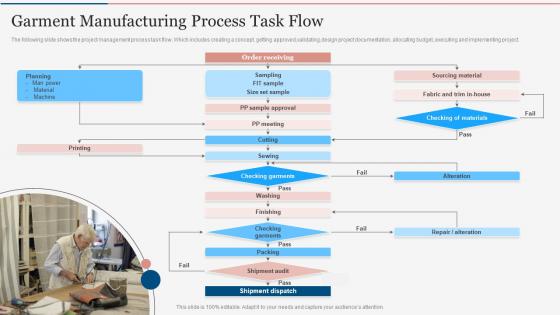
Garment Manufacturing Process Task Flow




Try Before you Buy Download Free Sample Product
 Impress Your
 Audience
 100%
100% Editable
 Save Hours
 of Time


The following slide shows the project management process task flow. Which includes creating a concept, getting approved, validating, design project documentation, allocating budget, executing and implementing project.
People who downloaded this PowerPoint presentation also viewed the following :
Garment Manufacturing Process Task Flow with all 6 slides:
Use our Garment Manufacturing Process Task Flow to effectively help you save your valuable time. They are readymade to fit into any presentation structure.





FAQs for Garment Manufacturing
So you'll go through design and pattern-making first, then fabric sourcing and cutting. Sewing comes next - seriously, good operators make it look like art or something. After that it's finishing stuff like pressing and adding labels. Oh, and quality control happens pretty much the whole time, but there's always one last check before packaging. Honestly though? Build in extra time between each step because when one thing gets delayed, everything else gets screwed up too. Learned that one the hard way.
Honestly, fabric choice makes or breaks everything - how it feels, looks, and whether it'll survive the wash. I picked a flimsy cotton for a blazer once and it looked like garbage, zero structure. Stretch recovery is huge too because nobody wants saggy clothes after one wear. Different fibers react weird to dye and shrinkage (polyester blends are sneaky that way). Oh, and pilling - ugh, don't get me started. You'll save yourself so much heartache by testing samples first instead of gambling on bulk orders.
So pattern making is basically your blueprint stage - you're translating your design into precise templates for cutting each piece. Kind of like making a puzzle template, but way more technical obviously. You've got to factor in seam allowances, how the fabric behaves, and fitting across different body sizes. Honestly, this step can make or break everything because any screwups here get repeated across your whole production run. I always tell people to do test fits with sample pieces first - learned that one the hard way! Get your patterns dialed in before you even think about mass production.
Oh man, tech changes everything in manufacturing. Automated cutting systems slice through multiple fabric layers at once - cuts time by 70%. Digital patterns and 3D sampling? Total lifesaver. What used to take weeks now happens in days. Smart sewing machines even adjust tension automatically, which honestly blew my mind the first time I saw it. Real-time inventory tracking keeps tabs on everything too. Start with digitizing your patterns though - that's where you'll actually see money back fast. The other stuff can wait.
So basically you want fabric inspection before cutting, then checks during sewing, plus final inspection before packing. Random sampling works well - like every 10th piece or testing seam strength on samples. Check measurements, stitching, color consistency, all that stuff. Good factories catch problems early instead of at the end (way less headache). Your QC team needs to document everything with clear rejection standards. Oh and definitely audit your own QC process regularly so standards don't slip over time.
Start with an audit of what you're doing now - that'll show you the worst offenders. Switching to organic cotton or recycled materials is huge. The water waste from dyeing is honestly insane when you look at the actual numbers. Better pattern layouts can cut down waste, and you want suppliers who aren't sketchy about labor practices. Oh, and design stuff so it can actually be recycled later instead of just ending up in a landfill. Energy and water optimization makes a real difference too. Focus on whatever's causing the biggest environmental mess first.
Honestly, ethical sourcing is kinda everything right now for brand rep. Consumers actually dig into where stuff comes from - fair wages, safe conditions, eco-friendly practices, all that. Way different than even a few years back. The cool thing is ethical suppliers usually have better quality control too since they're not cutting every corner possible. I'd start by auditing who you're working with now and push for certifications like Fair Trade or GOTS. Transparency is huge. Oh, and their delivery schedules tend to be more reliable which is honestly just nice for planning.
Labor laws totally dictate where clothes get manufactured - it's wild how much they matter. Companies constantly hop between countries chasing cheaper wages and looser safety rules. When one place tightens regulations, brands just pack up and move somewhere else. That's why supply chains are so messy and spread out everywhere. Honestly, the whole system feels pretty broken when you think about it. But for your business planning, just keep tabs on labor law changes wherever your suppliers are. Those shifts can mess up your whole production timeline if you're not paying attention.
Honestly, you're gonna hit three main walls: supply chain issues, quality control, and finding people to actually do the work. Fabric suppliers can't always ramp up when you need them to - learned that the hard way myself. Cash flow gets tricky too since you're buying way more materials upfront. Equipment capacity becomes a real problem when you're suddenly pushing double the volume through your lines. Oh, and good luck finding skilled workers fast enough - that's probably the worst part. I'd map out what your current suppliers can actually handle before you promise anything to those big clients. Quality tends to slip when you're rushing, which nobody wants.
Dude, fast fashion is wild - we're talking 12+ seasons now instead of the usual 2-4. Production cycles went from months to literal weeks, which honestly seems insane but somehow works. Your supply chain needs to be super flexible, and you'll need manufacturers who can switch between styles and volumes without losing their minds. Quality usually gets sacrificed for speed and cost, creating a whole mess of other problems. But here's the thing - you get way more shots to see what consumers actually want. Just make sure your manufacturing partners can keep up with this crazy pace or everything falls apart. It's exhausting but kinda genius?
So honestly, AI pattern making is huge right now, plus those automated cutting systems everyone's talking about. Robotic sewing is getting pretty decent for basic stuff too. Smart fabric inspection is where I'd put my money though - way faster at catching defects than any person could be. Those "lights-out" factories are still kind of a pipe dream since garments need so much detail work. But collaborative robots? That's where it gets interesting. They actually work with your team instead of just kicking everyone out. If you're gonna upgrade anything first, go with automated cutting tables. Best bang for your buck and you won't have to retrain everybody.
Honestly, supply chain stuff will totally mess with your production schedule if you're not careful. Fabric delays happen all the time, and shipping backup means you're looking at weeks of missed deadlines. When cotton prices go crazy, mills obviously take care of their big clients first - smaller brands get pushed to the back. Factory labor shortages are brutal too, especially during busy seasons when everyone's fighting for the same production slots. Oh, and peak season is like the hunger games for manufacturers. Build in extra time from the start and keep multiple suppliers on speed dial. Trust me, you don't want to be scrambling when things go sideways.
So there are basically three ways to dye: piece dyeing (after the fabric's made), yarn dyeing (before weaving), or garment dyeing the final piece. Finishing is where it gets interesting though - you've got mechanical stuff like brushing and calendering, plus chemical treatments for wrinkle-proofing or making things water-repellent. Heat setting's huge for synthetics too. What you choose really depends on your fabric - cotton's totally different from polyester blends. Oh, and definitely ask your supplier what they've already done so you don't waste time repeating steps.
Honestly, most waste happens during pattern layout - that's your biggest opportunity. Get some nesting software to arrange pieces better, or at least play around with grading techniques that leave fewer scraps. Track everything in your cutting room for like two weeks straight. I know it sounds tedious, but the data will show you exactly where you're losing material. Just-in-time production helps avoid making too much stuff you don't need yet. Oh, and don't toss those scraps! Sell them to people making accessories or use them for smaller items yourself. Start measuring this week if you can.
Honestly, customer feedback is like having a cheat sheet for your brand. People will straight up tell you when your sizing is off, when fabrics feel cheap, or when they're dying for a certain style you don't make yet. I'm always shocked how many brands just ignore this goldmine of info. You can grab feedback through surveys, stalking your social mentions (in a good way lol), analyzing returns, and reading reviews. The trick is setting up these feedback loops at every step - from sketching designs to after someone's worn your stuff for months. That way you're always tweaking based on what actually matters to real customers.
-
Wide collection of templates available. SlideTeam has made it easier to create presentations in just a few minutes.
-
Every time I ask for something out-of-the-box from them and they never fail in delivering that. No words for their excellence!