


Governance risk and compliance process management organizational compliance document




Try Before you Buy Download Free Sample Product
 Impress Your
 Audience
 100%
100% Editable
 Save Hours
 of Time


Our Governance Risk And Compliance Process Management Organizational Compliance Document are topically designed to provide an attractive backdrop to any subject. Use them to look like a presentation pro.
People who downloaded this PowerPoint presentation also viewed the following :
Governance risk and compliance process management organizational compliance document with all 12 slides:
Use our Governance Risk And Compliance Process Management Organizational Compliance Document to effectively help you save your valuable time. They are readymade to fit into any presentation structure.

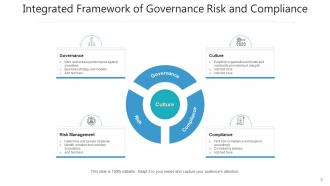
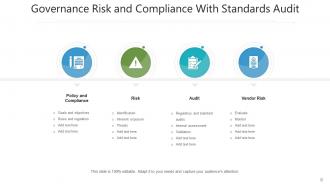
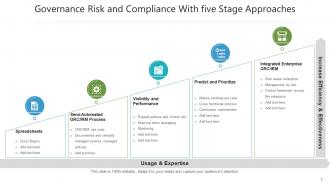
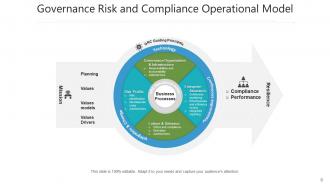

FAQs for Governance risk and compliance process management
You need three main things working together: governance (how decisions get made), risk management (spotting problems before they hit), and compliance (keeping regulators happy). Don't even think about managing this with spreadsheets - total disaster waiting to happen. Get departments actually talking to each other instead of doing their own thing. Some kind of integrated tech platform helps centralize everything. Regular monitoring matters too, obviously. Honestly, I'd start by figuring out what's already working at your company, then tackle the worst gaps first. The whole thing falls apart if these pieces aren't connected.
Honestly, get an integrated platform that puts everything in one spot - risk assessments, compliance stuff, policies, all of it. Automation saves your sanity here. Set up workflows for monitoring and alerts when policies change. Real-time dashboards are clutch too. I mean, anything beats drowning in spreadsheets, right? Figure out what's driving you crazy first - probably manual reporting or chasing down audit stuff. Then grab tools that actually fix those specific headaches. Don't try to boil the ocean from day one.
Dude, culture absolutely makes or breaks GRC programs. Leadership treating it like just another checkbox? Your whole team will follow suit and everything crumbles. People need to feel safe reporting problems without getting thrown under the bus. I've watched companies with gorgeous policies totally crash because nobody trusted the process - it's honestly painful to see. The real key is measuring culture stuff right alongside your regular GRC metrics. Oh, and your executives better actually practice what they preach, not just talk about it. Actions speak way louder than fancy mission statements.
Look, GRC basically stops regulatory changes from catching you off guard. You can actually track what's coming down the pipeline instead of scrambling when new rules hit. Your compliance team sets up regular scanning sessions - honestly, make someone own this or it won't happen. When changes pop up, you'll assess the impact and roll updates across departments systematically. The documentation part is clutch for audits too. You can show exactly how you adapted to new requirements. It's way better than the old reactive approach where you're always playing catch-up with risk management.
Oh man, where do I start? Departments never talk to each other - it's wild how siloed everything gets. Leadership often just wants to check boxes instead of actually caring about the process. Teams hate it because they think it's just more red tape. Your tech stack is probably a mess too, right? Legacy systems that hate each other. Regulations keep changing while budgets stay tight (story of my life). Honestly though, just pick one small area and nail it first. Show some quick wins so people see the point, then slowly build from there. Don't try to boil the ocean right away.
Yeah, so basically every industry has totally different risk stuff to worry about. Banks obsess over credit and market risks because of Basel III regulations - super number-heavy. Healthcare? Patient safety and HIPAA compliance are huge. Manufacturing focuses more on workplace safety and environmental issues. Tech companies are losing their minds over cybersecurity right now, which honestly makes sense given all the breaches lately. The GRC framework itself is pretty similar everywhere though. Your best bet is figuring out what regulations hit your industry first. That'll tell you what risks matter most and how often you need to assess them.
Honestly, you'll want to mix leading and lagging indicators to really see what's working. Track your control testing results, how fast you're fixing audit findings, incident response times - the usual suspects. Employee training completion rates are huge too, plus how long your risk assessments take. Shows you're being proactive instead of just putting out fires all the time. The compliance cost per revenue dollar is one executives actually pay attention to, which is nice for a change. I'd start with maybe 5-7 core metrics that match your biggest headaches, then build from there once you've got some solid baseline data to work with.
So GRC is basically like having a roadmap instead of just winging it. You get actual data on what could go wrong and how it'd mess with your goals. The "what if" scenarios are honestly pretty wild sometimes - you'll think of stuff that never crossed your mind. It also keeps you following the right processes and getting sign-offs from whoever needs to approve things. My advice? Start plugging GRC insights into your quarterly reviews and big project calls. Makes a huge difference when you're not just guessing about risks.
Honestly, don't overthink this - start with whatever's keeping you up at night risk-wise. Most small businesses try to build some massive program right away and just burn out. Grab a spreadsheet (I know, I know, but they work) and document your biggest compliance headaches first. Set up basic email reminders for stuff like policy reviews. Super simple automation beats fancy software you'll never use. My buddy tried jumping straight to enterprise-level tools and wasted months. Build something that actually works for your size, then add to it later. Consistent beats perfect every time.
Dude, non-compliance is a nightmare. Fines can hit millions depending on what industry you're in, plus all the legal fees pile up fast. The reputation damage though? That's what really kills companies long-term. Customers bail, partners get sketchy, stock tanks. And with social media now, bad news spreads everywhere instantly - nothing stays quiet anymore. Regulators will also be breathing down your neck for years after, making every future audit hell. My advice? Figure out your riskiest areas first and get some decent monitoring going. Trust me, it's way cheaper than dealing with the mess later.
So GDPR and CCPA basically turned GRC on its head - you can't just bolt privacy onto your existing framework anymore. Your risk assessments need data breach scenarios now. Governance has to weave in privacy controls from the ground up. The compliance monitoring gets way more complex too, honestly. I learned this the hard way when our team thought we could just add a privacy checklist or whatever. Nope. Start by figuring out how personal data actually moves through your current processes - that's where most companies get tripped up. Privacy isn't optional anymore; it's central to everything.
Your GRC team really needs to stay on top of changing regulations and threats. I'd focus on getting updates directly from regulatory bodies and pushing for industry certs like CISA or CRISC. Professional associations are honestly where it's at - their webinars and networking actually matter, unlike those painful weekly calls we all sit through. Set up alerts from relevant agencies so you're not scrambling. Cross-training helps too since everyone should understand what the others are doing. Make it routine with monthly sessions where team members share what they've learned. Don't wait until something breaks to start learning.
Start by mapping what you've already got to the GRC structure - way easier than starting from scratch. Most GRC platforms connect through APIs anyway, so your existing ERM system should sync up fine. Honestly, I'd test it with just one department first because rolling it out company-wide right away is asking for chaos. Get your risk taxonomy standardized first, then automate the reporting workflows. Once that's running smooth, add the compliance stuff and governance dashboards. Oh, and make sure data actually flows between systems - sounds obvious but you'd be surprised how many people skip that step.
Honestly, most places work best mixing both approaches. With centralized GRC, you get one team setting all the standards so departments can't just make up their own interpretations of regulations (which happens more than you'd think). Data stays cleaner too. But decentralized means each team handles their own stuff - faster responses since they actually know their specific risks. The downside? Departments might miss things or do everything differently. I'd go hybrid if I were you. Let central teams handle the big policies, then have local teams execute day-to-day monitoring.
Start with getting everyone in the same room regularly - not just during disasters. Cross-functional groups with GRC, IT, and HR meeting weekly actually works. Pizza doesn't hurt either (those lunch-and-learns are surprisingly effective). Share dashboards so each team sees how their work affects compliance. GRC can't be the compliance police anymore - they need to feel like partners. Pick one project where everyone has something to lose, like vendor management or data privacy. That's where you'll get buy-in. Once they win together on something small, the rest gets easier.
-
The Designed Graphic are very professional and classic.
-
Innovative and Colorful designs.
-
Presentation Design is very nice, good work with the content as well.