


Compliance organogram business commercial corporate organisation assurance management structure





Try Before you Buy Download Free Sample Product
 Impress Your
 Audience
 100%
100% Editable
 Save Hours
 of Time


Our Compliance Organogram Business Commercial Corporate Organisation Assurance Management Structure are topically designed to provide an attractive backdrop to any subject. Use them to look like a presentation pro.
People who downloaded this PowerPoint presentation also viewed the following :
Compliance organogram business commercial corporate organisation assurance management structure with all 12 slides:
Use our Compliance Organogram Business Commercial Corporate Organisation Assurance Management Structure to effectively help you save your valuable time. They are readymade to fit into any presentation structure.

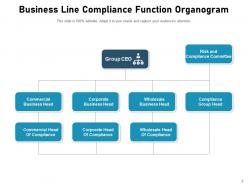
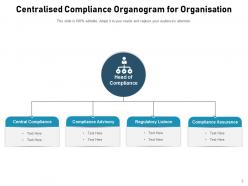
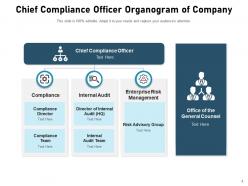
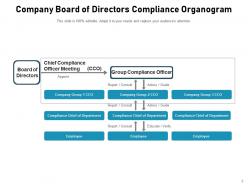
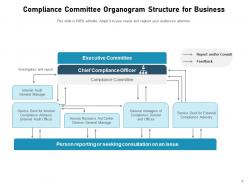
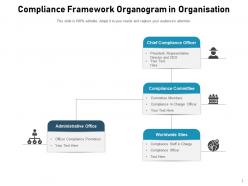
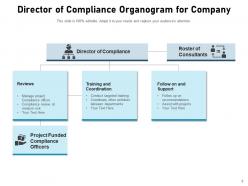
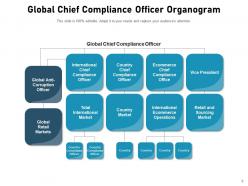

FAQs for Compliance organogram business commercial corporate organisation
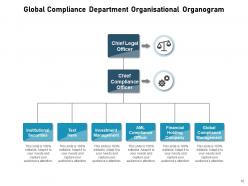
So a compliance organogram is basically a chart showing who handles what regulatory stuff in your company. You've got your Chief Compliance Officer at the top, then it branches down to compliance people in each department. When something goes wrong, you'll know exactly who to bug about it. Really helps with accountability too - nobody can play the "that's not my job" game anymore. Auditors love these things because they can see how compliance works across your whole organization. Oh, and definitely update it when people leave or switch roles, otherwise it's pretty useless.
So basically, compliance organograms show everyone exactly who does what - no more "wasn't my job" drama when audits come around. You can actually see your whole compliance structure laid out, which makes spotting gaps or duplicate work super obvious. Everyone knows the reporting lines and responsibilities, including stakeholders and auditors. Honestly, most companies should've done this years ago. Map what you have now first - you'll probably be surprised at how messy it looks. Then figure out where you're missing coverage.
Start with your Chief Compliance Officer at the top, then add compliance managers for different areas - legal, risk, operations, that stuff. Department heads are crucial since they're actually in the trenches doing compliance work daily. Your internal audit team and data protection officer should be on there too, plus any regulatory specialists. Here's the thing though - don't forget clear lines to senior leadership and the board. They need to see what's happening. Map out who's currently handling compliance tasks first, then organize it in a way that makes sense. Shows both responsibility and how info flows both ways.
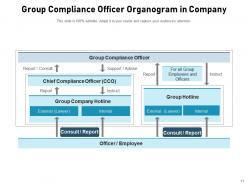
Honestly, just draw out who reports to who and what each person handles. That way when something comes up, you don't have to guess whether to bug your boss or go straight to the Chief Compliance Officer. I've seen people waste so much time playing email tag because nobody knew the chain. Once you map it out, you'll spot where communication breaks down - probably more places than you'd expect. It also helps you see how your job connects to everyone else's work. Maybe start with your immediate team first? Trust me, having that visual makes everything clearer when things get hectic.
First thing - nail down who reports to who. Zero ambiguity there. Your three lines of defense need clear separation: risk owners, compliance oversight, internal audit. I've watched companies completely mess this up and it's a nightmare. Show both direct reports AND the dotted line stuff so you get the whole picture. Job titles should match across the board, don't forget key committees. Oh and honestly? Update it constantly because nothing looks worse than someone pulling up an old chart when there's a crisis and half the people aren't even there anymore.
Update it quarterly at minimum, but honestly that's bare bones. Major reg changes or company reshuffles? Do it right away - don't wait around. I've watched companies get burned because their org chart was like 6 months stale and missed new reporting structures. Treat it more like a living doc instead of some filing cabinet thing. Calendar reminders help, and definitely assign someone to actually own the updates. Otherwise it just sits there getting more useless by the month.
Honestly, skip PowerPoint for compliance org charts - you'll hate yourself later. Lucidchart's probably your best bet if you need team collaboration. Visio works great too, especially if you're already using Microsoft stuff. I personally think draw.io is underrated - it's free and way more powerful than it looks. Just make sure whatever you pick exports to PDF easily. Trust me, you'll be updating these things constantly because compliance teams never stay the same. Oh, and avoid anything too fancy - your auditors won't care about animations or whatever.
So a compliance organogram is basically your "who handles what" map for risk stuff. Shows who's accountable when you're dealing with risks - identifying them, figuring out how bad they are, fixing them. No more awkward moments wondering if you should call legal or ops about something (been there). It highlights where things might slip through the cracks too. Honestly, the worst thing is having an outdated one - might as well not have one at all. I'd check yours every quarter and update it whenever people move around. Quick wins matter here.
Honestly, compliance organograms are clutch for new hires. I just show them the chart so they can see exactly where they fit and who they'll be working with most. Way easier than rambling through all the reporting relationships - that gets messy quick. New people can spot their key stakeholders right away and understand how compliance actually connects everything. Oh, and definitely walk through it with them first day. Keep one printed out too because they'll probably reference it for weeks. Makes the whole onboarding thing way less overwhelming.
Ugh, role confusion is the worst part honestly. Nobody knows who's supposed to handle what compliance stuff, and then you get that one person who fights every new process tooth and nail. Leadership sometimes thinks it's just more red tape too - super frustrating. Oh, and good luck keeping everything current when your team changes every six months! Start with mapping out who does what first. Make it crystal clear why each role matters or people will just ignore it. Also don't try to do everything at once - that's how you burn out your already swamped team.
So basically, your compliance organogram is like a family tree but for who's responsible for what. It shows clear lines from your day-to-day teams right up to the board committees - super helpful when directors need to track who owns compliance stuff. Most boards actually love these because it makes their oversight way less of a headache. You'll want to connect it with your risk and audit committees so everything flows properly. Oh, and here's the real kicker - when auditors show up (and they will), you can immediately point to who handles what and how problems get escalated. Saves everyone a ton of time.
Check your spans of control first - are managers drowning in reports? Then look at how many compliance people you have per business unit and whether you're covering all locations properly. Segregation of duties is huge here, honestly - can't have one person controlling too much of any critical process. Also track if you're too centralized or decentralized, and see how compliance duties flow down through the org levels. I'd map these ratios every quarter to catch trends early. Oh, and the geographic stuff gets tricky if you're spread out across regions.
Honestly, visual elements are a lifesaver for compliance charts. Color coding different functions, icons for departments, clear lines showing who reports to who - it all helps. Bold highlighting draws attention to the important stuff. Nobody's got time to decode dense text when they need answers fast. Oh, and if you can make sections clickable to show more details? Even better. I've seen too many beautifully designed org charts that are completely useless because they're cluttered. Keep it clean and scannable. People will actually reference it instead of just guessing who handles what.
Dude, you absolutely need visuals for that compliance org chart. Trust me on this one. Charts and flowcharts make all those confusing reporting lines actually make sense to people. I've sat through way too many meetings where everyone's eyes glaze over staring at walls of text - it's painful. Color-code the different departments and add clear role descriptions. Your executives will actually understand who reports to who instead of pretending they get it. Makes the whole compliance structure way less of a headache for everyone involved.
Talk to your compliance team first - seriously, don't skip this step. Send out quick surveys or just grab coffee with people individually. Ask about reporting lines that actually make sense, where communication gets stuck, and accountability gaps they've seen. The folks doing the real work always know what's broken better than management does. Get their take on your draft before you finalize anything. Oh, and definitely hit up the team leads for informal chats - they'll tell you how things really flow, not how the old org chart says they should. Their input is gold.
-
Much better than the original! Thanks for the quick turnaround.
-
Easily Understandable slides.
-
Helpful product design for delivering presentation.
-
Perfect template with attractive color combination.
-
Really like the color and design of the presentation.