

Directrices y normas para la seguridad en el lugar de trabajo Diapositivas de presentación de PowerPoint




Try Before you Buy Download Free Sample Product
 Impress Your
Audience
 100%
Editable
 Save Hours
of Time


La seguridad en el lugar de trabajo se refiere a la provisión de un entorno de trabajo seguro, con la limitación de elementos que pueden causar daños, lesiones y otros resultados negativos en el lugar de trabajo. Consulte nuestra presentación en PowerPoint de Pautas y estándares para la seguridad en el lugar de trabajo diseñada profesionalmente. Primero, esta cubierta cubre los problemas relacionados con incidentes en el lugar de trabajo que incluyen enfermedades ocupacionales, ocupación de empleados fatales y lesionados, y violaciones de seguridad por parte de los empleados. Adicionalmente, cubre las causas de los accidentes, el impacto de los accidentes en los empleados y las organizaciones. También destaca por qué existe la necesidad de seguridad en el lugar de trabajo con objetivos detallados. Además, esta plataforma cubre cómo examinar riesgos y peligros. También hace hincapié en la identificación de peligros y sus medidas de control, que incluyen peligros de compresores de aire y pautas de seguridad, peligros de incendio y pautas de seguridad, Lesiones por herramientas eléctricas con pautas de seguridad, peligros químicos con pautas de seguridad. lineamientos y el abuso de drogas y alcohol con lineamientos de seguridad. Por último, incluye las prácticas recomendadas para la gestión de la seguridad, sanciones por incumplimiento e impacto positivo de la seguridad en el trabajo en una organización. Descarga este mazo ahora.
People who downloaded this PowerPoint presentation also viewed the following :
Contenido de esta presentación de Powerpoint
Diapositiva 1 : Esta diapositiva muestra el título Pautas y estándares para la seguridad en el lugar de trabajo.
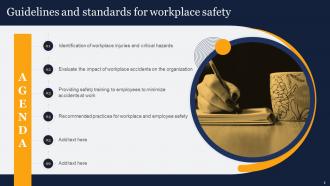
Diapositiva 2 : Esta diapositiva muestra el título AGENDA.
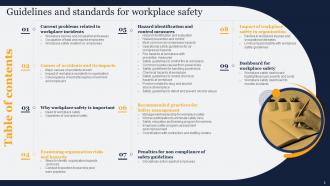
Diapositiva 3 : Esta diapositiva muestra la tabla de contenido.
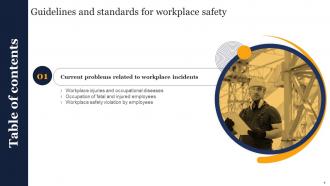
Diapositiva 4 : Esta diapositiva muestra el contenido de la tabla: problemas actuales relacionados con incidentes en el lugar de trabajo.
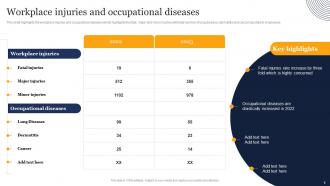
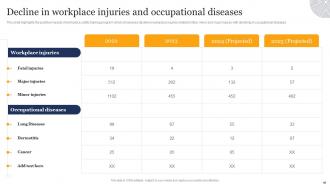
Diapositiva 5 : Esta diapositiva destaca las lesiones en el lugar de trabajo y las enfermedades profesionales.
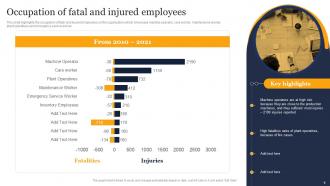
Diapositiva 6 : esta diapositiva destaca la ocupación de los empleados fatales y lesionados en la organización que muestra el operador de máquinas, el trabajador de cuidados, el trabajador de mantenimiento,
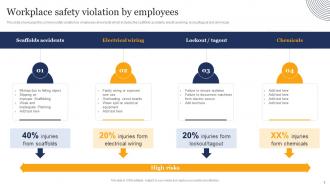
Diapositiva 7 : Esta diapositiva muestra la violación de seguridad común por parte de los empleados en el lugar de trabajo, que incluye accidentes en andamios, cableado eléctrico, bloqueo/etiquetado y productos químicos.
Diapositiva 8 : Esta diapositiva muestra el contenido de la tabla Causas de los accidentes y sus impactos
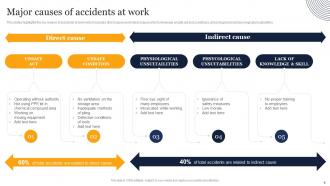
Diapositiva 9 : Esta diapositiva destaca la razón clave de los accidentes de trabajo, que incluye la causa directa y la causa indirecta.
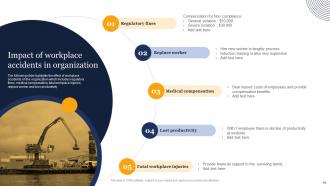
Diapositiva 10 : La siguiente diapositiva destaca el efecto de los accidentes laborales en la organización.
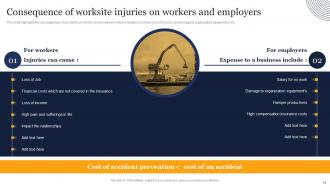
Diapositiva 11 : Esta diapositiva destaca las consecuencias de los accidentes para los trabajadores y los empleadores.
Diapositiva 12 : Esta diapositiva muestra el índice: Por qué es importante la seguridad en el lugar de trabajo.
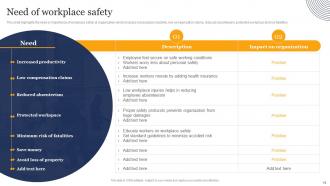
Diapositiva 13 : Esta diapositiva destaca la necesidad o la importancia de la seguridad en el lugar de trabajo en la organización.
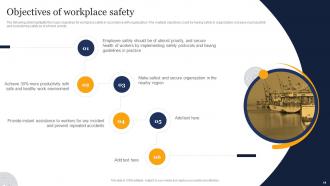
Diapositiva 14 : La siguiente diapositiva destaca los objetivos principales para la seguridad en el lugar de trabajo de acuerdo con la organización.
Diapositiva 15 : Esta diapositiva muestra la tabla de contenido: examen de los riesgos y peligros de la organización.
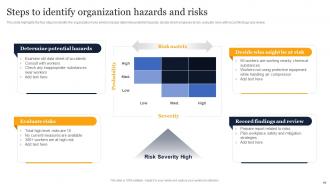
Diapositiva 16 : Esta diapositiva destaca los cuatro pasos para identificar los riesgos de la organización.
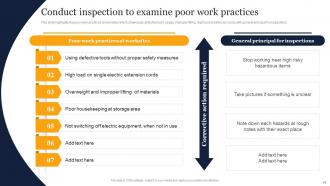
Diapositiva 17 : Esta diapositiva destaca las prácticas laborales deficientes en los lugares de trabajo que muestran el uso de herramientas defectuosas, el levantamiento inadecuado.
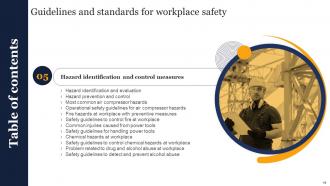
Diapositiva 18 : Esta diapositiva muestra la tabla de contenido: identificación de peligros y medidas de control.
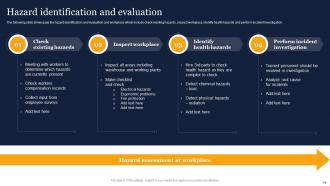
Diapositiva 19 : La siguiente diapositiva muestra la identificación y evaluación de peligros y el lugar de trabajo.
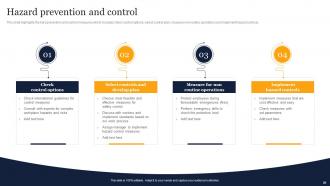
Diapositiva 20 : esta diapositiva destaca las medidas estrictas de prevención y control que incluyen opciones de control de verificación, plan de control seleccionado, operaciones no rutinarias de medición.
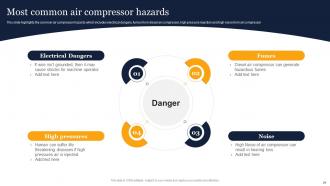
Diapositiva 21 : esta diapositiva destaca los peligros comunes de los compresores de aire, que incluyen peligros eléctricos, humos del compresor de aire diésel e inyección a alta presión.
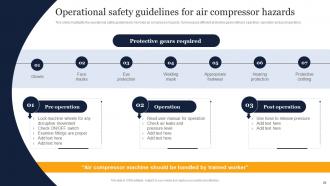
Diapositiva 22 : Esta diapositiva destaca las pautas de seguridad operativa para minimizar los riesgos del compresor de aire.
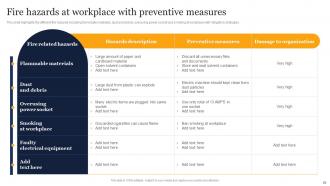
Diapositiva 23 : esta diapositiva destaca los diferentes riesgos de incendio, incluidos los materiales inflamables, el polvo y los escombros, y el uso excesivo de la toma de corriente.
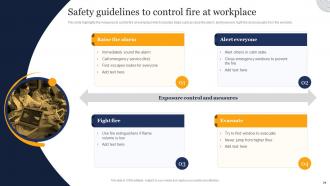
Diapositiva 24 : Esta diapositiva destaca las medidas para controlar incendios en el lugar de trabajo.
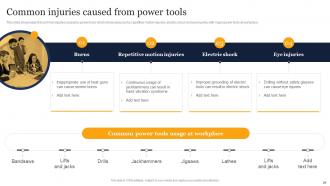
Diapositiva 25 : esta diapositiva muestra las lesiones comunes causadas por herramientas eléctricas, que incluyen quemaduras, lesiones por movimientos repetitivos y descargas eléctricas.
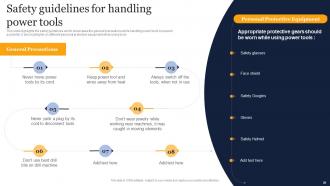
Diapositiva 26 : esta diapositiva destaca las pautas de seguridad que muestran las precauciones generales al manipular herramientas eléctricas para evitar accidentes.
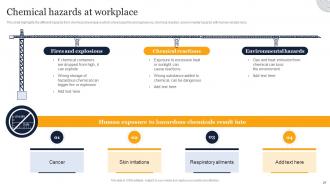
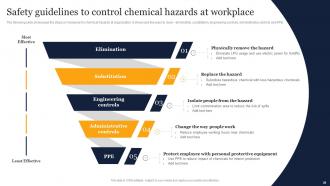
Diapositiva 27 : Esta diapositiva destaca los diferentes peligros de los productos químicos en el lugar de trabajo.
Diapositiva 28 : La siguiente diapositiva muestra los pasos o medidas para los peligros químicos en la organización.
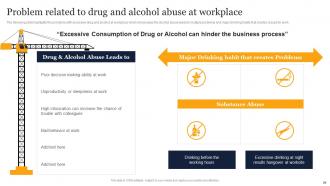
Diapositiva 29 : La siguiente diapositiva destaca los problemas con el exceso de drogas y alcohol en el lugar de trabajo.
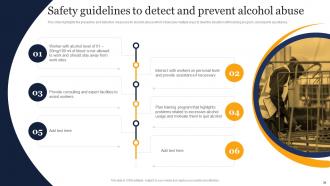
Diapositiva 30 : Esta diapositiva destaca las medidas preventivas y de detección para el abuso del alcohol que muestran múltiples formas de abordar la situación.
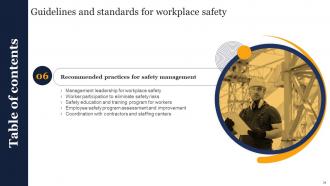
Diapositiva 31 : Esta diapositiva muestra el índice de prácticas recomendadas para la gestión de la seguridad.
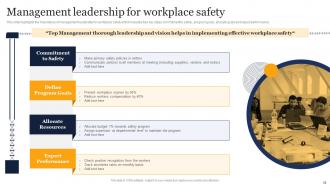
Diapositiva 32 : Esta diapositiva destaca la importancia del liderazgo gerencial para la seguridad en el lugar de trabajo.
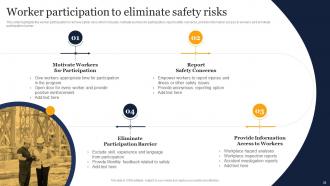
Diapositiva 33 : Esta diapositiva destaca la participación de los trabajadores para eliminar los riesgos de seguridad.
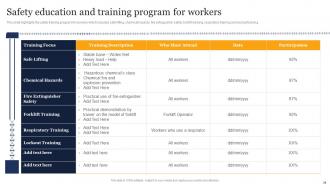
Diapositiva 34 : Esta diapositiva destaca el programa de capacitación en seguridad para los trabajadores.
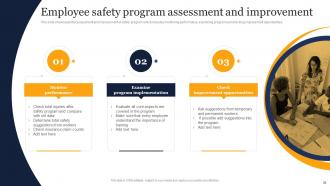
Diapositiva 35 : Esta diapositiva muestra la evaluación y mejora del programa de seguridad.
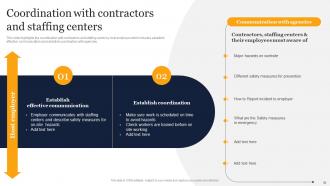
Diapositiva 36 : esta diapositiva destaca la coordinación con los contratistas y el centro de personal por parte del empleador anfitrión.
Diapositiva 37 : Esta diapositiva muestra la tabla de contenido: sanciones por incumplimiento de las pautas de seguridad.
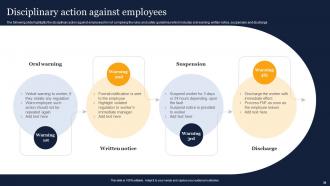
Diapositiva 38 : La siguiente diapositiva destaca la acción disciplinaria contra los empleados por no cumplir con las reglas y pautas de seguridad.
Diapositiva 39 : Esta diapositiva exhibe la tabla de contenido: impacto de la seguridad en el lugar de trabajo en la organización.
Diapositiva 40 : Esta diapositiva destaca los impactos positivos del programa de capacitación en seguridad en el lugar de trabajo.
Diapositiva 41 : Esta diapositiva destaca los impactos positivos de la seguridad en el lugar de trabajo.
Diapositiva 42 : Esta diapositiva muestra la tabla de contenido: Tablero para la seguridad en el lugar de trabajo
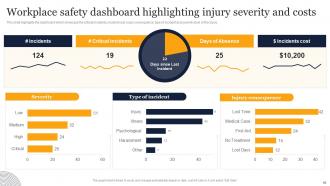
Diapositiva 43 : esta diapositiva destaca el tablero que muestra los incidentes críticos, el costo del incidente, la consecuencia de la lesión, el tipo de incidente y el nivel de gravedad de la lesión.
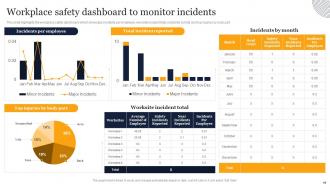
Diapositiva 44 : Esta diapositiva destaca el tablero de seguridad en el lugar de trabajo que muestra los incidentes por empleado, el total de incidentes en el lugar de trabajo, los incidentes por total y las principales lesiones por parte del cuerpo.
Diapositiva 45 : Esta diapositiva presenta el título de las diapositivas adicionales.
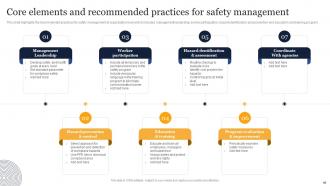
Diapositiva 46 : Esta diapositiva destaca las prácticas recomendadas para la gestión de la seguridad a nivel de organización.
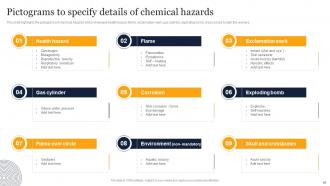
Diapositiva 47 : Esta diapositiva destaca los pictogramas de peligros químicos que muestran peligros para la salud, llamas, signos de exclamación, cilindros de gas.
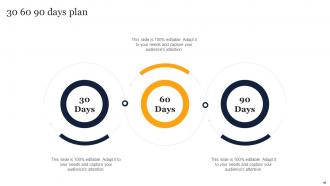
Diapositiva 48 : Esta diapositiva muestra un plan de 30-60-90 días para proyectos.
Diapositiva 49 : Esta diapositiva muestra Lupa.
Diapositiva 50 : Esta diapositiva muestra a Venn.
Diapositiva 51 : Esta diapositiva muestra la hoja de ruta de la empresa.
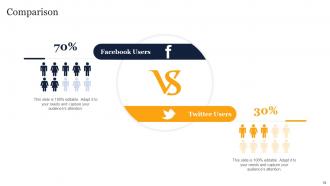
Diapositiva 52 : esta diapositiva muestra la comparación del usuario de Facebook y el usuario de Twitter.
Diapositiva 53 : Esta diapositiva muestra Nuestro objetivo.
Diapositiva 54 : Esta es una diapositiva de agradecimiento y contiene detalles de contacto de la empresa, como la dirección de la oficina, el número de teléfono, etc.
Pautas y estándares para la seguridad en el lugar de trabajo Diapositivas de presentación de Powerpoint con las 59 diapositivas:
Utilice nuestras Directrices y normas para la seguridad en el lugar de trabajo Diapositivas de presentación de Powerpoint para ayudarlo de manera efectiva a ahorrar su valioso tiempo. Están listos para encajar en cualquier estructura de presentación.







FAQs for Guidelines And Standards For Workplace Safety
Honestly, start with a walkthrough this week - you'll spot hazards you probably never noticed. Get your safety policies written down clearly, not buried in some manual nobody reads. Training's huge but don't make it a one-and-done thing because people forget. Regular meetings keep safety fresh in everyone's mind. Oh, and actually designate someone responsible instead of just hoping it works out. Having safety gear accessible is obvious but worth mentioning. The real trick is weaving it into daily routine rather than treating it like paperwork. Make it feel normal, not like extra work.
Honestly, make safety everyone's deal, not just the bosses'. People need to feel safe reporting stuff without getting blamed - nobody talks if they're gonna get fired, right? Skip those mind-numbing monthly meetings. Quick weekly huddles work way better. Definitely celebrate when teams spot hazards or come up with good ideas. Your managers have to follow the exact same rules as everyone else - no exceptions. Oh, and actually DO something when people bring up concerns. Once they see their suggestions matter, they'll keep watching out for each other.
Yeah, training makes a huge difference for safety - I can't stress that enough. You'll see way fewer accidents when people actually know what they're doing with equipment and can spot hazards before they become problems. Places that skip proper training? That's where people get hurt. Plus it builds this culture where everyone's watching out for each other, which is honestly pretty cool to see. Don't make it a one-and-done thing though. Start with an audit of your biggest gaps and tackle the scary stuff first. My old job did this really well and it showed.
Honestly, tech can be a game-changer for workplace safety. IoT sensors are great for tracking air quality and equipment status in real-time. Workers can wear devices that monitor fatigue or detect falls automatically. VR training lets people practice dangerous scenarios safely - I've seen some pretty impressive setups. Mobile apps beat those awful paper incident reports every time. AI cameras can catch unsafe behaviors and ping supervisors instantly. My advice? Don't go crazy with everything at once. Pick your biggest problem area and test one solution there first. Way less overwhelming that way.
Honestly, most workplace injuries come down to slips, falls, repetitive motions, and chemical stuff. The usual suspects, you know? Clear walkways help big time - I can't tell you how many people I've seen eat it on random cables or boxes. Take stretch breaks (your wrists and back aren't invincible), actually read those chemical sheets they post everywhere, and wear whatever safety gear they hand out. Even if it looks dorky. Don't get too comfortable with routine tasks either - that's when accidents happen. Maybe walk around your workspace this week and see what could go wrong?
Track both the stuff that already happened (incident rates, workers comp claims) and the forward-looking metrics like safety training completion and PPE usage rates. Near-miss reports are honestly your best friend - they show problems before someone gets hurt. Your employees know where the sketchy areas are, so definitely survey them regularly. Safety audits help too, but don't go crazy trying to measure everything. Pick maybe 3-4 things you can actually keep up with each month or you'll just burn out on the whole tracking thing.
So it totally depends on what kind of business you're running. OSHA covers the basics, but construction sites have way more hoops to jump through than like a regular office. Manufacturing needs all that machine safety stuff and hazmat training. Healthcare workers gotta do bloodborne pathogen courses - kinda gross but necessary. Food places have their own sanitation rules on top of everything else. Honestly, the fines are insane if you mess up, so don't risk it. Your state's labor department website usually has these handy checklists broken down by industry that'll save you tons of time.
Okay so first things first - get medical help if someone's hurt. Then don't let anyone touch ANYTHING at the scene. I can't tell you how many places I've seen totally botch this by letting people "tidy up" before documenting. Grab your phone and start taking photos of everything - the area, equipment, whatever's involved. Get witness statements while it's all fresh in their heads, you know? Report it to your safety person right away too. Oh and honestly? Every accident is basically a free lesson on what not to let happen again, so treat it that way.
So basically hazard communication is your legal right to know what chemicals you're dealing with at work. Your employer has to give you proper labels, safety data sheets, and training about risks. Pretty straightforward stuff, but honestly super important. Without it you'd just be guessing what might kill you, which is terrifying when you think about it. The whole point is so you can protect yourself and know how to react if something goes sideways. Oh and actually read those boring safety sheets when you get new materials - I know it's tempting to skip them but don't.
Dude, start with a basic self-assessment checklist so people can figure out how bad their setup actually is. Give them money for decent chairs and desks - trust me, the kitchen table thing isn't sustainable long-term. Make sure they've got proper lighting too. Regular breaks are huge for preventing eye strain and all that repetitive motion stuff. Don't forget mental health check-ins either since working alone can mess with people's heads. Honestly, half the battle is just getting folks to treat their home space like a real office instead of wherever they happen to plop down.
Honestly, get your employees involved from different departments first - they're the ones dealing with stuff daily and won't roll their eyes at changes they helped spot. Make a decent checklist hitting physical, chemical, ergonomic, and behavioral hazards. Don't just audit when something breaks (learned that the hard way). Document everything with photos and exact locations, then rank fixes by how urgent and expensive they are. Here's the thing though - actually follow through on recommendations. I've seen too many audits just collect dust. Keep your team updated on progress or they'll assume nothing happened.
Document everything first - photos, dates, times, what exactly happened. Your company probably has a few ways to report this stuff: your boss, HR, anonymous hotline, maybe an online thing. Honestly? Go anonymous if you're worried about blowback. I would. Keep copies of whatever you submit and bug them if they don't get back to you soon. When you write it up, stick to facts instead of getting all emotional about it. Don't just let this slide though - someone could really get hurt.
Dude, the wearable stuff is getting crazy - smart hard hats with collision sensors, wristbands tracking if you're getting too tired. Safety apps are blowing up everywhere. VR training is literally like being in a sci-fi movie (my cousin does crane operator training in VR now, it's wild). There's incident reporting tools, cameras that spot hazards, air quality monitors giving you real-time data. IoT sensors track noise, equipment vibrations - they'll predict accidents before they even happen. Honestly? Just grab a free incident reporting app first. You'll see results in your safety data pretty quick.
Okay so this is actually huge - your mental state totally affects how safe you are at work. When you're stressed or depressed, you're way more likely to mess up or miss dangerous stuff. I've seen it happen. Your brain just isn't as sharp when you're struggling. The flip side? Scary workplaces mess with your head too, creating this awful cycle. You need to push for mental health support AND a place where you can actually speak up about problems. Seriously though, if you're having a hard time mentally, don't tough it out alone - talk to your boss or HR about getting help.
Start with a real safety orientation before they touch anything - emergency procedures, PPE, hazards for their specific job. Don't just make them sign papers though, have them actually show you they know what they're doing. Pair them up with someone experienced for the first week. The check-ins at 30 and 90 days are huge too, keeps it fresh in their minds. Honestly, if safety feels like just another compliance thing, you've already lost them. It's gotta be part of how things actually work there, not some afterthought.
-
You can rely on SlideTeam whenever you run out of designs for your presentation. Thank you so much SlideTeam!
-
They guys always go the extra mile to meet the expectations of their customers. Almost a year has been associated with them.