


Hierarchy Of Control Model To Mitigate Workplace Hazards Implementation Of Safety Management Workplace Injuries





Try Before you Buy Download Free Sample Product
 Impress Your
 Audience
 100%
100% Editable
 Save Hours
 of Time


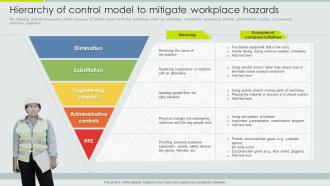
The following slide showcases the control measures of hazards based on the five techniques which are elimination, substitution, engineering controls, administrative controls, and personal protective equipment.
People who downloaded this PowerPoint presentation also viewed the following :
Hierarchy Of Control Model To Mitigate Workplace Hazards Implementation Of Safety Management Workplace Injuries with all 6 slides:
Use our Hierarchy Of Control Model To Mitigate Workplace Hazards Implementation Of Safety Management Workplace Injuries to effectively help you save your valuable time. They are readymade to fit into any presentation structure.





FAQs for Hierarchy Of Control Model To Mitigate Workplace Hazards Implementation Of Safety
So there's this hierarchy thing - elimination, substitution, engineering controls, admin controls, then PPE. Start at the top because honestly, getting rid of the hazard beats relying on Karen from accounting to wear her safety glasses every day. Elimination = bye-bye hazard completely. Substitution swaps it for something less sketchy. Engineering controls are like ventilation or physical barriers that work automatically. Admin stuff is training and policies (good luck with that). PPE's your backup plan when everything else fails. Higher levels protect everyone without depending on people actually following rules.
So engineering controls actually fix the problem at the source - stuff like ventilation, machine guards, sound barriers. Administrative controls are more about changing work policies, training people, adjusting schedules. Here's the thing though: engineering fixes work automatically. Administrative ones? They only work if people actually follow them, and honestly we both know how reliable that is lol. That's why engineering controls are way higher up in the safety hierarchy - you don't have to trust that Bob remembered his training from six months ago. Just go with engineering solutions first whenever you can.
Honestly, elimination is pretty straightforward - just get rid of the dangerous stuff completely. Replace those toxic solvents with water-based ones, toss that wobbly ladder nobody trusts, or redesign your whole setup to avoid confined spaces. Sometimes you can switch from manual lifting to automated systems too. My old workplace finally demolished this sketchy building we'd been walking around for years - should've done it way sooner. The main question is whether you actually need that hazard at all. If not, removing it beats trying to work around it every time.
PPE works great for protecting you personally, but here's the thing - it's basically the worst method for overall safety programs. You've gotta remember to wear it right every time, which let's be honest, doesn't always happen. People get complacent or forget stuff. The gear can break or wear down too. When PPE fails, boom - you're suddenly exposed to whatever nasty hazard is there. That's why smart companies eliminate hazards first using those higher methods, then treat PPE like the backup plan. Never design safety systems that depend entirely on workers remembering their equipment.
So training falls under administrative controls - basically your fourth option after elimination, substitution, and engineering controls. You're counting on people to remember stuff and follow procedures, which... yeah, that's where things can get messy since we all make mistakes. It teaches workers how to spot hazards, use equipment right, and stick to safety rules. Just don't make training your go-to solution - always try those higher-level controls first. When you do train people though, make it hands-on and regular. Oh, and actually relevant to their daily work, not some generic boring stuff.
Look, you gotta stay on top of this stuff constantly. Track the obvious metrics - compliance rates, training completions, incident reports. But honestly? The best way is just walking around and seeing what's actually happening. Are people wearing their gear? Following the procedures you set up? Do regular audits, sure, but also talk to your workers. They'll tell you straight up what's broken or what's working great. I learned this the hard way - you can't just check a box once a year and call it good. Make it part of your routine, not some annual headache. Your leading indicators matter just as much as the lagging ones.
Substitution is honestly my favorite approach - just swap dangerous stuff for safer alternatives without overhauling everything. Water-based solvents instead of toxic ones, mechanical lifts instead of throwing out your back. Works great when the hazardous material isn't make-or-break for your process and you can find cost-effective replacements. I'd focus on your worst hazards first. Chemicals causing serious health issues? Perfect candidates. Do some digging into what similar companies are using - you'd be surprised how many better options are already out there.
Honestly, culture makes a huge difference in how teams handle safety controls. Workers might push back on PPE if it clashes with traditional dress or religious stuff. Collectivist cultures? They're usually all about engineering controls since everyone benefits. But here's the thing - in cultures with big power gaps, people won't challenge dangerous admin rules from the boss. I've watched so many safety programs fail because of this! You gotta get cultural leaders involved early. Respect local customs when you're setting things up. And your training needs to work with these differences, not against them.
Honestly, the trickiest part is that solutions don't transfer between sites at all. What saves your office team could be totally pointless for field workers. Chemical lab protections? Useless on construction sites. Local regulations are all over the place too - what flies in Texas might be illegal in California, let alone overseas. Workers in different cultures react differently to safety measures, which people forget about. Oh, and climate matters more than you'd think. Start by figuring out the actual hazards at each specific location first. Then work your way down the hierarchy based on what'll actually work there, not what worked somewhere else.
So the Hierarchy of Controls thing is actually perfect for this. Start at elimination and work your way down - substitution, engineering controls, admin controls, then PPE at the bottom. What you're looking for is whether you're relying too much on the lower tiers when you could go higher up. Like if everyone's just wearing respirators, could you install better ventilation instead? Way more effective honestly. Document wherever you find those gaps. The whole point is catching where your company's taking the easy route instead of doing it right. Gives you a solid list of what needs fixing.
Honestly, just track your incident rates and how bad injuries are getting. Monthly numbers work best - you'll spot trends faster that way. Lost-time incidents and workers comp costs are your main hard data points. But don't ignore the softer stuff either - like how engaged people are with safety training and whether they're actually reporting near-misses. I'd focus on both the leading indicators (training completion rates, hazard reports) and the lagging ones (actual injuries). The real win is when you see fewer serious injuries over time, obviously. Oh, and track how fast you're catching new hazards - that tells you if your system's actually working.
So basically you gotta figure out how bad the hazard actually is first - like could it kill someone or just give them a headache? Once you know that, work your way down the hierarchy starting with elimination if you can swing it. The really nasty stuff obviously needs stronger controls than just slapping on some safety glasses and calling it good. I learned this the hard way in my last job honestly. Your risk assessment will show you if you need multiple layers of protection and help justify the costs to management. Don't skip the assessment part though - it drives everything else.
People think you've gotta pick just one thing from the hierarchy, but that's totally backwards. You want multiple layers working together - like, why wouldn't you? Also, elimination and substitution sound great on paper but aren't always realistic. PPE gets a bad rap because it's at the bottom, which is kinda unfair honestly. The whole thing isn't some rigid rulebook either. Think of it more as a starting point for figuring out what to prioritize, then mix and match whatever actually works for your situation. Sometimes combining different levels gives you way better protection anyway.
So OSHA basically wants you to follow their hierarchy when dealing with workplace hazards. You can't just slap some PPE on everyone and call it a day - they expect you to try elimination and engineering controls first. Honestly, it makes sense once you wrap your head around it. Most safety standards use this same framework, so inspectors know what to look for. Document everything though! Seriously, write down why you picked certain controls at each level. That paperwork will be a lifesaver if you get audited or something goes wrong and they start investigating.
Yeah, so you can definitely apply the Hierarchy of Controls to remote work! Start by eliminating stuff you don't need - like cutting out unnecessary travel or those meetings that could've been emails anyway. Then substitute risky activities with safer ones, swapping shared spaces for virtual tools. Engineering controls are things like getting proper lighting and ergonomic gear for your home setup, maybe an air purifier too. Administrative side covers your work-from-home policies and regular check-ins. PPE is last - blue light glasses, ergonomic accessories, that kind of stuff. Honestly, working from the top down gives you the best bang for your buck.
-
I was never satisfied with my own presentation design but SlideTeam has solved that problem for me. Thank you SlideTeam!
-
Great combination of visuals and information. Glad I purchased your subscription.