

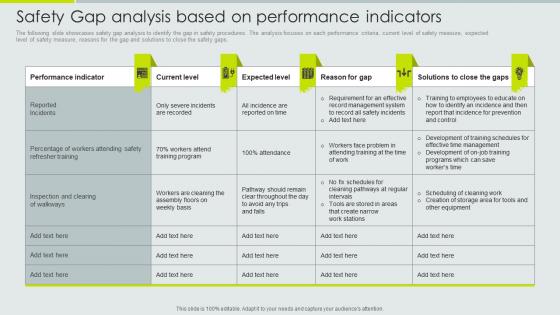
Safety Gap Analysis Based On Performance Indicators Implementation Of Safety Management Workplace Injuries




Try Before you Buy Download Free Sample Product
 Impress Your
 Audience
 100%
100% Editable
 Save Hours
 of Time


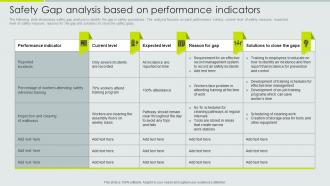
The following slide showcases safety gap analysis to identify the gap in safety procedures. The analysis focuses on each performance criteria, current level of safety measure, expected level of safety measure, reasons for the gap and solutions to close the safety gaps.
People who downloaded this PowerPoint presentation also viewed the following :
Safety Gap Analysis Based On Performance Indicators Implementation Of Safety Management Workplace Injuries with all 6 slides:
Use our Safety Gap Analysis Based On Performance Indicators Implementation Of Safety Management Workplace Injuries to effectively help you save your valuable time. They are readymade to fit into any presentation structure.





FAQs for Safety Gap Analysis Based On Performance Indicators Implementation Of Safety
Honestly, it comes down to four main things. Your leadership has to actually care about safety - not just talk about it in meetings. Workers need to be involved since they're the ones doing the job every day and usually catch stuff management totally misses. You'll want clear ways for people to report hazards without getting blamed for it. Oh, and regular training plus looking at what went wrong so it doesn't happen again. Maybe start by just walking around your workplace this week? Ask your team what's bugging them safety-wise.
Stop treating safety like some box to check off. Put those metrics right next to your revenue numbers on the executive dashboard - I swear, too many companies still act like safety doesn't matter until something goes wrong. Your board meetings should cover safety performance every single time. Connect it directly to stuff like efficiency and protecting your reputation. Budget for preventing problems, not just cleaning up messes afterward. Figure out where safety risks could actually hurt your profits, then build those targets into everyone's goals and reviews. Makes way more sense than scrambling later.
Honestly, training is everything when it comes to workplace safety. Your team needs to know how to spot hazards and handle emergencies - that's obvious. But here's what most people miss: well-trained employees actually start caring about safety instead of just following rules because they have to. They'll catch stuff you don't see and understand why procedures matter. I'd do solid onboarding first, then hit them with refreshers every few months. People get lazy when they're swamped, so you've got to keep it fresh. Trust me, consistency makes all the difference here.
Honestly, most workplace accidents boil down to four things: slips/falls, chemical exposure, machinery incidents, and electrical stuff. Slips are huge - like 30% of all accidents, so yeah, clear walkways and decent signage actually matter. Chemical exposure means your team needs proper gear, good ventilation, and they gotta know what they're doing with hazardous materials. Machine safety is where you can't mess around - proper guarding and lockout procedures are basically mandatory. Electrical issues need regular checks by people who actually know what they're looking at. Walk through your place this week and figure out which one's your biggest headache.
So you'll want to tailor your SMS to whatever industry you're in, obviously. Construction companies focus on physical hazards, PPE, equipment safety - that stuff. Healthcare is all about infection control and patient safety incidents. Manufacturing? Machine safety and chemical handling mostly. The basic SMS structure doesn't change though (hazard ID, risk assessment, controls, monitoring). You just customize the risk categories and training programs around your specific needs. Honestly, I'd start by listing your industry's top 10 risks and build everything around those. Way easier than trying to use some generic template.
Honestly, you gotta look at both sides of this. The obvious stuff - injury rates, lost time, workers comp costs - tells you what went wrong already. But the real value is in tracking things that predict problems before they blow up. Think safety training completion, how often people report near-misses, audit scores, employee participation in safety stuff. I'd also watch behavioral metrics like safety observations and how many hazards people actually identify. The trick is not getting stuck just reacting to bad things that already happened. Pick maybe 3-4 metrics you can actually do something about first, then expand from there once you've got those dialed in.
Dude, IoT sensors with AI are seriously a game-changer for safety stuff. Picture this: instant alerts when equipment's overheating or air quality tanks before anyone gets hurt. Smart cameras catch workers skipping PPE too - honestly didn't think that tech would work as well as it does. The AI crunches all that data to predict equipment failures and spot dangerous patterns you'd totally miss otherwise. Best part? You're preventing accidents instead of just reacting after something goes wrong. I'd say start with just a few sensors in your riskiest spots and build from there.
Dude, you're playing with fire here. OSHA fines are no joke - they keep going up every year and can hit six figures per violation. Criminal charges are on the table if someone dies or gets badly hurt. Then there's the civil lawsuits from workers and families that'll drain your bank account. Your insurance premiums will skyrocket. Workers comp claims go crazy. You might lose your business license entirely. As a manager, you could even face personal liability - which honestly keeps me up at night sometimes. Just bite the bullet and invest in proper safety training now.
Honestly, make it everyone's thing, not just the boss's headache. People need to feel safe reporting stuff without getting thrown under the bus - otherwise they'll just keep quiet. Regular safety chats work way better than those corporate emails nobody actually reads. Get your frontline folks involved in real conversations about what they're seeing out there. Leadership showing up matters too. Celebrate the good catches and near-misses, don't just wait for accidents to happen. Oh, and give people actual power to shut things down when something looks sketchy - that's huge.
Get a good checklist going and pull in people from other departments - they spot stuff you'd totally miss. I do quarterly audits plus random surprise ones. Document everything with photos and real details, not vague "fix this" notes. Here's the thing though - you've got maybe 30 days to actually act on what you find, or people will think it's just busywork. Train whoever's doing the audits properly too. I've walked into places where they clearly just checked boxes without looking around. Oh, and check your incident reports first to know where to focus. Always share results with the team after.
Oh man, this stuff drives me crazy - so many places just blame someone and move on. Don't do that. Get everything documented right away while people actually remember what happened. Talk to witnesses fast. Here's the thing though - you can't just fix the obvious problem. Dig deeper into why your systems let this happen in the first place. Update your procedures after, retrain people, and share what you learned with everyone else. Oh, and actually check later that your fixes worked. Sounds obvious but you'd be surprised how often that gets skipped.
Ugh, the worst part is you can't see what's actually happening at people's home setups - are they following protocols or cutting corners? Plus getting safety info out quickly becomes a nightmare when everyone's scattered. Some folks definitely get lazy without oversight, let's be real. You miss those random hallway conversations where someone mentions a near-miss or whatever. Training's brutal too since you can't do proper demos over Zoom. Honestly though, decent reporting apps help a ton. Regular check-ins work better than you'd think, and make sure people know they can actually reach someone when stuff goes sideways.
Honestly, it's way easier than you'd think. Safer processes usually cut down on waste and accidents that need cleanup - so there's your overlap right there. Employee engagement works for both too. I'd start by tweaking what you already have going. Like, add some environmental stuff to your safety training, or track resource waste in your incident reports. The whole thing makes sense when you think about it - both areas want to protect people and reduce mess-ups. Actually, most companies miss how natural this partnership really is. Just look for where your current programs already connect and build from there.
Dude, leadership and communication are everything when it comes to safety programs. Your managers need to actually show up and talk to people on the floor, not just blast out emails about incident rates (which nobody reads anyway). Workers have to feel like they can speak up about problems without getting shut down. Short sentences work here. The best policies mean nothing if leadership isn't walking around proving they actually care about this stuff. Oh and make sure communication goes both ways - people need to know you'll listen when they bring up concerns. Without those two things working together, you're basically just shuffling paperwork around.
Set up a few different ways for people to give feedback - anonymous boxes, safety meetings, maybe some kind of digital thing. Honestly, the biggest mistake I see companies make is collecting all this input and then... nothing. You've gotta actually respond and tell people what you did with their suggestions, even if you can't fix everything. A rotating safety committee could work too - grab people from different departments so everyone's represented. I'd probably start with just one method this month and check it weekly. Consistency is what builds trust with this stuff.
-
The presentations are very helpful. I am always able to get appropriate templates for the different topics related to my profession.
-
It is my first time working with them and that too on a friend's recommendation. I would say, I am not expecting such a worldly service at this low price.